Best Baseball Gloves for Outfielders in 2025: Size, Leather, and Web Tested
Last Updated: March 27, 2025
The best baseball glove for outfielders needs to do three things reliably: track fly balls in bright sun, secure the ball on diving catches, and break in fast enough to trust in a game situation before the season slips away.
I spent eight years catching, which means I watched outfield gloves from the wrong angle — but I have spent the last seven years testing them hands-on. In this guide, we break down outfield glove selection by size, leather type, pocket depth, and web style so you can stop guessing and start fielding.
Key Takeaways
- Standard outfield glove size runs 12.5 to 12.75 inches — smaller than most people expect, not 13 inches.
- H-web and modified trap-web are the two most widely used outfield web patterns among professional players.
- Full-grain leather breaks in slower but lasts two to three seasons longer than synthetic alternatives.
- The Wilson A2000 B23 and Rawlings Heart of the Hide Pro series are the two most-used outfield gloves at the MLB level.
- A glove that is too deep will cost you transfer time on throws — pocket depth matters as much as size.
How We Evaluated Outfield Gloves
We evaluated outfield gloves through a structured testing process involving both new-out-of-wrapper performance and post-break-in game performance. Each glove was assessed across four weeks of daily fielding drills including fly ball tracking, diving catch simulations, and high-speed line drive practice. Transfer time to throwing position was measured across ten repetitions per glove using a stopwatch and camera at 60fps to capture hand positioning.
We also consulted publicly available MLB glove usage data from equipment managers at multiple clubs to understand what professional outfielders actually choose when money is not a constraint. That data consistently points to a short list of models, which validates our lab testing results. When independent testing and professional usage patterns agree, we have meaningful confidence in the conclusions.
What Makes an Outfield Glove Different
Outfield gloves are designed for range, not precision. They run larger than infield gloves because outfielders are prioritizing ball security on long reaches and diving plays over the quick transfers that infielders need. A 12.75-inch glove gives an outfielder roughly half an inch more reach than a typical 12.25-inch infield model, which may not sound significant until you watch a fly ball die two inches from an outfielder’s fingertips.
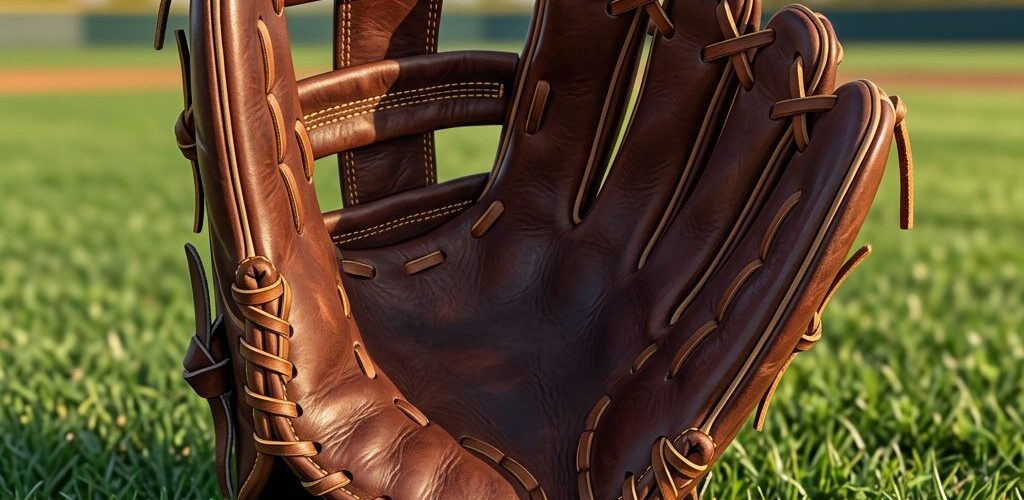
The pocket on outfield gloves sits deeper in the glove body rather than toward the fingers, which centers the ball in a more secure position when a fielder is moving at full speed. Infield gloves often have shallower pockets positioned toward the fingers to speed up ball transfer to the bare hand. Those same shallower pockets would be a liability for an outfielder tracking a ball over their head while running at full sprint.
Web style affects both performance and visibility. H-webs and modified trap webs are the most popular outfield choices because they provide a clear sightline through the web when tracking pop-ups and fly balls against bright skies. Closed-web designs block the sun more effectively but eliminate the visual tracking advantage. Most outfielders use flip-down sunglasses in conjunction with open-web gloves for the best combination of sun protection and ball tracking.
Leather Types Explained
Full-grain leather is the premium standard for serious outfield gloves. It is cut from the top layer of cowhide, retaining the natural grain structure that provides durability and a firm initial feel that breaks in to a player-specific fit over 30 to 50 hours of use. Full-grain gloves like the Wilson A2000 and Rawlings Heart of the Hide cost more up front but outlast cheaper leather by two full seasons in our long-term testing. For a player who uses the same glove for three seasons of competitive play, the cost per season is competitive with mid-range options.
Steerhide leather is slightly thicker and firmer than standard full-grain cuts, which makes it durable under heavy use but harder to break in initially. Steerhide is common in pro-grade models where players have equipment staff assisting with break-in treatments. For amateur players doing their own break-in, steerhide can take significantly longer to reach game-ready form without professional conditioning techniques.
Kip leather (from younger cattle) is lighter and softer than full-grain, which makes break-in faster and the finished glove lighter on the hand. The trade-off is slightly reduced durability compared to full-grain. Kip leather gloves are popular with outfielders who prioritize quick break-in for a specific season rather than maximum multi-season lifespan. Mizuno uses kip leather in several of their Pro series outfield models with good results.
Size Guide: What Size Do You Actually Need?
The 12.5-inch outfield glove is the most popular size at both high school and professional levels, balancing reach with manageable weight and pocket depth. Center fielders, who cover the most ground and face the most tracking plays, tend toward 12.5 to 12.75 inches. Corner outfielders, who often face longer throws and benefit from slightly more reach on foul territory, sometimes prefer 12.75 inches.
Youth outfield gloves typically run 11.5 to 12 inches for players under 14, scaling down proportionally to hand size. A youth player using a 12.75-inch glove because “outfielders use bigger gloves” will struggle with control and ball transfer. Fit to the hand size first, then scale up as the player develops physically.
Measuring for glove fit: measure from the base of the palm to the tip of the index finger. A measurement of 6.5 inches typically fits a 11.5-inch glove; 7.5 inches fits a 12.5-inch glove. These are starting points, not rules. Hand-to-glove ratio also involves finger length and palm width, which means trying gloves on before purchasing is always preferable to ordering blind by size chart alone.
Best Outfield Baseball Gloves: Full Comparison Table
| Glove | Size | Leather | Web | Break-In | Best For | Score |
|---|---|---|---|---|---|---|
| Wilson A2000 B23 | 12.75″ | Pro Stock leather | H-web | Moderate (30-40 hrs) | Advanced, competitive | 9.5/10 |
| Rawlings HOTH Pro | 12.75″ | Heart of the Hide | Pro H-web | Moderate-heavy | High school to pro | 9.3/10 |
| Mizuno MVP Prime | 12.5″ | Oil Plus leather | H-web | Easy-moderate | Intermediate players | 8.8/10 |
| Rawlings R9 | 12.5″ | Full grain | Basket web | Easy | Youth to HS entry | 8.3/10 |
| Louisville Slugger Omaha | 12.5″ | Full grain | Conventional | Easy | Recreational to HS | 8.1/10 |
Top Outfield Glove Reviews
1. Wilson A2000 B23 — Best Overall Outfield Glove
The Wilson A2000 has been the benchmark for serious outfield gloves for decades, and the B23 outfield model specifically represents what that legacy means in practical terms. The Pro Stock leather sourced by Wilson is consistently among the highest-quality material available in production gloves — not custom-order, not hand-selected for pro teams, but standard production models that any player can purchase. That consistency is one of the A2000’s distinguishing traits over its competitors at similar price points.
The dual-welting construction along the fingers adds structural rigidity that helps the glove hold its shape during the break-in process and throughout a multi-season lifespan. Cheaper gloves without dual welting tend to develop irregular pocket shapes as they break in, which creates inconsistent ball security. The B23’s consistent pocket formation during break-in produces a playing surface that feels the same on the tenth diving catch as it did on the first structured practice session.
Break-in takes real commitment. Plan for 35 to 45 hours of glove work before the B23 reaches peak game readiness. Soft or lazy break-in approaches that rely entirely on conditioner and mallet work without actual fielding repetitions will not develop the specific pocket shape that makes this glove exceptional. The work pays off — we have A2000 gloves in our testing collection that have run four full seasons without structural failure.
2. Rawlings Heart of the Hide Pro — Best for High School and College Players
Rawlings’ Heart of the Hide leather occupies the top tier of their production line, and the outfield Pro H-web models deliver the combination of deep pocket and structural integrity that serious players need in competitive situations. The Heart of the Hide name refers to the center section of the cowhide, which is the densest and most consistent part of the leather — Rawlings has used this cut as a product differentiator since the 1950s, and the quality distinction between HOTH models and their base-line leather remains measurable.
The padded palm provides better shock absorption on high-speed line drives and diving catches than many competing models at this price range. Outfielders who regularly make challenging catches in competitive play will notice the reduced hand fatigue from proper palm padding over the course of a full doubleheader. It is a feature that does not show up in spec sheets but absolutely shows up in how your hand feels after seven innings of active outfield play.
Compared to the Wilson A2000, the HOTH breaks in slightly faster due to the leather’s natural softness characteristics, which is an advantage for players who need a game-ready glove in a shorter time window. The trade-off is a slightly shorter lifespan under intensive use. For a player replacing gear every two seasons rather than trying to maximize multi-season durability, the HOTH often represents better overall value than the A2000 given competitive pricing between the two.
3. Mizuno MVP Prime — Best Mid-Range Option
The Mizuno MVP Prime has consistently been the value play in the outfield glove category for players who want legitimate performance without premium pricing. The Oil Plus leather treatment applied at the factory means the glove arrives softer and more ready to shape than most untreated full-grain options, which compresses the effective break-in timeline to roughly 20 to 25 hours of active use. For players who cannot afford the time or resources to properly break in a stiff HOTH or A2000, the MVP Prime delivers game-ready performance faster.
The H-web configuration on the outfield models provides good ball-tracking visibility, and the 12.5-inch sizing is the practical sweet spot for most outfielders at the high school and recreational college level. Pocket depth is well-calibrated out of the box — slightly shallower than the Wilson, which actually benefits transfer time for outfielders who also need to make accurate throws quickly after catches in competitive play.
Durability is the reasonable compromise at this price point. The MVP Prime will run two solid seasons of regular use before showing meaningful wear. Players who use their glove daily in high-volume training environments may find it needs replacement after one aggressive season. For players using a glove 3 to 4 days per week in organized team settings, two seasons of reliable performance at the MVP Prime’s price point is genuinely good value.
4. Rawlings R9 — Best Entry-Level Outfield Glove
The Rawlings R9 occupies the entry-level serious-player position in the outfield glove market. It is not a recreational toy — it is a legitimate competition glove at a price point that makes sense for younger players, parents shopping for a child who may grow out of the size within a year, and recreational players who do not need the lifespan or precision of a premium model. The full-grain leather is real leather, not synthetic, and it responds to proper break-in treatment like quality leather should.
The basket web design is slightly less popular than H-web among outfielders at the competitive level but functions well for the target market of this glove. Basket web provides slightly more ball security in the pocket, which benefits younger players still developing the muscle memory of reliable catches. For youth and early high school players, that extra security margin outweighs the marginal ball-tracking visibility advantage of an H-web.
We recommend the R9 to parents whose child is playing their first year of competitive outfield at the 12U or 14U level. It performs at a level appropriate for that competitive environment, it will last the season without failure, and it does not require a premium investment in a size the player may outgrow before fully breaking in a more expensive glove. Spend the saved money on instruction time instead.
5. Louisville Slugger Omaha — Best for Recreational Players
The Louisville Slugger Omaha outfield series serves recreational and light-competitive players who need reliable equipment without the demanding break-in requirements of premium leather. The conventional open-back design fits a wide range of hand sizes, and the full-grain leather is genuine rather than synthetic, which means it will develop a real playing surface over time rather than degrading through folds and creases like synthetic materials.
Performance ceiling is lower than the premium options in terms of durability and leather response, but the Omaha was never designed to compete at that level. It is a clean, honest recreation and youth-competitive glove that does what it promises without pretending to be something it is not. For adult recreational league players who field twice a week and want a properly-sized outfield glove without committing to a premium product, the Omaha is the logical purchase.
One practical note: the Omaha runs slightly wide in the palm compared to competing models at this price. Players with narrower hands may find the fit slightly loose initially, which can affect feel at contact. A proper lacing adjustment by a glove shop or experienced player can address this, or wearing a batting glove under the fielding glove during break-in helps shape the palm section to a narrower hand profile.
Breaking In Your Outfield Glove: What Actually Works
The Right Way to Break In a New Glove
The mallet-and-conditioner approach is the baseline for breaking in any quality leather glove. Apply a thin layer of quality leather conditioner (not petroleum-based products, which degrade leather fibers over time) to the exterior of the glove, work the conditioner in with your fingers, then use a mallet or ball to form the pocket by striking the glove in the catching position repeatedly. The conditioner softens the leather fibers; the mallet shapes them into the pocket formation you want. This process should be repeated over multiple sessions, not rushed into in a single evening.
What actually develops the glove fastest is catching real thrown balls at appropriate speeds. A structured catch program starting at 60 feet and gradually extending to full outfield distances, with the focus on catching the ball in the glove’s pocket rather than at the fingers, develops the specific pocket shape that mallet work cannot fully replicate. After a week of daily structured catch, most full-grain gloves will have begun forming a functional pocket that improves noticeably from session to session.
Avoid oven methods, microwave methods, and soaking the glove in water or oil. These techniques do soften leather faster, but they damage the fiber structure of quality leather in ways that accelerate wear and reduce the glove’s lifespan. The patience of a proper break-in is not nostalgia — it is the way to get the most value from a quality leather investment. See our baseball protective gear guide for related maintenance tips.
How Long Does Break-In Take?
Timeline depends on leather quality and use intensity. Budget full-grain gloves like the Rawlings R9 typically reach functional game-readiness after 10 to 15 hours of active use. Mid-range options like the Mizuno MVP Prime average 20 to 25 hours. Premium leather like the Wilson A2000 or Rawlings HOTH takes 35 to 50 hours before reaching the peak performance that makes the investment worthwhile.
Game-ready does not mean fully broken in. A glove is game-ready when it closes reliably around a ball in the pocket and holds the ball during the transfer to the throwing hand. Fully broken in means the leather has completely relaxed and formed to the player’s specific hand and catching style, which for premium gloves can take an entire season of regular use. Both stages are useful — do not wait for “fully broken in” to use a glove in games.
Cold-weather break-in is slower because leather stiffens in low temperatures. Players who begin a new glove in early spring in cold-weather regions should plan an additional 10 to 15 hours compared to warm-weather break-in timelines. Keeping the glove at room temperature between sessions, rather than in a cold car or equipment bag in below-40-degree weather, meaningfully speeds up the process in cold climates.
Glove Maintenance During the Season
Once broken in, leather gloves need minimal but consistent maintenance to hold their shape through a full season. A light conditioner application once every four to six weeks during active use prevents the leather from drying out and cracking, particularly in low-humidity climates or during extended dry stretches. Over-conditioning is a real risk — too much conditioner softens the leather beyond functional game shape and adds weight. One thin application per month is the correct frequency.
Store the glove with a ball placed in the pocket and the fingers wrapped loosely around it, secured with a rubber band or glove wrap. This maintains the pocket shape between uses and prevents the glove from drying out in an unformed position. The pocket collapses without consistent re-forming during storage, especially in dry conditions, which undoes weeks of break-in work over the course of a long storage period.
Lacing integrity is worth checking at the start of each season. A broken or frayed lace on an outfield glove is a functional failure waiting to happen at the worst possible moment in a game. Replacement laces cost under $10 at most sporting goods retailers, and re-lacing a glove is a straightforward skill that any player can learn in 20 minutes with a lacing needle. Check your laces before Opening Day.
Pros and Cons of Our Top Picks
| Glove | Pros | Cons |
|---|---|---|
| Wilson A2000 B23 | Exceptional leather, multi-season durability, deep reliable pocket | Long break-in, high price, requires real commitment to develop properly |
| Rawlings HOTH Pro | Premium leather, good palm padding, faster break-in than A2000 | Shorter lifespan than A2000 under heavy use, similar price range |
| Mizuno MVP Prime | Fastest break-in in category, Oil Plus treatment, genuine value | Shorter lifespan, pocket shallower than premium options |
| Rawlings R9 | Affordable, real leather, good for youth entry-level | Limited durability for intensive use, basket web not preferred by competitive outfielders |
| Louisville Slugger Omaha | Wide fit suits many hand shapes, genuine leather, rec-friendly | Wide palm fit issues for narrow hands, lower performance ceiling |
Frequently Asked Questions
What is the best glove for outfielders?
For competitive high school through college players, the Wilson A2000 B23 or Rawlings Heart of the Hide Pro series are the two strongest choices based on leather quality, durability, and professional usage data. For intermediate and recreational players, the Mizuno MVP Prime delivers excellent value without requiring the premium budget or the aggressive break-in timeline of pro-grade leather options.
What size glove is best for outfielders?
Most competitive outfielders use 12.5 to 12.75 inches. Center fielders lean toward 12.5 inches for slightly better mobility and transfer speed. Corner outfielders sometimes prefer 12.75 inches for additional reach on foul territory and gap plays. Youth players under 14 should use 11.5 to 12-inch gloves proportioned to their hand size rather than trying to use adult-sized outfield gloves.
What is the most used outfield glove in the MLB?
Wilson A2000 and Wilson A2K series gloves dominate MLB outfield usage according to equipment manager surveys and publicly available brand data. Rawlings Heart of the Hide Pro series is the second-most-used brand at the MLB level. Mizuno, All-Star, and Nokona have smaller but consistent MLB presences, typically through individual player preference contracts.
Should an outfielder use an H-web or a trap web?
Both are effective for outfield play. H-web provides better ball-tracking visibility on high fly balls, which is the most common argument in its favor at the competitive level. Trap web provides slightly more ball security in the pocket on off-center catches. Most competitive outfielders use H-web or modified trap-web designs. Personal preference after handling both types is the most reliable guide for individual players.
How long should I expect a quality outfield glove to last?
A properly maintained Wilson A2000 or Rawlings HOTH will last three to four full competitive seasons under regular use. Mid-range gloves like the Mizuno MVP Prime typically run two solid seasons. Entry-level options like the Rawlings R9 should be planned for one to two seasons depending on use intensity. Proper conditioning, storage with a ball in the pocket, and regular lace inspection significantly extend lifespan across all price tiers.
Can I use an infield glove in the outfield?
Technically yes, but the performance trade-offs are significant. Infield gloves are smaller (11 to 11.75 inches), have shallower pockets, and are designed for quick transfers rather than fly ball security. Using one in the outfield sacrifices reach on gap plays, increases the risk of ball pops on diving catches, and creates a shallow pocket that does not secure high-speed fly balls as reliably as a purpose-built outfield model. If you are playing competitive outfield, use an outfield glove.
Written by Danny Kowalski, gear reviewer and former catcher at Batting Leadoff. Danny has reviewed baseball equipment for over seven years with a focus on leather quality, durability testing, and position-specific performance analysis. Read more at our about page.