How to Break In a Baseball Glove Fast: 5 Proven Methods That Work
Knowing how to break in a baseball glove fast is one of the first real lessons every player learns — and one of the most important. A stiff, unbroken glove costs you catches, slows your transfer, and makes every rep feel awkward. We have coached and played through enough seasons to know that skipping this step causes more errors than almost anything else.
In this guide, we walk you through every proven method, from shaving cream conditioning to heat techniques, so your new glove feels game-ready in days instead of months.
- The fastest method combines glove conditioner, repetitive flexing, and a baseball wrapped in the pocket overnight.
- Shaving cream with lanolin is one of the most accessible and effective leather conditioners you can use.
- Never use petroleum-based products like Vaseline — they degrade leather fibers over time.
- Heat (done correctly with a low oven or steam) softens leather in minutes, not days.
- Catch real balls as much as possible — nothing replaces actual game-like repetition.
- A properly broken-in glove should take 1–4 weeks with consistent effort; shortcuts get you to 3–5 days.
Why Breaking In a Glove Matters
The Science of Leather Stiffness
A brand-new baseball glove is made from tanned cowhide that has been treated with preservatives and stiffeners during manufacturing. Those compounds keep the leather firm during shipping and display, but they work against you on the field. The fibers in the leather need to realign, soften, and develop memory around the shape of your hand and a baseball.
When we skip this process, the pocket never forms correctly, and the glove tends to close either too slowly or at the wrong angle. That costs us that split-second response time on line drives and pop flies.
How Long Does It Really Take?
With zero effort, a glove can take an entire season to feel comfortable. With deliberate conditioning and daily use, most players get there in two to four weeks. With the fast-track methods we outline below, serious effort can get a glove game-ready in as little as three to five days.
What “Broken In” Actually Means
A properly broken-in glove closes cleanly with one hand, holds its shape when open, has a defined pocket behind the index finger (for most fielding gloves), and does not fight you when you squeeze it shut. If you have to wrestle it closed, it needs more work.
The Fastest Methods to Break In a Baseball Glove
Method 1: Glove Oil or Conditioner Application
The foundation of every break-in method is proper conditioning. We recommend starting here before any other technique.
- Choose a purpose-made glove oil (Rawlings Glovolium, Wilson Pro Stock Glove Conditioner) or a shaving cream that contains lanolin. Shaving cream with lanolin is a legitimate option — it softens leather effectively and is available at any drugstore.
- Apply a small amount — about the size of a quarter — to a soft cloth or your fingertips.
- Work it into the palm, the pocket, the fingers, and along the back of the glove in circular motions.
- Pay extra attention to the hinge points: the heel pad, the top of the palm near the web, and the base of each finger stall.
- Let the glove sit for 15–20 minutes, then wipe off any excess with a dry cloth.
- Flex the glove open and closed 50–100 times immediately after conditioning while the leather is supple.
Do not over-oil. One thin coat is all you need. Saturating the leather adds weight and can weaken stitching over time.
Method 2: The Pocket-Wrap Overnight Technique
This is the single most effective passive method we know.
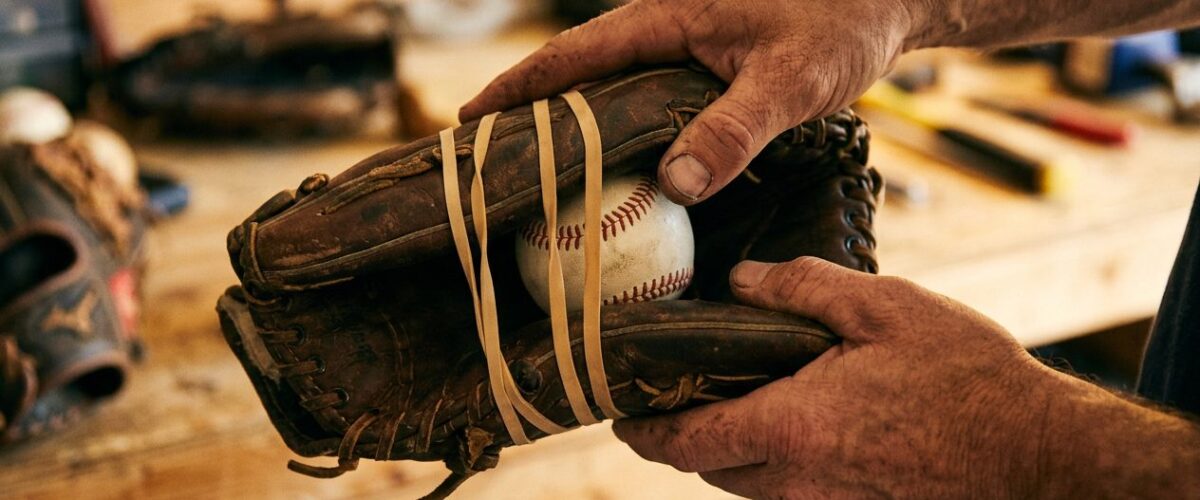
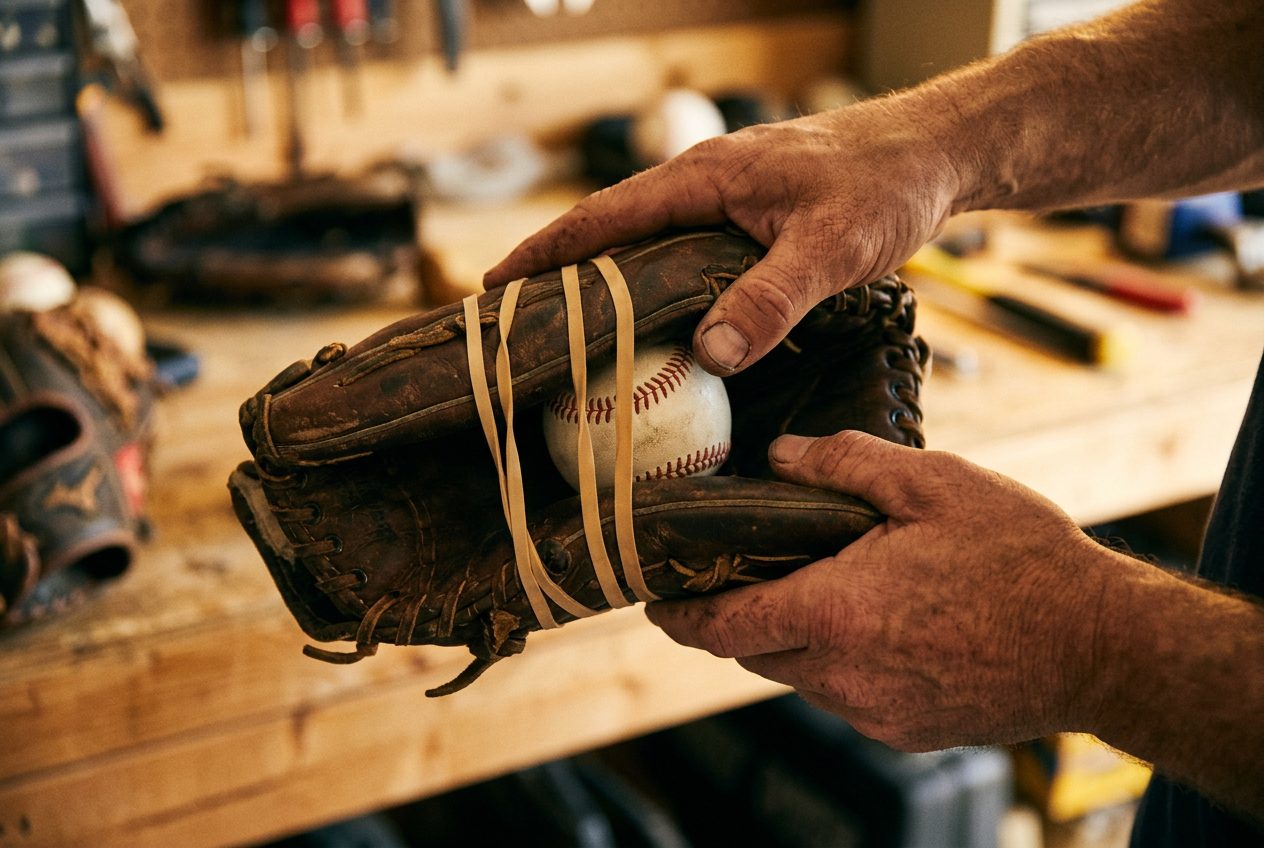
- After applying conditioner and flexing the glove, place a regulation baseball directly in the center of the pocket.
- Close the glove around the ball as naturally as you can.
- Wrap two or three rubber bands around the closed glove to hold it shut — not so tight that you distort the leather, but firm enough to keep the ball pressed into the pocket.
- Leave it overnight, or for at least 8 hours.
The ball trains the leather to memorize a round, deep pocket shape. This technique, repeated for three to five nights consecutively, produces dramatic results fast. Some players place the wrapped glove under a mattress for added even pressure.
Method 3: Low Oven Heat (Use Carefully)
Heat is the fastest way to soften leather, but it must be done at low temperatures. We use this method sparingly and carefully.
- Preheat your oven to 300°F (150°C) — no higher.
- Place the glove on a baking sheet with the palm facing up.
- Heat for 10–15 minutes only. Set a timer and do not walk away.
- Remove the glove — it will be noticeably softer and more pliable.
- While it is still warm, place a ball in the pocket, wrap with rubber bands, and work the fingers by hand.
The risk with heat is drying out the leather if you go too long or too hot. Always condition the glove before and after heat treatment.
Method 4: Steaming
Many sporting goods stores offer professional glove steaming for $10–$20. Steam penetrates the leather uniformly and does not carry the same risk of over-drying that oven heat does. If you have access to a clothes steamer at home, you can do this yourself.
- Hold the steamer about 6 inches from the glove surface.
- Move it slowly across the palm and pocket for 30–45 seconds per section.
- Work the glove immediately while it is warm and flexible.
- Condition afterwards.
Method 5: Pounding and Repetitive Use
No method replaces actually using the glove. Every catch, every throw into the pocket, every repetition trains the leather with real game forces.
- Use a mallet or the heel of your throwing hand to pound the pocket 100–200 times per session.
- Alternate between pounding the pocket and working your fingers to flex the hinge points.
- Play catch for at least 20–30 minutes per day. The combination of impact and grip is irreplaceable.
If you do not have a partner, throw a ball against a wall or use a pitching/rebounder net to get repetitions in on your own.
Conditioning Products — What to Use and What to Avoid
Recommended Products
| Product | Type | Best For | Notes |
|---|---|---|---|
| Rawlings Glovolium | Oil/Foam | All leather types | Industry standard, widely available |
| Wilson Pro Stock Conditioner | Cream | Pro-grade leather | Penetrates deeply without excess oil |
| Lanolin shaving cream | Cream | Budget option | Apply sparingly, wipe off excess |
| Lexol Leather Conditioner | Liquid | Stiff premium gloves | pH-balanced, very gentle on fibers |
Products to Avoid
Petroleum-based products — including Vaseline and WD-40 — degrade leather fibers over time, shortening the lifespan of your glove significantly. Olive oil and vegetable oils may seem natural, but they go rancid inside the leather and create a smell that never leaves. Neatsfoot oil is controversial; pure neatsfoot oil is acceptable in small amounts, but compound neatsfoot oil (which contains petroleum distillates) should be avoided.
How Often to Condition
During the break-in process: every 2–3 days. Once broken in: once or twice per season, and after any extended exposure to rain or sweat. Over-conditioning is a real problem — it adds weight and can soften the leather to the point where the glove loses structure.
Position-Specific Break-In Tips
Infielders
Infield gloves are smaller and shallower. You want a tight pocket that lets you transfer the ball quickly. When forming the pocket, place the ball toward the base of the fingers rather than deep in the palm. Fold the glove along the hinge aggressively to build a break just below the index finger.
Outfielders
Outfield gloves are larger and benefit from a deeper pocket. You want the pocket centered in the palm, and the glove should close firmly enough to secure fly balls on the run. Focus conditioning time on the heel pad and the top of the glove near the web. Check out our guide to outfield glove selection for details on the best models and web styles for each position.
Catchers and First Basemen
Catchers’ mitts and first baseman’s mitts are a different break-in challenge. They do not have individual finger stalls the same way, and the thick padding requires more time and more aggressive conditioning. Focus heat and conditioning on the palm and hinge. The break should come along the middle of the mitt, allowing it to cup around the ball naturally.
Common Break-In Mistakes to Avoid
Using Too Much Oil
We see this constantly. Players think more oil means faster results. In reality, a saturated glove becomes heavy, loses structural integrity, and can develop dark stains that never come out. One thin, well-worked-in coat is always better than a thick, sloppy application.
Skipping the Flexing Step
Conditioning alone does not break in a glove. The physical work of opening and closing, pounding, and catching is what actually repositions the leather fibers. Oil makes the leather receptive to that work — it does not replace it.
Applying Heat Too Aggressively
Temperatures above 350°F can crack and shrink leather permanently. We recommend staying at or below 300°F, and for most situations, steaming is safer than oven heat for beginners.
Neglecting the Web and Lacing
The web takes enormous stress on catches. Make sure you work conditioner into the web and along the lacing. Dry lacing breaks faster under game stress, and replacing lacing mid-season is a frustrating repair.
Maintaining Your Glove After Break-In
Storage
Always store your glove with a ball in the pocket. After every use, rewrap it with rubber bands or use a glove wrap product to preserve the pocket shape. Store the glove at room temperature — heat and cold both degrade leather over time.
Cleaning
Remove dirt with a dry cloth after every game. For deeper cleaning, use a slightly damp cloth only — never submerge leather in water. Dry naturally, away from direct heat sources.
Lacing Maintenance
Inspect lacing every few months during the season. A single broken lace spreads stress to adjacent laces quickly. Many sporting goods stores can replace individual laces for a few dollars. Learning to relace yourself is a worthwhile skill — there are excellent guides on the MLB official site covering equipment care at the professional level.
Understanding your equipment is part of becoming a complete player. If you want to go deeper on gear, our complete guide to baseball gloves covers fit, materials, and the brands worth your money at every price point. For sourcing quality gloves and comparing brands, Baseball Reference’s equipment sections and manufacturer specifications are reliable references.
Frequently Asked Questions
How long does it take to break in a baseball glove fast?
With deliberate conditioning, the overnight pocket-wrap method, and daily catching sessions, most players get a glove game-ready in 3–5 days. Without focused effort, expect 2–4 weeks of regular use.
Can I use petroleum jelly or Vaseline on my baseball glove?
We do not recommend it. Petroleum-based products degrade leather fibers over time, which shortens your glove’s lifespan considerably. Use purpose-made glove oil or lanolin-based shaving cream instead.
Is putting a glove in the oven safe?
Yes, at low temperatures (300°F or below) for no longer than 15 minutes. Higher heat or longer exposure can crack, shrink, or dry out the leather irreversibly. Steaming is a gentler alternative if you are cautious.
What is the best way to form the pocket?
Place a regulation baseball in the pocket, close the glove around it, and wrap with rubber bands. Leave overnight — or under a mattress for added pressure. Repeat this for 3–5 nights along with active conditioning and flexing during the day.
Do professional players break in their gloves differently?
Many MLB players use team equipment managers who steam gloves, apply professional-grade conditioners, and perform hours of manual break-in work. Some players use their gloves for years without replacing them because they maintain them carefully after the initial break-in.
Can shaving cream really break in a baseball glove?
Yes — shaving cream that contains lanolin is genuinely effective at softening leather. Apply sparingly, work it in thoroughly, let it sit for 15–20 minutes, then wipe off excess and flex the glove. It is a budget-friendly option that works nearly as well as commercial glove oils.
How do I know when my glove is fully broken in?
Your glove is ready when it closes cleanly with one hand without excessive force, holds an open position naturally, has a defined pocket, and no longer feels stiff at the hinge points. The leather should feel supple and slightly warm in your hand.
