Best Baseball Bat for Power Hitters: Top Picks Tested and Ranked
When we talk about the best baseball bat for power hitters, we are talking about a piece of equipment that can genuinely change outcomes at the plate. After 12-plus years of testing bats across every level of play, our team has swung through hundreds of models to help you cut through the noise and find the right stick for your game.
- End-loaded bats give power hitters extra mass toward the barrel, translating to higher exit velocity when swing speed stays consistent
- BBCOR certification is required for high school and college play; USSSA governs most youth travel ball
- The Marucci CAT9 and Louisville Slugger Meta remain the gold standard for power hitters in BBCOR
- Composite barrels typically have a larger sweet spot than alloy but require a break-in period
- Drop weight matters: most adult bats are -3 (BBCOR); youth options range from -5 to -13
What Makes a Bat Right for a Power Hitter?
Power hitters are not built like contact hitters, and their bats should not be either. The fundamental difference comes down to weight distribution and barrel profile. A bat designed for power transfers more mass toward the end of the barrel — what the industry calls an “end-loaded” feel — which increases the moment of inertia on contact. When your swing speed stays consistent, that extra barrel mass translates to measurable gains in exit velocity and, ultimately, distance.
End-Loaded vs. Balanced: Breaking Down the Terminology
Most manufacturers market bats as either “balanced” or “end-loaded.” Balanced bats distribute weight evenly along the handle and barrel, making them easier to control through the zone. End-loaded bats shift weight toward the barrel end, making them feel heavier to swing but delivering more pop on contact. True power hitters — those who generate above-average bat speed naturally — almost always benefit from an end-loaded profile.
Barrel Diameter and Sweet Spot Size
BBCOR bats are capped at a 2-5/8-inch barrel diameter. Within that constraint, construction quality and barrel material determine how large the sweet spot actually is. Composite barrels generally offer a more forgiving sweet spot than single-piece alloy because the layered carbon fiber can flex and rebound across a wider area. For a power hitter who tends to hit deep in the zone, a wider sweet spot means fewer stinging mishits.
Handle Flex and Connection Points
The connection between handle and barrel affects how much vibration travels back into your hands — and how much energy transfers into the ball. A stiff connection, like the one featured on the Louisville Slugger Meta, keeps more energy in the barrel at contact. A softer, “flex” connection can dampen sting but may rob some power on off-center hits. Power hitters generally prefer a stiffer connection for maximum energy transfer.
Top BBCOR Bats for Power Hitters in 2025
BBCOR (Batted Ball Coefficient of Restitution) certification is required for all high school and collegiate play. Every bat in this category carries a -3 drop weight, meaning a 33-inch bat weighs 30 ounces. Here are the models we rate highest for power.
Louisville Slugger Meta (-3 BBCOR)
The Meta remains one of the most consistently praised BBCOR bats on the market. Its three-piece composite construction features a stiff EKO™ composite barrel with a massive sweet spot, connected via Slugger’s 3FX™ Connection System. The stiff connection is exactly what power hitters want — minimal energy loss at contact. Available in sizes from 31 to 34 inches, the 33-inch (30 oz) and 34-inch (31 oz) versions are the go-to choices for bigger hitters. Retail price runs around $449-$499, and the barrel needs a proper break-in period of 150-200 swings off a tee before reaching peak performance.
Marucci CAT9 (-3 BBCOR)
Marucci’s CAT9 is a single-piece alloy bat that has built a massive following among power hitters who want a stiffer feel with zero break-in time. The AZ105 alloy barrel is among the strongest in the game, and the multi-variable wall design gives the barrel a more consistent flex across the hitting surface. Unlike the Meta, the CAT9 is ready to rake right out of the wrapper. It typically retails for $299-$349, making it a strong value option for players who do not want to invest $450-plus in a composite.
Easton Alpha ALX (-3 BBCOR)
For power hitters on a tighter budget, the Easton Alpha ALX delivers serious pop at a lower price point. The ALX50 military-grade aluminum barrel is thin-walled and stiff, with a slight end-load built in. It rings up around $149-$179, making it one of the better alloy values on the BBCOR market. The one-piece construction creates a stiff feel at contact that many power hitters actually prefer over a two-piece bat’s flex.
DeMarini The Goods (-3 BBCOR)
DeMarini specifically designed The Goods for sluggers. It features a two-piece hybrid construction — X14 Alloy barrel with a composite handle — and is explicitly marketed as end-loaded. The X14 alloy is stiffer than most alloy formulations, keeping energy in the barrel at contact. DeMarini rates this bat as among the most end-loaded in their lineup, making it a legitimate choice for cleanup hitters who can generate the swing speed to take advantage of it.
Rawlings Velo ACP (-3 BBCOR)
Rawlings enters the power hitter conversation with the Velo ACP, featuring their Advanced Carbon Performance composite barrel. The bat is designed with a slight end-load and a stiff connection point, targeting hitters who want the large sweet spot of composite without giving up the energy transfer of an alloy. It falls in the $299-$349 range and has earned strong reviews for durability through a full high school season.
USSSA Bats for Youth Power Hitters
Travel ball operates under USSSA standards, which allow higher-performing bats than BBCOR. The 1.15 BPF (Bat Performance Factor) standard permits more barrel trampoline effect, meaning youth hitters can swing bats that generate significantly more pop than their high school counterparts. Power-focused youth hitters should look for bats with built-in end-load and the largest USSSA-legal barrel diameter for their age group (typically 2-5/8 or 2-3/4 inches).
Marucci CAT9 CONNECT (-10 USSSA)
The CAT9 Connect bridges the performance gap between pure alloy and composite with a two-piece hybrid design. The AZ105 alloy barrel remains one of the most consistent in youth travel ball, and the composite handle absorbs vibration without sacrificing connection stiffness. Young power hitters making the jump from recreational leagues to travel ball will find the CAT9 Connect a significant upgrade.
Louisville Slugger Select PWR (-10 USSSA)
Slugger’s Select PWR is explicitly end-loaded, targeting travel ball sluggers who need more mass in the barrel to drive the ball. The three-piece composite construction offers a massive sweet spot with the end-heavy feel that power hitters crave. If your player is generating above-average bat speed for their age group, the Select PWR is one of the first bats we reach for during recommendations.
Victus Nox (-10 USSSA)
Victus has become a serious player in the travel ball market. The Nox composite barrel is crafted from premium Japanese carbon fiber, and the bat carries a slight end-load that suits power-focused swings. Victus also backs this bat with a 12-month warranty, which is better than most competitors offer on premium composites.
Power Hitter Bat Comparison Table
| Bat Model | Standard | Construction | Weight Profile | Price Range | Best For |
|---|---|---|---|---|---|
| Louisville Slugger Meta | BBCOR -3 | 3-piece composite | Balanced/Slight end-load | $449-$499 | Power + contact hybrid |
| Marucci CAT9 | BBCOR -3 | 1-piece alloy | Balanced | $299-$349 | Pure power, no break-in |
| DeMarini The Goods | BBCOR -3 | 2-piece hybrid | End-loaded | $349-$399 | Dedicated sluggers |
| Easton Alpha ALX | BBCOR -3 | 1-piece alloy | Slight end-load | $149-$179 | Budget power hitter |
| Marucci CAT9 Connect | USSSA -10 | 2-piece hybrid | Balanced | $299-$349 | Youth travel ball power |
| Louisville Slugger Select PWR | USSSA -10 | 3-piece composite | End-loaded | $349-$399 | Youth sluggers |
How to Fit a Bat to Your Power Swing
Picking the right model is only half the battle. Getting the right length and weight is equally important, and power hitters have unique needs compared to contact hitters.
Bat Length: Longer Is Not Always Better
Many power hitters assume that swinging the longest bat possible gives them the most reach and leverage. In practice, bat length is about optimizing your swing arc. A bat that is too long forces you to start your swing earlier in the loading phase, which can make you susceptible to inside pitches and off-speed stuff. Most adult power hitters land in the 33-to-34-inch range. For youth players, the standard arm-to-fingertip measurement remains a reliable starting point, but we always recommend swinging multiple lengths before committing.
Drop Weight: Finding the Right Balance
All BBCOR bats carry a -3 drop — that is fixed by certification rules. In USSSA and other youth standards, drop weight varies from -5 (heavier, more end-loaded feel) to -13 (lighter, easier to swing). Power hitters generally want a lower drop weight (heavier bat) to take full advantage of the end-load effect. A youth power hitter who has strong mechanics and above-average swing speed should consider a -8 or -10 rather than jumping to a -13.
Break-In Requirements for Composite Bats
If you choose a composite bat, plan for a break-in period before it performs at peak. We recommend hitting 150-200 balls off a tee or soft toss, rotating the bat a quarter turn between every 10 swings. This process flexes the carbon fiber fibers uniformly, expanding the sweet spot across the barrel. Skipping break-in is one of the most common mistakes we see players make when switching to composite.
Common Power Hitter Mistakes When Choosing a Bat
After testing bats for over a decade, we have watched players at every level make the same selection errors. Here are the mistakes we see most often and how to avoid them.
Choosing a Bat That Is Too Heavy
Power hitters assume heavier always equals more power. The physics only work in your favor if you can maintain your natural swing speed. A bat that slows your swing down — even slightly — will reduce exit velocity. If a bat feels noticeably heavy after 10-15 swings in the batting cage, it is too heavy for your current strength level. Train up to it rather than forcing the mismatch during the season.
Skipping the Grip and Handle Check
The grip and handle taper affect how the bat feels at contact and through the swing. Many power hitters prefer a thicker handle because it gives a more solid feel and reduces vibration on mishits. Thinner handles can generate more whip but may feel hollow on off-center contact. Always grip the bat in-store before purchasing, or check return policies for online purchases.
Not Accounting for Weather Conditions
Composite bats are temperature-sensitive. Most manufacturers warn against using composite bats in temperatures below 60°F — the carbon fiber becomes brittle and the barrel can crack. For spring ball in colder climates, an alloy bat like the Marucci CAT9 or Easton Alpha ALX is a safer choice. Save the composite for when temperatures consistently stay above 65°F.
Internal Links for More Bat Research
For more context on how bat selection fits into your overall equipment setup, check out our guide on the best baseball bats for 2025, our breakdown of composite bat pros and cons, and our primer on choosing the right baseball bat size.
Frequently Asked Questions: Best Baseball Bat for Power Hitters
What is the best BBCOR bat for a power hitter in 2025?
The Louisville Slugger Meta and Marucci CAT9 consistently top our rankings for power hitters. The Meta offers a larger sweet spot with stiff connection technology ideal for energy transfer, while the CAT9 delivers a stiffer alloy feel with no break-in requirement. Both are legitimate choices depending on whether you prefer composite or alloy construction.
Should a power hitter use an end-loaded or balanced bat?
Power hitters with above-average bat speed should generally favor end-loaded bats, which shift mass toward the barrel for increased exit velocity on contact. However, if your bat speed is average or below for your level, a balanced bat may help you maintain swing speed and make more consistent contact. We recommend testing both before committing.
Is a heavier bat always better for power hitters?
Not automatically. A heavier bat only increases exit velocity if you can maintain your natural swing speed. If the bat slows you down, you will actually lose exit velocity compared to a lighter model you can swing with full aggression. The right bat weight keeps your swing mechanics intact while adding as much barrel mass as your strength allows.
Do composite bats really hit farther than alloy?
In most cases, yes — once they are properly broken in. Composite barrels flex and rebound more efficiently than alloy, producing a trampoline effect that increases ball exit velocity. However, alloy bats like the CAT9 can generate comparable exit velocities at the sweet spot center. The larger sweet spot on composite bats means more consistency across a wider area of the barrel, which is where the distance advantage really shows up in practice.
What drop weight should a high school power hitter use?
High school players are required to use BBCOR-certified bats, which are standardized at -3 drop. There is no variation in drop weight at the high school level under NFHS rules. The choice becomes about barrel construction, weight distribution, and bat length rather than drop weight.
How long does it take to break in a composite BBCOR bat?
Plan on 150-200 swings off a tee or soft toss before your composite bat performs at peak. We recommend rotating the bat a quarter turn every 10 swings to flex the barrel fibers evenly. Do not rush this process — using a new composite in live game situations before proper break-in risks both performance and durability.
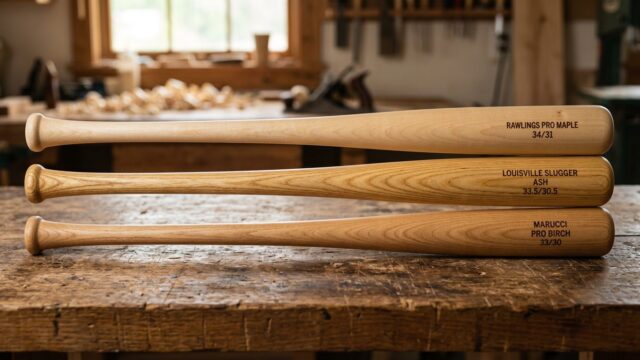
Can a power hitter use a wood bat in practice to improve bat speed?
Yes, and we strongly recommend it. Swinging a wood bat in practice — particularly a heavier model — develops the forearm and wrist strength that translates to faster bat speed with your game bat. Wood also provides honest feedback: mishits on wood sting and teach you where your contact is actually occurring. Check out our guide on metal bat vs. wood comparisons for more context on integrating wood work into your training.
Final Recommendation Summary
Choosing the right bat for a power hitter comes down to three decisions: standard (BBCOR or USSSA), construction type (composite, alloy, or hybrid), and weight distribution (balanced or end-loaded). For high school power hitters playing BBCOR ball, the Louisville Slugger Meta and Marucci CAT9 remain the top two recommendations we return to year after year. The Meta for players who want composite performance and the largest possible sweet spot; the CAT9 for players who want immediate alloy feedback with no break-in required. For youth travel ball power hitters in USSSA, the Louisville Slugger Select PWR is our dedicated end-loaded recommendation, with the Marucci CAT9 Connect as the best balanced hybrid for players transitioning toward more power-oriented swings. If budget is a constraint, the Easton Alpha ALX in BBCOR and the Rawlings Velo ACP in USSSA both deliver genuine performance at sub- price points that will not limit your development. Whatever you choose, remember: the best bat for a power hitter is the one you can swing with your best mechanics on every at-bat. Bat speed through the zone beats barrel mass every time when the mechanics break down. Test your exit velocity, match the bat weight to your real swing speed, and trust what the numbers tell you over what looks impressive on the rack.
For more equipment context, explore our full baseball bat rankings for 2025 and our comparison of composite vs. alloy bat construction. For external research, JustBats.com provides detailed bat certification and specification data, and Baseball Reference tracks exit velocity and bat performance data at the professional level for historical context on how bat selection trends have evolved.