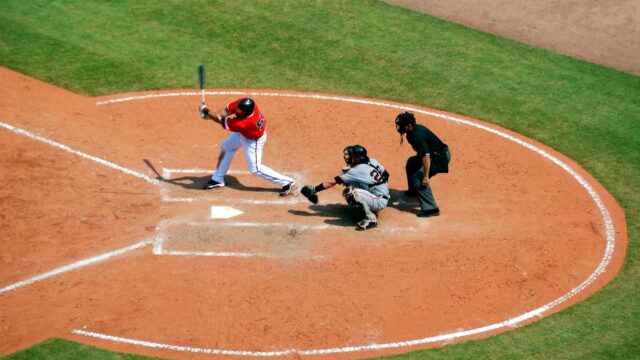
How to Hit Home Runs in Baseball: Power Mechanics, Drills, and Training for Every Level
Last updated: March 24, 2026
I have been chasing home runs since I was twelve years old, swinging an aluminum bat in a chain-link batting cage with my dad feeding me tennis balls from forty feet away. The first one I ever hit cleared a snow fence by a foot and rolled into a soybean field. I still remember the sound. Three decades later, after coaching travel ball, working with hitters at the high school and college level, and spending more hours than I care to count on a HitTrax monitor, I can tell you that hitting home runs is not magic. It is a stack of repeatable mechanics, a smart approach, and the patience to build power the right way. In this guide I will walk through every layer of how to hit home runs in baseball, from your stance to your stride, from launch angle to your offseason lifts, with drills and stats you can actually use.
Why Home Runs Happen: The Three Numbers That Matter
Before you swing harder, you need to understand what a home run actually requires. Statcast has been tracking every batted ball in MLB since 2015, and the data is brutally clear. A home run is the product of three measurable inputs: exit velocity, launch angle, and pitch contact location on the bat. If any one of those three drifts, the ball stays in the park. Get all three in the right window and it leaves. The good news is that all three are trainable, even if you are not built like Aaron Judge.
According to Statcast, the average MLB home run in 2025 left the bat at 103.6 mph with a launch angle of 28 degrees and traveled 399 feet. The minimum exit velocity required to produce a home run in most parks sits around 95 mph, and the optimal launch angle band runs from roughly 25 to 35 degrees. Below 95 mph, even a perfectly elevated ball usually dies on the warning track. Above 35 degrees, the ball turns into a high fly that loses carry. The barrel zone is real, it is small, and the hitters who live in it are the ones cashing home run paychecks.
| Metric | HR Threshold | Elite MLB Range | Trainable? |
|---|---|---|---|
| Exit Velocity | 95+ mph | 110-119 mph | Yes, via strength and bat speed |
| Launch Angle | 25-35 degrees | 26-30 degrees | Yes, via attack angle and contact point |
| Barrel Rate | 8% league average | 15-22% | Yes, via swing decisions |
| Bat Speed | 70+ mph | 76-82 mph | Yes, via overload/underload training |
| Hard-Hit Rate (95+ mph) | 40% league average | 55-60% | Yes, via approach and timing |
The Power Stance: Where Home Runs Actually Begin
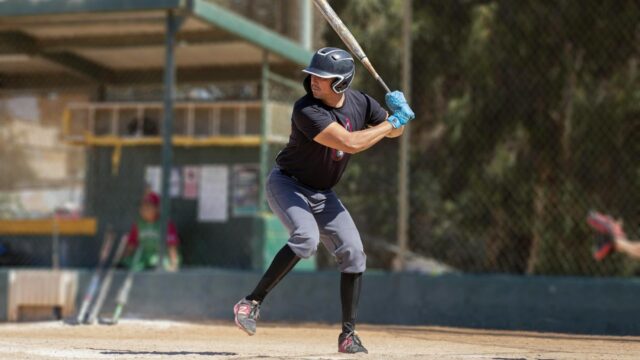
Most amateur hitters I work with set up wrong before the pitcher has even come set. They stand too tall, they grip too tight, and their weight is centered between their feet like they are about to take a free throw. Home run hitters look different at setup, and it is not a coincidence. They are loaded.
Start with your feet slightly wider than shoulder width, roughly the distance you would set up to do a barbell back squat. Bend your knees enough that you feel your quads turn on. Your weight should sit at about 60% on your back leg and 40% on your front, with the back hip slightly loaded. Your hands belong somewhere between your back shoulder and your back ear, with the bat angled around 45 degrees toward the sky. Grip the bat in your fingers, not your palms, with the door-knocking knuckles roughly aligned. A death grip kills bat speed every single time. If your forearms are flexed in the box, you are already losing.
One detail that separates power hitters from contact hitters: scap load. As the pitcher begins his delivery, the home run hitter pinches his back shoulder blade toward his spine, creating a small but powerful stretch reflex in the upper body. Watch Yordan Alvarez, Aaron Judge, or Shohei Ohtani in slow motion and you will see it every time. That tiny preload is worth two to three miles per hour of exit velocity. For more on building a complete swing foundation, check out my guide on how to hit a baseball.
The Stride and Load: Building Stored Energy
The stride is the most misunderstood movement in hitting. Coaches at every level tell kids to stride toward the pitcher, but the actual purpose of the stride has almost nothing to do with going forward. Its job is to give you something to push against. Power flows from the ground up, through the hips, into the core, and out into the bat. Without a strong front side to push into, you have nothing to swing around.
Your stride should be short, around six to eight inches, and it should land closed. The front foot opens at heel plant, not before. The single most common power leak I see in young hitters is a stride that lands open, which leaks the hips out early and turns a power swing into a chicken wing arm swing. Practice landing with your front foot at a 30-degree angle to the pitcher, not 90. Your back hip should stay coiled and your hands should stay back as your front foot lands. This separation between the lower half and the upper half is what hitting people call the X factor, and it is the engine of every home run in baseball.
Driveline Baseball published research in 2024 showing that hitters with a hip-shoulder separation of 40 degrees or more at front foot strike average 6.8 mph more exit velocity than hitters who separate 20 degrees or less. That is the difference between a warning-track fly out and a no-doubter. If you want to dig deeper into the load mechanics that power doubles and homers alike, my launch angle training guide goes into specifics on attack angle and contact point.
Attack Angle and the Path to the Ball
Here is the single biggest myth in amateur hitting: swing down on the ball. Anybody who tells you that has not looked at a single high-speed video of a major league swing in the last decade. The reality is that pitchers throw the ball downhill, with the average MLB fastball descending at roughly negative 6 degrees. To square that ball up and drive it in the air, your bat path needs to match the plane of the pitch, which means your bat must travel slightly upward through the hitting zone.
The technical term is attack angle, and it is measured by tools like Blast Motion, Diamond Kinetics, and HitTrax. The optimal attack angle for home run hitters sits between positive 10 and positive 19 degrees. Below 5 degrees and you are a ground ball machine. Above 25 degrees and you are a popup factory. Right in that 10-19 window is where balls explode off the bat in the air and over the fence.
Building this swing path takes deliberate practice. The cue I give my hitters: imagine the catcher is holding a flashlight pointing at the pitcher, and your bat is going to catch the beam of light as it crosses the plate. Your barrel should enter the zone slightly behind the ball and exit slightly above the ball, with the deepest point of the swing being the contact point. If your barrel is descending at contact, you are casting and you will hit the top half of the ball.
Contact Point: Catching the Ball Out Front
Even the best swing in baseball will not produce home runs if you make contact in the wrong spot. The contact point for a pull-side home run is roughly even with your front foot or slightly in front of it. For an opposite-field home run, it is roughly even with your back hip. Most amateur hitters make contact two to four inches too deep, which is the difference between a 410-foot home run and a hard-hit double down the line.
Statcast tracks bat path and contact location through their intercept point metric. Hitters whose average intercept is 30 to 32 inches in front of their back foot produce significantly more home runs than hitters who intercept the ball at 26 to 28 inches. The lesson is simple: get the ball out front. Your front hip should rotate before your hands fire, so that when the barrel arrives at the ball, your body has already done its work and the bat is delivering the energy your legs created. For more on improving consistent barrel contact, my barrel rate guide is a deeper dive.
Pitch Selection: You Cannot Hit Bombs on Pitcher Pitches
This is the part of home run hitting that nobody talks about, and it is the part that separates 25-homer hitters from 50-homer hitters. The pitches you choose to swing at matter more than how hard you swing at them. Aaron Judge is famously selective. Juan Soto walks more than he strikes out. Yordan Alvarez chases less than almost anybody in the league. These guys are not just strong, they are picky.
Every hitter has a hot zone, usually middle-in and from the belt to the chest. That is where home runs come from. Pitches on the outer third, below the knees, or at the chin produce home runs less than 1.5% of the time even for elite hitters. So before you load up to crush every pitch, learn what your strike zone for power looks like, and refuse to expand it with two strikes. My deep dive on plate discipline walks through how to train your swing decisions in cage work.
Count leverage is also critical. A hitter who works ahead in the count (1-0, 2-0, 2-1, 3-1) sees fastballs roughly 70% of the time in those counts according to MLB Statcast data, and slugs almost 200 points higher than when behind. Take pitches early in the count until you get one in your zone, then unload on it. The hitters who get into hitters counts are the hitters who hit home runs.
Bat Speed: The Trainable Variable
For decades, coaches treated bat speed like eye color: you were either born with it or you were not. That belief is dead. Bat speed is trainable, and the research over the last ten years has changed how serious hitters train forever. Overload and underload bat training, popularized by Driveline and the rest of the data-driven hitting world, can add 3 to 6 mph of bat speed in 8 to 10 weeks for a committed hitter.
The protocol is simple in concept. You swing a bat that is 20% heavier than your game bat, then a bat that is 20% lighter, then your game bat, in sets of five to ten swings. The heavier bat trains force production. The lighter bat trains nervous system speed. Together they push your bat speed window wider. For full programming I recommend my standalone bat speed training guide.
Bat speed is the single most predictive metric for home run output. Every 1 mph of bat speed adds roughly 1.2 mph of exit velocity, which adds 4 to 5 feet of carry on a well-struck ball. Take a hitter from 68 mph bat speed to 74 mph bat speed and you have just turned a warning-track flyout hitter into a wall-scraping home run hitter.
Strength Training for Power Hitters
You cannot out-mechanic genetics forever. At some point, if you want to hit 30 home runs at any level, you have to be strong. The good news is that you do not need to be a powerlifter, and you do not need to bulk up to 240 pounds. What you need is rotational power, posterior chain strength, and grip strength. Those three buckets account for almost all the strength components of a home run swing.
| Lift / Movement | Trains | Sets x Reps | Frequency |
|---|---|---|---|
| Trap Bar Deadlift | Posterior chain, ground force | 4 x 4-6 | 2x per week |
| Front Squat | Quad/core/upright posture | 3 x 5 | 2x per week |
| Med Ball Rotational Throw | Hip-shoulder separation | 4 x 5 each side | 3x per week |
| Cable Wood Chop | Anti-rotation core, transfer | 3 x 8 each side | 2-3x per week |
| Farmer Carry | Grip, forearm, core | 3 x 40 yards | 2x per week |
| Pull-Up | Lat strength for finish | 4 x max | 3x per week |
| Hip Thrust | Glute drive in rotation | 3 x 8 | 2x per week |
Notice the focus on rotational power and the posterior chain. Bench press and bicep curls do almost nothing for home run output. Med ball rotational throws are the single best transfer exercise from the weight room to the batter box. If you do nothing else in the offseason, do five sets of five rotational med ball throws against a brick wall three days a week. You can find my full offseason program in the baseball workout plan guide.
Six Drills That Build Real Home Run Power
1. The Walk-Through Drill
Set a tee at belt height and middle-in. Start two steps behind your normal stance. Walk through naturally and arrive at your front foot just as your bat enters the zone, almost like a soft toss to yourself. The drill forces you to use your lower half because you cannot arm-swing while moving. Twenty reps per session. You will feel home run swings show up within a week.
2. The High Tee Drill
Set the tee at the top of your strike zone, slightly inside. Take 10 swings focused on barreling the ball into the upper third of a net or batting cage. This trains your attack angle to match the upper part of the zone, which is where home run pitches live for most hitters. If you are constantly hitting the bottom of the net, your swing is too steep down.
3. Heavy Bag Swings
Find a heavy bag (a 20-pound MMA bag works fine) hanging from a sturdy support. Take full-effort swings into the bag. You cannot finish your swing if your hands are not connected. This drill trains the connection between your hips and your hands, and it builds the kind of grip and forearm strength you need to drive through contact.
4. One-Knee Drill
Get on your back knee with the front leg extended out toward the pitcher. Take swings off a tee. With the legs taken out of the equation, you are forced to use rotational core power and proper sequencing from the torso. This drill exposes hitters who are arming the bat versus rotating into it. Ten reps, three sets, twice a week.
5. Underload Bat Cage Round
Take a round of batting practice with a bat that is 20% lighter than your game bat. The goal is bat speed only. Try to swing faster than you have ever swung. Your central nervous system learns to fire faster, and that speed transfers to your game bat. Do this once or twice per week, not every day.
6. Bomb Round BP
Once per BP session, take a round where the only goal is to elevate. Five swings, max effort, only swing at pitches you can drive in the air. Do not swing for contact, do not protect strikes, do not slap singles. Train the mode. Hitters who never practice swinging for the fences cannot find that swing on Saturday at 3:45 PM when they need it.
For more drill ideas including tee work and front toss progressions, see my hitting drills routine guide.
Equipment Choices That Help and Ones That Do Not
Let me bust a myth right now: a more expensive bat will not turn you into a home run hitter. The difference between a $400 composite and a $200 alloy is meaningful, but it is small compared to the difference between proper mechanics and broken mechanics. That said, equipment fit matters more than equipment cost.
Choose a bat length where you can comfortably reach the outside corner without lunging, and a weight you can swing with sustained speed for 80 to 100 swings without your bat speed dropping. The drop weight (length minus weight, in inches and ounces) matters more than absolute weight. For high school players in BBCOR, drop 3 is required, but you can manipulate length within that constraint. A 32/29 swings noticeably faster than a 33/30, even though the relationship between length and weight is the same.
For power hitters, I lean toward end-loaded bats (more weight in the barrel) once you have the strength to swing them through the zone without losing speed. End-loaded bats produce 1 to 2 mph more exit velocity than balanced bats when paired with a hitter strong enough to wield them. Below high school strength levels, stick with a balanced bat.
Common Mistakes I See Every Single Week
- Lunging at the ball. Sliding forward instead of rotating around a firm front leg leaks every drop of power. Stay back, rotate.
- Dropping the back shoulder excessively. A little uphill is good. A 30-degree shoulder dip is a pop-up.
- Squeezing the bat at setup. A death grip slows your bat by 3-5 mph. Hold it like a tube of toothpaste.
- Trying to pull everything. You will get jammed, you will pull off, and you will roll over. Drive the ball where it is pitched.
- Swinging at pitcher pitches with two strikes. Sliders off the plate, fastballs at the chin, changeups in the dirt. None of these go 400 feet. Foul them off or take.
- Lifting heavy with no rotational work. A 500-pound deadlift does not equal a 105 mph exit velocity. You need rotational transfer.
- Hands too far from the body at setup. Wide hands force a longer swing path. Keep them close, near the back shoulder.
- No follow-through. If your bat does not finish high over the front shoulder, you are decelerating into contact, which means you are decelerating before contact. Finish the swing.
- Always swinging maximum effort. Max effort swings produce the worst contact rates. A controlled 90% effort produces more home runs than 100% effort swings.
- Not training pitch recognition. You cannot crush what you cannot identify in time. See my pitch recognition training guide.
Power Hitting by Level: What Is Realistic
| Level | Avg Exit Velo | Top HR Hitters | Bat Speed Goal | Power Threshold |
|---|---|---|---|---|
| 10U | 40-55 mph | 60+ mph | 40-50 mph | Pull-side fence |
| 13U | 55-70 mph | 75+ mph | 55-65 mph | Over 280-ft fence |
| High School JV | 70-80 mph | 85+ mph | 65-72 mph | Over 320-ft fence |
| High School Varsity | 80-90 mph | 95+ mph | 70-78 mph | Over 350-ft fence |
| College D1 | 90-95 mph | 105+ mph | 72-78 mph | Over 380-ft fence |
| Minor Leagues | 92-97 mph | 112+ mph | 74-80 mph | Over 400-ft fence |
| MLB | 89-92 mph | 118+ mph | 72-82 mph | Over 400-ft fence |
Notice that MLB average exit velocity is actually lower than minor league average. That is because MLB pitching is harder to square up, not because MLB hitters are weaker. The hitters who produce in the big leagues are the ones whose mechanics and approach hold up against 96 mph fastballs and 88 mph sliders, not the ones who hit the ball hardest in batting practice.
What the Experts Say
I have been collecting hitting wisdom for years, and a few quotes from working professionals have stuck with me because they cut through the noise. Hitting coach Tim Hyers, who has worked with the Dodgers and Red Sox, has often emphasized that the swing starts at the ground. That is not a throwaway line. Every measurable component of a home run swing starts with the lower body interaction with the dirt.
Doug Latta, the swing coach who helped resurrect Justin Turner career and worked with J.D. Martinez, has long preached balance, angle, direction. Balance means you are not lunging. Angle means your bat is on the right plane. Direction means you are moving toward the pitcher with intent, not away from him. If you check those three boxes on every swing, you will hit more home runs than you do right now, full stop.
And there is the line I love from Aaron Judge himself, who once told reporters that hitting home runs is about not trying to hit home runs. What he means is that the best power hitters take a controlled, repeatable swing at pitches in their zone, and the home runs are the natural byproduct of barrels squared up at the right angle. Hitters who chase home runs get out. Hitters who chase barrels get home runs.
The Mental Side: How Power Hitters Think
I want to spend a section on this because no amount of mechanical work will save a hitter who walks to the plate scared. Home run hitters are aggressive. They look fastball middle, they take pitches that are not fastball middle, and they swing hard on the ones they want. There is a calmness to it. They are not gripping it tight. They are not chasing. They are hunting.
One of my favorite tools for hitters who get tight in the box is the one pitch approach. Before each at-bat, you tell yourself: I am hunting fastball, middle-in, belt high. If I do not get it, I take. That mental clarity is what allows power hitters to unload when they get their pitch. Without it, you are a tentative swinger trying to protect everything, and you will hit nothing in the air.
For more on the mental side, check out my full baseball mental game guide and my hitting approach breakdown.
The Two-Strike Question: Should You Still Try
This is a question I get every single clinic season. Should you change your swing with two strikes to make more contact, or stay aggressive and trust your A-swing? The honest answer is: it depends on the level. At MLB and high D1, league-wide two-strike approaches have produced strikeout rates north of 30% for power hitters, but those same hitters slug roughly .500 in 0-0, 1-0, and 2-0 counts. The math says swing hard early.
At high school and college non-D1 levels, a two-strike adjustment makes more sense because pitchers cannot reliably put away hitters on the edge of the zone. Choke up an inch, widen your stance slightly, simplify your stride, and shorten your swing. You will not hit as many home runs in two-strike counts, but you will put the ball in play more often, and putting it in play 70% of the time beats striking out 50% of the time at most amateur levels. The home run hitters at every level make their living in counts other than 0-2 and 1-2.
Pull-Side vs. Opposite-Field Power
According to Baseball Savant, roughly 65% of all MLB home runs in the 2025 season went to the pull side. The pull-side fence is closer in most parks, and the contact point that produces a pull-side homer aligns naturally with where your bat is moving fastest in the swing. But the best home run hitters can drive the ball over any wall. Yordan Alvarez, Juan Soto, and Shohei Ohtani all hit double-digit opposite-field home runs in 2025, because they keep their hands inside the ball and stay through the middle of the field.
If you find yourself pulling everything in the air, your contact point is too far in front of the plate, your hips are flying open, and you are rolling over outside pitches. The fix is in drills like the one-knee drill and front toss with the L-screen shaded toward the opposite-field gap. Train your hands to stay inside, and you will start driving outside fastballs over the wall in right-center or left-center instead of weakly grounding them to second base. For a dedicated opposite-field breakdown, see how to hit to the opposite field.
How Pitchers Try to Prevent Home Runs and How to Beat Them
Pitchers are not throwing you cookies anymore once they figure out you can hit them out. They are pitching down and away. They are pitching up and in. They are mixing speeds to disrupt your timing. The hitters who continue to hit home runs against good pitching are the ones who can adjust mid at-bat and mid game.
Watch how MLB pitchers attack home run hitters. They start with a fastball up to elevate the eye level. Then they go to a slider down and away to expand the zone. Then they come back inside with another fastball at the hands. Three different planes, three different speeds. The hitter who can spit on the slider down and away, lay off the chase fastball up, and crush the fastball over the plate is the hitter who collects home runs in October.
Train this in cage work. Set a soft toss feeder with multiple pitch heights and locations. Practice the take. Practice the spit. Practice swinging only at the pitch in your zone. Mental reps in the cage save at-bats in the game. My two-strike hitting piece has more on adjusting your approach by count.
Frequently Asked Questions
How long does it take to add 5 mph of bat speed?
For a committed hitter working three to four days a week with overload/underload bats, rotational med ball work, and consistent strength training, 5 mph is realistic in 8 to 12 weeks. The first 2 to 3 mph come quickly from technique and CNS adaptation. The last 2 to 3 mph come from raw strength and take longer.
Do I need to be a big guy to hit home runs?
No. Jose Altuve is 5 feet 6 inches and has hit over 200 home runs in MLB. Ronald Acuna Jr., Mookie Betts, and Marcus Semien are not giants. What matters is rotational power, bat speed, and barrel control. Smaller hitters often have an advantage in bat speed because shorter limbs rotate faster. Size helps, but it is far from required.
What is the single best drill for adding power?
Rotational med ball throws against a brick wall, five sets of five each side, three days a week. It is the single drill with the best research support for transfer to bat speed and exit velocity. If you only do one thing this offseason, do this.
How important is launch angle compared to exit velocity?
Both matter. A 110 mph ball at 5 degrees is a hard line drive but not a home run. A 92 mph ball at 30 degrees is a soft fly to the warning track. You need both, and the sweet spot is roughly 100+ mph exit velo with 25-32 degree launch angle. Below that combination, the ball stays in the park.
Should I use a heavier bat to build strength?
Only in specific overload protocols, and never in batting practice or games. A bat that is too heavy slows your swing, encourages a longer swing path, and trains bad habits. Use a heavy bat (10-20% over game weight) for two to three reps in an overload set, then go back to your game bat.
Can I hit home runs with a wood bat the way I do with metal?
Wood bats are less forgiving on mishits, but the ball comes off the sweet spot just about as hot as it does off BBCOR metal. If you are barreling balls with wood, you are hitting home runs. The adjustment is to be more selective and to be more disciplined about contact point.
How much does grip strength matter?
More than people think. Grip strength predicts force production through contact, and weak grip leaks power on every swing that finds the end of the bat or the handle. Farmer carries, dead hangs, and thick-grip pull-ups all build grip relevant to hitting. Two sessions a week is plenty.
Will hitting off a tee actually help me hit home runs?
Yes, if you tee the right pitches. A tee at belt height in the middle of the plate is a power tee. Train your contact point, your attack angle, and your finish. Twenty quality reps a day on a high tee will do more for your home run output than 200 mindless reps off a low tee.
Putting It All Together: A 12-Week Power Plan
If you are serious about adding home runs to your game this season, here is the framework I have used with high school and college hitters who have measurably added pop year over year. Weeks 1 through 4 are foundation: focus on swing mechanics, attack angle, and contact point. Cage work three times a week, focused tee and front toss, no max effort swings. Strength training four days a week, focused on movement quality and rotational mobility.
Weeks 5 through 8 are power phase. Add overload/underload bat work, increase weight on your main lifts, add med ball plyos. Three cage sessions and four lift sessions per week. By week 8 you should be seeing measurable bat speed and exit velocity gains on whatever monitor you are using (HitTrax, Blast Motion, Pocket Radar).
Weeks 9 through 12 are transfer phase. Reduce strength volume to maintain mode, increase live BP and game-speed work, focus on pitch recognition and approach. By the end of week 12, your swing has been rebuilt from the feet up, you are stronger, you are faster, and you are smarter at the plate. That is how hitters add 5 to 15 home runs to their season output.
Final Thoughts: Patience Builds Power
I have watched hitters add 20 home runs over a single offseason and I have watched hitters spin their wheels for three years trying to lift everything they see. The difference between the two groups is not talent, it is patience and process. Power is the byproduct of doing the right things consistently for long enough. Mechanics first. Strength second. Approach third. Equipment last. Get those four in order and the home runs will arrive.
Above all, do not fall in love with the home run itself. Fall in love with the barrel. Hitters who hunt barrels will hit home runs when the pitch and the swing align. Hitters who hunt home runs will pop up, ground out, and strike out their way through a season trying to do something the count and the pitch do not allow. Trust the swing, trust the approach, and the bombs will come. See you at the warning track, and then over it.