How to Hit with Two Strikes: Approach, Drills, and Adjustments for Every Level
Last updated: March 15, 2026
Every hitter in baseball will face a two-strike count hundreds of times each season. How you handle those moments separates productive hitters from guys who walk back to the dugout shaking their heads. I have spent years coaching hitters at the high school, travel ball, and college levels, and I can tell you with full confidence that a disciplined two-strike approach is the single most trainable skill that produces immediate results in game at-bats.
In this guide, I am going to break down exactly how to hit with two strikes, covering the mechanical adjustments you need to make, the mental framework that keeps you competitive deep in counts, specific drills that train the skill, and the data behind why two-strike hitting matters more than most coaches realize. Whether you are a 12U player just learning plate discipline or a college hitter trying to cut your strikeout rate, this article will give you a complete system.
Why Two-Strike Hitting Is the Most Important Skill You Can Develop
Let me start with the numbers because they tell a compelling story. According to MLB Statcast data, major league hitters find themselves in a two-strike count on roughly 57 percent of all plate appearances. That is not a small sample. That is the majority of your time at the plate. If you do not have a plan for those at-bats, you are unprepared for more than half the pitches you will see in a game.
The league-wide batting average on two-strike counts in MLB has hovered around .167 over the past five seasons. Compare that to the overall MLB batting average of approximately .248. That drop of over 80 points tells you exactly how much harder it is to hit with two strikes, and it also tells you that any edge you can create in that count gives you a massive competitive advantage.
At the youth and amateur levels, the gap is even more dramatic. In high school baseball, hitters with no formal two-strike training strike out in roughly 35 to 40 percent of their two-strike plate appearances. Hitters who have been coached on a specific two-strike approach typically cut that number to 22 to 28 percent. That difference translates directly to more balls in play, more baserunners, and more runs scored.
Former MLB hitting coach Chili Davis put it simply: “The best hitters in the world are not the guys who hit the ball the hardest. They are the guys who refuse to give at-bats away. A two-strike approach is how you compete when the count says you should not.” That mindset is the foundation of everything I teach.
The Mental Framework: What Changes When You Get to Two Strikes
Before I get into mechanics and drills, I need to address the mental side because two-strike hitting starts in your head. The biggest mistake I see hitters make is that they do not actually change their approach when they get to two strikes. They are still looking for the same pitch in the same spot, swinging with the same intent as they would on a 2-0 count. That is a recipe for strikeouts.
Here is the mental shift that needs to happen the moment you see that second strike called or swung through:
Expand the zone slightly. You are no longer looking for your pitch. You are fighting to stay alive. Pitches on the corners that you might take with one strike now become pitches you need to put in play. Hall of Famer Tony Gwynn talked about expanding his zone by roughly two inches on each side of the plate with two strikes. That small adjustment kept him from being called out on borderline pitches and gave him a career .338 batting average.
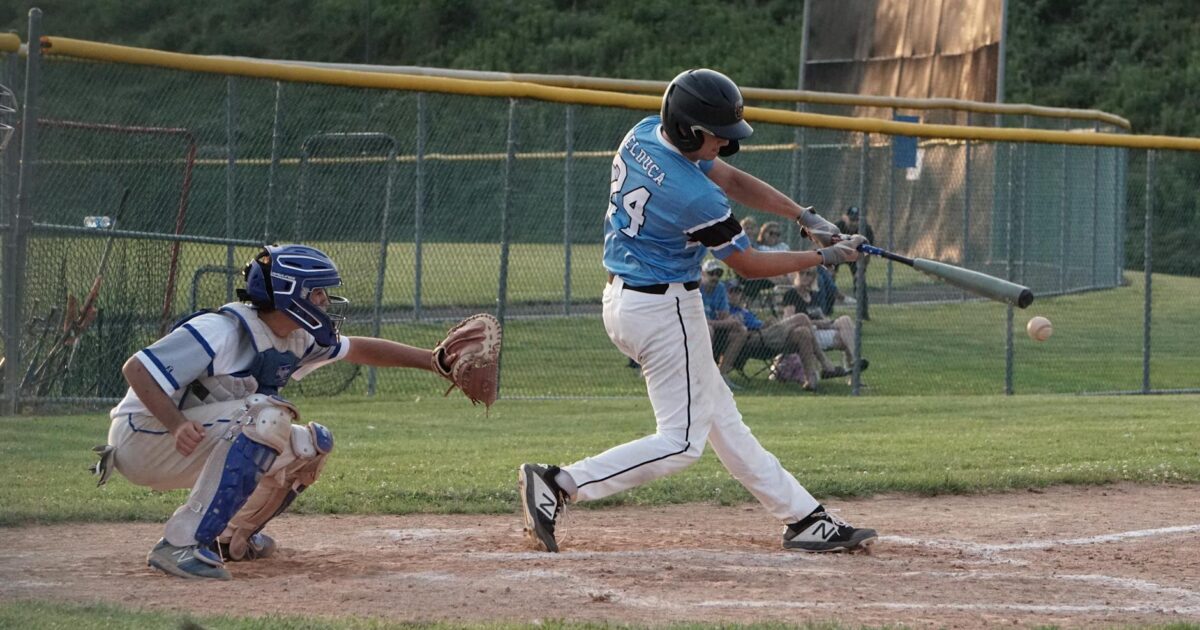
Shorten the swing. Your priority shifts from driving the ball to making contact. That does not mean you swing weakly. It means you eliminate the extra movement in your swing that creates timing issues. A shorter, more direct path to the ball increases your contact rate dramatically.
Commit to competing. I tell my hitters that with two strikes, every pitch is a battle. You are not going to strike out looking. You are going to foul pitches off, put tough pitches in play, and make the pitcher earn the out. This mentality alone can cut your strikeout rate by 10 to 15 percent.
Mechanical Adjustments for Two-Strike Hitting
Now let me get specific about what changes in your swing mechanics when you go to a two-strike approach. These adjustments are not dramatic overhauls. They are subtle changes that give you a better chance of putting the ball in play without completely abandoning your natural swing.
Choke Up on the Bat
Move your hands up the handle by one to two inches. This gives you better bat control, shortens your swing slightly, and improves your ability to react to late-breaking pitches. MLB data shows that hitters who choke up with two strikes increase their contact rate by an average of 8 percent compared to hitters who maintain their full grip. You sacrifice a small amount of power, but in a two-strike count, contact is king.
Move Closer to the Plate
Take a half step closer to the plate with two strikes. This gives you better coverage of the outer third of the zone, which is where most pitchers attack with two strikes. According to pitch location data from Baseball Savant, 43 percent of all two-strike pitches are thrown to the outer third or off the plate away. If you cannot reach those pitches, you are going to strike out on the pitch the pitcher wants to throw.
Quiet Your Load
Reduce your leg kick or stride to a simple toe tap or no stride at all. The less movement you have before your swing, the fewer things can go wrong with your timing. I have seen high school hitters cut their strikeout rate by 20 percent just by going to a no-stride approach with two strikes. Your power will decrease slightly, but your timing and balance will improve significantly.
Stay Through the Middle
Instead of trying to pull the ball or drive it to your gap, focus on hitting the ball back through the middle of the field. A middle-of-the-field approach with two strikes gives you the longest possible time to read the pitch before committing your swing. It also reduces your vulnerability to off-speed pitches on the outer half because you are not trying to pull everything.
Two-Strike Approach by Count: How to Adjust Based on the Situation
Not all two-strike counts are created equal. Your approach should vary based on how you got to two strikes and what the full count looks like. Here is how I teach my hitters to think about each two-strike count:
| Count | Situation | Approach | Priority |
|---|---|---|---|
| 0-2 | Pitcher is ahead and confident | Maximum survival mode. Expand zone fully, shorten swing, foul off anything close. Do not chase pitches in the dirt. | Stay alive, drive up pitch count |
| 1-2 | Pitcher still in control | Similar to 0-2 but watch for pitcher trying to get you to chase. Protect the zone but do not expand as aggressively off the plate. | Get to a better count |
| 2-2 | Even count, pitcher may come back over the plate | Slightly more aggressive. The pitcher has less margin for error. Look for a pitch in the zone but be ready to protect. | Balanced approach |
| 3-2 | Full count, pitcher must throw a strike | Most aggressive two-strike approach. The pitcher is more likely to throw a fastball in the zone. Sit on a pitch middle-in and react to everything else. | Drive a fastball |
Understanding these count-specific adjustments is a game changer. I have seen teams completely transform their offensive production just by teaching hitters to think this way instead of treating every two-strike count the same.
The Data Behind Two-Strike Hitting: What the Numbers Tell Us
Let me share some more specific data that reinforces why this approach matters. These numbers come from MLB Statcast, PitchFx data, and amateur tracking systems that I have worked with over the years.
| Metric | League Average (All Counts) | League Average (Two-Strike Counts) | Top Two-Strike Hitters |
|---|---|---|---|
| Batting Average | .248 | .167 | .210+ |
| Strikeout Rate | 22.4% | 38.1% | Under 28% |
| Contact Rate | 78.2% | 66.5% | 75%+ |
| Swing Rate at Pitches Outside Zone | 29.8% | 35.4% | Under 30% |
| Foul Ball Rate | 18.3% | 24.7% | 28%+ |
| Average Pitch Count Per PA | 3.94 | 4.81 | 5.2+ |
Look at the foul ball rate column. The best two-strike hitters are actually fouling off more pitches, not fewer. That tells you something critical about their approach. They are not passively hoping for a walk. They are actively fighting, using foul balls as a weapon to stay alive and wear down pitchers. Players like strong pitch recognition skills help them identify which pitches to foul off and which ones to attack.
The swing rate at pitches outside the zone is another key indicator. The best two-strike hitters actually chase less than the league average despite being in a more desperate count. This seems counterintuitive, but it makes perfect sense. They have trained themselves to expand the zone on borderline pitches while maintaining discipline on pitches that are clearly out of the strike zone. That combination of aggression and discipline is the hallmark of elite two-strike hitting.
Seven Drills to Improve Your Two-Strike Hitting
Here are the specific drills I use with my hitters to train the two-strike approach. These drills work for every level from 12U travel ball to college.
Drill 1: The Two-Strike Tee Circuit
Set up a batting tee in three positions: inner third, middle, and outer third. With each position, choke up one inch and take a shortened swing. Focus on hitting line drives back through the middle regardless of tee position. Take 10 swings at each location. The goal is not power. The goal is consistent, hard contact to the middle of the field. I recommend doing this circuit three times per practice session.
Drill 2: The Foul Ball Challenge
During front toss or batting practice, have the coach call “two strikes” randomly. When they do, the hitter must foul off the next three pitches intentionally before trying to get a hit. This teaches hitters how to stay alive on purpose. It trains the skill of directing foul balls instead of accidentally making weak contact. You would be amazed how quickly hitters improve their bat control with this drill.
Drill 3: Expanded Zone Soft Toss
During soft toss, have the tosser mix in pitches that are two to three inches off the plate on both sides. The hitter must make contact with everything that is within the expanded two-strike zone. If a pitch is clearly out of the zone (more than four inches off the plate), the hitter takes it. This drill trains the hitter to expand their zone slightly without becoming a chaser. Run this for sets of 20 tosses.
Drill 4: No-Stride Live At-Bats
During live batting practice, have hitters take all their at-bats with no stride. Feet are set, weight is balanced, and the swing starts from a quiet position. This forces hitters to rely on hand speed and bat path instead of momentum. It is the most direct way to train the shortened swing that works best with two strikes. Do a full round of BP this way at least once per week.
Drill 5: Count Progression BP
This is my favorite team drill. During BP, every hitter starts every at-bat in an 0-2 count. They must work the count up from there. If they strike out, they rotate out. If they get a hit, they stay in. Keep score and track who has the best survival rate. This creates game-like pressure and forces every swing to be a two-strike swing. It also builds the competitive mindset that two-strike hitting requires.
Drill 6: The Opposite Field Challenge
Set up BP with the goal of hitting every ball to the opposite field. Right-handed hitters aim for right field, left-handed hitters aim for left field. This trains the inside-out swing path that is most effective with two strikes. It also teaches hitters to stay on pitches longer, which improves their ability to recognize off-speed stuff. Keep the bat speed up while directing the ball the other way for maximum benefit.
Drill 7: Pitch Recognition With Consequences
Use a pitching machine or live arm and tell the hitter they are in an 0-2 count. They must lay off any pitch more than three inches outside the zone while swinging at anything in the expanded zone. Every chase on a bad pitch costs them five pushups. Every take on a good pitch costs them five pushups. This drill trains both sides of two-strike discipline: protecting the zone and expanding when necessary. It is demanding, but it produces fast results.
Common Two-Strike Hitting Mistakes and How to Fix Them
After years of coaching, I see the same mistakes show up over and over again when hitters try to implement a two-strike approach. Here are the most common errors and how to correct them.
Mistake 1: Becoming Too Passive
Some hitters hear “shorten your swing” and interpret that as “swing softly.” That is wrong. A two-strike swing should still be aggressive. You are simply being aggressive on a shorter path to the ball. The intent should still be to hit the ball hard. You are just accepting that the result might be a hard single instead of a home run. Former hitting coach Kevin Long said, “I never want my guys to give up at-bats. A two-strike approach is about competing, not conceding.”
Mistake 2: Expanding the Zone Too Much
There is a fine line between expanding the zone and chasing. If you start swinging at pitches six inches off the plate or balls in the dirt, you have gone too far. The expansion should be roughly two inches on each side of the plate and about one ball width at the top and bottom. Any more than that and you are helping the pitcher. This is where vision training becomes crucial for recognizing borderline pitches.
Mistake 3: Not Actually Changing Anything
I see this constantly at the high school level. Coaches teach a two-strike approach, but hitters never actually implement it in games because they do not practice it enough. If you only practice your two-strike swing for five minutes per week, it will not become automatic. You need to dedicate at least 25 percent of your hitting practice time to two-strike work. That means two-strike tee work, two-strike BP, and two-strike live at-bats every single practice.
Mistake 4: Trying to Hit Home Runs With Two Strikes
This is the ego mistake, and it kills hitters at every level. Yes, home runs happen with two strikes. But the hitters who hit them are not trying to hit home runs. They are trying to make hard contact, and the home run happens as a byproduct of solid mechanics on a pitch in the zone. If you go up there with two strikes trying to drive the ball over the fence, your swing will be too long, your timing will be off, and you will strike out. Focus on solid barrel contact and let the results take care of themselves.
Mistake 5: Ignoring the Pitcher’s Pattern
Smart hitters use information even with two strikes. If a pitcher has thrown you three fastballs in a row, the odds of an off-speed pitch increase. If a pitcher has been pounding the outside corner all night, expect the pitch there with two strikes. Adjusting your two-strike approach based on what the pitcher is showing you is an advanced skill that separates good hitters from great ones. Keep a mental log of what you see each time through the order.
Two-Strike Hitting by Level: Age-Specific Adjustments
The core principles of two-strike hitting are the same at every level, but the specific implementation changes based on age and skill level. Here is how I adjust my teaching based on the hitter in front of me.
Youth Baseball (Ages 8-12)
At this level, keep it simple. The two-strike approach is: choke up, swing at strikes, and try to hit the ball hard somewhere. Do not overload young hitters with zone expansion concepts or opposite field hitting. They need to learn the basic habit of changing something with two strikes. The choke-up alone gives them better bat control and sends the message that two-strike counts require a different approach. Practice the Two-Strike Tee Circuit and the Foul Ball Challenge from my drill section above.
Middle School and Travel Ball (Ages 13-15)
Now you can introduce the concept of zone expansion and the middle-of-the-field approach. Hitters at this level are starting to face pitchers with legitimate off-speed pitches, so they need to understand that their two-strike approach helps them handle breaking balls. Introduce the No-Stride Live At-Bats drill and the Count Progression BP. Start tracking strikeout rates and two-strike batting averages to give hitters measurable goals. A good target at this level is keeping the strikeout rate below 25 percent.
High School (Ages 15-18)
High school hitters should have a complete two-strike system that includes all the mechanical adjustments, mental framework, and count-specific approaches I have described. At this level, I also introduce pitch pattern recognition. Hitters should know what a pitcher’s go-to two-strike pitch is by the second time through the lineup. Use the Pitch Recognition With Consequences drill and the Opposite Field Challenge. A good high school hitter should maintain a two-strike batting average above .180 and a strikeout rate below 20 percent. The best hitting drill routines incorporate two-strike work into every session.
College and Beyond
At the college level, two-strike hitting becomes about refinement and data. Hitters should be using video analysis and Statcast-style metrics to understand their two-strike tendencies. Where are they making weak contact? What pitch types give them the most trouble with two strikes? What is their chase rate on specific pitch types? The best college programs track two-strike metrics as closely as overall batting average, and they hold hitters accountable for their approach in those counts. Elite college hitters maintain two-strike batting averages above .200 with strikeout rates below 18 percent.
What the Best MLB Two-Strike Hitters Do Differently
Studying the best two-strike hitters in professional baseball reveals patterns that every hitter can learn from, regardless of level. Let me highlight a few standout examples.
Luis Arraez has been one of the best two-strike hitters in baseball over the past several seasons, consistently maintaining a two-strike batting average above .220 while the league average sits around .167. His approach is textbook: he chokes up slightly, shortens his swing, and focuses on hitting the ball where it is pitched. He rarely tries to pull the ball with two strikes, and his chase rate in two-strike counts is well below the league average.
Steven Kwan is another elite example. Kwan’s ability to foul off pitches with two strikes is remarkable. He routinely sees six or seven pitches per plate appearance because he refuses to give in. His two-strike contact rate has been among the highest in MLB, and he combines it with excellent discipline, rarely chasing pitches out of the zone even when he is behind in the count.
On the other end of the spectrum, you can look at high-strikeout sluggers who have improved their two-strike approach over time. Players who commit to shortening their swings and expanding their zones with two strikes often see dramatic improvements in their overall production. The power might dip slightly, but the increase in contact and on-base percentage more than compensates.
Building a Two-Strike Approach Into Your Practice Routine
Having the knowledge is one thing. Actually integrating it into your daily routine is what produces results. Here is how I structure two-strike work into a typical baseball practice plan.
During tee work (10 minutes): Spend the last three minutes of every tee session doing two-strike tee work. Choke up, shorten the swing, and hit everything to center field. This makes the two-strike swing muscle memory.
During front toss (10 minutes): Use the Expanded Zone Soft Toss drill for the second half of every front toss session. Mix in borderline pitches and require hitters to make contact on everything in the expanded zone.
During BP (20 minutes): Run Count Progression BP at least once per week. On other days, have hitters take their last five swings of every round as two-strike swings. This ensures they finish every round with the right mindset.
During live at-bats (15 minutes): Once per week, run an entire live session where every at-bat starts at 0-2. Track results and keep a leaderboard. Competition drives improvement faster than any drill.
The Role of Pitch Selection and Plate Discipline With Two Strikes
Two-strike hitting is not just about swing mechanics. It is equally about knowing which pitches to swing at and which ones to lay off. This is where pitch recognition training becomes essential.
With two strikes, pitchers primarily attack in three ways: the chase pitch out of the zone, the back-door breaking ball on the corner, and the fastball elevated in the zone. Each requires a different response.
Chase pitches out of the zone: These are the pitches you absolutely must lay off. Sliders in the dirt, curveballs that bounce before the plate, and fastballs above the letters are all designed to get you to swing and miss. Train yourself to recognize these pitches early by focusing on the pitcher’s release point. If the ball starts below the pitcher’s hand at release, it is likely a breaking ball headed into the dirt. If it starts above the normal slot, it is likely an elevated fastball.
Back-door breaking balls: These are the hardest pitches to handle with two strikes because they start outside the zone and finish on the corner. The best approach is to have your expanded zone ready. If a pitch starts two inches off the plate and has a chance to catch the corner, protect yourself by putting the bat on the ball. A foul ball here is a win.
Elevated fastballs: Pitchers love to elevate with two strikes because hitters tend to swing over the top of everything else. If you recognize a fastball up in the zone, sit back and try to drive through it. This is actually one of the better pitches to hit with two strikes if you are ready for it. The key is not swinging at fastballs that are above the zone. The difference between a fastball at the top of the zone and one two inches above it is the difference between a line drive and a swing and miss.
How Pitchers Attack With Two Strikes and How to Counter
Understanding the pitcher’s mindset with two strikes gives you a significant edge. Here is what most pitchers are taught to do with two strikes and how you should respond.
Most pitching coaches teach a simple two-strike sequence: waste a pitch off the plate to see if the hitter chases, then come back with the put-away pitch. Knowing this, you should be ready to take the first pitch after reaching two strikes if it is clearly out of the zone. This forces the pitcher to come back into the zone, which gives you a better pitch to hit.
According to pitching strategy data, 62 percent of pitchers throw a non-fastball as their primary two-strike put-away pitch. That means you should be ready for something off-speed or breaking. Sitting on a fastball with two strikes is a losing strategy unless you are in a full count where the pitcher needs to throw strikes.
At the amateur level, pitchers tend to be less sophisticated. Many young pitchers simply try to throw their best fastball by you with two strikes. If you are facing a pitcher who mostly throws fastballs, your two-strike approach can be more aggressive because you know what is coming. Choke up, shorten up, and look to drive the fastball. This is where the mental game intersects with your physical approach.
Tracking Your Two-Strike Performance: What to Measure
If you are serious about improving your two-strike hitting, you need to track your performance. Here are the key metrics every hitter should record:
Two-strike batting average: How often you get a hit when you reach a two-strike count. Target: .180 or above at the high school level, .200 or above at the college level.
Two-strike strikeout rate: How often a two-strike count results in a strikeout. Target: below 30 percent at the high school level, below 25 percent at the college level.
Pitches per plate appearance in two-strike counts: How many additional pitches you see after reaching two strikes. More pitches means you are competing and fighting. Target: 2.0 or more additional pitches after reaching two strikes.
Chase rate: How often you swing at pitches outside the zone with two strikes. Target: below 32 percent. The league average in MLB is around 35 percent, so anything below that means you are more disciplined than average.
I recommend keeping a simple chart in a notebook or using a swing analyzer that tracks count-specific data. Review your numbers weekly and set improvement goals for each metric. Even small improvements in these numbers translate to significant results in your overall batting line.
Frequently Asked Questions About Two-Strike Hitting
Should I always choke up with two strikes?
For most hitters, yes. Choking up one to two inches gives you better bat control and improves your contact rate. The only exception might be elite power hitters who have naturally short swings and high contact rates already. For 95 percent of hitters at the amateur level, choking up with two strikes is the right move.
How much should I expand my zone with two strikes?
About two inches on each side of the plate and one ball width at the top and bottom. This means pitches that are borderline but hittable become pitches you put in play. Anything more than two inches off the plate is still a ball, and you should lay off it. The goal is controlled expansion, not reckless swinging.
What is a good two-strike batting average?
In MLB, the league average is around .167. The best two-strike hitters are above .210. For high school hitters, anything above .180 is solid, and above .200 is excellent. At the youth level, focus more on contact rate than batting average since the quality of pitching varies so much.
Should I swing at the first pitch after getting to two strikes?
It depends on the pitch. If it is clearly in the zone, yes. But many pitchers will throw a waste pitch with two strikes to see if you chase. If the pitch is out of the zone, take it. You want to be selective but not passive. The rule I teach is: swing at strikes and protect against borderline pitches. Do not chase, but do not take pitches down the middle either.
How do I practice two-strike hitting at home?
Set up a batting tee and practice your two-strike swing for 10 minutes every day. Choke up, shorten your swing, and focus on hitting line drives up the middle. You can also use a hitting net in your backyard for front toss two-strike drills. Even without a partner, tee work with a two-strike focus is extremely effective.
Does a two-strike approach hurt my power numbers?
Slightly, but it more than compensates by increasing your contact rate and on-base percentage. Think of it this way: a shortened swing that produces a hard single is infinitely more valuable than a full swing that produces a strikeout. The best hitters in baseball understand that power is great, but putting the ball in play is the first job. You cannot advance runners or create pressure on the defense from the dugout.
At what age should kids start learning a two-strike approach?
I start teaching the basics around age 10. At that age, the two-strike approach is simply choking up and trying to hit the ball hard. By age 13 or 14, hitters should have a more complete system that includes zone expansion, opposite field awareness, and pitch recognition. Trying to teach the full system to an 8-year-old is counterproductive because they are still learning basic swing mechanics.
Final Thoughts on Mastering Two-Strike Hitting
Two-strike hitting is not glamorous. Nobody makes a highlight reel of choking up and fighting off a tough slider. But the hitters who master this approach are the ones who consistently produce when it matters. They are the guys who extend at-bats, drive up pitch counts, put pressure on defenses, and come through in clutch situations when the strikeout rate for the average hitter skyrockets.
Start by implementing one or two changes from this article. Choke up with two strikes and focus on hitting the ball back up the middle. Once that becomes automatic, add the zone expansion and the mental framework. Then start running the drills with your team or on your own. Track your numbers and hold yourself accountable.
The best hitters in baseball did not become great because they hit monster home runs in favorable counts. They became great because they refused to give at-bats away when the count was against them. That is the lesson of two-strike hitting, and it is available to every hitter who is willing to put in the work.