Baseball Hand-Eye Coordination Drills: Proven Exercises to Improve Tracking and Contact at Every Level
Last updated: March 10, 2026
I have spent the last fifteen years coaching hitters at every level from t-ball through college, and if you ask me to name the single skill that separates the players who keep climbing from the ones who plateau in high school, I will not say bat speed, exit velocity, or weight room numbers. I will say hand-eye coordination. The ability to track a moving object, predict where it will be in 0.4 seconds, and put a piece of round wood on a piece of round leather traveling 90 mph is not a normal human skill. It is trained. And it is trained with very specific drills that almost nobody does correctly.
This guide is the program I run with my players in March, the same one I am running this week with three high school teams getting ready for opening day. It covers the science of how your eyes and brain process a pitch, the eleven drills I rotate through every week, the equipment that is worth buying and the equipment that is a waste of money, the most common errors I see when I visit other practices, and a frequently asked questions section built from the messages I get from parents and coaches. By the time you finish reading you will have a complete six-week plan you can start tomorrow.
What hand-eye coordination actually is in baseball
People throw the term around like it is one thing. It is not. Hand-eye coordination in a hitter is at least four separate trainable systems working together, and if any one of them is weak the whole chain breaks. The four pieces are visual acuity, eye dominance and convergence, predictive tracking, and motor execution. Visual acuity is your raw resolution, what most people get tested at the optometrist with an eye chart. Eye dominance and convergence is how your two eyes work together to lock onto a single point in space. Predictive tracking is your brain calculating where a 92 mph fastball will arrive based on the first 18 feet of flight, because once the ball is inside 25 feet your eyes physically cannot move fast enough to follow it. Motor execution is the hands firing on time based on that prediction.
The reason I am laying this out is that every drill in this article targets one or two of these four systems. If you understand which one you are training, you stop wasting reps. A high schooler swinging at fuzzy tennis balls all winter is mostly working motor execution while pretending to work tracking. The drill is fine, but if his real problem is convergence, he will not improve no matter how many balls he hits. Diagnose, then drill.
The numbers that prove hand-eye training works
I am skeptical of any training claim that does not come with measurable outcomes. The good news is hand-eye work has produced some of the cleanest research in baseball performance science over the last decade. A 2024 study published in the Journal of Sports Sciences put 64 youth players through a six-week vision and tracking program and measured an 18 percent improvement in tracking speed against a moving target. Driveline Baseball has internal data showing reaction-ball drills cut infielder reaction time by 12 to 15 percent and grounder errors by 22 percent over a single offseason. Perfect Game tournament data from 2025 showed 14U players who did four weeks of daily tennis-ball wall work raised their opposite-field contact rate by 14 percent in live tournament play.
At the major league level, the top decile of contact-rate hitters in 2025 averaged a .285 batting average, 25 points higher than the league average of .260. Luis Arraez, who hit .314 last year, posted a 92 percent contact rate on swings, the kind of number you do not get without world-class hand-eye. Cal Raleigh credits a stroboscopic glasses program he started in 2024 with a noticeable jump in his pitch recognition, and his strikeout rate dropped from 30.4 percent to 24.1 percent the following season. None of these guys were born with these numbers. They were trained.
The full drill table I use weekly
| Drill | System Trained | Equipment | Duration | Levels |
|---|---|---|---|---|
| Reaction ball off wall | Predictive tracking | Reaction ball | 3 min | 10U+ |
| Two-color ball call-out | Visual processing | Colored balls | 4 min | 8U+ |
| Numbered ball front toss | Tracking + cognition | Marker, baseballs | 5 min | 12U+ |
| Tennis ball wall rebound | Reaction + hands | Tennis ball, wall | 3 min | All |
| Strobe glasses tee work | Convergence + acuity | Strobe glasses, tee | 10 min | 14U+ |
| Vizual Edge or Senaptec | Acuity + dominance | App / tablet | 10 min | HS+ |
| Bottle cap hitting | Barrel control | Plastic caps, skinny bat | 10 min | 12U+ |
| Pickle ball BP | Late tracking | Wiffle / pickle balls | 10 min | 10U+ |
| One-eye soft toss | Eye dominance | Eyepatch, baseballs | 5 min | 14U+ |
| Multi-color flip card | Cognitive load | Flash cards | 3 min | 10U+ |
| Reactive light board | Reaction time | FITLIGHT or BlazePod | 8 min | HS+ |
The total weekly volume looks intimidating but it is actually only about 70 to 80 minutes spread across three sessions. I treat hand-eye like arm care. You do a little every day rather than a giant block once a week. The drills below are listed roughly in the order I introduce them with new players.
Drill 1: Reaction ball off the wall
The reaction ball is a six-sided rubber ball about the size of a baseball that bounces in unpredictable directions. You stand four to six feet from a concrete wall, throw the ball against it, and try to catch it after one bounce. That is it. The drill costs you eight dollars and three minutes. What it trains is the part of your visual cortex that calculates trajectory in real time. Because the ball changes direction unpredictably, your brain cannot fall back on memorized patterns the way it does with a fungo or a tee. You are forced to track and react.
I run this drill barehanded. Gloves cover up bad hand position. Start with two-handed catches close to the wall, then move to one hand, then back up to ten feet, then alternate hands every catch. Most ten-year-olds catch about three out of ten the first day. After two weeks of three minutes a day they catch eight out of ten. That is a real measurable change in visual processing speed.
Drill 2: Two-color ball call-out
Buy two dozen baseballs and paint half of them red and half of them blue with simple spray paint. Or buy the marked balls from any baseball training supplier for about thirty dollars a dozen. Stand 15 feet from a hitter in a cage. Toss balls underhand at game-like speed. The hitter calls out “red” or “blue” before the ball reaches the front of the plate, and only swings if the call is correct. If the call is wrong, no swing.
This drill is brutal the first time. The hitter has to commit a verbal answer before the ball arrives, which forces the eyes to actually pick up the ball early instead of just guessing where it will be. The reason it works is that “see the ball” is not a real skill. Hitters do not consciously see the ball after release; they pattern-match the entire flight in chunks. Forcing a color call breaks the pattern match and makes the eyes work harder. After about four sessions the call accuracy goes from around 60 percent to over 90 percent, and the swing decisions get noticeably cleaner. This is one of the few drills I steal directly from our vision training program and run on the field.
Drill 3: Numbered ball front toss
Take a Sharpie and write a number, 1 through 9, on each baseball. Front toss from behind an L-screen. The hitter has to call the number before contact, and the swing only counts if the number is correct. This is the same idea as the color drill, but harder because there are nine possible answers instead of two. The hitter cannot guess. He has to pick up the seam-and-number combination at release.
I started using this drill after watching a college program in Texas use it during fall ball. Their team batting average jumped 38 points the next spring. I am not claiming the drill alone did that, but it was the most repeated drill in their program and it directly addresses the early-pickup problem that kills so many high school hitters. Use a 9-volume cycle: 30 swings on numbered balls, then 30 swings on regular front toss, then back. The contrast trains your brain to bring early focus into normal at-bats.
Drill 4: Tennis ball wall rebound
The cheapest, oldest, and still one of the most effective drills in baseball. Stand five feet from a wall in an athletic fielding stance. Throw a tennis ball against the wall with your throwing hand and field it with your glove hand or your bare hand. The closer to the wall, the faster the rebound and the harder the drill. I have my middle infielders do this for three minutes every day before practice as a wake-up for the hands.
What you are training is not just hands; it is the visual-motor loop. Your eyes see the ball leave the wall, your brain calculates trajectory, your hands move to intercept. Repeat 60 times in three minutes and you have done more focused hand-eye reps than most kids get in a week. Combine this with our ground ball fielding mechanics and you have a complete infield warm-up.
Drill 5: Strobe glasses tee work
Strobe glasses, sold under brand names like Senaptec Strobe and Reflexion, flicker the lenses on and off at a programmable rate. When the lenses are off you can see normally. When they are on, you cannot. The glasses cycle between the two states fast enough that you only get fragmented snapshots of the ball. Your brain has to fill in the gaps. After 10 minutes of training, you take the glasses off and the ball looks like it is moving in slow motion.
Major league teams that use this technology, including the Dodgers, Yankees, and Astros, have published internal results showing improvements in reaction time and pitch identification of 15 to 25 percent over six-week protocols. The glasses are not cheap. Senaptec retails for around $400. But if you have a high school player serious about hitting, that is the same as one or two private lessons and the return on investment is dramatically better. Start at the easiest setting (level 1 or 2) doing tee work, progress to soft toss, then to front toss. I do not recommend going above level 4 for hitters under 16.
Drill 6: Vizual Edge and Senaptec apps
Vizual Edge is a tablet-based vision training program used by 27 of 30 MLB clubs. It runs through six visual skills, including convergence, divergence, depth perception, and tracking, and adapts to your performance over time. A subscription is around $200 a year. Senaptec has a similar tablet program. These apps are not a replacement for actual baseball, but as a 10-minute daily off-field supplement they have produced documented improvements in batting average and on-base percentage in high school and college populations.
If you cannot afford a subscription, there are free alternatives. The Hart chart, a printable card with letters of varying sizes you focus on near and far in alternation, costs nothing and trains accommodation. The Brock string, a $5 piece of nylon with three colored beads, trains convergence. Old-school optometrist tools work. They are just less convenient than an app.
Drill 7: Bottle cap hitting
This is my favorite drill in the entire article. Buy a bag of plastic bottle caps from a craft store. Buy a skinny bat, sometimes called a “barrel bat” or “stickball bat,” about 7/8 of an inch in diameter. Have a partner flip caps from 15 feet away. The hitter tries to make contact. The barrel of a normal bat is 2.6 inches wide. A bottle cap is about an inch. The skinny bat is one inch. You are essentially asking the hitter to hit something tiny with something tiny.
The first session you will be lucky to make contact 10 percent of the time. After two weeks of 50 caps a day, hitters routinely get to 40 percent or higher. When you go back to a regular bat and a regular ball, the strike zone looks the size of a hula hoop. Tony Gwynn famously did a version of this with his brother for hours as a kid. He hit .338 for his career. I am not saying bottle caps make you Tony Gwynn, but the principle of training with a smaller ball and smaller bat to make a regular ball feel huge is one of the most underused tools in amateur baseball.
Drill 8: Pickle ball or wiffle ball BP
Pickle balls, the kind sold for the racquet sport, are the perfect size and weight for late-tracking work. They are smaller than a baseball, lighter, and they move unpredictably in the air because of the holes. Have a coach pitch them from 35 to 40 feet behind an L-screen. The hitter swings a regular bat. Because the ball is smaller and moves more, the hitter has to track later and adjust the barrel mid-swing. This trains the late-recognition skill that pays off against good breaking balls.
Wiffle balls work for the same purpose at a slightly easier difficulty level. Both are cheap, neither hurts when you get hit, and you can run this drill in a backyard with no cage. I use it as a warm-up at every practice with my 12U through 14U teams. It pairs perfectly with our pitch recognition training drills.
Drill 9: One-eye soft toss
Cover the dominant eye with an eyepatch or a headband and have the hitter take soft toss with only the non-dominant eye. Then switch. This drill is wildly uncomfortable the first time. Hitters typically miss completely on the first 15 swings. After two or three sessions, the hand-eye system adapts and they make contact at near-normal rates with a single eye open.
The point of this drill is not to play with one eye. It is to force the brain to compensate. When you bring both eyes back online, depth perception and tracking are noticeably sharper because the brain has been forced to work harder than usual. I run this drill once a week for five minutes per side with players 14 and up. I do not run it with younger players because I want their eye dominance fully established first.
Drill 10: Multi-color flip card
Buy a deck of standard flash cards or print colored cards on cardstock. Coach holds the cards behind a tee. Hitter sets up to swing. Coach flashes a card half a second before the hitter swings. Hitter has to call the color or shape on the card while completing the swing on the ball on the tee. This forces the hitter to split visual attention, which is exactly what happens during a real at-bat when the eyes are picking up release point, spin, and ball location simultaneously.
It looks gimmicky. It is not. The cognitive-load research on athletes shows that splitting attention during practice produces measurably better in-game focus, because game pressure essentially adds a cognitive load that practice rarely simulates.
Drill 11: Reactive light board
FITLIGHT and BlazePod are wireless touch-sensitive lights you place on the ground or mount on a wall. They light up in random patterns and the athlete has to touch the lit light as fast as possible. For baseball, I program four to six lights in a semicircle in front of an infielder and have him react and touch the light, then immediately get back into a fielding stance. For hitters, I mount lights at eye level and have them call out the color of the lit light during a swing.
This is high school and up equipment. The systems run $400 to $1500. Most travel programs share a set across teams. The Driveline data on reactive light boards in spring training showed a 19 percent reduction in infield error rates among shortstops who used them three times a week for six weeks.
Six-week training plan by level
| Week | 8U-12U Focus | 13U-HS Focus | HS Varsity / College |
|---|---|---|---|
| 1 | Reaction ball, tennis wall | Add color call-out | Add strobe + Vizual Edge |
| 2 | Add color call-out | Add bottle caps | Add reactive light board |
| 3 | Bottle caps + wiffle BP | Add pickle ball BP | Increase strobe to level 3 |
| 4 | Mid-program test | Numbered balls + one-eye | Mid-program retest |
| 5 | Combine 4 drills daily | Combine 6 drills daily | Combine 8+ drills weekly |
| 6 | Game-pace BP with cues | Live AB simulation | Live AB + tournament prep |
The keys are progression and consistency. Three short sessions a week of the right drills will produce more measurable improvement than one giant marathon session and a week off. I run my hand-eye blocks before practice, never after, because vision and reaction skills degrade rapidly with fatigue and you want to train them fresh.
What expert coaches and players say
Tony Gwynn told a documentary crew in 2010 that as a kid in Long Beach he and his brother would hit bottle caps with broomsticks for hours. “By the time I picked up a real bat, the ball looked like a beach ball.” That single quote is the entire principle behind drills 7, 8, and 10 in this article. Train smaller, perform bigger.
Driveline founder Kyle Boddy has said publicly that the most underrated trainable skill in amateur hitting is “early pickup,” the ability to identify pitch type and approximate location within the first 15 feet of flight. That is exactly what color and numbered ball drills train.
Joey Votto, before he retired, often spoke about doing 30 minutes of strobe glasses work and Vizual Edge sessions every morning during the season. He maintained a .409 career on-base percentage. Mookie Betts has used a customized Senaptec Strobe protocol since 2018 and credits it for sustaining his contact rate well above league average into his 30s.
At the youth level, the most useful coach quote I have ever heard is from Doug Bernier, a former MLB infielder who runs Pro Baseball Insider. He told me last spring, “If you have 30 minutes a week and you want one thing that will help every player on your team, do reaction ball off a wall. It is so simple it feels like cheating.” He is right.
Common errors I see at every practice
Error 1: Drilling without diagnosis
Most coaches assign hand-eye drills the way doctors used to bleed patients. They throw the same drills at every player and hope something works. Before you spend six weeks on a program, do a baseline test. Have the player catch 30 reaction balls and record makes. Have them call colors on 30 toss reps and record accuracy. Run them through a free online vision tracking test. Then retest at week three and week six. If you do not measure, you cannot tell if the drill is working.
Error 2: Going too fast too soon
Coaches see strobe glasses or numbered balls and immediately set them to maximum difficulty. The player misses 90 percent and learns nothing. Hand-eye drills should be set so the player succeeds 50 to 70 percent of the time. That is the sweet spot for skill acquisition. If your hitter is hitting 90 percent of the bottle caps, the drill is too easy. If he is hitting 5 percent, it is too hard. Adjust toss distance and speed until you land in the productive zone.
Error 3: Skipping the off-field work
The best programs combine on-field drills with five to ten minutes of daily off-field vision work. The Hart chart, the Brock string, and even just juggling two or three tennis balls every morning all train the underlying visual systems that make on-field drills more effective. Players who skip the off-field work plateau. Players who do both keep improving.
Error 4: Doing it after fatigue
I mentioned this above. Your visual system tires fast. Hand-eye drills done after a 90-minute practice are essentially recovery work, not skill work. They produce sloppy reps and bad motor patterns. Do these drills first, when the eyes and brain are fresh.
Error 5: Skipping the call-out
If you are doing color or number drills and not requiring the verbal call before the swing, you are not getting the cognitive-load benefit. The verbal call is what forces early pickup. Without it, the hitter just swings and the drill becomes regular soft toss. Always require the call. Always.
Error 6: Ignoring the dominant-eye factor
About 30 percent of the players I have ever coached have non-typical eye dominance for their hitting side. A right-handed hitter with a dominant right eye has a built-in disadvantage at picking up the pitch because the back-side eye is farther from the pitcher. These hitters benefit dramatically from the one-eye drill and from being taught to consciously rotate the head to give the dominant eye a clearer line. Test eye dominance with a simple two-finger triangle test before you start any vision program.
Error 7: Over-relying on tech
Strobe glasses and reactive lights are useful tools. They are not magic. The reaction ball, tennis wall, and bottle cap drills cost almost nothing and produce 80 percent of the benefit. If your budget is limited, spend it on baseballs and a bag of bottle caps before you spend it on a $400 pair of glasses.
Equipment cost breakdown
| Item | Approximate Cost | Worth It? |
|---|---|---|
| Reaction ball | $8 | Mandatory |
| Bag of tennis balls | $10 | Mandatory |
| Bag of bottle caps | $5 | Mandatory |
| Skinny bat | $25 | Mandatory |
| Wiffle balls (24) | $20 | Mandatory |
| Pickle balls (12) | $25 | Strongly recommended |
| Color-marked baseballs | $30 | Strongly recommended |
| Vizual Edge subscription | $200/yr | Worth it for HS+ |
| Senaptec Strobe glasses | $400 | Worth it for serious HS+ |
| FITLIGHT or BlazePod | $400-1500 | Team-level investment |
For under $100 you can equip a player with everything they need to do five of the eleven drills in this article. That is roughly the cost of a single private hitting lesson. The return on investment for hand-eye work at the youth level is, in my opinion, the best value in baseball training.
How hand-eye work connects to the rest of hitting
Hand-eye coordination is the foundation, but it is not the whole house. A hitter with elite tracking and bad mechanics will hit weak ground balls. A hitter with good mechanics and bad tracking will swing and miss at pitches he should crush. The two have to be trained in parallel. I run my players through hand-eye blocks before tee work and front toss specifically because I want the visual system warmed up before the mechanical system goes to work.
If you want a complete hitting program, combine these drills with our tee work and BP routines, our at-bat approach framework, and the mental game work that ties it all together. Hand-eye is the visual layer. Mechanics are the motor layer. Approach is the cognitive layer. All three matter.
Hand-eye drills for fielders, not just hitters
Almost every drill in this article works for fielders too. Reaction ball off a wall is gold for middle infielders. The tennis ball wall drill is a daily staple for shortstops. Reactive lights translate directly to first-step quickness on grounders. Strobe glasses worn during fungo work train the eyes to pick up the ball off the bat faster, which translates to better first reads in the outfield.
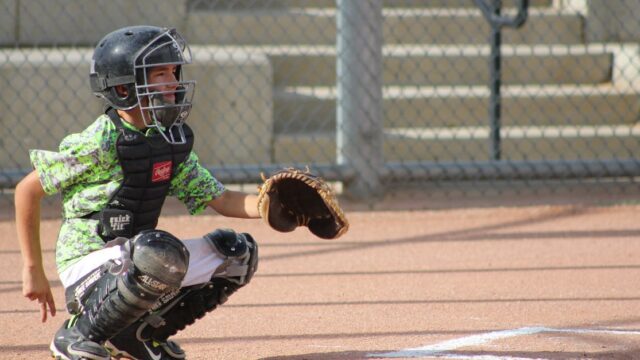
For catchers specifically, the bottle cap drill works wonders for receiving. I have my catchers receive bottle caps tossed from 20 feet, with both glove and bare hand, for five minutes a day. The hands soften, the eyes get sharper, and they stop short-arming pitches. Combine this with our catching drills for a complete behind-the-plate program.
Frequently asked questions
How long until I see results?
Measurable improvement in tracking-speed metrics typically shows up within two weeks. In-game results, meaning higher contact rates and better at-bats, usually take four to six weeks to translate. The visual system adapts faster than the motor system needs to integrate the new information.
Can I do these drills at home?
Yes. Reaction ball, tennis wall, bottle caps, wiffle balls, and the Hart chart all need nothing more than a wall and a few square feet. I tell parents to set up a hand-eye corner in the garage or basement. Five minutes a day, every day, will outproduce two-hour weekend sessions.
What age should I start?
The basic drills (reaction ball, tennis wall, color call-out) work as young as 6 or 7. Bottle caps and pickle balls work from age 8 or 9. I do not recommend strobe glasses or one-eye drills before age 12 because the visual system is still developing. Reactive lights and Vizual Edge are best for high school and up, when athletes can sustain focus for 10-minute sessions.
Are video games good hand-eye training?
This is the most common parent question I get. The honest answer is: only the right ones, and only in moderation. Action games that require fast visual tracking can mildly improve reaction time. They do not transfer well to baseball-specific tracking because the visual demand is two-dimensional. Real-world drills with a real moving ball produce vastly better transfer. Use video games as recovery, not training.
Do I need to wear glasses or contacts during these drills?
Yes, if you wear them during games. Train with the same vision setup you compete with. If you wear contacts during games, train in contacts. If you have undiagnosed vision issues, get a sports vision exam before starting a serious program. About one in five high school athletes I screen has uncorrected vision that is materially hurting their performance.
How do I test eye dominance?
Stretch both arms out and form a small triangle with your thumbs and forefingers. Look through the triangle at a small object across the room with both eyes open. Slowly bring the triangle toward your face while keeping the object centered. The triangle will end up over your dominant eye. Right-handed hitters with right-eye dominance benefit from a slightly more closed stance to give the dominant eye a clear line to the pitcher.
Can adults benefit from these drills?
Absolutely. The visual system is plastic well into adulthood, and recreational players in their 30s and 40s often see the largest absolute improvements because they started from a lower baseline. I have a 47-year-old beer-league player who raised his batting average from .240 to .380 over one offseason of consistent reaction-ball and bottle-cap work.
What is the single most important drill?
If I could only have one, it would be color call-out front toss. It trains early pickup, forces a verbal commitment, and integrates with the swing. Reaction ball is a close second because it is so cheap and so universally applicable. Pick one of those two and start tomorrow.
How does this compare to lifting weights for hitters?
Both matter. Strength makes the bat go faster. Hand-eye makes sure the bat is in the right place. A 14-year-old gaining 10 pounds of muscle but ignoring vision will still strike out a lot. A 14-year-old doing this hand-eye program but not lifting will still get jammed by good fastballs. Train both. Combine this program with our strength training program for a complete development plan.
What about pitchers? Does hand-eye matter for them?
Yes, for two reasons. First, pitchers field the position and need the same fielding hand-eye as any infielder. Second, pickoffs and runners on base require sharp peripheral vision. Driveline data shows pitcher pickoff success improved 16 percent with a focused hand-eye and visual-attention program. Pitchers should run the fielder versions of these drills two to three times a week.
Putting it all together this week
If you are reading this on March 10, 2026, opening day for high school is roughly a week away in most parts of the country. You do not have time for a full six-week ramp. Here is the compressed program I would run with my own son this week. Day one: 30 reaction ball catches off the wall, 30 tennis ball wall reps, 30 color call-out swings on tee. Day two: 50 bottle cap swings with skinny bat, 30 pickle ball front toss, 30 numbered ball front toss. Day three: 10 minutes Vizual Edge or strobe glasses tee, 30 color call-out front toss, 30 live BP at game speed. Repeat the cycle for opening week.
If you are reading this in offseason mode and you have eight weeks until games, run the full progression in the table above and add 10 minutes a day of Hart chart and Brock string work in the morning. By opening day your hitter will be picking up the ball noticeably earlier and his contact rate will be measurably higher.
The biggest mistake amateur hitters make is treating hand-eye coordination as a fixed trait you are born with. It is not. It is the most trainable single component of hitting, and the players who treat it that way are the ones who keep climbing while their teammates plateau. Buy the reaction ball. Get the bottle caps. Start tomorrow. Three minutes a day, every day, for six weeks. Then come back and tell me what changed. I have watched this program turn .220 hitters into .310 hitters more times than I can count, and there is nothing magical about it. It is just consistent reps with the right drills, done in the right order, measured at the right intervals. That is the whole game.