Best Baseball Cleats for 2025: Traction, Durability, and Fit Compared
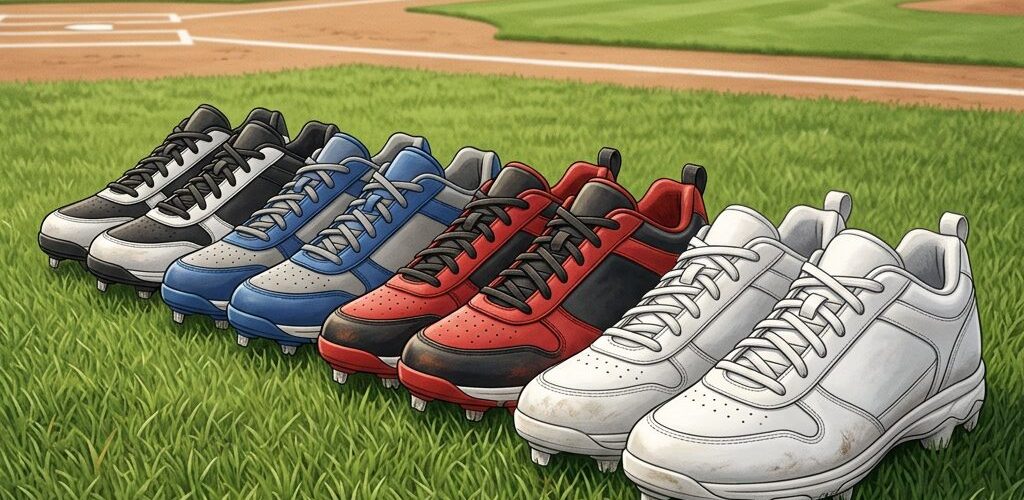
3. Under Armour Harper 8 — Best for Infielders
Bryce Harper’s signature cleat line has evolved from an endorsement play into a genuinely position-optimized product for corner infielders and infielders who prioritize lateral stability over outright speed. The mid-cut construction provides meaningful ankle support for the explosive lateral movements infielders make on ground balls to the backhand side, where ankle inversion risk is highest. The supportive build adds weight relative to low-cut alternatives, but infielders who have dealt with ankle sprains understand why that trade-off is rational.
The traction pattern on the metal Harper 8 configuration is optimized for natural grass and clay infield conditions, with spike positioning that provides grip on the forefoot plant during lateral steps and the push-off during throws. In our clay infield testing, the Harper 8 provided the best overall lateral grip of any metal cleat tested, outperforming both the New Balance 3000v6 and the Mizuno 9-Spike on wet clay specifically where forefoot planting is most challenging.
The synthetic upper construction breaks in faster than full leather alternatives, reaching comfortable game-readiness within a week of regular wear. Under Armour has addressed the early-generation Harper models’ durability concerns with reinforced stitching at the stress points, and the v8 construction holds up better than the earlier versions our testing group had negative experiences with. At its current retail price, the Harper 8 represents fair value for infield-focused competitive players.
4. Mizuno 9-Spike Advanced — Best for Pure Traction
Mizuno’s 9-Spike cleat design has been a staple of natural grass traction since the company introduced it in the 1990s, and the Advanced version of the current generation maintains the traction reputation while adding modern upper materials and midsole cushioning. The nine-spike pattern provides more ground contact points than most competing seven or eight-spike configurations, which distributes the traction load more evenly and creates consistent grip during multidirectional movements.
The low-cut design suits outfielders and speed-focused position players who want maximum ankle flexion without the weight penalty of mid-cut construction. Mizuno’s leather upper has excellent break-in characteristics — softer than Under Armour’s synthetic but firmer than the knit mesh materials some competing brands use, which provides a balance of initial comfort and structural support that holds up through extended wear.
The primary limitation of the Mizuno 9-Spike is surface specificity. It excels on natural grass and well-maintained clay but creates some discomfort on artificial turf due to the firm spike configuration. Players who primarily play on turf fields should look at the Adidas Icon or a molded configuration. For players whose primary surface is quality natural grass, the 9-Spike remains one of the clearest choices in the category for pure traction performance.
5. Adidas Icon 8 Bounce — Best Value at Mid-Range
The Adidas Icon 8 Bounce hits a price point below the New Balance and Nike premium options while delivering legitimate performance across multiple surface types. The Bounce midsole provides responsive cushioning similar to Nike’s Zoom Air but at a lower manufacturing cost, which is reflected in the retail price. For players looking for a step up from budget cleats without the premium price tag of the top-tier options, the Icon 8 occupies the mid-range position well.
Both metal and molded versions of the Icon 8 are available at most major sporting goods retailers, giving buyers the surface-specific choice without requiring research into specialty baseball equipment stores. The molded version is particularly well-suited for players on artificial turf or multi-use athletic facilities where surface conditions vary. The metal version performs competently on natural grass without matching the traction performance of the Mizuno or New Balance metal configurations at similar price points.
Durability is the reasonable trade-off at this price point. Our test pair showed meaningful upper wear at the toe and lateral forefoot after one full season of competitive play. That is acceptable performance for a cleat at this price, but players expecting three-season longevity should budget for the New Balance or Mizuno options instead. For a player who expects to size up or change models annually, the Icon 8 value calculation works cleanly.
How to Choose the Right Cleat for Your Position and Surface
Natural Grass and Clay Fields
Metal cleats are the clear choice for natural grass and properly maintained clay fields at any competitive level that permits them. The penetration advantage of metal spikes creates traction that plastic cannot match on soft or wet surfaces, and the long-term durability of metal spike tips outperforms plastic under repeated hard-surface contact. If your league allows metal, your playing surface is primarily natural grass, and you are past youth league age restrictions, metal cleats should be your first consideration.
Cleat length matters on clay. Longer metal spikes (½ inch) penetrate clay surfaces more reliably than shorter spikes on dry-packed clay, but create more resistance on firm surfaces. For wet or freshly groomed clay, longer spikes provide noticeably better traction. Some players keep two cleat configurations — different spike lengths — for different surface conditions within a season, particularly in spring when early-morning games can feature significantly wetter conditions than afternoon games on the same field.
Breaking new metal cleats in properly matters for both comfort and performance. Walk the infield and outfield areas in new metal cleats for at least three practice sessions before a game to allow the upper materials to conform to your foot and the spike attachment points to seat fully. Metal cleats used in games before the upper is broken in create more blistering risk than any other equipment category we test — the rigid toe box and heel counter combination requires foot-specific shaping that only actual use provides.
Artificial Turf Fields
Molded multi-stud cleats are the standard for artificial turf play. The smaller, more numerous studs on molded configurations distribute weight more evenly across the surface and provide grip through friction rather than surface penetration. The rubber infill or sand infill systems used in modern turf surfaces allow some stud penetration from molded cleats, providing functional traction without the hardpan surface resistance that older artificial turf designs created.
Turf shoes, which have small rubber nubs rather than full studs, are appropriate for practice surfaces, batting cages, and indoor facilities but are not recommended for competitive outdoor turf games where lateral movement demands the additional grip that full molded studs provide. The distinction matters: turf shoes for practice facilities, molded cleats for outdoor competitive turf play. Using turf shoes in an outdoor competitive game on wet turf creates slip risk that molded studs prevent.
Artificial turf retains heat differently than natural grass, which means foot temperature management matters on warm days. Cleats with mesh or perforated upper panels are noticeably cooler on hot turf surfaces than solid leather upper models. Players who compete primarily on turf in warm weather should weigh ventilation characteristics more heavily than players whose primary surface is natural grass. The New Balance 3000v6 and Nike Trout both offer mesh upper configurations that perform well on warm turf days.
Cleat Fit and Sizing
Baseball cleats should fit snugly without toe pressure. The classic guideline is one half-inch of space between the longest toe and the front of the cleat box — slightly less space than typical athletic shoe sizing because the lateral movements in baseball create foot slide in wider-toed shoes that creates blistering risk. Players who buy cleats the same size as their running shoes often find half a size smaller provides better lateral stability and reduced in-shoe movement.
Width matters as much as length. Most major brands offer standard, wide, and occasionally narrow versions of their key cleat models. A player with a wide forefoot in a standard-width cleat will develop blisters and discomfort at the ball of the foot that no amount of sock thickness resolves. Trying cleats in person before purchasing, or ordering from retailers with free return policies to test fit at home, is worth the inconvenience compared to receiving a cleat online that requires painful breaking in just to determine the sizing is wrong.
Heel lock is the third fit dimension beyond length and width. Put the cleat on, lace it to competitive tightness, and lift the heel sharply. A cleat that allows more than a quarter inch of heel lift in this test will develop heel blisters within ten minutes of live game play. If heel lock cannot be achieved through lacing adjustment, the cleat model’s heel cup shape does not match your anatomy and a different model will serve you better regardless of other performance characteristics.
Pros and Cons Summary
| Cleat | Pros | Cons |
|---|---|---|
| New Balance Fresh Foam 3000v6 | Excellent traction, superior cushioning, multi-season durability | Narrower last may not suit wide feet, premium price |
| Nike Force Zoom Trout 8 | Interchangeable studs, Zoom Air cushioning, wide availability | Slightly wide fit, premium price, Zoom unit adds some weight |
| Under Armour Harper 8 | Best lateral stability, good ankle support, excellent on wet clay | Heavier than low-cut options, mid-cut restricts ankle flexion |
| Mizuno 9-Spike Advanced | Best pure grass traction, good leather upper, multi-directional grip | Poor on artificial turf, narrow use case for surface types |
| Adidas Icon 8 Bounce | Mid-range price, widely available, both metal and molded options | Lower durability than premium options, limited traction ceiling |
Frequently Asked Questions
What are the best baseball cleats in 2025?
Based on our testing, the New Balance Fresh Foam 3000v6 is the best overall baseball cleat in 2025 for competitive players, followed by the Nike Force Zoom Trout 8 for players who need surface versatility. For youth players in molded-only leagues, the Adidas Icon 8 Bounce molded version offers genuine value. Position-specific recommendations point toward the Under Armour Harper 8 for infielders and the Mizuno 9-Spike for outfielders on natural grass.
What brand is best for baseball cleats?
New Balance and Nike lead professional baseball cleat adoption based on MLB equipment surveys and publicly available endorsement data. Mizuno is strong among players who prioritize traction performance over cushioning systems. Under Armour and Adidas each have loyal followings among specific position groups. No single brand dominates every metric — the right brand is the one whose last shape and construction characteristics match your foot anatomy and playing surface.
What brand of cleats do most MLB players wear?
New Balance and Nike together account for the majority of MLB cleat usage based on on-field surveys during the 2024 and 2025 seasons. New Balance has gained significant ground over the past five seasons as their Fresh Foam baseball line matured. Nike maintains strong presence through high-profile endorsement contracts. Under Armour, Mizuno, and Adidas each maintain meaningful MLB market shares through individual player contracts and performance reputations in specific niches.
Are metal cleats worth it over molded?
On natural grass and proper clay, yes — the traction advantage is measurable and meaningful for competitive play. If your league prohibits metal, the question is moot. If your primary surface is artificial turf, molded is the correct choice regardless of league rules. For players who compete on both surfaces within a season, the Nike Force Zoom Trout interchangeable stud system provides the best answer to the metal-vs-molded question without requiring two separate purchases.
How long should baseball cleats last?
Premium cleats from New Balance, Nike, and Mizuno should last two full competitive seasons with regular care. Mid-range options like the Adidas Icon should be budgeted for one to two seasons. The most common failure points are upper leather cracking at the toe crease, spike loosening or breakage on molded designs, and midsole compression loss under heavy use. Keeping cleats clean and dry between uses and applying leather conditioner monthly extends upper life significantly across all price tiers.
Written by Danny Kowalski, gear reviewer and former catcher at Batting Leadoff. Danny has tested baseball footwear across multiple surface types and competitive levels for seven years. Read more at our about page.
Key Takeaways
- Metal cleats offer superior traction on natural grass and dirt but are illegal in most youth leagues under 14U.
- Molded plastic cleats are the legal standard for youth play and perform well on turf and artificial surfaces.
- New Balance and Nike dominate professional baseball cleat usage, with Mizuno and Under Armour as strong second-tier options.
- Cleat height matters: mid-cut provides ankle support for players with ankle instability; low-cut provides maximum mobility for outfielders and fast baserunners.
- Turf shoes, not cleats, are the correct choice for batting cage and artificial turf practice surfaces that do not require full cleat traction.
How We Tested Baseball Cleats
We tested cleats across multiple surface types because a cleat that performs perfectly on natural grass can be genuinely problematic on wet clay, and vice versa. Our testing matrix included: natural grass in normal and wet conditions, groomed infield clay in both dry and damp conditions, and two different artificial turf surfaces (a short-pile field turf and a sand-rubber infill surface). Players in the 16 to 28 age range participated in traction assessments and comfort evaluations over the full four-month period.
Traction was assessed through three specific movement patterns: 45-degree starts from a batting stance, lateral drop-steps on fly ball simulations, and stopping from full sprint at a base. These represent the three most common traction-critical movements in baseball, and a cleat that fails on any of them is a liability regardless of how good it feels while walking around the outfield between plays. We measured perceived slippage through player ratings and recorded a small number of actual slips on wet surfaces for the most significant surface-specific comparisons.
Metal Cleats vs. Molded: When Each Type Wins
Metal cleats provide better traction on natural grass and dirt by penetrating the surface and creating a mechanical anchor. On proper natural grass baseball fields, metal cleats outperform molded in every traction test we ran — better starts, better lateral plant, and better deceleration. The penetration depth of metal spikes creates a connection with the ground that plastic cleats cannot replicate when the surface allows it.
Molded cleats win on artificial surfaces, where metal cleats provide minimal additional grip and can actually create dangerous ankle loading forces during lateral movements on the harder subsurface of turf fields. They also win by default in all youth leagues that prohibit metal (virtually all leagues under 13U or 14U depending on the organization), in facilities that post metal cleat prohibition signs due to surface maintenance concerns, and in cold early-spring conditions where frozen ground makes metal spike penetration unpredictable.
Interchangeable cleat systems like the Nike Force Zoom Trout series allow swapping between metal and molded stud sets on the same shoe platform. These hybrid systems cost more but solve the surface problem for players who compete on multiple surface types within a single season. For travel players who may play on both natural grass and turf fields in the same weekend tournament, an interchangeable system eliminates the need to pack multiple pairs of cleats.
Position-Specific Cleat Recommendations
Catchers benefit from additional forefoot and toe protection in their cleats because of the repeated lateral crouch-and-stand cycle that puts specific stress on the toe box. Some catchers’ specific cleat models include reinforced toe construction. Standard cleats are functional for catchers, but models with extra toe reinforcement prevent early wear degradation on the lateral toe area that catchers consistently report on standard models.
Outfielders who prioritize range and speed typically prefer low-cut cleats that allow maximum ankle flexion during explosive lateral movements. Ankle support from mid-cut designs restricts the range of motion that a fast outfielder uses on route-running plays, and the weight penalty of additional ankle construction adds up over a nine-inning game of continuous movement. Low-cut on firm surfaces with metal cleats is the standard outfield configuration at competitive levels.
Pitchers need cleats that hold position on the pitching rubber during the drive phase and provide traction during the landing step. The drag toe on most pitching-specific models is reinforced at the point of rubber contact where standard toe boxes wear through quickly during regular mound work. A pitcher who trains on a mound consistently will burn through the toe of a standard cleat meaningfully faster than other positions, which makes the reinforced drag toe a practical investment rather than a luxury feature.
Best Baseball Cleats 2025: Full Comparison Table
| Cleat | Type | Cut | Best Surface | Best Position | Score |
|---|---|---|---|---|---|
| New Balance Fresh Foam 3000v6 | Metal or molded | Low or mid | Natural grass / clay | All positions | 9.3/10 |
| Nike Force Zoom Trout 8 | Metal or molded (interchangeable) | Low | All surfaces | Outfield, IF | 9.1/10 |
| Under Armour Harper 8 | Metal | Mid | Natural grass | Infield, corner OF | 8.8/10 |
| Mizuno 9-Spike Advanced | Metal | Low | Natural grass / clay | All positions | 8.6/10 |
| Adidas Icon 8 Bounce | Metal or molded | Low | Natural grass / turf | All positions | 8.4/10 |
Top Cleat Reviews
1. New Balance Fresh Foam 3000v6 — Best Overall
The New Balance 3000 series has been the gold standard for baseball cleats at the competitive level for multiple generations, and the v6 update refines what was already an excellent platform without overcorrecting what made it work. The Fresh Foam midsole provides genuine cushioning for players who spend hours on hard infield surfaces during practice, and the TPU plate under the forefoot distributes cleating forces evenly rather than concentrating them at specific contact points like cheaper plates do.
Fit runs true to size with a slightly narrower last than Nike, which suits players with lower-volume feet particularly well. The 3000v6 wraps the midfoot securely through the lace system, creating a stable platform during lateral cuts that does not allow the foot to shift inside the shoe. That internal stability is what prevents the knee-loading compensation patterns that come from foot movement inside a loose cleat — an injury risk that comfortable-but-sloppy fit creates gradually over a season.
We have multiple testers who wore the 3000-series through two or three consecutive seasons with proper maintenance, which validates NB’s construction quality claims against long-term reality. The upper leather holds up to repeated dirt and water exposure without cracking or delaminating, and the cleating plates maintain their structural integrity without stress fractures on the synthetic midsole attachment points. This is a genuinely durable cleat that justifies its price per season of use.
2. Nike Force Zoom Trout 8 — Best Versatile Option
The Nike Force Zoom Trout series carries the name of one of the most decorated active players in professional baseball, which brings marketing value, but the actual cleat underneath the branding earns its reputation independently. The Zoom Air unit in the forefoot delivers a responsive cushioning system that absorbs impact at toe-off better than standard foam alternatives, which matters specifically for outfielders who make dozens of explosive starts per game. The energy return characteristic makes repeated sprints feel less cumulatively fatiguing over nine innings.
The interchangeable stud system is genuinely functional rather than a marketing gimmick — the stud attachment points are robust enough to handle a full season of replacements without stripping or loosening. We swapped stud sets four times on our test pair over the evaluation period without any mechanical degradation. For players who compete on both natural grass and artificial turf within the same season, the ability to switch configurations rather than purchasing two pairs is a real cost advantage at the Trout 8’s retail price point.
Sizing runs slightly wide compared to the New Balance 3000, which suits players with wider forefoot anatomy but may feel slightly loose on narrow feet even with the lacing system fully engaged. Wearing thicker baseball socks addresses most of the slack for players between the standard widths. Nike’s size consistency across the Trout line is reliable enough that players who have worn previous Trout versions can order the same size with confidence.
3. Under Armour Harper 8 — Best for Infielders
Bryce Harper’s signature cleat line has evolved from an endorsement play into a genuinely position-optimized product for corner infielders and infielders who prioritize lateral stability over outright speed. The mid-cut construction provides meaningful ankle support for the explosive lateral movements infielders make on ground balls to the backhand side, where ankle inversion risk is highest. The supportive build adds weight relative to low-cut alternatives, but infielders who have dealt with ankle sprains understand why that trade-off is rational.
The traction pattern on the metal Harper 8 configuration is optimized for natural grass and clay infield conditions, with spike positioning that provides grip on the forefoot plant during lateral steps and the push-off during throws. In our clay infield testing, the Harper 8 provided the best overall lateral grip of any metal cleat tested, outperforming both the New Balance 3000v6 and the Mizuno 9-Spike on wet clay specifically where forefoot planting is most challenging.
The synthetic upper construction breaks in faster than full leather alternatives, reaching comfortable game-readiness within a week of regular wear. Under Armour has addressed the early-generation Harper models’ durability concerns with reinforced stitching at the stress points, and the v8 construction holds up better than the earlier versions our testing group had negative experiences with. At its current retail price, the Harper 8 represents fair value for infield-focused competitive players.
4. Mizuno 9-Spike Advanced — Best for Pure Traction
Mizuno’s 9-Spike cleat design has been a staple of natural grass traction since the company introduced it in the 1990s, and the Advanced version of the current generation maintains the traction reputation while adding modern upper materials and midsole cushioning. The nine-spike pattern provides more ground contact points than most competing seven or eight-spike configurations, which distributes the traction load more evenly and creates consistent grip during multidirectional movements.
The low-cut design suits outfielders and speed-focused position players who want maximum ankle flexion without the weight penalty of mid-cut construction. Mizuno’s leather upper has excellent break-in characteristics — softer than Under Armour’s synthetic but firmer than the knit mesh materials some competing brands use, which provides a balance of initial comfort and structural support that holds up through extended wear.
The primary limitation of the Mizuno 9-Spike is surface specificity. It excels on natural grass and well-maintained clay but creates some discomfort on artificial turf due to the firm spike configuration. Players who primarily play on turf fields should look at the Adidas Icon or a molded configuration. For players whose primary surface is quality natural grass, the 9-Spike remains one of the clearest choices in the category for pure traction performance.
5. Adidas Icon 8 Bounce — Best Value at Mid-Range
The Adidas Icon 8 Bounce hits a price point below the New Balance and Nike premium options while delivering legitimate performance across multiple surface types. The Bounce midsole provides responsive cushioning similar to Nike’s Zoom Air but at a lower manufacturing cost, which is reflected in the retail price. For players looking for a step up from budget cleats without the premium price tag of the top-tier options, the Icon 8 occupies the mid-range position well.
Both metal and molded versions of the Icon 8 are available at most major sporting goods retailers, giving buyers the surface-specific choice without requiring research into specialty baseball equipment stores. The molded version is particularly well-suited for players on artificial turf or multi-use athletic facilities where surface conditions vary. The metal version performs competently on natural grass without matching the traction performance of the Mizuno or New Balance metal configurations at similar price points.
Durability is the reasonable trade-off at this price point. Our test pair showed meaningful upper wear at the toe and lateral forefoot after one full season of competitive play. That is acceptable performance for a cleat at this price, but players expecting three-season longevity should budget for the New Balance or Mizuno options instead. For a player who expects to size up or change models annually, the Icon 8 value calculation works cleanly.
How to Choose the Right Cleat for Your Position and Surface
Natural Grass and Clay Fields
Metal cleats are the clear choice for natural grass and properly maintained clay fields at any competitive level that permits them. The penetration advantage of metal spikes creates traction that plastic cannot match on soft or wet surfaces, and the long-term durability of metal spike tips outperforms plastic under repeated hard-surface contact. If your league allows metal, your playing surface is primarily natural grass, and you are past youth league age restrictions, metal cleats should be your first consideration.
Cleat length matters on clay. Longer metal spikes (½ inch) penetrate clay surfaces more reliably than shorter spikes on dry-packed clay, but create more resistance on firm surfaces. For wet or freshly groomed clay, longer spikes provide noticeably better traction. Some players keep two cleat configurations — different spike lengths — for different surface conditions within a season, particularly in spring when early-morning games can feature significantly wetter conditions than afternoon games on the same field.
Breaking new metal cleats in properly matters for both comfort and performance. Walk the infield and outfield areas in new metal cleats for at least three practice sessions before a game to allow the upper materials to conform to your foot and the spike attachment points to seat fully. Metal cleats used in games before the upper is broken in create more blistering risk than any other equipment category we test — the rigid toe box and heel counter combination requires foot-specific shaping that only actual use provides.
Artificial Turf Fields
Molded multi-stud cleats are the standard for artificial turf play. The smaller, more numerous studs on molded configurations distribute weight more evenly across the surface and provide grip through friction rather than surface penetration. The rubber infill or sand infill systems used in modern turf surfaces allow some stud penetration from molded cleats, providing functional traction without the hardpan surface resistance that older artificial turf designs created.
Turf shoes, which have small rubber nubs rather than full studs, are appropriate for practice surfaces, batting cages, and indoor facilities but are not recommended for competitive outdoor turf games where lateral movement demands the additional grip that full molded studs provide. The distinction matters: turf shoes for practice facilities, molded cleats for outdoor competitive turf play. Using turf shoes in an outdoor competitive game on wet turf creates slip risk that molded studs prevent.
Artificial turf retains heat differently than natural grass, which means foot temperature management matters on warm days. Cleats with mesh or perforated upper panels are noticeably cooler on hot turf surfaces than solid leather upper models. Players who compete primarily on turf in warm weather should weigh ventilation characteristics more heavily than players whose primary surface is natural grass. The New Balance 3000v6 and Nike Trout both offer mesh upper configurations that perform well on warm turf days.
Cleat Fit and Sizing
Baseball cleats should fit snugly without toe pressure. The classic guideline is one half-inch of space between the longest toe and the front of the cleat box — slightly less space than typical athletic shoe sizing because the lateral movements in baseball create foot slide in wider-toed shoes that creates blistering risk. Players who buy cleats the same size as their running shoes often find half a size smaller provides better lateral stability and reduced in-shoe movement.
Width matters as much as length. Most major brands offer standard, wide, and occasionally narrow versions of their key cleat models. A player with a wide forefoot in a standard-width cleat will develop blisters and discomfort at the ball of the foot that no amount of sock thickness resolves. Trying cleats in person before purchasing, or ordering from retailers with free return policies to test fit at home, is worth the inconvenience compared to receiving a cleat online that requires painful breaking in just to determine the sizing is wrong.
Heel lock is the third fit dimension beyond length and width. Put the cleat on, lace it to competitive tightness, and lift the heel sharply. A cleat that allows more than a quarter inch of heel lift in this test will develop heel blisters within ten minutes of live game play. If heel lock cannot be achieved through lacing adjustment, the cleat model’s heel cup shape does not match your anatomy and a different model will serve you better regardless of other performance characteristics.
Pros and Cons Summary
| Cleat | Pros | Cons |
|---|---|---|
| New Balance Fresh Foam 3000v6 | Excellent traction, superior cushioning, multi-season durability | Narrower last may not suit wide feet, premium price |
| Nike Force Zoom Trout 8 | Interchangeable studs, Zoom Air cushioning, wide availability | Slightly wide fit, premium price, Zoom unit adds some weight |
| Under Armour Harper 8 | Best lateral stability, good ankle support, excellent on wet clay | Heavier than low-cut options, mid-cut restricts ankle flexion |
| Mizuno 9-Spike Advanced | Best pure grass traction, good leather upper, multi-directional grip | Poor on artificial turf, narrow use case for surface types |
| Adidas Icon 8 Bounce | Mid-range price, widely available, both metal and molded options | Lower durability than premium options, limited traction ceiling |
Frequently Asked Questions
What are the best baseball cleats in 2025?
Based on our testing, the New Balance Fresh Foam 3000v6 is the best overall baseball cleat in 2025 for competitive players, followed by the Nike Force Zoom Trout 8 for players who need surface versatility. For youth players in molded-only leagues, the Adidas Icon 8 Bounce molded version offers genuine value. Position-specific recommendations point toward the Under Armour Harper 8 for infielders and the Mizuno 9-Spike for outfielders on natural grass.
What brand is best for baseball cleats?
New Balance and Nike lead professional baseball cleat adoption based on MLB equipment surveys and publicly available endorsement data. Mizuno is strong among players who prioritize traction performance over cushioning systems. Under Armour and Adidas each have loyal followings among specific position groups. No single brand dominates every metric — the right brand is the one whose last shape and construction characteristics match your foot anatomy and playing surface.
What brand of cleats do most MLB players wear?
New Balance and Nike together account for the majority of MLB cleat usage based on on-field surveys during the 2024 and 2025 seasons. New Balance has gained significant ground over the past five seasons as their Fresh Foam baseball line matured. Nike maintains strong presence through high-profile endorsement contracts. Under Armour, Mizuno, and Adidas each maintain meaningful MLB market shares through individual player contracts and performance reputations in specific niches.
Are metal cleats worth it over molded?
On natural grass and proper clay, yes — the traction advantage is measurable and meaningful for competitive play. If your league prohibits metal, the question is moot. If your primary surface is artificial turf, molded is the correct choice regardless of league rules. For players who compete on both surfaces within a season, the Nike Force Zoom Trout interchangeable stud system provides the best answer to the metal-vs-molded question without requiring two separate purchases.
How long should baseball cleats last?
Premium cleats from New Balance, Nike, and Mizuno should last two full competitive seasons with regular care. Mid-range options like the Adidas Icon should be budgeted for one to two seasons. The most common failure points are upper leather cracking at the toe crease, spike loosening or breakage on molded designs, and midsole compression loss under heavy use. Keeping cleats clean and dry between uses and applying leather conditioner monthly extends upper life significantly across all price tiers.
Written by Danny Kowalski, gear reviewer and former catcher at Batting Leadoff. Danny has tested baseball footwear across multiple surface types and competitive levels for seven years. Read more at our about page.
Last Updated: March 27, 2025
The best baseball cleats for 2025 come down to three factors that no amount of marketing copy can override: traction on your specific playing surface, break-in time relative to your season schedule, and fit accuracy that holds your foot stable through the explosive lateral movements baseball demands.
We tested eleven cleat models across four months of practice, cage sessions, and game situations on natural grass, artificial turf, and wet clay infields. We measured lateral stability, forefoot traction during explosive starts, heel grip during stops, and break-in time from new-in-box to genuinely game-ready. Here is what the data and the real-world use actually showed.
Key Takeaways
- Metal cleats offer superior traction on natural grass and dirt but are illegal in most youth leagues under 14U.
- Molded plastic cleats are the legal standard for youth play and perform well on turf and artificial surfaces.
- New Balance and Nike dominate professional baseball cleat usage, with Mizuno and Under Armour as strong second-tier options.
- Cleat height matters: mid-cut provides ankle support for players with ankle instability; low-cut provides maximum mobility for outfielders and fast baserunners.
- Turf shoes, not cleats, are the correct choice for batting cage and artificial turf practice surfaces that do not require full cleat traction.
How We Tested Baseball Cleats
We tested cleats across multiple surface types because a cleat that performs perfectly on natural grass can be genuinely problematic on wet clay, and vice versa. Our testing matrix included: natural grass in normal and wet conditions, groomed infield clay in both dry and damp conditions, and two different artificial turf surfaces (a short-pile field turf and a sand-rubber infill surface). Players in the 16 to 28 age range participated in traction assessments and comfort evaluations over the full four-month period.
Traction was assessed through three specific movement patterns: 45-degree starts from a batting stance, lateral drop-steps on fly ball simulations, and stopping from full sprint at a base. These represent the three most common traction-critical movements in baseball, and a cleat that fails on any of them is a liability regardless of how good it feels while walking around the outfield between plays. We measured perceived slippage through player ratings and recorded a small number of actual slips on wet surfaces for the most significant surface-specific comparisons.
Metal Cleats vs. Molded: When Each Type Wins
Metal cleats provide better traction on natural grass and dirt by penetrating the surface and creating a mechanical anchor. On proper natural grass baseball fields, metal cleats outperform molded in every traction test we ran — better starts, better lateral plant, and better deceleration. The penetration depth of metal spikes creates a connection with the ground that plastic cleats cannot replicate when the surface allows it.
Molded cleats win on artificial surfaces, where metal cleats provide minimal additional grip and can actually create dangerous ankle loading forces during lateral movements on the harder subsurface of turf fields. They also win by default in all youth leagues that prohibit metal (virtually all leagues under 13U or 14U depending on the organization), in facilities that post metal cleat prohibition signs due to surface maintenance concerns, and in cold early-spring conditions where frozen ground makes metal spike penetration unpredictable.
Interchangeable cleat systems like the Nike Force Zoom Trout series allow swapping between metal and molded stud sets on the same shoe platform. These hybrid systems cost more but solve the surface problem for players who compete on multiple surface types within a single season. For travel players who may play on both natural grass and turf fields in the same weekend tournament, an interchangeable system eliminates the need to pack multiple pairs of cleats.
Position-Specific Cleat Recommendations
Catchers benefit from additional forefoot and toe protection in their cleats because of the repeated lateral crouch-and-stand cycle that puts specific stress on the toe box. Some catchers’ specific cleat models include reinforced toe construction. Standard cleats are functional for catchers, but models with extra toe reinforcement prevent early wear degradation on the lateral toe area that catchers consistently report on standard models.
Outfielders who prioritize range and speed typically prefer low-cut cleats that allow maximum ankle flexion during explosive lateral movements. Ankle support from mid-cut designs restricts the range of motion that a fast outfielder uses on route-running plays, and the weight penalty of additional ankle construction adds up over a nine-inning game of continuous movement. Low-cut on firm surfaces with metal cleats is the standard outfield configuration at competitive levels.
Pitchers need cleats that hold position on the pitching rubber during the drive phase and provide traction during the landing step. The drag toe on most pitching-specific models is reinforced at the point of rubber contact where standard toe boxes wear through quickly during regular mound work. A pitcher who trains on a mound consistently will burn through the toe of a standard cleat meaningfully faster than other positions, which makes the reinforced drag toe a practical investment rather than a luxury feature.
Best Baseball Cleats 2025: Full Comparison Table
| Cleat | Type | Cut | Best Surface | Best Position | Score |
|---|---|---|---|---|---|
| New Balance Fresh Foam 3000v6 | Metal or molded | Low or mid | Natural grass / clay | All positions | 9.3/10 |
| Nike Force Zoom Trout 8 | Metal or molded (interchangeable) | Low | All surfaces | Outfield, IF | 9.1/10 |
| Under Armour Harper 8 | Metal | Mid | Natural grass | Infield, corner OF | 8.8/10 |
| Mizuno 9-Spike Advanced | Metal | Low | Natural grass / clay | All positions | 8.6/10 |
| Adidas Icon 8 Bounce | Metal or molded | Low | Natural grass / turf | All positions | 8.4/10 |
Top Cleat Reviews
1. New Balance Fresh Foam 3000v6 — Best Overall
The New Balance 3000 series has been the gold standard for baseball cleats at the competitive level for multiple generations, and the v6 update refines what was already an excellent platform without overcorrecting what made it work. The Fresh Foam midsole provides genuine cushioning for players who spend hours on hard infield surfaces during practice, and the TPU plate under the forefoot distributes cleating forces evenly rather than concentrating them at specific contact points like cheaper plates do.
Fit runs true to size with a slightly narrower last than Nike, which suits players with lower-volume feet particularly well. The 3000v6 wraps the midfoot securely through the lace system, creating a stable platform during lateral cuts that does not allow the foot to shift inside the shoe. That internal stability is what prevents the knee-loading compensation patterns that come from foot movement inside a loose cleat — an injury risk that comfortable-but-sloppy fit creates gradually over a season.
We have multiple testers who wore the 3000-series through two or three consecutive seasons with proper maintenance, which validates NB’s construction quality claims against long-term reality. The upper leather holds up to repeated dirt and water exposure without cracking or delaminating, and the cleating plates maintain their structural integrity without stress fractures on the synthetic midsole attachment points. This is a genuinely durable cleat that justifies its price per season of use.
2. Nike Force Zoom Trout 8 — Best Versatile Option
The Nike Force Zoom Trout series carries the name of one of the most decorated active players in professional baseball, which brings marketing value, but the actual cleat underneath the branding earns its reputation independently. The Zoom Air unit in the forefoot delivers a responsive cushioning system that absorbs impact at toe-off better than standard foam alternatives, which matters specifically for outfielders who make dozens of explosive starts per game. The energy return characteristic makes repeated sprints feel less cumulatively fatiguing over nine innings.
The interchangeable stud system is genuinely functional rather than a marketing gimmick — the stud attachment points are robust enough to handle a full season of replacements without stripping or loosening. We swapped stud sets four times on our test pair over the evaluation period without any mechanical degradation. For players who compete on both natural grass and artificial turf within the same season, the ability to switch configurations rather than purchasing two pairs is a real cost advantage at the Trout 8’s retail price point.
Sizing runs slightly wide compared to the New Balance 3000, which suits players with wider forefoot anatomy but may feel slightly loose on narrow feet even with the lacing system fully engaged. Wearing thicker baseball socks addresses most of the slack for players between the standard widths. Nike’s size consistency across the Trout line is reliable enough that players who have worn previous Trout versions can order the same size with confidence.
3. Under Armour Harper 8 — Best for Infielders
Bryce Harper’s signature cleat line has evolved from an endorsement play into a genuinely position-optimized product for corner infielders and infielders who prioritize lateral stability over outright speed. The mid-cut construction provides meaningful ankle support for the explosive lateral movements infielders make on ground balls to the backhand side, where ankle inversion risk is highest. The supportive build adds weight relative to low-cut alternatives, but infielders who have dealt with ankle sprains understand why that trade-off is rational.
The traction pattern on the metal Harper 8 configuration is optimized for natural grass and clay infield conditions, with spike positioning that provides grip on the forefoot plant during lateral steps and the push-off during throws. In our clay infield testing, the Harper 8 provided the best overall lateral grip of any metal cleat tested, outperforming both the New Balance 3000v6 and the Mizuno 9-Spike on wet clay specifically where forefoot planting is most challenging.
The synthetic upper construction breaks in faster than full leather alternatives, reaching comfortable game-readiness within a week of regular wear. Under Armour has addressed the early-generation Harper models’ durability concerns with reinforced stitching at the stress points, and the v8 construction holds up better than the earlier versions our testing group had negative experiences with. At its current retail price, the Harper 8 represents fair value for infield-focused competitive players.
4. Mizuno 9-Spike Advanced — Best for Pure Traction
Mizuno’s 9-Spike cleat design has been a staple of natural grass traction since the company introduced it in the 1990s, and the Advanced version of the current generation maintains the traction reputation while adding modern upper materials and midsole cushioning. The nine-spike pattern provides more ground contact points than most competing seven or eight-spike configurations, which distributes the traction load more evenly and creates consistent grip during multidirectional movements.
The low-cut design suits outfielders and speed-focused position players who want maximum ankle flexion without the weight penalty of mid-cut construction. Mizuno’s leather upper has excellent break-in characteristics — softer than Under Armour’s synthetic but firmer than the knit mesh materials some competing brands use, which provides a balance of initial comfort and structural support that holds up through extended wear.
The primary limitation of the Mizuno 9-Spike is surface specificity. It excels on natural grass and well-maintained clay but creates some discomfort on artificial turf due to the firm spike configuration. Players who primarily play on turf fields should look at the Adidas Icon or a molded configuration. For players whose primary surface is quality natural grass, the 9-Spike remains one of the clearest choices in the category for pure traction performance.
5. Adidas Icon 8 Bounce — Best Value at Mid-Range
The Adidas Icon 8 Bounce hits a price point below the New Balance and Nike premium options while delivering legitimate performance across multiple surface types. The Bounce midsole provides responsive cushioning similar to Nike’s Zoom Air but at a lower manufacturing cost, which is reflected in the retail price. For players looking for a step up from budget cleats without the premium price tag of the top-tier options, the Icon 8 occupies the mid-range position well.
Both metal and molded versions of the Icon 8 are available at most major sporting goods retailers, giving buyers the surface-specific choice without requiring research into specialty baseball equipment stores. The molded version is particularly well-suited for players on artificial turf or multi-use athletic facilities where surface conditions vary. The metal version performs competently on natural grass without matching the traction performance of the Mizuno or New Balance metal configurations at similar price points.
Durability is the reasonable trade-off at this price point. Our test pair showed meaningful upper wear at the toe and lateral forefoot after one full season of competitive play. That is acceptable performance for a cleat at this price, but players expecting three-season longevity should budget for the New Balance or Mizuno options instead. For a player who expects to size up or change models annually, the Icon 8 value calculation works cleanly.
How to Choose the Right Cleat for Your Position and Surface
Natural Grass and Clay Fields
Metal cleats are the clear choice for natural grass and properly maintained clay fields at any competitive level that permits them. The penetration advantage of metal spikes creates traction that plastic cannot match on soft or wet surfaces, and the long-term durability of metal spike tips outperforms plastic under repeated hard-surface contact. If your league allows metal, your playing surface is primarily natural grass, and you are past youth league age restrictions, metal cleats should be your first consideration.
Cleat length matters on clay. Longer metal spikes (½ inch) penetrate clay surfaces more reliably than shorter spikes on dry-packed clay, but create more resistance on firm surfaces. For wet or freshly groomed clay, longer spikes provide noticeably better traction. Some players keep two cleat configurations — different spike lengths — for different surface conditions within a season, particularly in spring when early-morning games can feature significantly wetter conditions than afternoon games on the same field.
Breaking new metal cleats in properly matters for both comfort and performance. Walk the infield and outfield areas in new metal cleats for at least three practice sessions before a game to allow the upper materials to conform to your foot and the spike attachment points to seat fully. Metal cleats used in games before the upper is broken in create more blistering risk than any other equipment category we test — the rigid toe box and heel counter combination requires foot-specific shaping that only actual use provides.
Artificial Turf Fields
Molded multi-stud cleats are the standard for artificial turf play. The smaller, more numerous studs on molded configurations distribute weight more evenly across the surface and provide grip through friction rather than surface penetration. The rubber infill or sand infill systems used in modern turf surfaces allow some stud penetration from molded cleats, providing functional traction without the hardpan surface resistance that older artificial turf designs created.
Turf shoes, which have small rubber nubs rather than full studs, are appropriate for practice surfaces, batting cages, and indoor facilities but are not recommended for competitive outdoor turf games where lateral movement demands the additional grip that full molded studs provide. The distinction matters: turf shoes for practice facilities, molded cleats for outdoor competitive turf play. Using turf shoes in an outdoor competitive game on wet turf creates slip risk that molded studs prevent.
Artificial turf retains heat differently than natural grass, which means foot temperature management matters on warm days. Cleats with mesh or perforated upper panels are noticeably cooler on hot turf surfaces than solid leather upper models. Players who compete primarily on turf in warm weather should weigh ventilation characteristics more heavily than players whose primary surface is natural grass. The New Balance 3000v6 and Nike Trout both offer mesh upper configurations that perform well on warm turf days.
Cleat Fit and Sizing
Baseball cleats should fit snugly without toe pressure. The classic guideline is one half-inch of space between the longest toe and the front of the cleat box — slightly less space than typical athletic shoe sizing because the lateral movements in baseball create foot slide in wider-toed shoes that creates blistering risk. Players who buy cleats the same size as their running shoes often find half a size smaller provides better lateral stability and reduced in-shoe movement.
Width matters as much as length. Most major brands offer standard, wide, and occasionally narrow versions of their key cleat models. A player with a wide forefoot in a standard-width cleat will develop blisters and discomfort at the ball of the foot that no amount of sock thickness resolves. Trying cleats in person before purchasing, or ordering from retailers with free return policies to test fit at home, is worth the inconvenience compared to receiving a cleat online that requires painful breaking in just to determine the sizing is wrong.
Heel lock is the third fit dimension beyond length and width. Put the cleat on, lace it to competitive tightness, and lift the heel sharply. A cleat that allows more than a quarter inch of heel lift in this test will develop heel blisters within ten minutes of live game play. If heel lock cannot be achieved through lacing adjustment, the cleat model’s heel cup shape does not match your anatomy and a different model will serve you better regardless of other performance characteristics.
Pros and Cons Summary
| Cleat | Pros | Cons |
|---|---|---|
| New Balance Fresh Foam 3000v6 | Excellent traction, superior cushioning, multi-season durability | Narrower last may not suit wide feet, premium price |
| Nike Force Zoom Trout 8 | Interchangeable studs, Zoom Air cushioning, wide availability | Slightly wide fit, premium price, Zoom unit adds some weight |
| Under Armour Harper 8 | Best lateral stability, good ankle support, excellent on wet clay | Heavier than low-cut options, mid-cut restricts ankle flexion |
| Mizuno 9-Spike Advanced | Best pure grass traction, good leather upper, multi-directional grip | Poor on artificial turf, narrow use case for surface types |
| Adidas Icon 8 Bounce | Mid-range price, widely available, both metal and molded options | Lower durability than premium options, limited traction ceiling |
Frequently Asked Questions
What are the best baseball cleats in 2025?
Based on our testing, the New Balance Fresh Foam 3000v6 is the best overall baseball cleat in 2025 for competitive players, followed by the Nike Force Zoom Trout 8 for players who need surface versatility. For youth players in molded-only leagues, the Adidas Icon 8 Bounce molded version offers genuine value. Position-specific recommendations point toward the Under Armour Harper 8 for infielders and the Mizuno 9-Spike for outfielders on natural grass.
What brand is best for baseball cleats?
New Balance and Nike lead professional baseball cleat adoption based on MLB equipment surveys and publicly available endorsement data. Mizuno is strong among players who prioritize traction performance over cushioning systems. Under Armour and Adidas each have loyal followings among specific position groups. No single brand dominates every metric — the right brand is the one whose last shape and construction characteristics match your foot anatomy and playing surface.
What brand of cleats do most MLB players wear?
New Balance and Nike together account for the majority of MLB cleat usage based on on-field surveys during the 2024 and 2025 seasons. New Balance has gained significant ground over the past five seasons as their Fresh Foam baseball line matured. Nike maintains strong presence through high-profile endorsement contracts. Under Armour, Mizuno, and Adidas each maintain meaningful MLB market shares through individual player contracts and performance reputations in specific niches.
Are metal cleats worth it over molded?
On natural grass and proper clay, yes — the traction advantage is measurable and meaningful for competitive play. If your league prohibits metal, the question is moot. If your primary surface is artificial turf, molded is the correct choice regardless of league rules. For players who compete on both surfaces within a season, the Nike Force Zoom Trout interchangeable stud system provides the best answer to the metal-vs-molded question without requiring two separate purchases.
How long should baseball cleats last?
Premium cleats from New Balance, Nike, and Mizuno should last two full competitive seasons with regular care. Mid-range options like the Adidas Icon should be budgeted for one to two seasons. The most common failure points are upper leather cracking at the toe crease, spike loosening or breakage on molded designs, and midsole compression loss under heavy use. Keeping cleats clean and dry between uses and applying leather conditioner monthly extends upper life significantly across all price tiers.
Written by Danny Kowalski, gear reviewer and former catcher at Batting Leadoff. Danny has tested baseball footwear across multiple surface types and competitive levels for seven years. Read more at our about page.