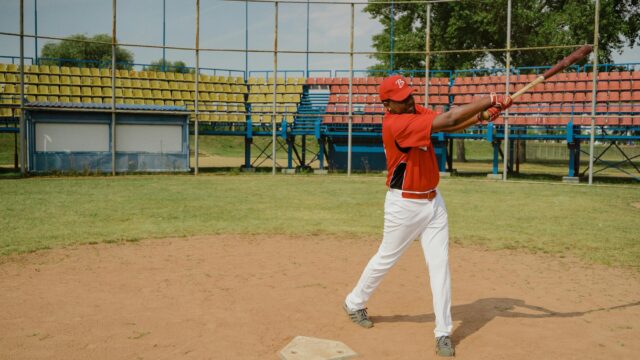
How to Hit a Fastball: Stance, Swing Path, and Drills for Every Level
Last updated: March 23, 2026
I have spent the last twenty years either swinging a bat or teaching kids how to swing one, and the single question I get asked more than any other is the one that sounds the simplest. How do I hit a fastball? On the surface, it seems like the answer should be obvious. See ball, hit ball. But anyone who has stepped into the box against a 90 mph heater, a low-90s sinker that runs back over the inner half, or even a coach throwing 75 with a flat plane from 50 feet knows the truth. Hitting a fastball is the hardest single act in sports, and the gap between “swinging at it” and “consistently squaring it up” is enormous.
This guide is the one I wish someone had handed me when I was 14 years old, getting blown away by varsity arms. We are going to break down the stance, the load, the timing windows, the swing path, the mental approach, and the specific drills I still use with my hitters today. Whether you are a Little Leaguer trying to catch up to a 50 mph kid who throws “gas” for his age, a high school sophomore facing 85 in a wood bat league, or a college hitter trying to keep up with low-90s velocity that now feels like the league average, the principles do not change. The execution does. By the time you finish this guide, you should have a step-by-step framework you can take into the cage tomorrow.
Why the Fastball Is Still the Pitch You Have to Beat
Even in 2026, with sweepers and splitters and kick changes dominating the analytics conversation, the fastball is thrown roughly 48 to 55 percent of the time at every level from high school through MLB. According to recent pitch tracking data from MLB Statcast, four-seamers and sinkers combined still account for the majority of pitches in nearly every count, and the average MLB four-seam velocity sits at 94.2 mph. At the youth level, average velocity climbs about 4 to 6 mph per age tier. A 12U kid who throws 65 is “fast.” A 14U arm at 75 is plus. By 16U, 80 to 85 is the floor for varsity. The number changes. The skill of beating it does not.
Here is the truth I tell every hitter I work with on day one. If you cannot hit the fastball, you cannot hit. Period. Pitchers throw the secondary stuff to set up the heater or to get you out when they have already established the heater. If you sit on a hanging slider but cannot turn around a 92 mph fastball on the inner third, the at-bat is already over before the first pitch. You have to be a fastball hitter first. Everything else is an adjustment off of that baseline.
The Reaction Time Reality You Have to Plan Around
Before we touch a bat, you need to internalize one number. From 60 feet 6 inches, a 95 mph fastball reaches the plate in roughly 400 milliseconds. The hitter’s swing itself takes about 150 milliseconds from the moment the front foot lands to contact. That leaves you, at the absolute most, 250 milliseconds to recognize the pitch, decide to swing, and start moving. Human reaction time to a visual stimulus is around 200 milliseconds on its own. You are operating in a window so narrow that the brain literally cannot afford to “decide” the way it decides anything else in life.
What this means in practical terms is that hitting a fastball is not a reaction sport in the way most people think. It is an anticipation sport. You are not waiting to see the pitch and then deciding what to do. You are committing to a swing before you have full visual confirmation, and using your eyes to decide whether to abort. That is the opposite of what most parents and youth coaches teach. “See the ball, hit the ball” is the worst hitting advice ever given. The real instruction is “expect the ball, confirm the ball, hit the ball.” Once you understand this, the rest of the guide will start to click.
Equipment You Actually Need to Train Fastball Hitting
You can train fastball hitting with surprisingly little gear, but a few specific tools accelerate the process by months. I have ranked these in the order I would buy them if I were starting from zero today.
| Equipment | Why You Need It | Approx. Cost (2026) | Priority |
|---|---|---|---|
| Game bat (correctly fit) | Wrong weight or length kills bat speed and timing | $80–$500 | Essential |
| Batting tee (heavy base) | Foundation of swing path and contact point work | $40–$120 | Essential |
| L-screen and bucket of balls | Live front toss and BP at game speeds | $150–$300 | Essential |
| Pitching machine (variable speed) | Repeated reps at game velocity, no arm fatigue | $300–$1,800 | High |
| Vision training balls (numbered) | Train pitch recognition and tracking | $25–$60 | High |
| Weighted training bat | Build bat speed for catching up to velocity | $50–$110 | Medium |
| Swing analyzer (Blast or Diamond Kinetics) | Measure attack angle, bat speed, time to contact | $130–$200 | Medium |
| Batting cage (home or rented) | High-volume reps without retrieval time | $0–$2,000 | Bonus |
The bat fit is the one most parents and players get wrong. If your bat is too heavy, your barrel will drag through the zone and you will be late on every fastball above 85. If it is too light, you will lose the kinetic chain and end up arming the ball. I generally tell hitters to swing the heaviest bat they can still control with a clean, on-time barrel through the zone, and not a half ounce more. If you are unsure, our guide on how to choose a baseball bat walks through the sizing math for every age and certification.
Step 1: Build a Stance That Survives Velocity
The stance is the launching pad. Velocity exposes every flaw in your setup, because there is no time to fix anything once the ball is released. I want my hitters set up so the body is already in an athletic, balanced position from the moment they step into the box.
Feet: Slightly wider than shoulder width. Too narrow and you cannot post against the front leg. Too wide and you cannot stride. Toes should be roughly even with the front edge of the plate or slightly behind it for most hitters facing high velocity. Move closer to the plate and you cover the outer third. Move back a few inches in the box and you give yourself an extra few feet, which is essentially free reaction time against a fastball.
Knees and hips: Soft knees, slight bend, weight on the balls of the feet, not the heels. The hips should feel like they are loaded into the back leg at about 60/40 weight distribution. If you are flat-footed at setup, you are dead before the pitch is thrown.
Hands: Hands start somewhere between the back shoulder and slightly behind it, at roughly armpit height. The exact spot is personal preference. What matters is that your hands have a short, clean path to the launch position. The biggest fastball killer I see in young hitters is hands set too low or too far away from the body, which adds 40 to 80 milliseconds of “wasted motion” before the swing even starts.
Eyes: Both eyes squared to the pitcher. Not turned, not buried in your shoulder. If you cannot comfortably see the release point with both eyes, your stance is too closed.
Step 2: The Load That Buys You Time
The load is where you store energy and synchronize your timing with the pitcher. Done well, it shaves milliseconds off your reaction window. Done poorly, it costs you those milliseconds and you end up swinging at where the ball used to be.
I teach a two-part load. First, a small inward turn of the front shoulder and front hip, no more than a few degrees. This is the “gather.” Second, a controlled weight shift to the back hip while the hands move slightly back and up to the launch position. By the time the pitcher is at the top of his leg lift, your gather should be complete. By the time his front foot is about to land, your back hip should be loaded and your hands set.
The single most important thing I can tell you about loading against velocity is this. Start your load earlier than feels comfortable. Most amateurs load late because they are scared of committing too soon. Then they have no time to react and end up “rushing” the swing, which is a polite term for arms flying open with no hip rotation. Get loaded early, hold your stretch, and let the swing fire from a fully coiled position. Watch any MLB hitter against a 95 mph fastball. They are loaded before the ball is released, not after.
Step 3: The Stride and the Timing Trigger
Your stride is your timing mechanism. Pick something the pitcher does and use it as your trigger. Common triggers are the moment his hands separate, the peak of his leg lift, or the start of his stride toward the plate. The exact trigger does not matter as much as picking one and being consistent. Inconsistent triggers are the number one cause of getting jammed by fastballs and out front of changeups.
Stride length should be short and quiet. Six to ten inches for most hitters, with the front foot landing slightly closed (toes pointed somewhere between the shortstop and the pitcher, depending on hitter). The front foot should land before the swing starts. If your foot is still in the air when you start your swing, you have no base to rotate against and you will lose 5 to 10 mph of exit velocity. Land soft, land closed, and let the back hip fire.
If you struggle with timing against velocity, try eliminating the stride entirely. A no-stride or “quiet foot” approach removes a moving part. You lose a small amount of momentum but gain massive amounts of consistency. Plenty of MLB hitters, including some of the best fastball hitters in the league, use minimal or no stride against high velocity. It is a legitimate adjustment, not a crutch.
Step 4: Swing Path and the A-to-B Concept
The shortest distance between your hands and the ball is a straight line. Velocity punishes long swings. Every loop, every wrap, every bar of the front arm adds milliseconds you do not have. The phrase I use is “A to B.” Point A is your launch position. Point B is the contact point in the hitting zone. The bat should travel from A to B on the most direct path possible while still maintaining a slight upward attack angle to match the downward plane of the pitch.
I want the back elbow to slot down to the rib cage as the hands fire forward. The barrel should drop into the zone and stay in the zone for as long as possible. A flat or downward swing path against an elevated four-seamer is a recipe for rolled-over groundballs and pop-ups. A swing with about an 8 to 12 degree attack angle, matched to a typical fastball plane, gives you the largest margin for error and the best chance to drive the ball with backspin. We talk about this in more detail in our guide on improving barrel rate.
The back elbow position at launch is non-negotiable. Elbow up means longer swing and dropped barrel. Elbow slotted down and slightly behind the rib cage means short, fast, on-plane. If you take only one mechanical fix from this guide, fix the elbow.
Step 5: Contact Point by Pitch Location
Where you make contact with a fastball changes based on where it is located. This is one of the least taught and most important concepts in hitting. The contact point determines your bat speed at impact, your spray angle, and your chances of squaring the ball.
| Pitch Location | Ideal Contact Point | Target Field | Common Result if Mistimed |
|---|---|---|---|
| Inner third, belt high | 6–10 inches in front of front hip | Pull side line drive | Pulled foul or hooked ground ball |
| Middle, belt high | Even with front hip | Center field gap | Pulled weak grounder if early |
| Outer third, belt high | Even with or slightly behind front hip | Opposite field | Rolled over to short or weak fly |
| Inner third, high | Well in front of front hip | Pull side fly ball | Pop up or swing through |
| Outer third, low | Slightly behind front hip | Oppo ground ball or line drive | Topped grounder |
| Middle, high (climber) | Just in front of plate | Center or slight pull | Pop up under the ball |
The big idea is that the inside fastball must be contacted earlier and farther out front than the outside fastball. If you try to pull a pitch on the outer third, you will roll over it. If you try to push an inside fastball to right field as a right-handed hitter, you will get jammed and broken bats will follow. Match the swing to the location, and the location to the count. Most hitters should sit on the inner half early in the count and adjust to the outside corner as the at-bat develops.
Step 6: The Mental Approach Against Velocity
The mental side of fastball hitting is bigger than the mechanical side once your swing is in order. You cannot defend the entire strike zone against high velocity. The math does not work. So you have to narrow your zone, sit on a location, and trust that you will have time to abort if the pitch is somewhere else.
I teach a tiered approach. Early in the count (0-0, 1-0, 2-0), pick a half of the plate. Sit middle-in or sit middle-away. Be aggressive on anything in your zone, take everything else. With two strikes, expand to the full plate but shorten up your swing and go the other way with anything outer half. Our two-strike hitting guide covers the full breakdown.
Two psychological keys for facing real velocity: First, slow your breathing in the box. A deep breath as you step in, exhale as you settle. This drops your heart rate and sharpens your visual processing. Second, do not chase your last at-bat. Hitting against velocity is a rolling average. You will get beat. The hitters who succeed are the ones who treat each pitch as an independent event and reset between every one.
Step 7: Pitch Recognition and Picking Up the Ball Early
Pitch recognition is the bridge between mechanics and at-bat success. The good news is that it is trainable. The bad news is that almost nobody trains it deliberately.
Identify the pitcher’s release point. This is the small window of space, usually about a foot wide and a foot tall, from which every pitch he throws will emerge. Soft focus on a slightly larger box around that release window during your stance. As the pitcher delivers, your eyes will naturally sharpen onto the ball as it appears. You are looking for spin, plane, and shape within the first 15 to 20 feet of flight. By the time the ball is halfway to the plate, you should have your “yes” or “no” decision locked in.
Specifically for fastballs, you are looking for tight, four-seam rotation (the ball almost looks still or “red dot free”) and a flat, level plane. A four-seamer on the inner third with backspin will appear to rise. It does not actually rise, but the absence of the gravity drop you expect makes it look elevated. This is what gets hitters to swing under high fastballs. Train your eyes to expect this. Our deeper guide on baseball pitch recognition goes further into the visual training side.
Drills That Actually Train Fastball Hitting
I will be honest. Most of the drills you see on social media are useless for this purpose. They look pretty and they generate views, but they do not transfer to the box against velocity. These are the ones I have used for years with hitters from 10U through college, and they work.
Drill 1: High-Tee Inside Fastball Drill
Set the tee belt-high on the inner third. Stand close enough that you have to hit the ball way out in front to drive it pull side. Take 25 swings focused on getting the barrel out front cleanly with the back elbow slotted. The goal is to feel the contact point and the elbow path against the inside fastball. If you cannot pull this in BP, you cannot turn on a 92 mph inside heater. Period.
Drill 2: Outside-Tee Oppo Drill
Tee placed on the outer third, contact point even with the front hip or slightly behind. The drill is to hit hard line drives the other way. Most hitters cheat this drill by pulling off and yanking the ball pull side. The whole point is to teach the body how to stay closed on outside fastballs and use the whole field. Take 25 reps. If 20 of them go to the opposite field gap, you are doing it right.
Drill 3: Short-Distance Front Toss (Velocity Sim)
Coach throws front toss from 20 to 25 feet behind an L-screen, throwing 50 to 60 mph. The shortened distance simulates the perceived velocity of a much faster pitch from regulation distance. This is the single best drill on earth for training fastball reaction. Take 30 to 50 reps in sets of 10. You will be amazed how much faster your real-game timing feels after a few weeks of this.
Drill 4: Numbered Ball Recognition
Use balls with large numbers written on them. The hitter calls out the number before the ball reaches the plate, then decides to swing or take based on a pre-set rule (e.g., swing only on even numbers). This trains the eyes to track and process information quickly while still executing a swing decision. Twenty reps daily, four days a week, for six weeks will measurably improve plate discipline and pitch recognition.
Drill 5: One-Knee Top-Hand Drill
On your back knee in front of a tee, hold the bat with only your top hand near the bat’s balance point (or use a short bat). Swing through the ball with the top hand only. This isolates the back arm action and teaches you to drive the barrel from the slot rather than casting it out and around. Twenty-five reps per session. This drill cures more long swings than any verbal cue I know.
Drill 6: Machine Velocity Ladder
If you have access to a pitching machine, set it at game speed. Take 15 swings. Then bump it up 5 mph above game speed. Take 15 swings. Then drop it to 5 mph below game speed. Take 15 swings. The contrast trains your timing system to handle a wider range, so when you face game velocity it feels manageable. Round out with another 15 at game speed. Total: 60 reps, three velocities. Do this twice a week.
Drill 7: Soft Toss with Two Balls
Coach holds two balls and tosses both in the same motion, dropping one and tossing the other. The hitter has to identify which ball is “live” and swing only at that one. This trains last-millisecond pitch recognition and swing-abort ability. Brutal at first, transformative after a month.
Common Mistakes Hitters Make Against the Fastball
I have charted thousands of at-bats. The same handful of mistakes show up over and over. Fix any one of these and you will jump a level overnight.
| Mistake | What It Looks Like | The Fix |
|---|---|---|
| Loading too late | Hands still moving back as the ball is released | Trigger on the pitcher’s leg lift, not his stride |
| Long swing path | Bat wraps around the head, barrel arrives late | Top-hand drill and elbow-slot cue |
| Drifting onto the front side | Body lunges, back leg collapses, no power | Hold back hip stretch through contact |
| Pulling off the ball | Front shoulder flies open, head leaves the ball | Oppo tee drill and chin-on-back-shoulder cue |
| Swinging at high heat in two-strike counts | Pop-ups under the high four-seamer | Set zone ceiling at the belt with two strikes |
| Trying to crush every fastball | Max-effort hacks that produce weak contact | Hit the ball hard, do not try to hit it hard |
| Bad bat fit | Late, weak swings or arming the ball | Drop down a half ounce or up depending on issue |
| No specific approach | Hunting for any pitch in any location | Pick a half of the plate early in the count |
| Eyes wandering at setup | Picks up release point late | Soft focus on release window before delivery |
| Hands too low at start | Adds time to load and longer swing path | Start hands at armpit height or slightly higher |
Adjusting by Pitch Type Within the Fastball Family
Not all fastballs are the same. The four-seam, two-seam, sinker, and cutter all behave differently, and a hitter who lumps them together will struggle. Here is how I coach each one.
Four-seam fastball: The straight one. Backspin makes it appear to ride. Your eye level matters most here. Stay tall, do not collapse the back side, and look for it up in the zone. Drive it the other way if it is on the outer third, pull it if it is on the inner third. The four-seam is the easiest fastball to backspin for distance, which is why the home run and line drive numbers cluster there.
Two-seam fastball / sinker: Has arm-side run and downward action. From a right-handed pitcher to a right-handed batter, the ball runs in on the hands. The fix is to start your hands a hair earlier and look for the ball middle-down. Hitting a sinker out front of the plate is how you turn it into a line drive. Letting it travel deep is how you roll it over to short.
Cutter: Late horizontal break, usually 2 to 5 mph slower than a four-seamer. Looks like a fastball, finishes like a small slider. The biggest mistake hitters make is treating it like a slider and getting jammed when it does not break enough. Treat it as a fastball with a small late move, stay through the middle of the field, and accept that some cutters off the plate are simply unhittable.
Splitter / split-change: Technically not a fastball, but disguised as one. Released with fastball arm action and looks like a four-seamer until it falls off the table about 10 feet from home plate. The cure is recognition. If you swing at every “fastball” out of the hand, you will swing through every splitter. The cue I give my hitters is “trust nothing in the bottom third with two strikes against a splitter guy.”
Fastball Hitting by Age and Level
The fundamentals are universal, but the application changes by age. Here is what to focus on at each level.
| Level | Typical Fastball Velo | Reaction Time | Top Priority |
|---|---|---|---|
| 8U–10U | 40–55 mph | ~700 ms | Stance, see ball, simple swing |
| 11U–12U | 55–68 mph | ~550 ms | Timing, contact point, basic load |
| 13U–14U | 65–78 mph | ~470 ms | Pitch recognition, two-strike approach |
| HS Freshman/JV | 72–82 mph | ~420 ms | Quiet load, on-plane swing path |
| HS Varsity | 78–88 mph | ~390 ms | Plate coverage, count leverage |
| Travel/Showcase 16U–18U | 82–92 mph | ~370 ms | Velocity training, machine work |
| College D1 | 88–95 mph | ~350 ms | Anticipation, pitch tunneling reads |
| Pro / MLB | 92–100+ mph | ~330 ms or less | Specific scouting reports per pitcher |
For young hitters under 12, the focus is purely on swing fundamentals. Do not start drilling pitch recognition or sit-zone strategy with an 8-year-old. Build the swing first. From 12 to 14, layer in timing work and a basic two-strike adjustment. From 14 onward, the mental and recognition pieces become the difference makers, because most varsity hitters can mechanically swing the bat. Few of them have a real plan.
Advanced Tips: What Separates Good Hitters from Great Ones
Once your mechanics are solid and your approach is mature, these are the small things that drop your strikeout rate and bump your slugging.
Hunt the heater in fastball counts. 1-0, 2-0, 2-1, and 3-1 are fastball counts. Pitchers throw fastballs in those counts about 65 to 75 percent of the time at every level. Sit on the heater in those spots and do not even consider offspeed unless you have a specific scouting read that says otherwise. The hitters who slug live in 1-0 and 2-1.
Read the pitcher’s release window. Different pitches often have slightly different release points or arm slots. The good slider that “looks like a fastball” usually has a tiny tell. Most amateur pitchers release sliders a fraction higher and slightly to the glove side. Pick that up and you will drop your chase rate by 20 percent inside a season.
Use bat speed as a fastball weapon. Every additional mph of bat speed buys you about 0.005 seconds of decision time, which adds up. If you are getting beat by velocity, lift weights, do rotational med ball work, and grind on overload/underload bat training. Our bat speed guide has the full program. More bat speed equals more time to see the ball.
Track the ball into the catcher’s glove. On takes, follow the ball all the way into the mitt. This trains your eye-tracking system to handle full pitch flight, which translates to faster recognition on the next pitch. Hitters who let their eyes go after the ball crosses the plate get worse at recognition over the course of the at-bat.
Sequence-aware approach. If a pitcher has thrown two straight fastballs and gotten swings, expect offspeed. If he has buried two sliders that you took for balls, expect the fastball back in the zone. Pitchers fall into patterns. Track them in your head between pitches, not after the at-bat.
Train at higher velocity than you face. If you face 85 in games, set the machine at 90. Two months of this and game-speed velocity will look like front toss. The brain is plastic. Train it under harder conditions, then perform under normal ones.
Building a Weekly Practice Plan for Fastball Hitting
Skill is built through deliberate, repeated, focused practice. Here is the weekly schedule I have used with high school and college hitters during the season. Adjust volume down for younger players, and pull back during the heaviest game weeks.
| Day | Focus | Volume |
|---|---|---|
| Monday | Tee work (50 swings: 20 inside, 20 outside, 10 middle) + film review | 50 swings |
| Tuesday | Front toss + soft toss recognition drill | 60 swings + 20 recognition reps |
| Wednesday | Machine velocity ladder (game speed, +5, -5, game speed) | 60 swings |
| Thursday | Live BP from coach or teammate | 40 swings, 4 rounds |
| Friday | Light tee day + visualization + game prep | 25 swings |
| Saturday | Game | 3–4 ABs |
| Sunday | Active recovery, mobility, and off-bat strength | No swings |
The mistake most amateurs make is taking 200 mindless BP swings and calling it work. Quality crushes quantity. Forty intentional swings with a specific feel and a specific outcome will do more for you than 300 random hacks.
Frequently Asked Questions About Hitting a Fastball
How do I stop being late on the fastball?
Three steps. First, start your load earlier — your hands and back hip should be set before the pitcher’s stride foot lands. Second, shorten your swing by slotting the back elbow and going from A to B without wrapping the bat. Third, train at higher velocity than you face in games to recalibrate your timing system. If you do all three for a month and you are still late, you almost certainly have the wrong bat. Drop a half ounce.
Should I move up in the box against a hard thrower?
Generally no, but it depends. Moving up gets you closer to a sinker before it sinks, which is helpful against heavy ground ball arms. Moving back gives you more reaction time, which helps against pure velocity. The vast majority of hitters benefit more from moving back a few inches than forward. The exception is when you face a pitcher who throws hard with a lot of late life and changeups — then moving up takes the changeup out of play.
Why do I keep popping up high fastballs?
You are swinging under the ball, almost certainly because your back shoulder is dropping and you are coming up through the swing. Stay tall, do not collapse the back side, and shorten the path to the ball. The high fastball appears to rise because of backspin defying your gravity expectation. Train your eye to hit through the top half of the ball at the top of the zone, not under it.
Is it better to choke up against a hard thrower?
Yes, especially with two strikes. Choking up half an inch to an inch shortens the lever, increases bat speed, and improves bat control. You give up a small amount of leverage at the end of the bat, but you gain everything in timing and contact. Mookie Betts has slugged over .500 in his career while choking up. It is not a beginner’s compromise. It is a tool.
How do I train fastball hitting if I do not have a pitching machine?
Short-distance front toss is the answer. A coach throwing 50 to 55 mph from 25 feet behind an L-screen produces the perceived velocity of a 90 mph pitch from regulation distance. It is the cheapest, most effective fastball training tool that exists. Get an L-screen, a bucket of balls, a partner, and you have everything you need.
Should I sit fastball every pitch?
Early in the count, yes. The default plan should always be fastball-on-time, then adjust to offspeed. Sitting offspeed and trying to react to a fastball is a losing equation against any quality velocity. The exception is in obvious offspeed counts (0-2, 1-2, sometimes 2-2 against a finesse pitcher) where you can shrink your fastball zone and look for the breaker. For more on count-based planning, see our guide on building a hitting approach.
What is the difference in approach between hitting a four-seam and a sinker?
Against a four-seam, hunt up in the zone and stay through the middle of the field. The ball will appear to rise, so trust your hands at the top of the zone. Against a sinker, hunt belt-down, expect arm-side run, and try to catch the ball out front before it dives. Sinkers eaten up deep in the zone become weak rollovers. Sinkers attacked out front become hard line drives.
How long does it take to become a good fastball hitter?
If you start from scratch with sound mechanics, you can get noticeably better in 6 to 8 weeks of focused, deliberate work. Real proficiency at a given velocity tier usually takes a full season of repetitions plus consistent off-season volume. The hitters who jump from JV to varsity, or from varsity to college, almost universally do it through 12 to 16 months of layered work — mechanical cleanup, velocity exposure, recognition training, and physical strength. There is no shortcut, but the path is well-mapped.
Do weighted bats actually help with fastball hitting?
Used correctly, yes. Overload/underload protocols (alternating heavier and lighter than game-bat training swings) have research-backed effects on bat speed and rotational power. Used incorrectly — swinging a 60 oz donut on deck right before stepping in — they can blunt your swing for the first AB. Train with weighted bats in the cage, not on deck. Take your warmup swings with your game bat or a slightly underloaded version.
What is the single biggest mistake youth hitters make against velocity?
Trying to swing harder. The natural reaction to a fastball is to muscle up, and muscling up tightens the swing, lengthens the path, and slows the bat. The hitters who beat velocity look smoother and easier than the hitters who get beat by it. Tell your kid to “swing easier and meet the ball.” Their exit velocity will go up, not down. I have seen this hold true at every level for two decades.
Putting It All Together
Hitting a fastball is a stack of small habits. A balanced stance. An early load. A quiet stride. A short, on-plane swing from a slotted back elbow. A contact point matched to the pitch location. A defined plan for the count. Eyes that pick up the release window early. A swing decision committed to before you have full information. And the physical strength to drive the ball when all of that lines up.
None of these things alone will turn you into a fastball hitter. Together, they will. The hitters I have coached who made the biggest jumps did not find a magic cue or a secret drill. They drilled the boring fundamentals every day, layered in velocity exposure, and built a real plan instead of guessing. Six months of that, four days a week, and you will not recognize your at-bats.
If you want to keep building from here, our deeper dive on general hitting mechanics covers stance and swing in even more detail, our hitting drills guide gives you the full BP and tee menu, and our curveball hitting guide covers the natural next step once you can drive the heater. Hit the cage tomorrow with a plan. The fastball is the pitch you have to beat. Now you know how to beat it.