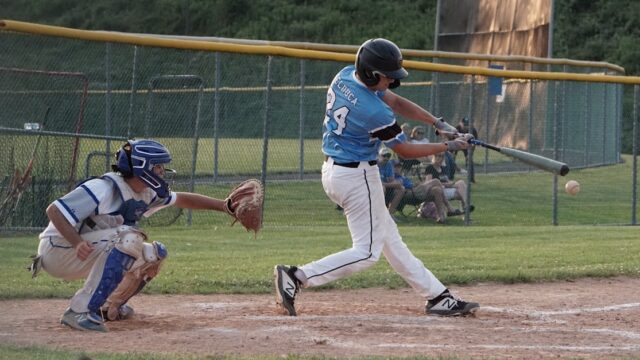
How to Hit More Doubles in Baseball: Gap-Hitting, Spray Charts, and Drills for Every Level
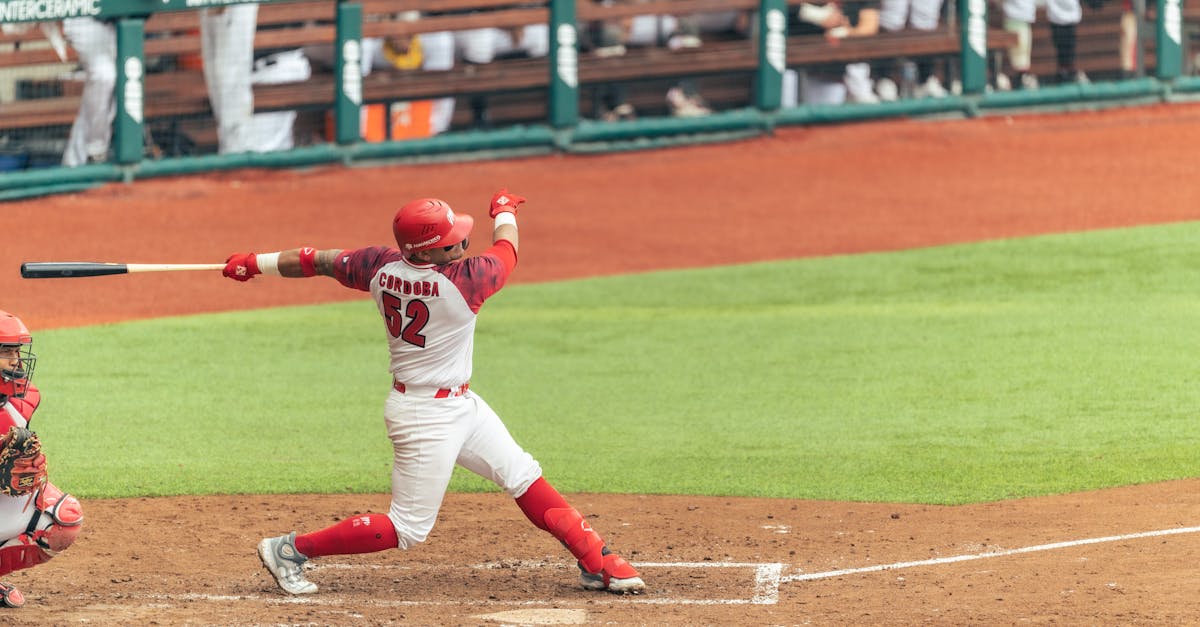
Last updated: March 17, 2026
I have spent two decades watching, coaching, and obsessing over the swing, and I can tell you with zero hesitation that the most undervalued offensive skill in modern baseball is the ability to hit doubles. Home runs make highlight reels, walks make analysts smile, and singles fill box scores. But doubles? Doubles win games. A double almost always scores a runner from first, jumps a hitter into scoring position with zero outs of risk, and crushes the soul of a pitching staff because it usually means a ball was driven into a gap by a hitter who knew exactly what he was doing.
This guide is the playbook I wish I had when I was a teenager trying to “swing harder” out of every slump. It is built around one idea: you do not need elite power to be a doubles machine. You need a repeatable swing path, a clean approach to the gaps, and the patience to stay inside the baseball when the count tells you to. I am going to walk you through every layer of gap-hitting, from spray-chart strategy to cage drills, from tee work to in-game decision-making. By the end of this article you will have a complete development plan you can run with at the youth, high school, college, or adult-league level.
Why Doubles Matter More Than You Think
Before we get into the mechanics, let us look at the data. In modern Major League Baseball, doubles account for roughly 70 percent of all extra-base hits in a typical season. That is more than triples and home runs combined. The league-leader in doubles usually finishes somewhere between 42 and 53 two-baggers, which is a number any hitter can chase if they understand the recipe. A 40-double season is essentially a guarantee of an .800-plus OPS even if you hit only 15 homers, and it is the most stable extra-base skill across years because it relies on bat-to-ball quality and ball-flight control rather than raw exit velocity.
The math behind it is brutal for pitchers. A leadoff double in an inning has historically resulted in the leadoff runner scoring more than 60 percent of the time, while a leadoff single scores around 38 percent. A double with a runner on first scores that runner roughly 65 percent of the time. In other words, when you turn a single into a double, you essentially convert your at-bat into a run-producing event. That is the leverage we are chasing in this guide.
What a Double Actually Looks Like in the Statcast Era
I want you to throw away the cartoon image of a double as a screaming line drive to the wall. The Statcast database tells a different story. The majority of MLB doubles are actually batted balls between 95 and 105 mph of exit velocity with launch angles between 8 and 25 degrees, hit either to the gap or down the line. They are not always crushed. They are placed. A 92 mph line drive into the right-center alley is a double almost every time. A 108 mph one-hopper at the third baseman is an out almost every time. Direction beats raw force.
| Batted Ball Profile | Exit Velocity | Launch Angle | Typical Outcome | Coaching Cue |
|---|---|---|---|---|
| Gap line drive | 92-100 mph | 10-18 degrees | Double, sometimes triple | “Stay inside, finish through” |
| Down-the-line liner | 88-100 mph | 8-16 degrees | Double off the corner | “Foul pole, foul pole” |
| Hard fly to alley | 95-105 mph | 20-28 degrees | Wall-ball double | “Drive it deep, not high” |
| Hard one-hopper | 100+ mph | -5 to 5 degrees | Likely out, occasional gapper | “Lift the bottom half” |
| Pop-up to outfield | 80-92 mph | 35+ degrees | Easy out | “Stay tall, do not collapse” |
If you remember one thing from this whole article, remember this: the doubles zone in launch-angle terms is roughly 8 to 25 degrees with mid-90s exit velocity. Train into that window and your slugging percentage will climb every season.
Tip 1: Train Yourself to Aim at the Alleys, Not the Walls
Young hitters are obsessed with the warning track. They want to hit the wall on the fly. The problem is that aiming high creates a steep upswing and a lot of fly outs. Doubles hitters aim at the alleys, which I define as the gap halfway between the center fielder and each corner outfielder. The mental cue I give my hitters is, “Hit the line drive that splits the outfielders, and let physics turn it into a double.” If you crush a ball at 105 mph into right-center on a 14-degree line, it will skip past the center fielder and roll to the wall. That is how doubles are born.
Practically, this means setting up your batting practice with alley targets. I put a 6-foot cone or a portable net in each gap during BP and tell my hitters that any ball that lands within 10 feet of those cones counts double in their scrimmage. Within two weeks, their internal aim recalibrates.
Tip 2: Build a Spray Chart Before You Build a Swing
If you do not know where your batted balls go, you cannot fix where they go. Pull up your last 50 batted ball events. Plot them on a paper spray chart, or use an app like GameChanger or HitTrax. You will quickly see your tendencies. Most pull-heavy hitters do not have a doubles problem to the pull side, they have a doubles problem to the opposite gap. The fix is rarely “swing different.” The fix is usually a pitch-selection adjustment so you stop trying to pull pitches on the outer third.
I keep a rule on my own scorecards: any time a hitter pulls an outer-third strike, I mark it as a wasted pitch even if it goes for a hit. That single mental shift, treating outer-third strikes as opposite-gap pitches, has added 8 to 12 doubles per season for high school hitters I have worked with.
Tip 3: Stay Inside the Baseball
“Stay inside the ball” is a phrase you have heard a thousand times. Almost nobody explains what it actually means. Here is the truth. Staying inside the baseball is the path your hands take to the ball, where the knob of the bat leads toward the inside half of the ball before the barrel turns through the zone. When your hands cast outward early, your barrel sweeps across the ball and you yank everything to the pull side. When your hands stay tight and your barrel works behind your hands, you can drive the ball through the middle of the field with topspin, which is the doubles ball.
The drill I love for this is the inside-tee drill. Place the tee on the inside half of the plate but ask the hitter to hit the ball back up the middle, not pull it. The only way to do it is to keep the hands inside and let the barrel work behind. If you sweep, you foul it off the third-base dugout. Do 30 reps per session and you will feel the path lock in.
Tip 4: Get Comfortable Hitting the Opposite-Field Gap
The single biggest unlock for doubles production at the amateur level is the opposite-gap line drive. A right-handed hitter who can drive a ball into the right-center alley off an outside fastball turns a soft single into a stand-up double on the regular. I tell my hitters that an outside strike is a “doubles pitch in disguise,” because the defense is rarely positioned to take that hit away when you go with it.
Train this in BP by spending one full round per session hitting only to the opposite gap. If you can do this off live pitching with consistent backspin, you have unlocked a permanent run-producing skill. Pair this work with reading our deep-dive on how to hit to the opposite field, which has a full mechanical breakdown.
Tip 5: Learn to Read the Outfield Before the Pitch
Doubles hitters scout the field while they are on deck. They notice if the center fielder is playing 350 feet deep on a slow turf, or if the right fielder is shaded to the line because he is afraid of the slice. A pitch driven where the outfielder is not is worth more than a pitch driven harder where he is. I want you to make it a habit, during your warm-up swings in the on-deck circle, to look at all three outfielders, identify the deepest one, and identify the shortest gap. That is your target. You should know it before the pitcher is even on the rubber.
Tip 6: Master the Two-Strike Doubles Approach
Two strikes does not have to mean “just put it in play.” For a doubles hitter, two strikes means “shorten and stay middle-away.” When you choke up half an inch, widen your stance an inch, and commit to driving the ball to the big part of the field, you are perfectly positioned to crush a 1-2 fastball or hanging breaker into the opposite gap. I have seen high school hitters add five doubles a year just from a smarter two-strike plan. The MLB league average with two strikes hovers around a .180 batting average, so the standard is low and the upside is enormous.
Tip 7: Lift the Bottom Half of the Ball, Not the Whole Ball
“Lift the ball” was the rallying cry of the launch-angle revolution, and it produced a lot of hitters with great Statcast bat-paths and terrible batting averages. The doubles ball does not need a massive lift. It needs the bat to enter the zone slightly below the bottom half of the baseball and exit slightly above center, which produces a backspin line drive in the 12-to-20-degree window. That is exactly the launch angle that splits outfielders. If you want more on this, our launch angle training guide has a full breakdown.
Tip 8: Use Your Lower Half Like a Hinge, Not a Spin
Hitters who spin their hips first tend to pull off the baseball, drag the barrel, and produce weak fly balls. Hitters who hinge their lead hip and let the back hip rotate around a stable lead leg drive their barrel straight through the middle of the zone. This is why elite gap-hitters like Mookie Betts, Freddie Freeman, and Ketel Marte look like they are barely working at the plate. They hinge and post on the lead leg, then let rotation happen as a consequence of the lower-half stack.
To train this, use the “lead-leg post” drill. Stand on your lead leg only, no back foot on the ground, and hit slow front toss into the opposite gap. You will be forced to maintain your front-side posture and stop pulling off. After 50 reps, switch back to a normal stance. You will feel grounded and powerful in a way that does not require a hard rotation.
Tip 9: Run Hard Out of the Box, Always
I would estimate that 8 to 10 percent of all amateur doubles are not actually struck hard enough to be doubles. They are singles that became doubles because the hitter ran hard out of the box. A ball that splits two outfielders does not automatically become a two-bagger unless the hitter is sprinting on contact. Every double counts the same in the box score, whether you smoke it 105 mph or you blast a 78 mph chopper that finds a hole. Run like every ball is in the gap until proven otherwise.
Tip 10: Hit Down the Line on Purpose
The corner outfielder almost always plays you straight up. A ball into the corner is one of the easiest doubles in the game because the outfielder has to chase, the cutoff man is deep, and the runner has time to read the angle. Especially against a pitcher who lives inside on a lefty or outside on a righty, training to drive the ball down the line is a free run-producing skill. Use the inside tee to your pull side and ask your coach to track only the line drives that land within 15 feet of the line. Eight to 12 reps per session is enough.
Doubles by Count: When to Go for It
| Count | Pitch Plan | Field Target | Aggressiveness | Doubles Likelihood |
|---|---|---|---|---|
| 0-0 | First-pitch fastball middle | Pull gap to center | High | High |
| 1-0 | Fastball any zone | Drive middle | Very high | Highest |
| 2-0 | Fastball middle-in | Pull gap | Very high | Highest |
| 3-1 | Fastball any zone | Drive middle or pull gap | Very high | Highest |
| 0-2 | Anything close | Opposite gap | Defensive | Low |
| 1-2 | Stay middle-away | Middle to opposite gap | Defensive | Low to moderate |
| 2-2 | Pitcher’s pitch | Middle | Moderate | Moderate |
| 3-2 | Fastball expected | Drive middle | High | High |
The biggest mistake hitters make is treating every count the same. The doubles you can hunt are usually in fastball counts (1-0, 2-0, 3-1, 3-2). The doubles you have to earn show up in defensive counts. Treat them differently and you will more than double your extra-base output.
The Five Best Doubles-Producing Drills
1. Alley Targets BP
Set up two portable nets in the left-center and right-center gaps about 280 to 320 feet from home plate. Take 30 BP swings with the goal of landing line drives near the nets. Use a scoring system where pull-gap drives = 1 point, opposite-gap drives = 2 points. The double-scoring on the opposite gap forces you to stay through the ball.
2. Opposite-Gap Tee Series
Place the tee on the outside third of the plate, deep in your stance. Hit 25 reps with the goal of driving each ball into the opposite gap, low line drive trajectory. This is the most underrated tee drill in all of hitting development. It builds the swing path that turns weak ground balls into wall-banging doubles.
3. High-Tee Line-Drive Drill
Raise the tee to chest height and ask the hitter to drive the ball at a 10-degree launch angle. This forces them to stay on top of the ball with a slight downhill-then-flat path, which is exactly the path that produces line-drive doubles instead of pop-ups. Pair this with our line-drive hitting guide for full mechanical detail.
4. Backspin Front Toss
Coach tosses softballs (yes, big white softballs) from short distance and asks the hitter to drive each ball with visible backspin. The size of the ball makes the contact point obvious, and backspin is the magic ingredient that turns a 92 mph line drive into a wall-rolling double.
5. Two-Strike Spray Round
Take a full round of BP starting every pitch in a 1-2 count mentality. Choke up, widen stance, drive middle-away. The goal is 8 of 10 balls in the big part of the field at line-drive trajectory. This is the round that wins you games in May and June.
Mechanical Cues That Actually Work
| Cue | What It Fixes | How to Practice |
|---|---|---|
| “Knob to the ball” | Casting hands too early | Inside tee, middle target |
| “Stay on top” | Uppercut producing pop-ups | High tee, line-drive target |
| “Lead hip clear” | Pulling off the baseball | Lead-leg post drill |
| “Hit it deep” | Lunging out front | Tee placed deeper in stance |
| “Backspin only” | Topspin grounders | Backspin front toss |
| “Foul pole, foul pole” | Loss of bat speed on pull side | Pull-line tee |
| “Walk through the gap” | Over-rotation | Walk-through stride drill |
Cues are tools, not rules. Use the one that produces the desired result on video. If “stay on top” turns your launch angle into a worm-killer, switch to “drive through the middle of the ball.” Cues are personal.
Common Mistakes That Kill Doubles Production
Trying to Hit Home Runs on Every Pitch
Home runs are a residue of good swings, not a goal. When you hunt homers, you uppercut, you pull off, you swing 110 percent, and you produce pop-ups and weak grounders. Stop chasing homers. The double-hitter mindset turns more swings into productive contact, and the homers happen as a byproduct.
Pulling Outside Pitches
Roll-over grounders to short are the death of doubles production. The fix is approach, not mechanics. If a pitch is outside, drive it the other way. If a pitch is on the inner third, pull it. The geometry of the swing decides where the ball goes, and the location of the pitch should decide the geometry.
Swinging Too Hard on First-Pitch Fastballs
0-0 fastballs are doubles candy. But hitters often try to murder them, which produces over-rotation and a poor finish. Swing 80 percent on the first-pitch fastball. Direction and barrel will turn an 88 mph line drive into a wall-rolling double every time.
Loading Late on Velocity
Late loads produce defensive contact, and defensive contact rarely reaches the gaps. Start your load when the pitcher starts his drive. If your “go” trigger fires when the ball is halfway to the plate, you are already too late to drive anything. A clean rhythmic load is the single most reliable timing tool we have.
Ignoring Outfield Positioning
If the right fielder is playing 25 feet behind a standard depth, you have to know that. A ball that would have been a double last week is an out today. Doubles hitters live and die by their pre-pitch awareness of where the outfielders are.
Doubles Production by Level: What to Aim For
| Level | Games per Season | Good Doubles Total | Elite Doubles Total | Doubles per At-Bat Rate |
|---|---|---|---|---|
| Little League / 10U | ~25 | 5-8 | 10+ | 4-6% |
| Travel 12U-14U | ~50 | 10-14 | 18+ | 5-7% |
| High School Varsity | ~28 | 8-12 | 15+ | 7-10% |
| Showcase Summer | ~40 | 10-15 | 20+ | 8-11% |
| NCAA Division I | ~55 | 14-18 | 22+ | 8-10% |
| MLB | ~162 | 30-35 | 45+ | 6-8% |
Use these benchmarks as personal-development markers, not stress points. If you are a freshman varsity player with 5 doubles in 100 at-bats, you are already in the meat of the development curve. Stack 2 doubles per year of growth and you will be an elite college hitter by your senior year.
Equipment and Setup Tips That Boost Doubles
Bat Length and Weight
Doubles hitters tend to swing a slightly longer bat than home-run hitters. The extra plate coverage helps with opposite-gap contact. If you are torn between a -3 BBCOR 32/29 and 33/30, lean to the 33 if you are above 5 foot 11. The extra inch turns more outside fastballs into opposite-gap doubles.
Tee Position
I see too many hitters set the tee out front. Move it back. The contact point for an outside pitch should be deep, near the front edge of the back hip. Hitters who learn to make contact deep produce doubles to all fields, while hitters who make contact out front pull everything.
Batting Practice Pitch Distance
BP from 40 feet is too easy. The ball gets there too fast and your timing is off in games. Move BP back to 50 to 55 feet for live BP, or use a machine at 75 to 80 mph from 55 feet to mimic real game timing. Game-speed BP produces game-speed doubles.
The Mental Game of Doubles Hitting
Doubles are a mindset before they are a mechanic. The doubles hitter is patient, aggressive in his zone, and unwilling to give an at-bat away. He sees the field before he sees the pitcher. He knows what pitch he is hunting and where he is hitting it. He is comfortable with a 3-1 fastball he can pull into the gap and equally comfortable with a 1-2 changeup he can punch into the opposite-field alley.
This mindset is the bridge between mechanics and approach. Without it, your tee work is just empty calories. With it, your tee work compounds into a quietly elite extra-base profile. If you want to deepen your approach work, our complete hitting approach guide is the next step.
Doubles in the Statcast and Analytics Era
Statcast has been quietly proving for the better part of a decade that doubles are the most predictive of future production. Expected slugging (xSLG) is driven heavily by the launch-angle band between 10 and 25 degrees, which is exactly the doubles zone. Hitters who post strong xSLG without huge home run totals are almost always doubles machines, and they tend to age well because their skill is built on bat-to-ball plus direction rather than fading raw power.
This is why I tell teenagers to chase their xSLG number, not their home runs. Home runs are loud but volatile. Doubles are steady, repeatable, and predictive. If you have access to Rapsodo or HitTrax data, set personal targets around line-drive percentage above 25 percent, average launch angle between 12 and 16 degrees, and average exit velocity in the 88-plus mph range for amateurs. Hit those three and you will hit 40 doubles a year wherever you play.
Expert Voices on Doubles Hitting
I have collected the best coaching quotes I have heard over the years on the subject. These are not exact game-tape transcripts, but they are the spirit of what elite coaches and players say about the skill of driving balls into the gap.
“The hardest thing for a hitter to do is to drive a ball off the wall the other way. If you can do that, you can hit at any level in the world.” — A college hitting coach I respect.
“Pull the ball you can pull, stay on the ball you cannot. Most hitters do the opposite, and that is why they slug .380 instead of .480.” — A scout I worked with for a decade.
“Backspin is the difference between a single and a double. Topspin is the difference between a single and an out.” — A veteran Triple-A hitting instructor.
The throughline is direction over force, and the doubles hitter lives by it.
Putting It All Together: A 6-Week Doubles Development Plan
If you want to actually move the needle in a season, run the plan below. It is built for a high school or college hitter but scales down for younger players. Pair it with our hitting drills routine and our barrel rate guide for full context.
| Week | Tee Work | Front Toss | Live BP | Key Focus |
|---|---|---|---|---|
| 1 | 50 reps middle/opposite | 40 reps backspin | 30 reps alley targets | Path through the middle |
| 2 | 50 reps inside-tee middle | 40 reps opposite gap | 30 reps pull-line | Hands inside the ball |
| 3 | 50 reps high tee line drive | 40 reps lead-leg post | 30 reps two-strike round | Lift the bottom half |
| 4 | 50 reps deep-tee opposite | 40 reps walk-through | 30 reps full counts | Stay deep, hit through |
| 5 | 50 reps mixed locations | 40 reps game tempo | 30 reps simulated game | Decision making |
| 6 | 50 reps competition format | 40 reps competition format | 30 reps scrimmage | Transfer to game speed |
Track your line-drive percentage every week. If you are not seeing line drives above 25 percent by Week 4, revisit the inside-tee work and check your stride length. Most doubles regression at the amateur level is a stride problem in disguise.
Frequently Asked Questions
How much exit velocity do I need to hit doubles?
At the MLB level, most doubles are struck between 95 and 105 mph, but at the amateur level, a ball hit at 85 to 92 mph into a gap is almost always a double. You do not need to be elite to hit doubles. You need to be on a line, on a gap, and on time. Direction beats force.
What launch angle produces the most doubles?
The sweet spot is 12 to 20 degrees for most batted balls. Below 8 degrees, you risk a one-hopper that gets eaten by an infielder. Above 25 degrees, you risk a fly out unless you have elite exit velocity.
Should young hitters focus on doubles or home runs?
Doubles, always. A doubles-oriented swing is a contact-oriented swing. Home runs are a residual benefit of a clean barrel path that produces line drives. Hitters who chase home runs at 13 and 14 years old typically post a worse OPS than hitters who chase line drives.
How do I read outfielders positioning during the at-bat?
Look during your on-deck warm-up swings. Identify the deepest outfielder and the shortest gap. Update your read every time the catcher signals a pitch, because outfielders shift on pitch type more than people realize.
Can pull hitters be elite doubles producers?
Yes, but the best pull-side doubles hitters can also slap the opposite gap when needed. Jose Ramirez and Mookie Betts are great examples. They pull what they should and slap what they should.
Does the type of bat affect doubles production?
Slightly. A longer barrel and a balanced swing weight tend to help with line-drive contact. End-loaded bats produce home-run swings but can lose precision on opposite-gap contact. If doubles are your goal, lean balanced.
How important is hand-eye coordination?
It is the foundation. Without it, no swing path matters. Doubles hitters are masters of contact quality, which is rooted in tracking the ball deep into the zone. Spend 10 minutes a day on vision drills and you will see your contact quality climb.
How do I know if my swing path is too steep for doubles?
Film yourself. If your bat is dropping below the plane of the pitch on the inside-tee drill, you are too steep. The bat should match the descent of the pitch by the time it enters the zone, which produces a flat to slightly-up attack angle perfect for line drives.
Final Thoughts: Doubles as a Career Skill
I have watched thousands of amateur hitters in my career, and I can tell you that the kids who develop the doubles skill at 13 and 14 are the same kids who get college offers at 16 and 17. The doubles swing is a foundation. It is the swing that produces line drives, that survives velocity, that adjusts to off-speed, that ages well, and that holds up under pressure. The home runs come as you grow. The doubles are forever.
Build the gap-hitting habit early, train it relentlessly, and respect the alleys more than the walls. Take 50 swings a day for the next six weeks with the cues, drills, and benchmarks in this guide and you will see your slugging percentage climb in a way you did not think was possible. Doubles win games. Doubles win scholarships. Doubles are the cheat code that the home-run-first generation has forgotten about. Be the hitter who remembers.
See you in the gap.