How to Steal a Base in Baseball: Reads, Leads, and Timing

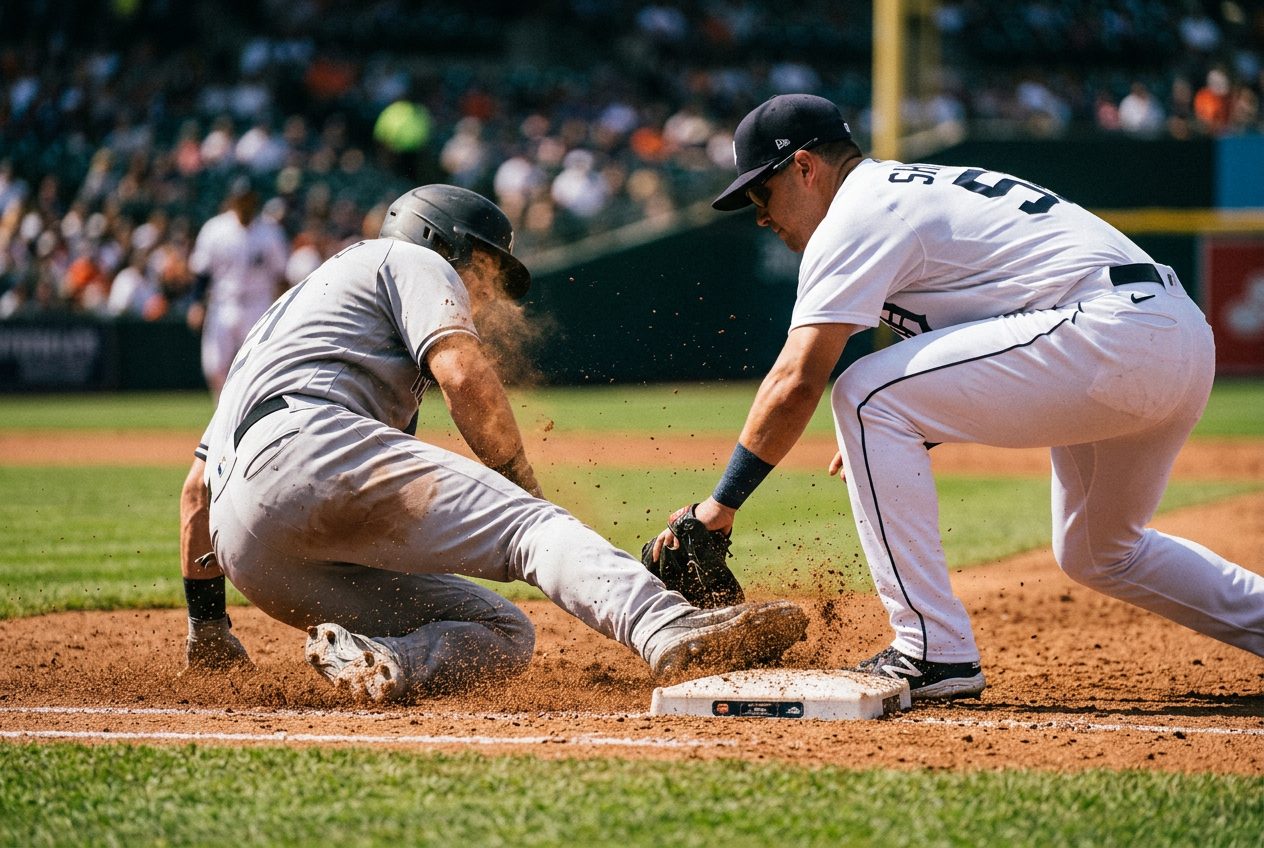
Knowing how to steal a base in baseball is not just about being fast — it is about being smart, prepared, and reading the game better than the defense. We have coached players with elite speed who could not steal a base and slower players who consistently put pressure on defenses by studying pitchers and getting great jumps. Speed helps, but timing and knowledge are what actually determine success.
In this guide, we break down the complete base-stealing process: reading pitchers, getting the right lead, timing the jump, and sliding into the bag safely.
- Left-handed pitchers are statistically better at holding runners than right-handed pitchers — their stolen base success rate allowed is lower despite facing first base.
- The break-even stolen base success rate is approximately 70–75% for the attempt to generate positive expected value for your team.
- Getting a good jump (reading the pitcher’s first move) is more valuable than raw speed in most steal attempts.
- Your primary lead should be 3 steps off the base — the maximum distance from which you can safely dive back on a pickoff.
- Reading the pitcher’s heel, shoulder, and leg lift tells you whether the pitch is coming home or a pickoff is being thrown.
- The hook slide away from the fielder’s tag is the preferred arrival technique on a stolen base attempt.
Why Base Stealing Still Matters
The Strategic Value of the Stolen Base
A stolen base moves a runner from scoring position where one hit can score them to better scoring position — or from non-scoring position (first base) to scoring position (second base). The break-even analysis shows that you need to succeed on roughly 70–75% of attempts for the stolen base to generate positive expected value for your offense. Below that threshold, the outs you give away cost more than the bases you gain.
This means base stealing is not for every runner and not for every situation. Stealing with two outs, with a big power hitter at the plate, or down multiple runs late in the game are low-value decisions. The best baserunners understand this and are selective.
The New Era of Base Stealing
MLB implemented the pitch clock starting in the 2023 season, and stolen base attempts exploded. The pitch clock limits pitchers’ ability to step off and reset repeatedly, which shortens the time between deliveries and reduces pickoff opportunities. At every level where pitch clocks are used, this rule creates more opportunities for smart baserunners.
Reading the Pitcher: The Foundation of a Stolen Base
Right-Handed Pitchers
A right-handed pitcher has their back to first base during their delivery. This gives baserunners a clear view of early tells.
Watch for:
- The heel lift: When a right-handed pitcher lifts their heel off the rubber, a pitch home is coming. A step toward first means a pickoff.
- The shoulder turn: If the left shoulder (for a right-handed pitcher) stays closed toward the plate, the pitch is going home. If it opens toward first, a pickoff is being thrown.
- The leg kick timing: Measure the pitcher’s delivery time (from first movement to home plate) across multiple pitches. Most right-handed pitchers deliver in 1.3–1.4 seconds. Faster means less steal opportunity; slower means more.
Left-Handed Pitchers
Left-handed pitchers face first base from the stretch, which is why conventional wisdom says they are easier to steal against. The data says otherwise — left-handed pitchers actually suppress stolen base success rates compared to right-handers. Their ability to freeze runners with look-offs, stutter-steps, and difficult-to-read pickoff moves makes them statistically harder to run on.
Watch for:
- The lift knee direction: When a lefty’s front knee lifts and moves toward home plate, the pitch is going home. When it stays toward first base or moves back toward the bag, a pickoff is coming.
- The heel: If the back heel comes off the rubber, the pitcher is committed to delivering home. If it stays planted, a pickoff remains possible.
- Timing patterns: Left-handers often vary their look-off times deliberately. Track the average time they hold the look versus when they go to the plate.
The Lead: Setting Yourself Up for the Best Jump
Primary Lead
The primary lead is taken while the pitcher is in the set position. Take 3 shuffle steps off the bag — enough to get a running start, not so far that you cannot dive back on a pickoff.
Mechanics:
- Start with your right foot on the inside corner of first base (for a right-handed runner stealing second).
- Take a shoulder-width shuffle step with your left foot, then your right foot, then your left foot — staying parallel to the baseline.
- Set your weight on the balls of your feet in a slight athletic crouch. Your weight should be slightly forward, loaded to go toward second.
- Eyes are on the pitcher’s midsection, not the ball in their glove. The midsection move comes first before the arm does anything.
Secondary Lead
As the pitcher commits to home, take your secondary lead: two shuffle steps toward second base while the pitch travels to the plate. This gets you in motion and reduces the distance you need to cover on a stolen base decision.
The steal decision: On a pitch to the plate where you are stealing, your read from the secondary lead is already in progress. By the time the catcher catches the ball, you are already 6–8 feet further toward second than your primary lead.
The Jump: Timing Your First Step
The Crossover Step
Your first move when committing to a steal is a crossover step — your left foot crosses in front of your right (for a right-handed runner heading to second) as you explode toward the bag. This is the fastest way to rotate your body toward the target base without wasting a step.
- As you trigger the steal from your primary lead, drive off your right foot.
- Left foot crosses over in front — do not reach with it, drive it.
- Head turns toward second base to see the play.
- Full sprint from that first step forward.
When to Pull the Trigger
The best time to steal is when the pitcher begins committing to home plate — after their first movement that indicates the pitch is going home. Going on the pitcher’s movement (rather than the catcher’s throw) is the difference between a 3.0-second attempt and a 3.5-second attempt at the professional level.
Stealing Different Bases
| Base Stolen | Key Challenge | Best Approach | Notes |
|---|---|---|---|
| Second base | Pitcher hold, catcher throw | Go on pitcher’s first move | Most common steal attempt |
| Third base | Shorter throw from catcher | Steal on pitchout count or when 3B playing deep | Riskier — shorter distance for catcher |
| Home (delayed steal) | Catcher standing up, 2B/3B defense | Catch catcher standing up, ball rolling back | Very rare, opportunistic only |
Stealing Third Base
Stealing third is riskier than second because the catcher’s throw is shorter and more accurate. The best time to steal third is when the catcher is not expecting it — on a pitch where the infield is shading toward second, when the pitcher is working quickly without looking, or when the third baseman is positioned significantly behind the bag.
Left-handed hitters at the plate actually help the runner steal third — the batter’s body blocks the catcher’s initial view of the runner breaking.
Sliding Into the Stolen Base
The hook slide is the preferred technique on most stolen base attempts. Slide to the outfield side of second base and hook the bag with your trailing foot — this makes the tag as difficult as possible. Review our complete guide to sliding in baseball to master this technique before your next steal attempt.
Situations Where You Should Not Steal
High-Value Offensive Situations
Do not steal when:
- A power hitter with bases-empty tendencies is at the plate — you are taking the bat out of their hands.
- The count is 3-0 or 3-1 and the pitcher is likely to walk the batter — wait for first base to be unoccupied and your lead to improve.
- You are down multiple runs late — gambling on a steal when down four runs in the seventh inning has minimal upside.
- There are two outs — a caught stealing ends the inning regardless of the count.
Catcher Pop-Time Awareness
Before attempting a steal, consider the catcher’s arm. At the professional level, catchers with pop times (time from catch to release of throw) under 1.9 seconds make stealing against them extremely difficult. MLB’s Statcast data tracks catcher pop times publicly. At the amateur level, a catcher who consistently releases quickly changes your break-even calculation significantly. Resources at Baseball Reference include historical stolen base data by catcher, which is useful for evaluating your own decisions against historical benchmarks.
Our baseball drills guide covers baserunning drills that sharpen your jump timing and read ability — the two most trainable factors in stolen base success.
Frequently Asked Questions
How do you steal a base in baseball?
Read the pitcher’s first movement, take a 3-step primary lead, trigger your crossover step as the pitcher commits to home, and sprint to the base. Use a hook slide to avoid the tag on arrival. Success depends more on timing and reading the pitcher than on raw speed.
Is stealing a base based on speed or timing?
Both, but timing and reading the pitcher are more important and more trainable. A player with average speed and excellent pitcher-reading ability will steal more bases than a fast player who goes on the catcher’s throw. The jump is everything.
Are left-handed pitchers easier to steal against?
Counterintuitively, no. Left-handed pitchers face first base in their delivery, which makes it seem easier to read them, but historical data shows stolen base success rates are lower against lefties than right-handers. Their deceptive moves and ability to hold runners with look-offs make them statistically harder to run on.
What is the break-even success rate for stealing a base?
Approximately 70–75%. Below that success rate, the outs you give away cost more than the bases you gain in expected run value. This is why selective base stealing — only going when conditions are favorable — is smarter than going every time.
How far should your lead be at first base?
The standard primary lead is 3 shuffle steps from the bag — roughly 8–9 feet. This is the maximum distance from which most runners can safely dive back on a pickoff. Aggressive leads beyond this distance require excellent reflexes and pitcher-reading ability.
When is the best time to steal third base?
Third base is most stealable when the third baseman is playing deep, the pitcher is working quickly without checking the runner, or a left-handed batter is up (blocking the catcher’s view). Stealing third on a double steal — sending both runners simultaneously — divides the defense’s attention and can be effective when timed correctly.
Does the pitch clock affect base stealing?
Yes, significantly. The MLB pitch clock limits how long pitchers can hold the set position and how many times they can step off without penalty. This reduces pickoff opportunities and creates more steal windows. Levels with pitch clocks have seen measurably higher stolen base rates since implementation.