How to Throw a Two Seam Fastball: Grip, Movement, and Game Usage

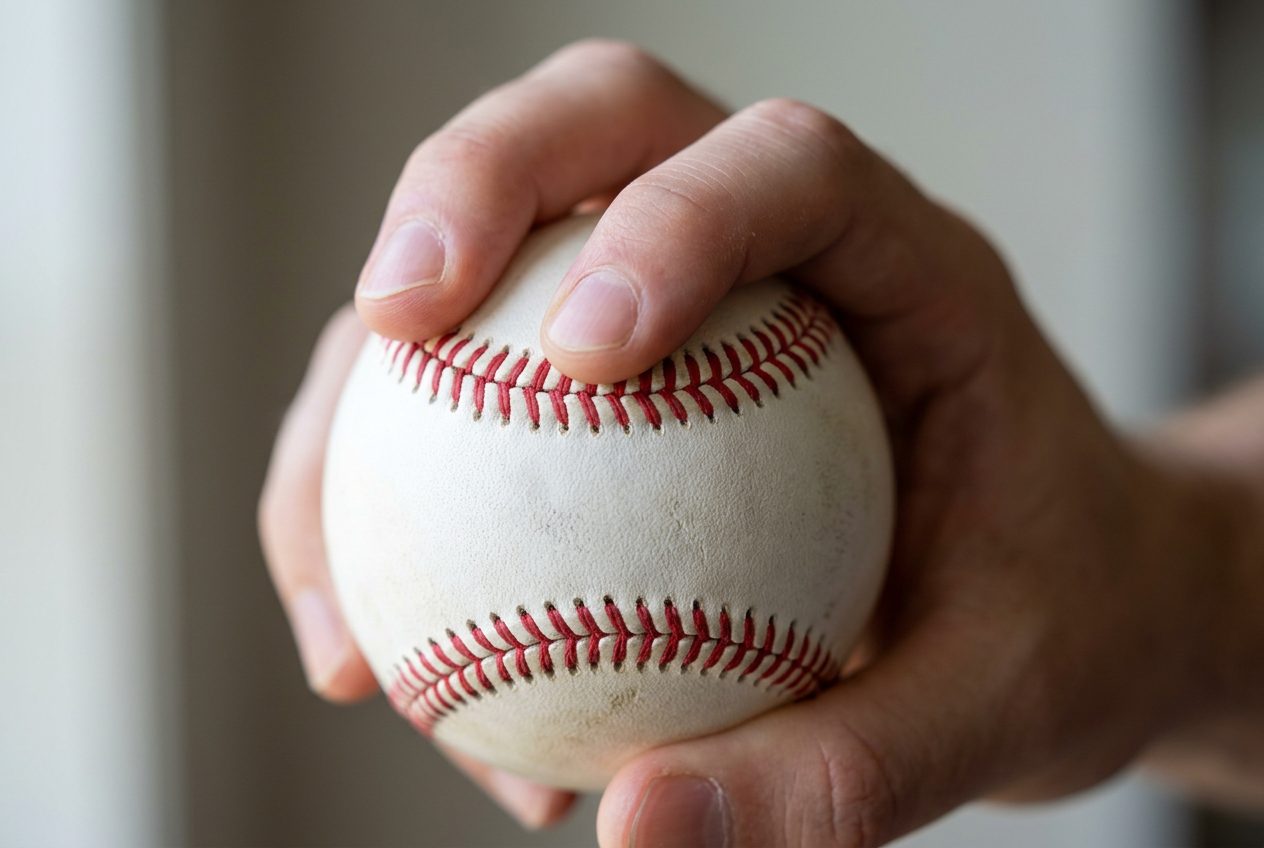
Learning how to throw a two seam fastball gives pitchers one of the most effective ground-ball-inducing weapons in the game. Where the four-seam fastball is all about velocity and straight-line power, the two-seamer is about movement — sink, arm-side run, and late action that batters struggle to hit with authority. We use this pitch extensively in our coaching work because it turns average velocity into above-average effectiveness.
In this guide, we break down the grip, the mechanics, the spin physics, and how to use the two-seam fastball most effectively in actual games.
- The two-seam grip places the index and middle fingers on the narrow seams where they run closest together, with the thumb underneath for stability.
- A two-seamer typically produces 1–4 mph less velocity than a four-seam from the same pitcher, but generates more horizontal and vertical movement.
- The movement comes from asymmetric air resistance as the ball’s seams rotate through the airflow — the seam orientation creates turbulence that pushes the ball toward the pitching arm side.
- The two-seamer is one of the best pitches for generating ground balls — it sits low in the zone and tails away from right-handed hitters (for a right-handed pitcher).
- Keep arm speed identical to your four-seam fastball — the difference is only in the grip.
- The two-seam fastball is sometimes called a sinker, though pitchers distinguish between the two based on movement profile: sinkers drop more, two-seamers run more laterally.
Two Seam vs. Four Seam Fastball: Understanding the Difference
The Grip Difference
The four-seam fastball is gripped across the four seams — your fingers rest perpendicular to the seams, and all four of the ball’s seam rotations are evenly spinning through the air. This creates backspin that fights gravity and keeps the ball on a flat plane longer.
The two-seam fastball is gripped along the two narrow seams — your fingers run parallel to the seams, following them rather than crossing them. Only two seams are actively spinning through the air, creating an asymmetric airflow that pushes the ball toward the arm side and downward.
Velocity and Movement Trade-Off
The two-seam fastball is typically 1–4 mph slower than a four-seam from the same pitcher because the seam orientation generates less Magnus-effect lift. In exchange, the pitcher gains:
- Arm-side horizontal movement (runs toward same-handed batters)
- Downward sink (more pronounced for pitchers with certain release points)
- Later-breaking action that is difficult to pick up early in flight
Two-Seam vs. Sinker
These terms are often used interchangeably but some coaches differentiate them. A true sinker has primarily downward movement with less horizontal run — it drops out of the zone. A two-seamer runs more horizontally toward the arm side while also sinking. Mechanically, the distinction comes from hand position at release and the exact finger pressure applied. For this guide, we treat them as variations of the same fundamental grip.
How to Grip the Two Seam Fastball
Finding the Seams
- Hold the baseball and find the horseshoe shape formed by the seams.
- Look for the area where the seams run closest together — the narrow gap between the two parallel seams running up the ball. This is where your fingers will go.
- Rotate the ball so this narrow seam area is on top, facing you.
Placing Your Fingers
- Place your index finger directly on top of the inner seam — the seam closest to the center of the ball at that narrow point.
- Place your middle finger directly on top of the outer seam — parallel to your index finger, running down the ball’s surface.
- Your two fingers should be roughly shoulder-width apart relative to the ball — similar to but not identical to a four-seam grip.
- Position your thumb on the underside of the ball, beneath the two seams. The thumb supports the ball and contributes to backspin and release stability.
- Tuck your ring finger and pinky finger along the side of the ball — they should not grip it actively but should rest lightly for comfort and stability.
Finger Pressure Variations
The direction of the pitch’s movement is influenced by which finger applies more pressure at release.
- More pressure on the index finger: The ball will tail more to the arm side (left for a right-handed pitcher) with additional run.
- More pressure on the middle finger: The ball will sink more, producing more downward movement with less lateral action.
- Even pressure: A balanced two-seamer with both run and sink.
Experiment during bullpen sessions to find the finger pressure that produces the movement profile you want. Most pitchers develop a consistent feel over hundreds of repetitions.
Mechanics: Throwing the Two Seam Fastball
Arm Speed Must Match Your Fastball
The only difference between your two-seam fastball and your four-seam fastball should be the grip. Every other mechanical element — wind-up, stride, arm path, release point, follow-through — should be identical. If you slow down your arm to “guide” the pitch, you will telegraph it to batters and also lose the natural movement the grip creates.
Release Point
- Your release point should be the same as your four-seam fastball. Do not try to “flick” the wrist or manipulate the release — the grip does the work.
- At release, drive your fingers through the ball toward the plate. Some pitchers feel like they are “pulling down a window shade” — the fingers cut down and through the bottom of the ball.
- Pronation (rotating the palm toward the ground as you follow through) is natural and actually helps generate the two-seamer’s arm-side movement. Do not fight it.
Follow-Through
Follow through fully. The two-seam fastball should feel almost identical to a four-seam after release — your arm should complete its arc without interruption. Pitchers who cut their follow-through short to try to “add sink” often develop arm problems over time.
Movement Profile and Spin Rate
Understanding Spin Axis
The spin axis for a two-seam fastball is tilted compared to a four-seam. A perfect four-seam fastball has pure backspin (12-6 spin axis); a two-seamer has a tilted spin axis closer to 1-7 or 2-8, which is what creates the arm-side run. The more tilted the axis, the more lateral the movement. A spin axis closer to pure backspin means more sink and less run.
Statcast tracks spin axis and spin efficiency at the professional level. The key takeaway for amateur pitchers: grip consistently, and your movement will be consistent. Inconsistent grip placement produces unpredictable movement.
Comparing Common Fastball Types
| Pitch Type | Velocity (vs 4-seam) | Horizontal Movement | Vertical Movement | Best Use |
|---|---|---|---|---|
| 4-Seam Fastball | Baseline | Minimal | High ride | Up in zone, power pitch |
| Two-Seam Fastball | -1 to -4 mph | High (arm side) | Moderate sink | Down and in, ground balls |
| Sinker | -2 to -4 mph | Moderate | Heavy sink | Inducing ground balls, weak contact |
| Cut Fastball (Cutter) | -2 to -5 mph | Glove side | Minimal | Jamming same-handed batters |
Our detailed comparison article on 2-seam vs 4-seam fastballs goes deeper on when to use each and how different pitcher profiles benefit from one over the other.
Using the Two Seam Fastball in Games
Ideal Locations
The two-seam fastball is most effective when it works down and to the arm side. For a right-handed pitcher facing a right-handed hitter, that means down and in — one of the most difficult locations for a batter to handle. For a right-handed pitcher against a left-handed hitter, it tails away from them into the bottom outside corner.
Keep the pitch below the belt when possible. The lower the two-seamer sits in the zone, the more likely it produces a ground ball or a swing-and-miss at a pitch out of the zone.
Pitch Sequencing
The two-seamer works best when paired with a four-seamer up in the zone. Start a batter up and in with a four-seam fastball, then throw the two-seam down and away on the next pitch — the batter’s eyes track the arm-side movement and their swing plane is in the wrong place. This sequence is one of the oldest in pitching and still extremely effective.
Pairing the two-seamer with a curveball or changeup that also runs away gives you a complementary arsenal for pitching to same-handed batters. For a complete breakdown of how to build your pitching repertoire, visit the four-seam fastball grip guide and the two-seam fastball grip detailed reference.
Ground Ball Rates
Two-seam fastball pitchers typically post significantly higher ground ball rates than four-seam dominant pitchers. Ground balls prevent extra-base hits, minimize damage on balls in play, and are especially valuable with a strong infield defense. If your fielders are good, the two-seamer is a gift to them — it turns hard-hit balls into routine plays.
Common Mistakes with the Two Seam Fastball
Placing Fingers Off the Seams
If your fingers are not exactly on the seams, the ball’s spin will be inconsistent. Practice finding the grip in your glove without looking — this is a real-game necessity.
Trying to Add Movement Manually
Twisting the wrist, rolling the forearm, or manipulating the release to add movement is counterproductive. The grip creates the movement through the ball’s natural spin. Manual manipulation adds inconsistency and can stress the elbow and forearm. Trust the grip.
Changing Arm Speed
Slowing down for the two-seamer is the most common tell pitchers give. Batters can read the pace of your delivery even if they cannot identify the grip. Full arm speed, every pitch. Details on mechanics and how velocity relates to pitch speed are covered in our average baseball pitch speed guide.
Frequently Asked Questions
How do you grip a two seam fastball?
Place your index and middle fingers along the narrow seams where they run closest together — following the seams rather than crossing them. Your thumb goes underneath for support. Keep the grip firm but relaxed, and let arm speed do the rest.
Is the two seam fastball the same as a sinker?
They are closely related and the terms are often used interchangeably. Technically, a sinker has more downward movement and less horizontal run, while a two-seamer runs more to the arm side. Both use the same fundamental grip with variations in finger pressure and release point.
Why does the two seam fastball move?
The movement comes from asymmetric air resistance. When the two seams spin through the air, they create uneven turbulence — one side of the ball experiences more drag than the other, which pushes the ball toward the pitching arm side and downward. This is a seam-based version of the Magnus effect.
How much slower is a two seam fastball than a four seam?
Typically 1–4 mph slower for the same pitcher. The seam orientation generates slightly less backspin-based lift, which reduces effective velocity. The velocity trade-off is worthwhile for most pitchers because of the added movement and ground ball induction.
Should young pitchers learn the two seam fastball?
Yes — the two-seam fastball is actually one of the safest pitches for young arms. It is a fastball grip variation that does not require wrist snap or arm manipulation. It is generally recommended before the curveball or slider for young pitchers who want more pitch variety.
Where should I throw the two seam fastball in the zone?
Down in the zone, particularly down and to the arm side. Against right-handed hitters (for a right-handed pitcher), aim for the bottom inside corner. Against left-handed hitters, aim for the bottom outside corner. The pitch is least effective up in the zone where its movement makes it easier to elevate and hit hard.
How do I get more movement on my two seam fastball?
Apply slightly more pressure with the index finger to increase arm-side run, or more pressure with the middle finger to increase sink. Make sure your fingers are directly on the seams — even a small displacement reduces movement consistency. Also ensure you are fully pronating through the follow-through, which naturally enhances arm-side run.