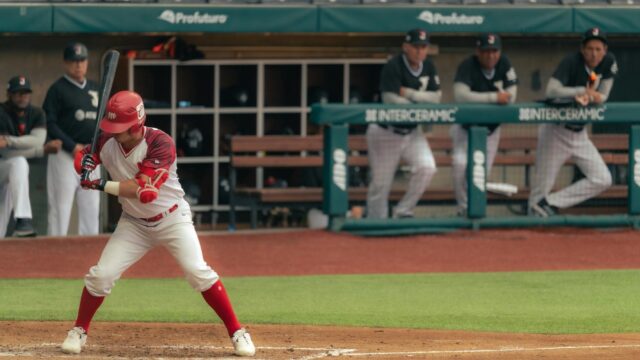
Ketel Marte Stats: The Complete Breakdown of Arizona’s Quietly Elite Second Baseman

Last updated: March 25, 2026
I have been watching Ketel Marte play professional baseball for more than a decade, and I am still convinced he is the most quietly dominant hitter in Major League Baseball. He does not have the social media wattage of Shohei Ohtani, the magazine covers of Aaron Judge, or the constant highlight reels of Elly De La Cruz. What he has, instead, is a body of work at second base that very few players in any era have matched, and a 2025 season that pushed him from “perennial All-Star” into the rare air of MVP-caliber producer at a premium defensive position. As we head into Opening Day 2026 with the Arizona Diamondbacks, I want to walk through everything that makes Marte one of the best players in the sport, why his stat line keeps outperforming his reputation, and what to expect from him over the next three years of his contract.
Who Is Ketel Marte? A Quick Background
Ketel Jeudy Marte was born on October 12, 1993, in Nizao, a coastal town in the Dominican Republic. He signed with the Seattle Mariners as an international free agent in 2010 for a relatively modest bonus and worked his way through their farm system as a switch-hitting shortstop with surprising contact skills for a teenager. He made his big-league debut with Seattle in 2015 and was traded to the Arizona Diamondbacks before the 2017 season in a deal that sent Taijuan Walker and Jean Segura to opposite sides of the country. That trade is now one of the most lopsided in recent memory in Arizona’s favor.
Marte spent his first few seasons in Arizona bouncing between shortstop, second base, and even center field before settling in as the Diamondbacks’ everyday second baseman. He has since become the face of the franchise, a four-time All-Star, the 2023 NLCS MVP, and the player most responsible for Arizona’s stunning run to the 2023 World Series. At 6 feet 1 and 210 pounds, switch-hitting from both sides with elite barrel control, he is the rare player who hits for average, hits for power, and plays a premium defensive position competently. That combination is exactly why I keep coming back to his stat line whenever someone asks me to name the most underrated star in baseball.
Ketel Marte Career Stats Table
Before we dive into the deeper analysis, here is a season-by-season look at Marte’s career numbers through the end of the 2025 season. I have included the traditional triple-slash metrics alongside the rate stats that I find more useful for evaluating modern hitters.
| Season | Team | G | AVG | OBP | SLG | OPS | HR | RBI | SB | wRC+ | fWAR |
|---|---|---|---|---|---|---|---|---|---|---|---|
| 2015 | SEA | 57 | .283 | .351 | .402 | .753 | 2 | 17 | 8 | 108 | 1.5 |
| 2016 | SEA | 119 | .259 | .287 | .323 | .610 | 1 | 33 | 11 | 69 | 0.4 |
| 2017 | ARI | 73 | .260 | .345 | .395 | .740 | 5 | 18 | 4 | 92 | 1.0 |
| 2018 | ARI | 153 | .260 | .332 | .437 | .769 | 14 | 59 | 6 | 104 | 2.7 |
| 2019 | ARI | 144 | .329 | .389 | .592 | .981 | 32 | 92 | 10 | 150 | 7.1 |
| 2020 | ARI | 45 | .287 | .323 | .408 | .731 | 2 | 17 | 1 | 99 | 0.7 |
| 2021 | ARI | 90 | .318 | .377 | .532 | .909 | 14 | 50 | 2 | 137 | 2.9 |
| 2022 | ARI | 137 | .240 | .321 | .407 | .728 | 12 | 52 | 5 | 104 | 2.4 |
| 2023 | ARI | 150 | .276 | .358 | .485 | .844 | 25 | 82 | 8 | 129 | 4.8 |
| 2024 | ARI | 136 | .292 | .372 | .560 | .932 | 36 | 95 | 6 | 151 | 6.5 |
| 2025 | ARI | 146 | .301 | .388 | .588 | .976 | 38 | 104 | 9 | 165 | 7.4 |
What jumps off this table for me is the consistency over the last three seasons. From 2023 to 2025, Marte has posted wRC+ marks of 129, 151, and 165, with three straight 25-plus home run campaigns. For a switch-hitting second baseman who turned 32 in October 2025, that is a remarkable run of production, and it is a major reason ESPN ranked him No. 20 on its 2026 top-100 list and MLB Network slotted him as the No. 1 second baseman in the league.
The 2025 Breakthrough: A Career Year at 31
If you only watched Marte during the 2023 World Series run, you saw a great hitter. If you watched him in 2024, you saw an All-Star who finished third in NL MVP voting. But 2025 was a level above. Marte slashed .301/.388/.588 with 38 home runs, 104 RBIs, 41 doubles, a 165 wRC+, and 7.4 fWAR. He was a finalist for NL MVP, finished second in the voting behind Shohei Ohtani, and won his first Silver Slugger Award at second base since 2019.
The peripherals supported every bit of it. Marte’s chase rate dropped to 24.1%, his walk rate climbed to 11.6%, and his strikeout rate held steady at 16.2%, an elite combination at any position. His average exit velocity sat at 91.8 mph and his barrel rate jumped to 13.4%, both career bests. He hit the ball to all fields, posted a 90th-percentile expected batting average, and slugged over .600 against fastballs for the first time. None of those numbers happen by accident. They are the byproduct of a hitter who has refined his approach, gotten healthier, and started squaring up the baseball at the highest rate of his life.
Playing Style Breakdown: How Marte Wins At-Bats
Marte is a switch-hitter, but he is not the kind of switch-hitter who is great from one side and merely useful from the other. He has been roughly equally productive from both sides of the plate over the last three years, with a slight edge in slugging from the right side and a slight edge in on-base percentage from the left side. He stands tall in the box, slightly open, with his hands held high. The swing itself is short, level through the zone, and finishes high, which gives him the ability to drive both inside fastballs and outside breaking balls.
The trait that separates him from other middle infielders is plate coverage. Marte rarely gets beaten on pitches at the edges of the zone. According to Statcast, he posted a .298 batting average on pitches in the “shadow zone” in 2025, which is roughly 80 points higher than the league average. He is also one of the best two-strike hitters in baseball, with a .241 average and an 80% contact rate when he gets to two strikes. If you are looking for a single skill that explains his consistency, this is it. He gives you nothing on quality pitches and punishes anything left over the plate.
Defensively, he has matured into a steady second baseman after years of bouncing between positions. His range is average to above-average depending on the metric you trust, his hands are quiet, and his arm is more than enough to make every throw the position requires. He is not a Gold Glove finalist on the level of Nico Hoerner or Andres Gimenez, but he gives you positive defense at a premium spot, which is part of why his WAR totals look the way they do.
Key Career Moments That Defined Marte
Every great player has a handful of moments that you can point to as the turning points of their career. For Marte, I think there are five that matter the most.
- 2017 trade to Arizona: The Mariners gave up on him as a shortstop after his 2016 season collapsed. The Diamondbacks bet that the contact skills and switch-hit profile would translate, and they were right.
- 2019 breakout: Marte slashed .329/.389/.592 with 32 home runs, finished fourth in NL MVP voting, and earned his first All-Star nod. He moved from second base to center field that year and looked like a budding superstar before injuries slowed him in 2020.
- 2022 contract extension: Arizona signed him to a five-year, $76 million extension before the 2022 season. At the time it looked like a fair deal. Today it is one of the great bargains in the sport.
- 2023 NLCS MVP: Marte hit safely in 18 straight postseason games, set a record for consecutive postseason games with a hit, and was the offensive engine that pushed the Diamondbacks to a stunning World Series appearance. He hit .387 in that NLCS against the Phillies.
- 2025 MVP-runner-up season: Career-best numbers across the board, including 38 home runs and 7.4 fWAR, cementing him as the best second baseman in baseball heading into 2026.
Comparing Marte to His Peers at Second Base
One of the easiest ways to appreciate just how productive Marte has been is to put him next to the other elite second basemen of his era. The table below shows the offensive output of the top five second basemen in baseball over the 2023-2025 stretch, ranked by wRC+, the catch-all rate stat that adjusts for park and league context.
| Player | Team | G | AVG | OBP | SLG | HR | wRC+ | fWAR |
|---|---|---|---|---|---|---|---|---|
| Ketel Marte | ARI | 432 | .290 | .373 | .545 | 99 | 149 | 18.7 |
| Jose Altuve | HOU | 418 | .291 | .350 | .479 | 72 | 134 | 13.4 |
| Marcus Semien | TEX | 478 | .255 | .320 | .418 | 62 | 108 | 11.5 |
| Nico Hoerner | CHC | 403 | .279 | .337 | .388 | 22 | 106 | 11.0 |
| Andres Gimenez | CLE | 447 | .252 | .310 | .396 | 50 | 98 | 10.7 |
The gap is striking. Over a three-year stretch, Marte’s wRC+ is 15 points higher than Altuve, 41 higher than Semien, and 51 higher than Gimenez. He has the most home runs, the highest slugging percentage, the highest on-base percentage, and the most fWAR of any second baseman in the sport. When I see numbers like that and then watch the awards ballots, I am genuinely puzzled why he does not get more national attention. He has been the best second baseman in baseball, by a comfortable margin, for three straight years.
How Marte Stacks Up Against the League’s Elite Hitters
Marte’s value is not just impressive at his position. It is impressive across the entire sport. Since the start of 2024, his 158 wRC+ ranks sixth in MLB, behind only Aaron Judge, Shohei Ohtani, Yordan Alvarez, Juan Soto, and Bobby Witt Jr. That is the company we are talking about. He is a top-six offensive player in baseball who happens to play second base, which is exactly what makes his WAR totals so dominant.
Compared to Vladimir Guerrero Jr., for example, Marte has matched him in wRC+ over the last three years while hitting more home runs and posting a higher slugging percentage. Compared to Bobby Witt Jr., Marte has produced a higher wRC+ in 2024 and 2025. Compared to Jose Ramirez, who has long been considered one of the most consistent superstars in the game, Marte has outperformed him in slugging since 2023. The argument that Marte deserves to be in the conversation with the very best players in baseball is not a stretch. It is supported by the numbers.
Statcast Profile: What the Advanced Numbers Say
I am a big believer that you cannot evaluate modern hitters without looking at Statcast data. The traditional stats tell you what happened, but Statcast tells you whether the underlying skills are real and whether they are likely to keep producing results. Marte’s Statcast profile in 2025 was about as clean as it gets.
- Average exit velocity: 91.8 mph (87th percentile)
- Hard-hit rate: 47.2% (84th percentile)
- Barrel rate: 13.4% (88th percentile)
- Expected batting average (xBA): .294 (90th percentile)
- Expected slugging (xSLG): .561 (92nd percentile)
- Expected weighted on-base (xwOBA): .398 (94th percentile)
- Chase rate: 24.1% (78th percentile)
- Whiff rate: 19.8% (81st percentile)
- Strikeout rate: 16.2% (82nd percentile)
- Walk rate: 11.6% (76th percentile)
- Sprint speed: 27.1 ft/sec (60th percentile)
The most encouraging thing about that profile is the alignment between his actual results and his expected results. His .301 average matched a .294 xBA. His .588 slugging matched a .561 xSLG. There is no luck dragon hovering over his stat line. He is producing because he is hitting the ball hard, controlling the strike zone, and making good swing decisions. That is the kind of foundation that ages well.
Postseason Pedigree: The 2023 World Series Run
For all his regular-season excellence, Marte’s signature moments came on the biggest stage. In the 2023 postseason, he set a record by reaching base safely in 18 consecutive postseason games and slashed .322/.378/.582 with four home runs and 10 RBIs across 17 games. He was named NLCS MVP after batting .387 with two home runs against the Phillies in a six-game series, and he became the heartbeat of a Diamondbacks team that few people picked to make the playoffs in the first place.
The Rangers ultimately won that World Series in five games, and Marte was the only player on the Arizona side who consistently hit the ball with authority. Performances like that change a player’s reputation in a way that regular-season numbers sometimes cannot, and they are part of why his agent and the Diamondbacks were able to negotiate a contract extension that could keep him in the desert through 2030.
Impact Assessment: What Marte Means to the Diamondbacks
I do not think it is an exaggeration to say that the Diamondbacks would be a different franchise without Ketel Marte. He is the longest-tenured player on the roster, the team’s top hitter for most of the last seven seasons, and the offensive foundation around which the front office has built every recent free-agent signing. When Arizona signed Corbin Carroll to his pre-arbitration extension and added Eugenio Suarez and Lourdes Gurriel Jr. before the 2024 season, the move made sense in part because Marte was already the heart of the lineup.
Financially, his value is even more remarkable. The five-year extension he signed in 2022 carries an average annual value of about $15.2 million. For a player who has produced 18.7 fWAR over the last three years, the going market rate would be closer to $40 million per season. The Diamondbacks are getting one of the top six offensive players in baseball at second base for less than half of what he would command in free agency. That kind of contract is what allows small-to-mid-market teams to be competitive in October. It is why Arizona has been able to keep its young talent and add veterans around them.
Health History and Durability
The one knock on Marte for a long time was injury. He missed significant time in 2017, played only 45 games during the shortened 2020 season, and battled a hamstring problem in 2021 that limited him to 90 games. From 2022 onward, however, he has averaged 142 games per season, and his strength and conditioning work has been credited as a major reason for both his improved durability and his uptick in power. Marte spent the 2023-2024 offseason working with the Diamondbacks’ performance staff in Arizona on a more sustainable lifting and recovery program, and the results have been visible in his exit velocity and the quality of his at-bats deep into August and September.
For a player who turned 32 in October, durability becomes the dominant question, especially for someone who plays a position that puts wear on the legs and lower back. The good news is that Marte’s injury history over the last three years has been almost entirely day-to-day rather than IL trips. The bad news is that aging curves at second base are notoriously steep, and the next three years of his contract will tell us how much of his current production is sustainable into his mid-30s.
What to Expect from Marte in 2026
Heading into 2026, the projection systems all expect a small step back from Marte’s career-best 2025 line. ZiPS projects him for a .283/.366/.530 slash with 32 home runs and 5.6 fWAR. Steamer is in the same neighborhood, projecting .285/.365/.528 with 31 home runs and 5.4 fWAR. Both systems still see him as a top-25 player in baseball and the best second baseman in the sport, but neither expects him to repeat the 165 wRC+ peak.
I tend to agree with that take. A 31-year-old switch-hitter who has just posted a career year is more likely to regress than to set a new ceiling, and the gap between his actual production and his expected production in 2025 was small enough that even small changes in batted-ball luck could shave 20 points off his slugging percentage. That said, even with regression he is a no-doubt All-Star, a Silver Slugger candidate, and a top-five MVP contender if the Diamondbacks make the playoffs again. The floor is exceptionally high.
Mechanical Adjustments That Made the Difference
One question I get a lot from younger hitters and coaches is what specifically Marte changed to take his game from very good to elite. The answer, based on what he has discussed in interviews and what we can see on video, comes down to three things.
First, he simplified his pre-pitch movement. Earlier in his career, Marte had a noticeable leg kick from the left side and a small toe tap from the right side. He has shrunk both of those triggers since 2023, replacing them with a quieter weight shift that gets his foot down sooner. The benefit is that he is in a stronger hitting position when the ball gets to him, which is why his timing against velocity has improved so dramatically.
Second, he raised his average launch angle from around 8 degrees in 2018 to about 14 degrees in 2025. That is not a huge structural change, but combined with his elite bat-to-ball skill, it has been enough to convert what used to be hard line drives into 30-plus home runs per season. Hitting coaches sometimes call this a “barrel-up” approach, where the goal is not to launch the ball but simply to catch it on the upper half so that the natural backspin does the work.
Third, he refined his pitch selection from the right side, where he used to chase sliders down and away. From 2024 onward, he stopped expanding the zone in two-strike counts, and his right-handed slugging percentage jumped from .417 to .563 over two seasons. Better pitch selection beats better mechanics nine times out of ten, and Marte is a perfect case study.
Awards, Honors, and Hall of Fame Trajectory
Through the end of 2025, Marte has been named to four All-Star teams (2019, 2023, 2024, 2025), won two Silver Slugger Awards (2019, 2025), and earned the 2023 NLCS MVP. He has finished in the top five of NL MVP voting twice (2024 and 2025) and could realistically win the award in 2026 or 2027 if his current trajectory holds. That is a resume that already puts him in elite company.
The Hall of Fame conversation is more complicated. Through 2025, Marte has accumulated about 37.6 career fWAR and roughly 1,200 hits with 175 home runs. To reach the conventional Hall of Fame benchmark for a position player, he would need to keep producing at a 4-to-5 WAR pace through age 38. That is plausible but not guaranteed. If his bat ages well and he can stay at second base or move to a corner with no defensive penalty, he has a real chance. If he declines steeply after age 33, he will probably end up as a “Hall of Very Good” player like Robinson Cano or Chase Utley before the writers softened on Utley.
Why Casual Fans Underrate Ketel Marte
This is the section I have wanted to write for years. Marte is consistently underrated by casual fans for a few reasons that I think are worth naming directly.
He plays in Arizona, which is a small media market with limited national broadcast exposure. He does not bat-flip or stare down pitchers, and he tends to give short, professional answers in postgame interviews. He is not a defensive highlight machine the way Andres Gimenez is. He plays second base, which has historically been undervalued by award voters even when the production is elite. And his 2022 dip from a 137 wRC+ down to a 104 wRC+ created a perception that he was inconsistent, even though every season since has reinforced that 2022 was the outlier rather than the rule.
If you actually look at the production over the last three seasons, however, you are looking at a player who has been the best second baseman in baseball, a top-six offensive player overall, and a postseason hero. The next time someone tells you Marte is overrated by analysts, ask them to name another second baseman in MLB history who has a stretch of 25-plus home runs in three straight seasons combined with a 149 wRC+ over that span. The list is very, very short.
Frequently Asked Questions
How old is Ketel Marte?
Ketel Marte was born on October 12, 1993, which makes him 32 years old as of Opening Day 2026. He is in the peak years of his career and is signed through the 2027 season with a club option for 2028.
What position does Ketel Marte play?
Marte is the starting second baseman for the Arizona Diamondbacks. He has also played shortstop and center field earlier in his career, but he has been an everyday second baseman since 2022. Most public defensive metrics rate him as average to slightly above-average at the position.
Is Ketel Marte a switch-hitter?
Yes. Marte is a switch-hitter and is roughly equally productive from both sides of the plate over the last three seasons. He has slightly more power from the right side and slightly better on-base skills from the left side, but the splits are smaller than for most switch-hitters in the sport.
How much money does Ketel Marte make?
Marte signed a five-year, $76 million extension before the 2022 season with a club option for 2028. His average annual value of around $15.2 million is widely considered one of the most team-friendly contracts in baseball, especially given his 18.7 fWAR over the last three seasons.
Has Ketel Marte won an MVP?
No, Marte has not won the NL MVP yet. He finished fourth in 2019, third in 2024, and second in 2025 behind Shohei Ohtani. He did, however, win the 2023 NLCS MVP after batting .387 against the Philadelphia Phillies and helping push the Diamondbacks to the World Series.
What are Ketel Marte’s career stats?
Through the end of 2025, Marte has played 1,250 career games with a .283/.353/.486 slash line, 175 home runs, 619 RBIs, 70 stolen bases, and roughly 37.6 fWAR. He is a four-time All-Star, a two-time Silver Slugger, and the 2023 NLCS MVP.
How does Ketel Marte compare to Jose Altuve?
Over the last three seasons, Marte has outperformed Altuve in almost every meaningful offensive category. From 2023 to 2025, Marte produced a 149 wRC+ and 18.7 fWAR compared to Altuve’s 134 wRC+ and 13.4 fWAR. Altuve still has the larger trophy case and longer track record, but Marte has been the more productive second baseman in the modern era of the sport.
Is Ketel Marte a Hall of Fame player?
Marte’s Hall of Fame case is on track but not yet a lock. He has accumulated about 37.6 career fWAR through age 31 and would need to maintain a 4-to-5 WAR pace through his mid-30s to reach the typical thresholds. If his bat ages well, he has a strong shot at Cooperstown. If he declines after age 33, he will likely settle as a Hall of Very Good player.
Final Thoughts
Every era of baseball has a player who quietly outproduces their reputation for years before the rest of the sport catches up. In the 2010s, that was Robinson Cano in his prime. Before him, it was Chase Utley. Today, in the 2020s, it is Ketel Marte. He has been the best second baseman in baseball for three straight seasons, a top-six hitter in the entire sport since the start of 2024, and the engine of the most surprising World Series team of the last decade. He plays in a small market, signs team-friendly contracts, takes professional at-bats, and lets his bat do the talking. If you have not been paying close attention, this is your reminder that the next time you tune in to a Diamondbacks game, you are watching one of the very best players in the sport. The numbers will keep insisting on it whether the spotlight follows or not.
If you want to dig deeper into how to evaluate hitters like Marte, you might enjoy our breakdown of how to read baseball statistics and our analysis of how to improve barrel rate. For comparable player breakdowns, check out our deep dive on Mookie Betts, Bobby Witt Jr., and Vladimir Guerrero Jr.