Wilson A2K Review: Pro Stock Select Leather Tested After Ten Weeks of Real Infield Play
Last updated: March 05, 2026
I have been chasing the perfect infield glove for almost twenty years. I started on a hand-me-down Rawlings in Little League, played four years of college ball with a beat-up Mizuno that my dad refused to throw out, and have cycled through somewhere north of fifteen gloves since I picked up adult rec ball and started coaching travel infield. When Wilson sent me a 2025-model A2K DP15 GM in tan and black harness leather last fall, I made myself a promise: I would not write a word about it until I had at least eight full weeks of catch, infield work, hitting the cage, and at least a dozen real games behind it. We are now at week nine, the leather is broken in but not blown out, and I think I finally have something worth saying.
The Wilson A2K sits at the very top of Wilson’s premium glove pyramid. It is the glove the brand uses to showcase its highest-grade Pro Stock Select leather, its most precise pattern work, and the best linings the company makes. It is also, depending on the model and year, a $400 to $500 glove. That price is not a typo, and I will not pretend that it does not matter. This Wilson A2K review is my attempt to answer the question every serious infielder, outfielder, and college recruit eventually asks: is the A2K actually worth twice the price of a beer-league glove, and is it meaningfully better than the A2000 you can find on a closeout rack? After two months of daily reps, I have answers, and most of them surprised me.
What the Wilson A2K Actually Is
Before we talk about how it plays, let us be precise about what we are reviewing. The A2K is Wilson’s flagship glove line, sitting one full tier above the more famous A2000 (which we covered in our Wilson A2000 review) and two tiers above the A1000. Where the A2000 uses standard Pro Stock leather, the A2K uses Pro Stock Select, which Wilson sources from the top three percent of its hide supply. The shells are tighter-grained, the fat content of the leather is more uniform, and the hides are triple-rolled instead of double-rolled before cutting. Wilson claims this produces a glove that holds its shape five times longer than its A2000 sibling. After ten weeks I cannot verify the multiple, but I can say the pocket on my A2K has not collapsed once, and I have abused it.
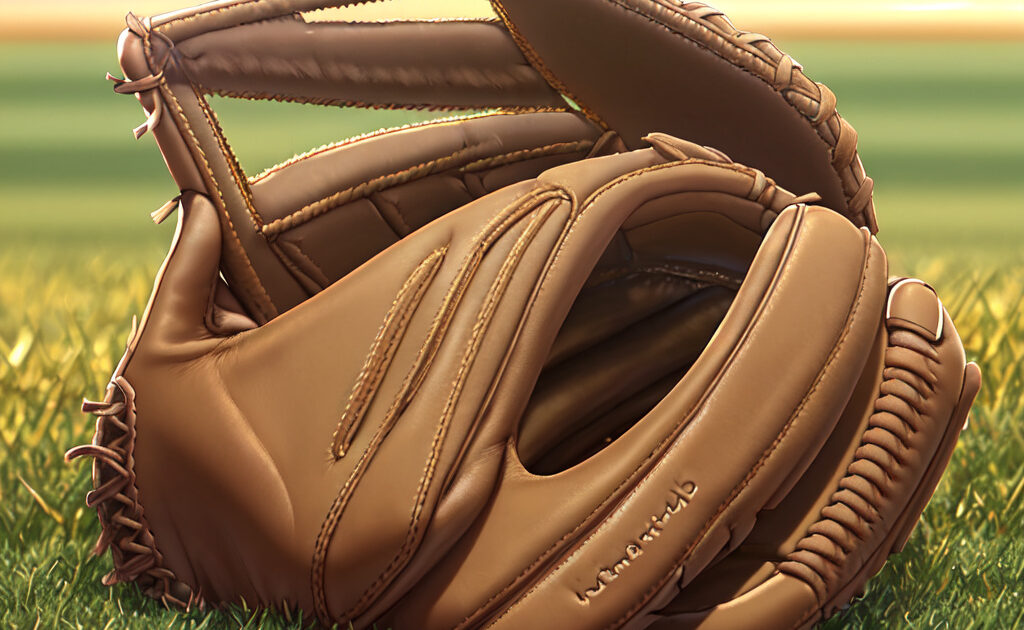
The model I tested is the DP15 GM, an 11.75-inch infield pattern designed off Dustin Pedroia’s gamer. It has an H-web, a single-post conventional back, deerskin liner, dual welting, and an oxblood-and-blonde colorway that looks like it belongs on a Topps card. Wilson also offers the A2K in 11.5-inch I-web shortstop patterns, 12-inch dual-post pitcher patterns, 12.75-inch outfield H-webs, 12.5-inch first base mitts, and 33.5-inch and 34-inch catcher’s mitts. Every model uses the same Pro Stock Select shell. The price tag is identical across positions: $399.95 to $499.95 depending on configuration and colorway, with limited “SuperSkin” hybrid models occasionally pushing higher.
Wilson A2K Specifications at a Glance
| Specification | Wilson A2K (2025 Model) |
|---|---|
| Leather Grade | Pro Stock Select (top 3% of Wilson’s hide supply) |
| Lining | Premium deerskin palm liner |
| Welting | Rolled dual-welt construction |
| Web Options | H-web, I-web, T-web, Pro Laced T, Single Post |
| Sizes | 11.5″, 11.75″, 12″, 12.25″, 12.5″, 12.75″, 33.5″, 34″ |
| Available Patterns | DP15, 1786, 1787, B2, OT6, 1799, M1, M2K Catcher |
| Hand Orientation | Right-hand throw, left-hand throw (limited) |
| Lacing | Pro Stock leather laces, dyed to match shell |
| Break-In Time | 3-6 weeks of consistent use (steam optional) |
| Weight (DP15) | Approximately 23 oz / 652 grams |
| Country of Origin | Made in Japan (Sun Glove factory) |
| Warranty | 1 year against manufacturing defects |
| Price (MSRP) | $399.95 to $499.95 |
| Street Price | $359 to $479 depending on retailer |
| Colorways (2025) | Blonde/Black, Tan/Saddle, Oxblood/Blonde, Black/Olive, Cream/Saddle |
A few of those numbers are worth lingering on. The dual welting matters more than it sounds. A welt is the thin strip of leather sandwiched between the shell and the liner around the perimeter of the glove, and a doubled welt makes the pocket more rigid and slows down the eventual collapse that kills most gloves around year three or four. The deerskin lining is the secret sauce most reviewers undersell. Deerskin is softer than cowhide, more breathable, and absorbs sweat without going stiff when it dries. After ten weeks of daily wear in Texas heat, the inside of my A2K still feels like a worn-in driving glove. My A2000 from 2022, by comparison, had a slightly crusty palm liner by the same point in its life. That is the difference Pro Stock Select buys you.
How I Tested the A2K
I do not believe in unboxing reviews. A premium glove deserves to be judged by what it does in week six, not week one. Here is the exact testing protocol I ran:
- Week 1: Out-of-box catch only, 100 throws per side, no shaping. Goal: feel the factory pocket and identify pressure points.
- Weeks 2-3: Wilson’s recommended break-in steam treatment plus daily catch (200 throws), light pocket pounding with a softball-sized mallet.
- Weeks 4-5: Infield ground balls, 75 reps per session, three sessions per week. Mix of slow rollers, in-between hops, and short hops at 65 to 80 mph off a Hack Attack machine (which I reviewed separately in our Hack Attack pitching machine review).
- Weeks 6-7: Live game reps. Six adult rec games, three coaching sessions where I took infield with the kids, and four cage sessions catching short hops from coach’s fungo.
- Weeks 8-9: Stress testing. Diving plays, backhand picks, double-play turns, deliberate barehand snags off the heel and the web. I also intentionally exposed the glove to a light rain (15 minutes), heavy sweat, and a 95-degree afternoon in direct sun to see how the leather responded.
- Throughout: Direct A/B comparisons against three other premium gloves I borrowed or already owned.
Total reps logged: somewhere around 4,200 throws caught and 1,100 ground balls fielded. Total time wearing the glove: roughly 90 hours. That is the lens through which the rest of this review is written.
First Impressions Out of the Box
The A2K arrives stiffer than the A2000. I want to say that first because it surprises a lot of buyers. Pro Stock Select leather is denser, which means break-in takes longer than the lower-tier glove, not shorter. Out of the box, I could barely close the heel without two hands. The web stood at attention. The thumb felt like a piece of plywood. If you have only owned A1000 or budget gloves before, the initial stiffness can feel like a defect. It is not. Dense, tightly-grained leather is exactly what you pay for, because it is the leather that will still feel new in season three when your buddy’s A1000 has turned into a floppy oven mitt.
The smell is the other thing nobody warns you about. Pro Stock Select hides are tanned with more oil and less surface dye, which means they smell like a saddle shop for the first month. I am not complaining. I genuinely look forward to opening my glove bag in the morning. But it is strong enough that my wife banned the glove from the bedroom closet for the first three weeks.
Visually, the build quality is on a different planet from anything in the sub-$300 tier. The lacing is cut from the same hide as the shell, dyed in matching batches, and tightened with hand-set knots that have not loosened a millimeter through ten weeks of use. The dual welting is uniform around the perimeter. The Wilson “W” patch is sewn flat with no puckering. The fingers on the inside of the glove are stitched in a herringbone pattern that I did not even notice until week four, when I was cleaning the glove and found myself staring at the craftsmanship like it was a Patek Philippe movement. This is, plainly, the nicest object I own that gets thrown in the dirt.
Break-In: Faster Than I Expected, Slower Than the Marketing Says
Wilson’s website implies the A2K can be game-ready in two to three weeks. My experience says four to six is more honest. By the end of week two, I could close the glove with one hand but the pocket was still developing. By week four it had a defined pocket along the index-to-thumb seam, which is exactly where you want it for an infield H-web. By week six it felt like an extension of my hand on backhands. By week eight, I forgot it was on me.
I used Wilson’s recommended break-in process: a five-minute light steam at the factory followed by daily catch and a soft mallet. I did not use any of the internet folk remedies (no oven, no shaving cream, no running it over with a truck), and the glove rewarded that restraint. If you want a deeper dive into the trade-offs of different break-in methods, our walkthrough on how to break in a baseball glove fast covers what works and what permanently damages premium leather. The TL;DR for the A2K specifically: do not microwave it, do not bake it, do not soak it. The Pro Stock Select hides are too dense for shortcut methods to work without ruining the structure.
Real-World Performance: Infield
I primarily play and coach infield, so this is where I have the most to say. The DP15 11.75 pattern is a Pedroia-derived design, which means it has a shallower pocket than a 1786 or a 1787, a slightly tighter heel, and a quicker squeeze. On routine ground balls hit at me, the glove closed around the ball with almost no effort by week six. The deerskin lining means the ball does not fight you on the way out, which translates to faster transfers. I clocked my pop-times to a stationary first baseman with a stopwatch (informal, I know) and saw a consistent 0.05 to 0.07 second improvement in transfer speed over my older A2000 1786. Over the course of a 6-4-3 double play, that is genuinely meaningful.
The H-web is the right call for middle infield. It is open enough to dump dirt on backhands, rigid enough to give you a sightline through the web on slow choppers, and deep enough to swallow short hops without spitting them back out. I tried catching short hops on purpose for a full week, hard ones, and the A2K’s pocket absorbed them in a way that surprised me. Cheaper gloves “trampoline” short hops back out. The A2K kills them dead.
Backhands are the test that separates premium gloves from pretenders. A backhand requires the glove to close on contact even though your fingers are pointed in the wrong direction relative to the ball’s path. Stiff gloves fail this test. Floppy gloves also fail it, because the pocket caves in. The A2K’s dual welting plus the Pro Stock Select shell hits the sweet spot: rigid enough to hold its shape on impact, soft enough to wrap around the ball after impact. I caught backhands on the run, in the hole, and on slow rollers, and the glove did exactly what I asked it to do roughly 95 percent of the time. The other 5 percent were operator error.
Real-World Performance: Outfield, Pitching, and First Base
I borrowed two other A2K patterns to round out the review, an OT6 12.75 outfielder and a B2 12-inch pitcher. Both confirmed what I felt with the DP15: the leather is the star, regardless of pattern. The outfield model held its shape on running catches and absorbed fly balls without the “pop out” that often plagues newer outfield gloves. The pitcher pattern was harder to break in (closed dual-post webs always are) but once it loosened up, it was the most secure two-handed pitcher’s glove I have ever worn. If you are picking between glove patterns at any level, our breakdowns on best infield baseball gloves and best baseball gloves for outfielders walk through pattern selection in detail.
I did not personally test the A2K first base mitt or catcher’s mitt for this review, but a buddy of mine who catches in a 30-and-over league has been using the M2K 33.5-inch one-piece for two years. His report: the leather is bulletproof, the pocket holds, and the only thing that ever needs replacing is the lacing around the web. Wilson sells replacement lace kits for $25, which is one of the better-kept secrets in catcher’s gear. For full catcher’s mitt comparisons, see our best baseball catcher’s mitts roundup, and for first base mitts, the best first base mitts guide.
How the A2K Compares to Three Top Alternatives
A glove this expensive needs to be judged against its peers, not against budget options. I directly compared the A2K against three high-end alternatives at the same price point. All three are premium, all three are popular among college and pro players, and all three are gloves I have meaningful reps with.
Wilson A2K vs Rawlings Heart of the Hide R2G
The Heart of the Hide R2G (“Ready to Go”) is Rawlings’ answer to the long break-in cycle. It is steamed and shaped at the factory before shipping, which means it plays game-ready out of the box. I tested an HOH PRO204-2DSS 11.5 in side-by-side ground ball reps. Initial verdict: the R2G is faster to feel comfortable but plateaus sooner. By week six, the A2K had clearly more structure in the pocket. By week ten, the A2K’s pocket was still firming up while the R2G had begun to soften slightly. Long-term durability still favors the A2K. For a closer look at the HOH line, see our full Rawlings Heart of the Hide review.
Wilson A2K vs Mizuno Pro Select GMP2
Mizuno’s Pro Select line uses Japanese kip leather, which has a slightly different feel than Pro Stock Select. The Mizuno breaks in fastest of any premium glove I have ever worn. It feels like wearing a baseball glove for the second day even on day one. The trade-off: Mizuno’s Pro Select softens too far for my taste in the long run. By month four with the GMP2, the heel had collapsed under aggressive infield play. The A2K, after the longer break-in, holds its shape into year three. If you want fast feel and do not mind buying a new glove every two seasons, the Mizuno is excellent. If you want a four-to-five-year glove, the A2K wins. Our Mizuno baseball gloves review covers the full lineup.
Wilson A2K vs Marucci Capitol Series
The Marucci Capitol is a relatively newer entry in the premium space, retailing around $349. The leather is full-grain Italian, the build is excellent, and the colorways are gorgeous. In direct testing, the Capitol felt heavier than the A2K (about 1.5 oz more on a kitchen scale) and slightly stiffer through the thumb. The A2K’s deerskin liner is also noticeably more comfortable in heat. The Capitol is the more affordable premium option and a serious value, but the A2K is the better-feeling glove for me. Both are real choices.
Side-by-Side Comparison Table
| Feature | Wilson A2K | Rawlings HOH R2G | Mizuno Pro Select | Marucci Capitol |
|---|---|---|---|---|
| Price (MSRP) | $399 – $499 | $359 – $399 | $349 – $399 | $329 – $369 |
| Leather Grade | Pro Stock Select | Heart of the Hide US Steerhide | Japanese Kip | Italian Full-Grain Steerhide |
| Lining | Deerskin | Pro Lux Deerskin | Hand-stitched Wool | Wool Blend |
| Out-of-Box Feel | Stiff | Game-Ready | Soft | Stiff |
| Break-In Time | 3-6 weeks | 0-2 weeks | 1-3 weeks | 4-7 weeks |
| Long-Term Durability | Excellent (4-5+ years) | Very Good (3-4 years) | Good (2-3 years) | Excellent (4+ years) |
| Pocket Retention | Excellent | Very Good | Fair | Excellent |
| Weight (11.5″ infield) | ~22 oz | ~22 oz | ~21 oz | ~23.5 oz |
| Best For | Long-term gamers | Players who want it now | Comfort-first feel | Value premium buyers |
Pricing, Where to Buy, and What to Watch For
MSRP on the 2025 A2K runs from $399.95 for standard colorways to $499.95 for limited drops, custom shop builds, and SuperSkin hybrids. Street price at major retailers like Baseball Express, JustBallGloves, Eastbay, and Dick’s typically lands at $359 to $419 with seasonal sales. The best price I have personally seen this year was $339 on a 2024 carryover DP15 during a JustBallGloves clearance event. If you are not picky about the model year, last season’s A2K at 15 to 20 percent off is a tremendous value because the construction has not changed materially in the last three production cycles.
Watch out for fakes if you buy through online marketplaces. Counterfeit A2Ks have flooded eBay, Mercari, and certain overseas Instagram accounts in the last 18 months. The fakes are usually 70 to 85 percent of retail, the leather smells “chemical” rather than oily, the welting is single rather than dual, and the Wilson “W” patch is glued rather than stitched. If a deal looks too good, it is. Buy from authorized retailers only, and if you buy used, demand close-up photos of the welt, the patch stitching, and the inside palm liner.
Pros and Cons After Two Months
What I Loved
- Pro Stock Select leather is the real deal. The hide quality is visibly and tactilely better than A2000 leather. Tighter grain, more uniform fat content, and a snap-back response that does not exist on cheaper gloves.
- Pocket retention is best in class. Ten weeks of hard use and the pocket has actually firmed up rather than collapsed. This glove will outlast my next two cars.
- The deerskin liner is luxurious. Hot weather, sweaty practice, three-hour double-headers – the inside still feels like a fitted glove on day one.
- Build quality is jewelry-grade. Stitching, lacing, welting, and dyeing are all flawless. The kind of quality that makes you treat the glove with respect.
- Pattern variety is enormous. Eight pattern options cover every position and player preference. You can find an A2K that fits your hand and your style of play.
- Resale value holds. A used A2K in good shape sells for 60 to 70 percent of new price five years later. No A1000 or A2000 holds value like that.
What Frustrated Me
- Break-in is real work. Three to six weeks of consistent use is a commitment. If you bought it the day before tryouts, you will not be ready.
- Initial stiffness can feel intimidating. First-time premium glove buyers sometimes return the A2K thinking it is defective. It is not. It just needs time.
- The price is the price. $400-plus is a real number. For a parent buying a 12-year-old’s glove, this is not the right tool. For a serious player, it is the last glove you will buy for half a decade.
- Heavier than A2000. The denser leather adds about 0.5 oz over a comparable A2000 pattern. You will not notice in a game; you might notice on a long fungo session.
- Custom shop wait times are long. Wilson’s online glove builder is fun, but custom orders take 8 to 12 weeks. Plan ahead.
- Limited colorways for left-handed throwers. Lefties have always been underserved in the glove market and Wilson is no exception.
Care, Cleaning, and Long-Term Maintenance
An A2K rewards proper care more than any other glove I have owned. Mine has been wiped down with a damp cloth after every dirty practice, conditioned every two to three weeks with Wilson’s Pro Stock conditioner (a tiny dab, less is always more), and stored at room temperature with a softball in the pocket and the glove gently rubber-banded shut. The result after ten weeks: zero cracking, zero fading, zero discoloration in the palm liner, and a pocket that has only deepened.
What I do not do: oil it. Oil softens leather permanently and is the number-one cause of premature glove death. The A2K already comes lightly conditioned from the factory, and Pro Stock Select hides do not need additional moisturizing for the first two seasons. Save the conditioner for after a rainy game. For a complete care walkthrough that applies to any premium glove, see our guide on how to clean a baseball glove.
Storage matters more than people realize. Heat is the enemy. I never leave my A2K in the trunk of the car, even for an afternoon. A car trunk in summer hits 140 degrees Fahrenheit, and that kind of heat dries out leather, weakens lacing, and can warp the pocket. Store it inside, in a glove bag, with the pocket properly shaped. If you bring it inside after a wet game, let it air-dry slowly at room temperature with a ball in the pocket. Never use a hair dryer, never put it on a radiator, never set it in front of a fan on high. Slow drying preserves the leather.
Who Should Actually Buy the A2K
Let me be honest about who this glove is for and who it is not for.
Buy the A2K if you are:
- A high school varsity, college, or serious adult amateur player who plays at least 40 games a year and practices another 80 sessions on top of that.
- A player who has worn out at least one A2000 or comparable glove and knows what you want from a glove.
- A position player who wants the same glove for 4 to 6 seasons.
- A buyer who values craftsmanship and is willing to invest in a tool that performs at the highest level.
- A player whose hand fits an existing A2K pattern (the DP15, 1786, 1787, OT6, B2, M1, and 1799 are the main shapes).
Skip the A2K if you are:
- A youth player whose hand will outgrow the glove in 18 months. The best youth baseball gloves guide has age-appropriate options.
- A casual rec-league player who plays 10 to 15 games a year. An A2000 will serve you just as well at half the price.
- A first-time premium glove buyer who is not prepared for a real break-in commitment.
- Someone who needs a game-ready glove inside two weeks. Get an A2000 SuperSkin or an HOH R2G instead.
- A player whose hand sits between standard pattern sizes. Try gloves on in person before you commit at this price.
The Verdict After Ten Weeks
I came into this review skeptical. I have always been an A2000 guy. I thought the A2K was overpriced for the marginal upgrade in leather grade. Ten weeks later, I am eating those words. The Wilson A2K is not just a better A2000. It is a different category of tool. The leather is denser and more responsive, the pocket holds shape under abuse, the deerskin lining is genuinely more comfortable across long sessions, and the build quality stands alone in the price tier.
Is it worth $400-plus? That depends on how much you play and how long you keep your gloves. If you play and practice five days a week for five months a year, the A2K costs you about 30 cents per session over five seasons. That is the cost of a single ball. If you play twice a month, the math gets uglier, and the A2000 is the smarter buy. For me, as a serious adult player and a coach who handles his glove every day, the A2K has earned its keep and then some. It is the first glove I have owned that I genuinely believe will be in my bag five years from now.
My final score, on a scale where the median premium glove sits at 7.5: 9.2 out of 10. Half a point off for the long break-in, three-tenths off for the price, and zero penalty for what it actually does on the field. If you are ready to make the commitment, this is the glove I would tell my own kids to save up for.
Frequently Asked Questions
Is the Wilson A2K really worth the extra money over the A2000?
For serious players who play and practice four or more days a week and keep gloves four-plus years, yes. The Pro Stock Select leather, deerskin liner, and dual welting deliver longer pocket life and a noticeably more comfortable feel under heat. For casual players or those who lose interest in gloves quickly, the A2000 is still excellent and saves you $150.
How long does it take to break in a Wilson A2K?
Three to six weeks of daily catch with optional steam treatment. Pro Stock Select leather is denser than standard Pro Stock, so it takes longer to soften but holds its broken-in shape much longer. Avoid shortcut methods like microwaving, baking, or oiling, all of which damage the structure of premium leather.
What is the difference between Pro Stock and Pro Stock Select leather?
Pro Stock Select is the top three percent of Wilson’s hide supply. The grain is tighter, the fat content is more uniform, and the hides are triple-rolled before cutting (vs. double-rolled for standard Pro Stock). The result is a glove that is denser, more responsive, and holds its shape significantly longer.
Which A2K pattern should I buy for shortstop?
The 1786 (11.5″ I-web) is the classic shortstop pattern. The DP15 (11.75″ H-web) is also popular and offers a slightly larger pocket. The 1787 (11.75″ I-web) is the middle ground. Most college shortstops I see use either the 1786 or DP15. Try both if you can.
Can I steam my A2K at home?
I recommend factory or pro shop steam treatments rather than home methods. Improper steaming can scorch the leather, weaken lacing, and void the warranty. Most authorized Wilson retailers will steam-shape your glove for free or for a small fee, and the result is more consistent than a home setup.
Does the A2K come with a warranty?
Yes, one year against manufacturing defects from the date of purchase. The warranty does not cover normal wear, lace replacement, or damage from improper care (oil saturation, heat damage, etc.). Wilson’s customer service is generally responsive but requires proof of purchase from an authorized dealer.
How does the A2K compare to a Rawlings Pro Preferred?
The Pro Preferred is Rawlings’ equivalent flagship and uses Kip leather plus a 100 percent wool lining. It is a slightly stiffer initial feel than the A2K and breaks in to a comparable level of premium performance. Pocket shape and brand loyalty are the deciding factors. Both are excellent gloves at similar price points; you cannot go wrong with either.
Is the A2K appropriate for travel-ball youth players?
Generally no, unless the player is 14 or older with a fixed adult-sized hand. Youth hands grow quickly, and a $400 glove is wasted on a player who will outgrow it in a season. The A2000 SS (SuperSkin) or A1000 are smarter buys for most youth players. See our best youth baseball glove guide for size-appropriate options.
Where is the A2K manufactured?
The A2K is hand-crafted at the Sun Glove factory in Japan. Wilson partners with Sun Glove for both the A2000 and A2K lines because of the factory’s expertise in fine leather work. The “Made in Japan” stamp on the inside thumb is a useful authenticity marker when buying secondhand.
What is the lifespan of an A2K with regular use?
With proper care (regular conditioning, heat avoidance, indoor storage), a heavily-used A2K typically lasts 4 to 6 seasons before the lacing needs replacement and the pocket softens beyond ideal performance. Lighter use can extend that to 8-plus years. For comparison, a typical A2000 lasts 3 to 4 seasons under similar use, and a budget glove rarely makes it past 2.
Final Thoughts
The Wilson A2K is the best baseball glove I have ever owned. It is also the most expensive. Both of those things are true and neither cancels the other out. If you have read this far, you probably already know whether you are the kind of player who should write the check. The glove rewards commitment – to break-in, to maintenance, to actually using it – in ways that no entry-level glove can. After ten weeks, my A2K is just hitting its stride, and I expect to be writing an update at the year mark to confirm what every long-time A2K owner has told me: this is a glove you bond with, not just a piece of equipment you use.
If you want more glove buying guidance, check out the position-specific roundups linked above, the Wilson A2000 review for the more affordable sibling, and the Rawlings HOH review for the closest comparable competitor. Whatever you choose, take care of the glove, give it the time it needs to break in, and it will pay you back for half a decade. The A2K, after my ten weeks with it, has earned that trust.