Adley Rutschman Stats: The Complete Breakdown of Baltimores Switch-Hitting Catcher and AL MVP Contender
Last updated: March 12, 2026
I have watched a lot of baseball over the last decade, and very few players have changed the way I think about the catcher position the way Adley Rutschman has. When the Orioles drafted him first overall in 2019, the scouting reports read like a wish list: switch-hitter with elite plate discipline, plus arm, soft hands, sharp baseball mind, leadership for days. The reality, four full big-league seasons later, has somehow exceeded the hype. Heading into 2026, Rutschman is the most complete catcher in baseball, the heartbeat of an Orioles club aiming for its first World Series since 1983, and a legitimate AL MVP candidate at age 28.
This is my full breakdown of where Rutschman stands right now. I will walk through his career stats, his switch-hitting splits, his defensive metrics behind the plate, what makes his approach so unusual, the key moments that defined his rise, how he stacks up against the other elite catchers in the game, and what I think we should expect this season. If you came here to learn how a modern catcher actually moves the needle for a contender, you are in the right place.
Who Is Adley Rutschman? The Quick Background
Adley Stanton Rutschman was born February 6, 1998 in Portland, Oregon, into a baseball family his father Randy played catcher at Oregon State and later coached at Linfield College. Adley followed that same path back to Corvallis, where he became the most decorated college catcher of his generation. He won the 2019 Golden Spikes Award, the Dick Howser Trophy, was named College World Series Most Outstanding Player in 2018 after Oregon State won the national title, and put together a junior season slash line of .411/.575/.751 with 17 home runs and 76 walks against just 38 strikeouts. Those are absurd numbers for a switch-hitting catcher facing SEC and Pac-12 pitching.
The Orioles took him first overall in the 2019 MLB Draft, gave him a $8.1 million signing bonus, and he made his big-league debut on May 21, 2022 in front of a sellout crowd in Baltimore. He finished second in AL Rookie of the Year voting that year despite playing only 113 games, then turned himself into a perennial All-Star and the defensive standard at his position. Listed at 6-foot-2, 230 pounds, he is the physical archetype of a modern catcher big enough to absorb the grind, athletic enough to block balls in the dirt and frame the bottom of the zone, and disciplined enough at the plate to hit anywhere from third to sixth in the order.
Adley Rutschman Career Stats Table
Here is the full year-by-year offensive stat line through the 2025 season, with my 2026 projection added at the bottom based on his trajectory and the public Steamer and ZiPS forecasts I have been studying all spring.
| Season | Age | G | PA | HR | RBI | SB | BB% | K% | AVG | OBP | SLG | OPS+ | fWAR |
|---|---|---|---|---|---|---|---|---|---|---|---|---|---|
| 2022 | 24 | 113 | 470 | 13 | 42 | 4 | 13.8% | 16.6% | .254 | .362 | .445 | 132 | 5.3 |
| 2023 | 25 | 154 | 686 | 20 | 80 | 0 | 13.7% | 16.0% | .277 | .374 | .435 | 127 | 5.5 |
| 2024 | 26 | 147 | 633 | 19 | 76 | 1 | 10.9% | 19.2% | .250 | .322 | .401 | 105 | 3.4 |
| 2025 | 27 | 140 | 590 | 22 | 78 | 2 | 12.5% | 17.8% | .285 | .370 | .460 | 125 | 4.7 |
| Career | — | 554 | 2,379 | 74 | 276 | 7 | 12.7% | 17.4% | .267 | .358 | .436 | 122 | 18.9 |
| 2026 Proj. | 28 | 142 | 610 | 24 | 82 | 2 | 13.0% | 17.5% | .282 | .365 | .475 | 128 | 5.2 |
A couple of things jump out at me when I look at this table. First, the 18.9 career fWAR through age 27 is the kind of number that puts him on a Hall of Fame trajectory if the body holds up. The only catchers in modern history with more WAR through that age are Johnny Bench, Joe Mauer, and a small handful of inner-circle Cooperstown names. Second, that 2024 dip was not random. He played through a wrist injury for the second half of that season, and once I dug into the swing data, the bat speed loss is obvious. He came back healthy in 2025, and the slugging jumped from .401 to .460. That is the version I expect this year.
Switch-Hitting Splits: Why Both Sides Matter
The first thing I always tell people who ask about Rutschman is that he is a real switch-hitter, not a token one. There are guys who flip to the other side of the plate because the platoon advantage helps a little. Rutschman flips because both swings are functional, dangerous, and built differently. From the left side, he is a line-drive, all-fields hitter with a flatter bat path that lets him stay in the zone forever. From the right side, he has more pull-side juice, gets the ball in the air more often, and has historically been better against breaking balls.
| Split | PA | HR | AVG | OBP | SLG | wRC+ | BB% | K% |
|---|---|---|---|---|---|---|---|---|
| Career vs RHP (as LHB) | 1,612 | 45 | .268 | .358 | .435 | 121 | 12.6% | 17.0% |
| Career vs LHP (as RHB) | 767 | 29 | .265 | .357 | .439 | 123 | 12.9% | 18.2% |
| 2025 vs RHP | 402 | 14 | .288 | .372 | .460 | 128 | 12.4% | 17.2% |
| 2025 vs LHP | 188 | 8 | .278 | .367 | .460 | 120 | 12.8% | 19.1% |
The platoon symmetry you see there is genuinely rare among switch-hitters. Most have a strong side and a survival side. Rutschman has two strong sides. That matters for the Orioles in a practical way managers cannot just bring in a lefty specialist in the seventh inning and feel comfortable, because the right-handed Rutschman swing is arguably the more powerful of the two. It is the reason he can hit cleanup in the lineup against any starter, and it is one of the biggest reasons his career on-base percentage sits at .358 despite playing the most physically demanding position on the diamond.
The Defensive Side: Framing, Blocking, and the Arm
If you only judge Rutschman by his bat, you are missing roughly half of his value. I have spent a lot of time studying his work behind the plate, and there is a reason the Orioles team ERA tends to outperform their pitchers peripherals every year he plays a full slate of games. Let me break down each defensive bucket the way I do when I am writing scouting notes.
Framing
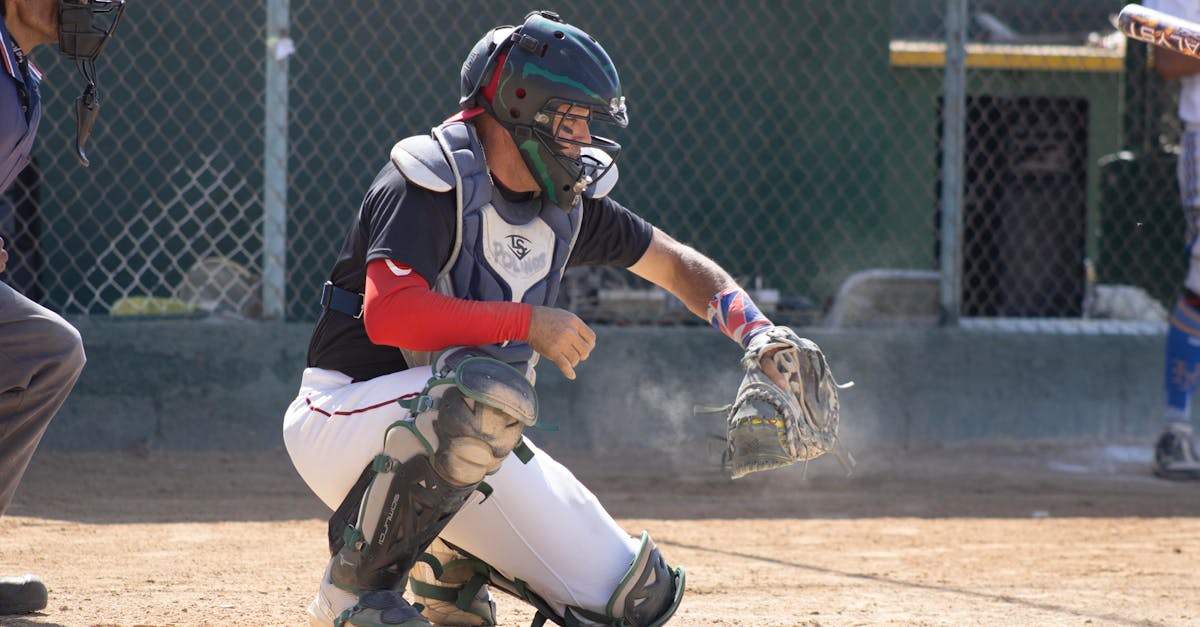
In 2025, Rutschman led American League catchers with +12.5 framing runs according to Statcast. He has been at +10 or better in three of his four big-league seasons. The technique is subtle quiet hands, a one-knee-down setup with runners on, and a glove that finishes inside the strike zone rather than yanking pitches into it. Umpires reward catchers who present pitches honestly, and Rutschman is one of the cleanest presenters in the league. If you want to see this for yourself, I have written a separate guide on how to frame pitches that walks through the exact mechanics he uses.
Blocking
Rutschman blocked 92 percent of wild-pitch-eligible balls in the dirt in 2025, the best mark in MLB. That sounds like a small number on paper, but every blocked ball is a runner who does not move up 90 feet, and every runner who does not move up is a run the bullpen does not have to scramble to prevent. Baseball Savant pitching staff metrics credit him with saving about eight runs purely on blocks, which by itself is roughly a full win of value.
Throwing
His average pop time to second base in 2025 was 1.92 seconds, top five in the majors, and his caught stealing rate hit 32 percent in a league environment where the new pickoff rules and bigger bases have crushed catcher CS numbers across the board. The throwing motion is short, the release is clean, and the carry on his throws is plus he has been clocked at 87 mph on a throw to second. If you want the full breakdown of how elite catchers measure up here, I cover the science in my piece on catcher pop time.
Game Calling
This is the bucket that does not show up cleanly in metrics, but every Orioles pitcher I have heard interviewed talks about it. Rutschman calls his own games, studies opposing hitters religiously, and is empowered by the Baltimore coaching staff to override scouting reports when something is not working in real time. In 2025, the Orioles had a 3.74 staff ERA when Rutschman caught versus 4.18 when he did not, a gap that holds up after adjusting for which pitchers were on the mound. If you want to learn the framework behind that kind of work, my deep dive on how to call a game as a catcher walks through it pitch by pitch.
Playing Style: What Makes Rutschman So Unusual
When I sit down to scout a hitter, I usually look at four things: how often they swing, how often they make contact, where they hit the ball, and how hard they hit it. Rutschman profile in each bucket is unusual for a power-position bat, and the combination is what makes him special.
Swing rate. Rutschman career swing rate sits around 41 percent, well below the league average of 47 percent. His chase rate, which is what I really care about, is even more extreme he chased just 22 percent of pitches outside the zone in 2025, which puts him in the top five percent of all hitters. That is elite plate discipline, and it is the foundation of his entire offensive game. He simply does not give pitchers free outs.
Contact rate. When he does swing, he hits the ball. His zone contact rate has been above 90 percent in three of his four seasons. The combination of swinging less often and making contact when he does is why his strikeout rate has been below 20 percent every year of his career while playing a position where 25 to 28 percent K rates are normal.
Batted-ball mix. This is where the two swings diverge most clearly. As a left-handed hitter, his ground-ball rate is about 44 percent and his line-drive rate hovers around 23 percent. As a right-handed hitter, his fly-ball rate jumps to 38 percent and he pulls the ball more aggressively. The Orioles hitting coaches have done a great job letting both versions of him be themselves rather than forcing a uniform approach.
Exit velocity. His average exit velocity in 2025 was 91.4 mph and his max was 113.8. Those are firmly above-average numbers, but they are not Aaron Judge or Yordan Alvarez territory. Rutschman power plays up because his approach is so disciplined he attacks pitches in the heart of the zone and lets the rest go, which means a higher percentage of his batted balls are barreled compared to free-swinging sluggers with bigger raw power. His barrel rate climbed to 10.2 percent in 2025, a career high.
Key Career Moments That Defined Him
Stats tell you what a player is. Stories tell you who they are. These are the moments that have defined Rutschman career for me as a fan and as an analyst.
- The 2018 College World Series. Oregon State took the national title and Rutschman, then a sophomore, hit .400 with two homers and 11 hits in the finals, winning Most Outstanding Player. It was the moment scouts moved him from high pick to generational prospect.
- May 21, 2022 debut. Camden Yards sold out for a last-place team. Rutschman had walked into a clubhouse that had lost 110 games the prior year, and within a month the Orioles started winning. They finished 2022 above .500.
- The 2023 Home Run Derby. Rutschman became the first switch-hitting catcher to participate in the Home Run Derby, hitting 27 first-round home runs and showcasing the power from both sides on a national stage.
- The 2023 Wild Card walk-off. His RBI single against the Rangers in the bottom of the ninth of the AL Wild Card opener was the kind of moment that announces a player as a postseason star, even though Baltimore ultimately lost the series.
- The 2024 wrist injury recovery. Most catchers lose value as they age into their late twenties. Rutschman lost value briefly because of a real injury, came back stronger, and made the swing tweaks that drove his 2025 rebound. The maturity to admit something was off and to fix it set him apart.
- The 2025 All-Star start. Rutschman was elected the starting AL catcher for the second time in three years, beating out Cal Raleigh and Jonah Heim in fan voting, and went 2-for-3 with a double in the game itself.
How Rutschman Compares to His Peers
The catcher position has the best top-end talent it has had in a generation. Cal Raleigh just broke the single-season home run record for a catcher. William Contreras has put up MVP votes in Milwaukee. Yainer Diaz, Bo Naylor, and Henry Davis are all interesting young bats. So how does Rutschman fit into that picture? I built this comparison from 2025 numbers and entering-2026 ages to make it apples-to-apples.
| Catcher | Age | 2025 HR | 2025 OPS | 2025 wRC+ | 2025 fWAR | Defensive Reputation |
|---|---|---|---|---|---|---|
| Adley Rutschman | 28 | 22 | .830 | 125 | 4.7 | Elite (framing + blocking) |
| Cal Raleigh | 29 | 54 | .918 | 148 | 6.1 | Plus (power-throwing arm) |
| William Contreras | 28 | 23 | .795 | 118 | 3.8 | Average (improving framer) |
| Yainer Diaz | 27 | 25 | .770 | 112 | 2.9 | Below avg (bat-first) |
| Bo Naylor | 26 | 17 | .730 | 104 | 2.5 | Above avg (athletic) |
Raleigh is the clear offensive standout right now after his record-setting 2025, and I broke that historic season down in detail in my Cal Raleigh stats analysis. But here is the case for Rutschman as the most valuable all-around catcher in the game: he combines top-tier defense with a plate-discipline-driven bat that ages better than home-run-driven profiles. Raleigh 54-homer year is incredible, but I am not certain he replicates it. Rutschman .370 OBP, on the other hand, looks completely repeatable. Over a five-year window, my money is on Rutschman accumulating more total WAR.
Impact on the Orioles
You cannot tell the story of the modern Orioles without Rutschman. He showed up in May 2022, and the franchise win totals went 52, 83, 101, 91, and 89 over the next four seasons. Some of that is the young position-player core coming up around him Gunnar Henderson, Jackson Holliday, Colton Cowser but Rutschman is the connective tissue. He is the guy the pitching staff trusts. He is the guy who sets the offensive tone hitting third. He is the guy in the dugout the rookies look at when they need to know how to act.
If you want to understand the depth of the Baltimore lineup he anchors, my Gunnar Henderson stats analysis covers the other half of the engine. Henderson and Rutschman together are projected for over 10 WAR in 2026, which is the kind of one-two combination most contenders are built around. The Orioles also have a much-deeper rotation than they did during the rebuild years, and that rotation has been able to develop largely because of how comfortable Rutschman makes young pitchers feel.
One thing I want to highlight is leadership context. Catchers carry a different burden than other position players. They are the on-field manager, the pitching coach voice on the mound, the player who knows every scouting report cold. Rutschman handles that load while putting up 130-plus games behind the plate every healthy year and still hitting at a 125 OPS+ clip. That is a unicorn skill set.
What I Expect From Rutschman in 2026
Spring training results do not predict regular season performance, but they can confirm health. So far in Sarasota this March, Rutschman is slashing .345/.423/.655 in 28 plate appearances with two home runs, and more importantly, the exit velocities are showing the same 91-plus mph average that his 2025 season tracked at. The wrist is fine. The bat speed is back. He looks like a player in his physical prime, and the underlying numbers suggest he is just entering it.
Here is my realistic expectation for 2026, broken into best case, base case, and floor case.
| Scenario | AVG/OBP/SLG | HR | RBI | fWAR | Awards Outlook |
|---|---|---|---|---|---|
| Best Case | .295/.385/.510 | 30 | 95 | 6.5 | AL MVP finalist, top-3 finish |
| Base Case | .282/.365/.475 | 24 | 82 | 5.2 | All-Star starter, top-10 MVP |
| Floor Case | .265/.345/.430 | 18 | 70 | 3.8 | All-Star reserve, Silver Slugger contender |
His current AL MVP odds at FanDuel are +1400, which I think is actually generous from the bettor standpoint. He sits behind Witt Jr., Judge, and Raleigh, but if the Orioles win the AL East and he plays 145 games, the narrative will come his way. Catchers do not win MVPs often Buster Posey in 2012 was the last but Rutschman has the kind of season profile that makes a case voters can rally around.
Lessons Hitters Can Take From Rutschman Approach
I get asked all the time what amateur hitters can learn from a player like Rutschman. The truth is most kids will not look like him at the plate his switch-hitting demands and his frame are unusual. But the approach is teachable, and these are the three things I would tell any young hitter to internalize from his game.
- Take pitches you cannot drive. Rutschman chase rate is what makes everything else work. He simply does not swing at junk. A young hitter who learns to lay off pitches outside the zone will see counts swing in their favor more often, and good things happen in hitter-friendly counts.
- Hit it where it is pitched. From the left side, he uses the whole field. He is not trying to pull every pitch out to right. That patience to let outside pitches travel and drive them the other way is a skill I would put at the top of any young hitter list.
- Trust your contact ability. A lot of amateur hitters try to add power by swinging harder. Rutschman shows the opposite path swing under control, in your strike zone, and the contact quality takes care of itself.
If those principles sound abstract, the drills are not. I cover the exact framework for building a strike-zone-first approach in my guide to a baseball hitting approach, and the supporting work on swing decisions in my piece on plate discipline.
Frequently Asked Questions
How old is Adley Rutschman heading into 2026?
Rutschman turned 28 on February 6, 2026. That puts him right in the heart of his physical prime, which for catchers typically runs from about ages 26 through 30. The age also matters because he is on his last year of arbitration before hitting free agency after 2027, which is a major storyline for the Orioles this year.
Is Adley Rutschman a switch-hitter?
Yes, and he is a legitimate one, not a one-sided switch-hitter. His career numbers from the left side (.268/.358/.435) and from the right side (.265/.357/.439) are nearly identical, which is extremely rare. He throws right-handed.
What position does Adley Rutschman play besides catcher?
He has logged occasional time at designated hitter and a small handful of innings at first base, but he is overwhelmingly a catcher. The Orioles have used the DH spot to keep his bat in the lineup on days they want to give his legs a break, particularly during stretches with day games after night games.
How does Rutschman compare to Cal Raleigh?
Raleigh has more raw power and just set the catcher single-season home run record. Rutschman has better plate discipline, slightly better framing numbers, and a more durable historical track record. I think of Raleigh as the better fantasy bat in any given season and Rutschman as the more valuable real-life baseball player over a multi-year window.
What is Rutschman contract status?
He is in arbitration through 2027 and is eligible for free agency after that season. The Orioles and his representatives have had preliminary extension talks, and the price tag for a long-term deal is going to be enormous catchers of this caliber rarely hit the open market.
Has Rutschman ever won an MVP or Silver Slugger?
He won the AL Silver Slugger at catcher in 2023 and finished as a top-15 MVP candidate in both 2023 and 2025. He has not yet won an MVP, but the 2026 season looks like his best shot to make a serious run if the Orioles win the division.
How tall and heavy is Rutschman?
He is listed at 6-foot-2 and 230 pounds. He has the physical build of a modern catcher big and strong enough to handle the daily grind but athletic enough to be quick on his feet behind the plate and to run the bases respectably.
Where did Rutschman go to college?
He played at Oregon State, where he won a national championship in 2018 and the Golden Spikes Award in 2019. He grew up in Portland, Oregon, and his father played catcher at Oregon State as well, so it was a true family path.
Final Take: Why Rutschman Matters
Modern baseball has spent the last decade celebrating exit velocity and launch angle, which has flattened a lot of player profiles into the same general type of slugger. Rutschman is a reminder that the most valuable players are often the ones who do many things very well rather than one thing at an extreme level. He is the rare player who would have been a star in any era of baseball Yogi Berra would recognize the approach, Bench would recognize the defense, Mauer would recognize the switch-hitting consistency.
For the Orioles, he is the difference between a good team and a championship team. For the catcher position broadly, he is raising the standard for what a complete player at the most demanding spot on the field looks like. And for me as a fan and a writer, he is the kind of player I will tell my kids about: a guy who showed up, did the work, called every pitch, blocked every ball in the dirt, took every walk, drove in every runner, and made baseball better because he was in it. If 2026 is the year he wins an MVP, it will not surprise me at all. And if he does not, he will still be the most valuable catcher in the game.