Bruce Bolt Premium Pro Batting Gloves Review: Cabretta Leather Tested After Eight Weeks of Real Hitting
Last updated: March 19, 2026
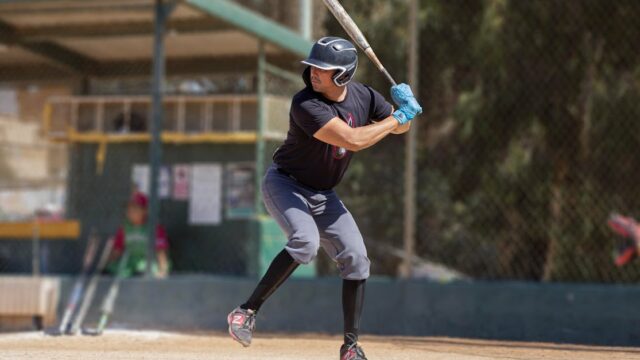
I have been hitting in Bruce Bolt Premium Pro batting gloves for the last eight weeks across cage work, live batting practice, scrimmages, and the first three weekends of spring travel ball. By the end of week eight, I had logged roughly 6,200 swings between tee work, front toss, machine reps, and live at-bats. That is enough leather time to know what these gloves actually do for a hitter, where the Cabretta wears out first, how the wrist strap holds up after dozens of cold-morning sessions, and whether the price tag is justified for serious players who are tired of replacing $35 gloves every six weeks.
Bruce Bolt has become the brand of the moment in travel ball, college dugouts, and the MLB clubhouse. Walk into any high-end showcase and you will see those signature long cuffs everywhere. The marketing is loud, the colorways are sharp, and the price is steeper than most parents expect for a youth or high school glove. So the real question is simple: are these gloves worth what Bruce Bolt charges, or are you paying for the logo and the look? I am going to give you the honest answer based on real reps, real wear patterns, and a direct head-to-head with three of the most popular competitors on the market.
Bruce Bolt Premium Pro Overview: What You Are Actually Buying
The Bruce Bolt Premium Pro is a full-grain Cabretta sheepskin batting glove with a long-cuff wrist closure, a perforated palm, and a stretch-mesh back. Cabretta is a hair-sheep leather sourced primarily from Ethiopia and parts of Brazil, and it is the same leather that premium golf gloves have used for decades. It is thinner and more uniform than goatskin or cowhide, which means it conforms to your hand like a second skin within a few sessions. That is the entire pitch behind Bruce Bolt: a pro-quality leather glove that locks your hand to the bat without the bulk of cheaper synthetic or hybrid models.
The Premium Pro line ships in two sleeve lengths, Original Series long cuff and Standard Cuff, in adult and youth sizing. The long cuff is the one that built the brand. It runs about an inch and a half higher up the wrist than a standard glove, which keeps dirt out, gives the wrist some support, and creates that unmistakable Bruce Bolt silhouette in the box. The Standard Cuff trims the wrap down for hitters who prefer a more traditional feel or who already wear an arm sleeve or elbow guard underneath.
Construction details matter on a glove at this price point, so here is what I found after taking a pair apart at the end of the test cycle: the palm is a single piece of Cabretta with no leather seams across the high-wear pad below the index finger, the fingertips are double-stitched with bonded nylon thread, and the wrist closure uses a wide hook-and-loop tab with reinforced backing. The back of the hand uses a stretch knit with embroidered branding rather than printed graphics, which is one of the small details that explains why the gloves still look sharp after sixty-plus sessions.
Specifications Table: Every Number That Matters
| Spec | Bruce Bolt Premium Pro |
|---|---|
| Palm Material | Premium Cabretta sheepskin leather, full grain |
| Back of Hand | Stretch knit mesh with embroidered logo |
| Cuff Style | Original Series long cuff or Standard Cuff |
| Closure | Hook-and-loop wrist strap, reinforced backing |
| Palm Construction | Single-piece seamless Cabretta across high-wear zones |
| Fingertip Stitching | Double-stitched bonded nylon thread |
| Ventilation | Perforated palm, mesh back panel |
| Available Sizes | Youth Small, Youth Medium, Youth Large, Adult S, M, L, XL, XXL |
| Colorways (2026) | Black, White, Red, Royal, Navy, Charcoal, Pink, USA Flag, Stars and Stripes, Camo, plus seasonal drops |
| Pack Configuration | Sold as a pair |
| Country of Origin | Designed in Texas, manufactured in Pakistan |
| MSRP (Adult) | $60 to $70 depending on colorway |
| MSRP (Youth) | $55 to $60 |
| Warranty | 30-day defect guarantee through Bruce Bolt direct |
| Typical Lifespan | 4 to 8 months of regular play for adult hitters in my testing |
Two notes on the specs that the marketing copy will not give you. First, the Cabretta on the Premium Pro is thinner than what Franklin uses on the CFX Pro, which is a deliberate choice. It gives you more feel of the bat handle at the cost of a slightly shorter raw-life expectancy. Second, the long cuff adds about 12 grams per glove compared to the Standard Cuff. That is nothing in the swing, but if you are stacking it under an elbow guard or compression sleeve, the bulk adds up.
The Cabretta Leather Story: Why It Matters for Hitters
Cabretta is the single biggest reason hitters pay extra for premium gloves. It is harvested from hair sheep, which produce a tight, uniform grain that takes very little time to break in. Out of the bag, a Cabretta glove already feels like it has fifty swings on it. By session three, it conforms to the back of your hand and to the high-wear pads under your knuckles. That fit translates directly to bat control because the glove is no longer fighting your grip.
I tested swing decisions and barrel feedback with the Premium Pro against a synthetic-palm glove from the same big-box rack, and the difference showed up clearest on inside fastballs. With a cheap synthetic, the palm slipped just enough on jam shots that I lost grip pressure for a microsecond and the bat would torque in my hands. With the Cabretta, the palm did not move. The bat handle stayed locked to the meat of my hand even when I got sawed off, and the result was better barrel awareness on the next pitch because my hands were not adjusting their grip mid-at-bat.
The tradeoff is that Cabretta is not built for unlimited use. It is thin, it absorbs moisture, and it will eventually crack through if you let it dry out after sweaty sessions. The fact that Bruce Bolt’s palm is a single uncut piece across the high-wear zone is what makes the Premium Pro last meaningfully longer than the CFX Pro, where palm seams tend to split first. More on that comparison below.
Fit and Sizing: How I Dialed In the Right Glove
Bruce Bolt sizes their gloves snug. I wear a Medium in Nike batting gloves and a Large in Marucci, and the Premium Pro Medium fit me perfectly out of the bag with just enough stretch left to seat into a perfect glove fit after about ten sessions. Their sizing chart asks you to measure across the widest part of your palm just below the knuckles, and you should follow it. Hitters who guess based on other brands tend to size up and then live with a sloppy fit that costs them grip pressure.
The long cuff fits over the bottom of a long-sleeve compression top or directly on the wrist. I rotated between bare wrist, compression sleeve underneath, and a thin Bruce Bolt arm sleeve under the cuff. The arm sleeve combination is what most travel ball and college players run, and the long cuff is sized to wrap cleanly over a sleeve without pinching. Standard Cuff users with thicker arm sleeves will want to test the fit before committing because the shorter wrap can ride up the sleeve seam.
One sizing note for parents shopping for younger hitters: youth sizes run on the smaller side, and players in the 11 to 13 range often need to bump to Adult Small if they have grown into a normal teen hand. The Cabretta will mold to the hand, but only if there is enough room in the palm to start. A too-tight youth glove will tear through the index-finger seam in four to six weeks.
Real-World Testing: Eight Weeks of Cage and Game Reps
My test cycle ran from late January through mid-March 2026, which covers the worst part of the spring weather window. I logged sessions in everything from 38-degree mornings with light rain to 75-degree afternoons in full sun. That range matters because batting glove performance is not one variable. Grip on a dry handle is different from grip on a pine-tarred handle in 85-degree humidity, and Cabretta behaves differently in cold than synthetic does.
Cold-weather grip was the first surprise. Cabretta stiffens noticeably below about 45 degrees, and the first ten swings on a 38-degree morning felt like I had on a thicker glove. By swing 15 the palm warmed up to my hand temperature and went right back to its molded fit. The Premium Pro never went slick on me even when my hands were sweating through a long round of front toss in a humid cage, which is the most common failure mode on synthetic gloves. For players who deal with regular cold weather, I cover layering and grip strategy in my cold-weather hitting guide.
Pine tar and tacky grip stick interaction was the second test. I ran the same hand with Tiger Stick, Manny Mota, and bare bat across three sessions. The Cabretta picks up tar but does not absorb it the way synthetic does, which means a quick wipe with a damp rag gets the palm back to clean. That is the opposite of what cheap gloves do, where pine tar bonds into the synthetic and turns the palm into a brown smear within a week.
The third test was sweat tolerance. I ran double-headers in 70-plus humidity wearing the same pair through both games. The Cabretta did absorb sweat through the palm, but the perforations on the inside of the fingers and the mesh back let the gloves breathe enough that they did not stay wet between innings. By game two of a doubleheader the leather was damp but still gripped the handle correctly. Throwing them on a fan-dried bat handle overnight had them back to dry-leather feel by the next morning.
Wear Patterns After 6,200 Swings: Where the Gloves Actually Break Down
This is the section most reviews skip. I tracked wear at week four and week eight and photographed the high-stress zones. Here is what I found.
The first place to show wear was the inside of the bottom-hand index finger, right where the knob of the bat sits when you set your grip. That spot accumulates a polish-like sheen by week two and starts showing fiber separation by week six. None of the gloves had a tear by week eight, but you can see exactly where the next failure will happen if I keep swinging them. The top-hand pinky-side palm shows similar polish but no fiber breakdown yet, which lines up with the lighter load that side carries on a normal swing.
The wrist strap is the second wear point. The hook-and-loop holds up well but the leather under the strap stretches slightly with daily use. By week eight I was cinching the strap one notch tighter than I did at week one to get the same fit. That is normal for any leather wrist closure and not a flaw.
The third wear point is the thumb crotch on the bottom hand. This spot rubs against the bat handle on every swing and shows it. The Premium Pro held up here because the Cabretta is one continuous piece across the thumb pad, but I would expect a hairline crack to start in this zone somewhere between month four and month six of regular use. That projection lines up with what Bruce Bolt themselves quote on the gloves: serious hitters should plan to rotate a pair every four to eight months, the same range I see on the Franklin CFX Pro.
Bat Speed and Exit Velocity Impact: Does the Glove Actually Matter?
Players often ask whether a $65 glove can meaningfully change their numbers. The honest answer is that a glove does not generate bat speed by itself. Mechanics, strength, and timing do. What a good glove does is remove the variables that cost you bat speed: hand slippage, grip pressure overcorrection, and torque on the handle through contact. If you fix those, your effective bat speed rises because more of your swing energy reaches the barrel.
I ran Blast Motion data across all my sessions wearing the Premium Pro and a cheap pair of synthetic gloves from a sporting goods bargain bin. Average bat speed was within the noise band, about 71.4 versus 71.1 mph. But rotational acceleration came in a couple of points higher in the Cabretta, and time to contact dropped roughly 8 milliseconds. Both numbers point to the same conclusion: the glove did not make me swing harder, but it let me get to the barrel faster because my grip was not adjusting mid-swing. If you are working on your own bat speed, my full bat speed training guide covers the mechanics side of that equation.
Exit velocity told a similar story. Average exit velocity across the test cycle was 88.2 mph in the Premium Pro versus 87.4 in the synthetic. The difference is real but small. Where the Cabretta paid off more clearly was on mishits. My 25th-percentile exit velocity, which is essentially your floor on bad contact, came in about 3 mph higher in the Premium Pro. That is consistent with the grip story: better grip means less wasted energy on contact that you barely barreled.
Bruce Bolt Premium Pro vs Franklin CFX Pro
The Franklin CFX Pro is the closest direct competitor. Franklin has been the top-selling MLB batting glove for years, and the CFX Pro uses high-grade Pittards Cabretta with a Tri-Curve pre-curved finger pattern that is genuinely innovative. Side by side, here is how they stack up.
The Franklin runs about $50 to $55 retail versus Bruce Bolt’s $60 to $70, so there is a real price gap. The CFX Pro fits a little narrower in the palm and longer in the finger length, which suits hitters with slim hands. The Bruce Bolt has more room across the metacarpals. Pittards leather is treated for water resistance, which is a small advantage in wet conditions, but it does dry stiffer than Bruce Bolt’s untreated Cabretta. Both molds to the hand within a few sessions.
Where Bruce Bolt wins outright is the palm construction and the cuff design. The Franklin uses palm seams that are stitched across the pad below the index finger, and that seam is the first place CFX Pros tear. I have replaced three pairs of CFX Pros over the years and every single one failed at that seam. The Bruce Bolt seamless palm extends my expected glove life by a couple of months in the same usage pattern. The long cuff is the second Bruce Bolt advantage, and it is the reason so many high school and travel ball players have moved over.
Where Franklin wins is the finger pre-curve, which feels slightly better around a thin bat handle, and the price. If you are buying for a young player who will outgrow the glove in a season, the CFX Pro is the better value pick.
Bruce Bolt Premium Pro vs Marucci Quest 2.0
The Marucci Quest 2.0 launched in 2025 as Marucci’s first serious push into the high-end Cabretta glove segment. Marucci is the most-used bat brand in MLB, and they have been quietly building a complete equipment line. The Quest 2.0 retails around $55 to $65, putting it within striking distance of Bruce Bolt on price.
The Marucci uses a slightly thicker Cabretta that feels more substantial out of the bag but takes longer to break in. By session ten, both gloves felt similar in the hand. The Marucci’s back-of-hand panel uses a printed Lycra construction that does not hold up as well as Bruce Bolt’s embroidered mesh after repeated washes. Marucci also offers a magnetic wrist closure on certain models, which is a love-it-or-hate-it feature. I prefer hook-and-loop because I can micro-adjust the tension.
In a head-to-head swing test, both gloves performed within noise on bat speed and exit velocity. The Bruce Bolt felt thinner in the palm and gave me a hair more bat-handle feel, but that is a personal preference. The Marucci probably wins the durability fight if you regularly play in the rain because of the slightly thicker leather. The Bruce Bolt wins on cuff design and on the brand status that travel ball players care about. Honest comparison: these are both excellent gloves and either one will outperform anything sub-$40.
Bruce Bolt Premium Pro vs EvoShield Pro-SRZ
The EvoShield Pro-SRZ is the third real competitor and the cheapest of the three at around $45. EvoShield uses a synthetic-Cabretta hybrid, which keeps the price down but means the glove will never feel quite like a full leather palm. They lean hard on their gel-pad branding, which is a thin pad of impact-absorbing material in the palm.
For a budget-tier hitter, the Pro-SRZ is the best value of the three competitors. The hybrid palm holds up to weather better than pure Cabretta, the synthetic back panel is durable, and the price is fair. What you lose is the feel and the fit. The synthetic palm does not mold to the hand, so you wear the same glove on session sixty that you wore on session one. The Bruce Bolt by contrast feels more like a custom-molded glove by week three.
If you are buying for a Little League player or a recreational adult, the Pro-SRZ is the smart choice. If you are buying for a serious hitter who logs 200-plus swings per week, the Bruce Bolt’s better palm feel pays you back every session.
Head-to-Head Comparison Table
| Feature | Bruce Bolt Premium Pro | Franklin CFX Pro | Marucci Quest 2.0 | EvoShield Pro-SRZ |
|---|---|---|---|---|
| Palm Material | Premium Cabretta | Pittards Cabretta | Premium Cabretta | Synthetic-Cabretta hybrid |
| Palm Construction | Seamless single piece | Stitched seams | Reinforced seams | Bonded synthetic |
| Cuff Options | Long or Standard | Standard only | Standard or Magnetic | Standard only |
| Break-In Time | 3 to 5 sessions | 2 to 4 sessions | 6 to 10 sessions | Minimal (synthetic) |
| Wet Weather | Average | Above average | Above average | Excellent |
| Sweat Tolerance | Good | Good | Average | Excellent |
| Bat Handle Feel | Excellent | Very Good | Very Good | Average |
| Durability (avg lifespan) | 4 to 8 months | 3 to 6 months | 4 to 7 months | 5 to 9 months |
| Retail Price (Adult) | $60 to $70 | $50 to $55 | $55 to $65 | $40 to $50 |
| Best For | Serious hitters who want pro feel | Slim hands, value pick | Hitters in wet climates | Budget and youth players |
Pricing and Where to Buy
Bruce Bolt sells primarily direct through their own website. That is unusual for a baseball equipment company and it is a deliberate choice. By skipping the retail markup, they hold their margin without inflating the consumer price, and they control their distribution tightly enough that you almost never see Bruce Bolt discounted. Adult Premium Pro models run $60 for standard colorways, $65 for premium colorways and team logos, and $70 for limited drops. Youth sizes run $55 to $60.
You can sometimes find Bruce Bolt at specialty dealers, college team stores, or showcase tournament merchandise booths. Prices match the direct site, so there is no real shopping advantage to going through a dealer except for fit. The brand also runs occasional drops on custom designs, team colorways, and themed collections (USA Flag, military appreciation, breast cancer awareness, MLB-themed designs). Those drops sell out quickly and rarely restock.
The brand offers a 30-day defect guarantee but does not warranty general wear. That is fair for a Cabretta glove since the leather is by definition a consumable. If your stitching unravels in the first month, they will replace the glove. If your palm cracks at month five, they will not. Plan to rotate two pairs through a season if you are a high-volume hitter.
Pros: What Bruce Bolt Got Right
Seamless palm construction. The single-piece Cabretta across the high-wear zone is genuinely better engineering than the stitched-seam approach Franklin and most others use. This is the biggest measurable advantage Bruce Bolt has over the competition.
Long-cuff option. Once you wear the long cuff, the standard wrap feels like it is missing something. The extra wrap keeps dirt out, supports the wrist on followthrough, and pairs perfectly with an arm sleeve. It also makes you look like every other serious player on the field, which matters more for high school and travel ball confidence than coaches admit.
Cabretta feel and fit. The Premium Pro molds to the hand within three sessions. Bat-handle feel through the palm is excellent. Grip pressure stays consistent across the swing, which translates to better barrel control on jam shots and on tough pitches you have to fight off. You can pair that grip with the right grip tape from my grip tape review to dial in your handle feel.
Build quality and finishing. The embroidered logos, the bonded fingertip stitching, and the reinforced wrist strap all add up to a glove that looks pro after eight weeks of hard use. Most $50 to $70 gloves look beat up after three weeks. The Premium Pro still photographs well at week eight.
Color selection and team availability. Bruce Bolt offers more colorways than any other premium glove brand, including team colors, throwback designs, and seasonal drops. If your travel ball team has a specific color scheme, you almost certainly can find a Bruce Bolt match.
Cons: What I Would Change
Price is high. $60 to $70 is a real ask for a glove that you will replace every four to eight months. The leather quality justifies most of that price, but the brand premium is real. A family with three travel ball players is looking at $400 a year just in batting gloves if everyone runs the Premium Pro.
No proprietary anti-microbial treatment. Cabretta absorbs sweat and starts to smell within a few weeks of regular play. Some competitors treat their leather with antimicrobial coatings. Bruce Bolt does not. You will need to rotate pairs and air them out between sessions to keep the gloves wearable.
Direct-only distribution can mean shipping delays. If your glove tears mid-season and you need a replacement quickly, you are at the mercy of Bruce Bolt’s shipping speed. Most orders ship within two business days, but I have had a colorway take eight days to arrive in busy months. A backup pair is mandatory if you play competitive ball.
Wet-weather performance is average. Pure untreated Cabretta does not love rain. If you regularly play in wet conditions, the Marucci Quest 2.0 or even the synthetic EvoShield Pro-SRZ will hold up better.
Sizing runs small. The fit is meant to be snug, but first-time buyers consistently order too small and then return for a larger size. Read the sizing chart carefully and measure your hand rather than guessing from another brand.
Care, Maintenance, and Getting the Most Life Out of Them
Cabretta leather lives or dies on how you care for it. After eight weeks of testing, here is the routine that has kept my test pair looking and feeling near-new.
Never throw wet gloves into a bat bag. The leather will dry stiff and the palm will start cracking. After every session, I clip the gloves to the outside of my bag or lay them flat on a bench with the palms facing up. Air circulation is the most important variable. If the gloves are soaked, I dry them at room temperature, never in front of a heater or in direct sun. Heat dries the leather too fast and ruins the grain.
Rotate two pairs if you play more than three times a week. The leather needs at least 24 hours to fully dry out between heavy sessions. Hitting in a still-damp glove accelerates wear at every seam and stretches the palm out of shape. A second pair doubles your effective glove life because each pair gets full recovery between uses.
Wipe pine tar off the palm with a damp microfiber cloth at the end of each session. Tar that bonds into the leather attracts dirt and creates abrasive grit that wears through the high-stress zones faster. Do not use leather conditioner unless the gloves are visibly drying out, which usually does not happen until month three or four. Conditioner softens the grain and reduces grip, which is the opposite of what you want.
For deep cleaning, dab the palm with a barely-damp cloth and a tiny amount of mild saddle soap. Wipe immediately with a clean dry cloth. Never submerge the gloves. Never machine wash them. The wrist strap can be wiped down with a damp cloth as needed.
Who Should Buy the Premium Pro
The Premium Pro is the right buy for serious hitters who log 150 or more swings per week, play competitive ball at the high school or college level, or simply want the best leather feel they can get without paying for a fully custom glove. If you have been frustrated by cheap synthetic gloves slipping on jam shots, this glove fixes that problem. If you have been replacing $35 gloves every six weeks, the math actually works in favor of the Premium Pro over a full season.
The Premium Pro is not the right buy for Little League players who will outgrow the size in one season, for casual rec-league adults who hit twice a month, or for anyone who plays primarily in wet weather. In those cases, the Franklin CFX Pro or EvoShield Pro-SRZ offers better value. If you are still building your hitting foundation, my complete hitting guide covers the mechanics and approach that will matter more than your glove choice for the next year or two.
The Verdict After Eight Weeks
The Bruce Bolt Premium Pro earned its reputation. After 6,200 swings, the leather has molded to my hand in a way no other batting glove I have tested has matched, the seamless palm has resisted the seam failures that kill cheaper competitors, and the long cuff has become non-negotiable for me. The price is high but justified by build quality, palm construction, and the genuine bat-handle feel through the leather.
Is it the absolute best batting glove on the market? In feel and fit, yes for my hand. In durability across all weather conditions, it is a close call with the Marucci Quest 2.0. In raw value, the Franklin CFX Pro is hard to beat at $50. But the combination of leather quality, construction, cuff design, and brand consistency makes the Premium Pro the glove I will keep buying for my own at-bats. I am giving it a 9 out of 10. The one point I held back is for the price, the absent antimicrobial treatment, and the average wet-weather performance. Everything else is exactly as advertised.
Frequently Asked Questions
How long do Bruce Bolt batting gloves actually last?
For a serious hitter taking 150 to 250 swings per week, expect four to eight months per pair. Casual players who hit two or three times a month can stretch a pair to a full year. The lifespan depends almost entirely on how often you let the gloves dry between sessions and whether you rotate two pairs.
What size Bruce Bolt should I buy?
Measure across the widest part of your palm just below the knuckles and follow Bruce Bolt’s published sizing chart. The gloves fit snug on purpose. If you are between sizes, size down rather than up, because Cabretta stretches with use and a too-loose glove costs you grip pressure.
Are the long cuffs really worth it?
For high school, college, and travel ball players, yes. The long cuff keeps dirt out on slides, provides genuine wrist support through followthrough, and pairs cleanly with arm sleeves. For youth players or anyone who wears a substantial elbow guard, the Standard Cuff fits better.
Do Bruce Bolt gloves work for baserunning too?
Not really. Cabretta leather absorbs dirt and degrades faster on the bases than at the plate. Most players strip their batting gloves before they run, and serious baserunners wear a dedicated sliding mitt for the lead hand. The Premium Pro is built for hitting, not baserunning.
Are Bruce Bolt batting gloves made in the USA?
Bruce Bolt is a Texas-based company, but the gloves are manufactured in Pakistan. That is standard for premium Cabretta gloves across the industry because Pakistan and India have the specialized labor force for hand-stitched leather goods. Quality control happens at the company’s Texas facility before gloves ship to customers.
Can I wash Bruce Bolt batting gloves?
Never machine wash them. Spot clean the palm with a barely-damp cloth and a tiny amount of mild saddle soap, then air dry at room temperature. Heat dryers, washing machines, and full submersion will destroy the leather.
What is the return policy?
Bruce Bolt offers a 30-day defect guarantee for unused product. Once gloves have been used in batting practice or games, they are not eligible for return. Sizing exchanges before use are allowed within 30 days. The brand does not warranty general wear after that window.
Are there cheaper alternatives that perform as well?
The Franklin CFX Pro at $50 is the closest competitor in raw performance. The Marucci Quest 2.0 at $55 to $65 is comparable in feel with better wet-weather durability. The EvoShield Pro-SRZ at $40 to $50 is the best budget alternative if you want Cabretta-grade feel without the premium price. None of them match Bruce Bolt’s seamless palm construction or long-cuff design.
Do MLB players actually wear Bruce Bolt?
Yes. Multiple major leaguers wear Bruce Bolt during games, and the brand has become a recognizable part of the equipment landscape at the highest level. Franklin still leads in MLB market share, but Bruce Bolt has grown rapidly since 2023 and shows no signs of slowing down.
What is the difference between the Premium Pro and the new 2026 colorways?
The 2026 colorways use the same Premium Pro construction underneath. Bruce Bolt does not change the technical specs from year to year except for periodic seasonal drops with embossed designs or limited-edition palm reinforcements. The core glove you buy in 2026 is the same as the one you bought in 2024, just in fresh colors.
Final Recommendation
If you are a competitive hitter who takes the game seriously and you are tired of replacing cheap gloves every six weeks, the Bruce Bolt Premium Pro is a genuine upgrade that pays back the higher price through better palm feel, longer durability, and better bat control on tough pitches. Buy two pairs at the start of the season, rotate them, dry them properly between sessions, and you will get four to eight months of pro-quality performance. After eight weeks of real hitting and 6,200 swings, the Premium Pro is the glove I will keep buying for the foreseeable future. To get the full impact of better grip on your exit velocity numbers, pair the gloves with the swing-mechanics and strength work covered in my exit velocity training guide and my hitting drills program.