How to Throw a Curveball: Grip, Mechanics, and Drills for Every Level
Last updated: March 18, 2026
I have been throwing curveballs since I was 14 years old, and I have spent the last decade coaching pitchers from Little League all the way up to college recruits in the Northeast. The curveball is the single most romantic pitch in baseball. It is the one that made Sandy Koufax a legend, the one Clayton Kershaw turned into a 12-to-6 hammer, and the one that every kid wants to learn the moment they realize fastballs alone will not get them through a lineup twice. But the curveball is also the most misunderstood pitch in the game. Coaches scream about elbow stress, parents panic about UCL tears, and half the YouTube tutorials I see online teach grips that promote exactly the kind of mechanics that lead to injury. After 20 years around the pitch, I want to give you the real playbook.
This is a complete guide to throwing a curveball at every level. I am going to walk you through the grip, the arm action, the release point, the spin axis, the drills I use in my own bullpens, the most common mistakes I see, and the safety considerations every pitcher and parent should understand before they ever throw their first breaking ball. By the time you finish reading, you should be able to walk to a mound, snap off a curve that breaks late and hard, and know exactly why it is moving the way it is. Let us get into it.
What a Curveball Actually Does (And Why It Breaks)
Before you can throw a curveball, you have to understand what makes it curve. A curveball breaks because of topspin. When the ball leaves your hand, your fingers impart forward rotation, the seams catch the air, and the Magnus effect pulls the ball downward as it travels. The harder you spin it and the steeper the spin axis, the sharper the break. According to Statcast data from the 2025 MLB season, the average big league curveball spins at roughly 2,550 RPM and breaks about 14 inches vertically compared to a no-spin baseline. Elite curveballs from pitchers like Charlie Morton and Yu Darvish push past 3,000 RPM with nearly 20 inches of vertical drop.
The shape of your curveball depends on your release. A pure 12-to-6 curve has a spin axis close to pure topspin and drops straight down. A 1-to-7 or 2-to-8 curve has tilted spin and breaks down and across. Neither is better than the other in a vacuum; both can be devastating if thrown with conviction and command. The key is consistency. Hitters can adjust to a sharp curve, but they cannot adjust to one they cannot identify out of the hand. Tunnel it off your fastball and you have a put-away pitch for life.
The Three Curveball Grips Every Pitcher Should Know
There is no single “right” curveball grip. I teach three primary grips depending on hand size, finger strength, and the style of break a pitcher wants. Pick the one that feels natural and let the spin take care of itself.
1. The Traditional Curveball Grip
This is the classic grip taught at most high schools. Place your middle finger along the long seam of the horseshoe, with your index finger resting next to it (not pressing). Your thumb goes underneath, on the opposite seam, forming a tight C with your middle finger. The ball should sit slightly off-center in your hand. When you throw it, you pull down hard with your middle finger as if you are pulling down a window shade. This grip produces a clean 12-to-6 break and is the easiest for younger pitchers to learn safely.
2. The Knuckle Curve
Made famous by A.J. Burnett and now used by pitchers like Phil Hughes and Clayton Kershaw (in a modified form), the knuckle curve replaces the index finger with a knuckled or bent finger digging into the seam. The bent index acts as a stabilizer while the middle finger does all the work. This grip is great for pitchers who struggle to get enough spin with the traditional grip because the knuckle gives you a launch pad for extra rotation. It tends to produce slightly higher RPM but takes longer to master.
3. The Spike Curve
The spike curve is the trendy version that has taken over MLB bullpens over the past five years. You drive your index fingernail straight into the leather of the ball, almost like you are pointing at home plate. The middle finger sits along the seam, the thumb underneath. The spike eliminates index finger interference and forces the ball to spin purely off the middle finger, generating extreme topspin and tight, late break. Pitchers with smaller hands often find this grip easier than the traditional. If you have ever watched Aaron Nola or Sonny Gray spin a curve, you have seen the spike in action.
Curveball Grip Comparison
| Grip Type | Best For | Typical Break | Difficulty | MLB Example |
|---|---|---|---|---|
| Traditional | Beginners, large hands | 12-to-6 | Low | Adam Wainwright |
| Knuckle Curve | Spin-rate seekers | 11-to-5 or 12-to-6 | Medium | A.J. Burnett, Phil Hughes |
| Spike Curve | Small hands, tight break | 12-to-6, sharp | Medium-High | Aaron Nola, Sonny Gray |
Curveball Mechanics: Arm Action and Release
This is where most pitchers ruin their curveballs and, frankly, where most arm injuries are born. The biggest myth I have to break with every new pitcher I coach is the idea that you have to “twist” or “snap” your wrist sideways to make a curveball curve. You do not. You should not. That sideways wrist action is exactly what generates the harmful supination forces that stress the medial elbow ligaments.
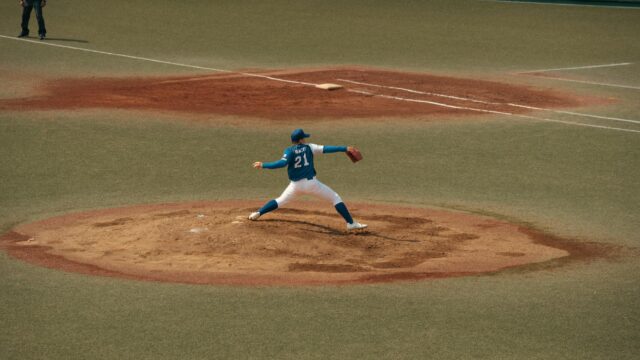
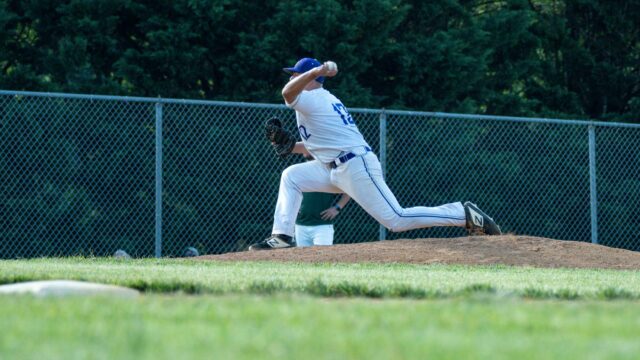
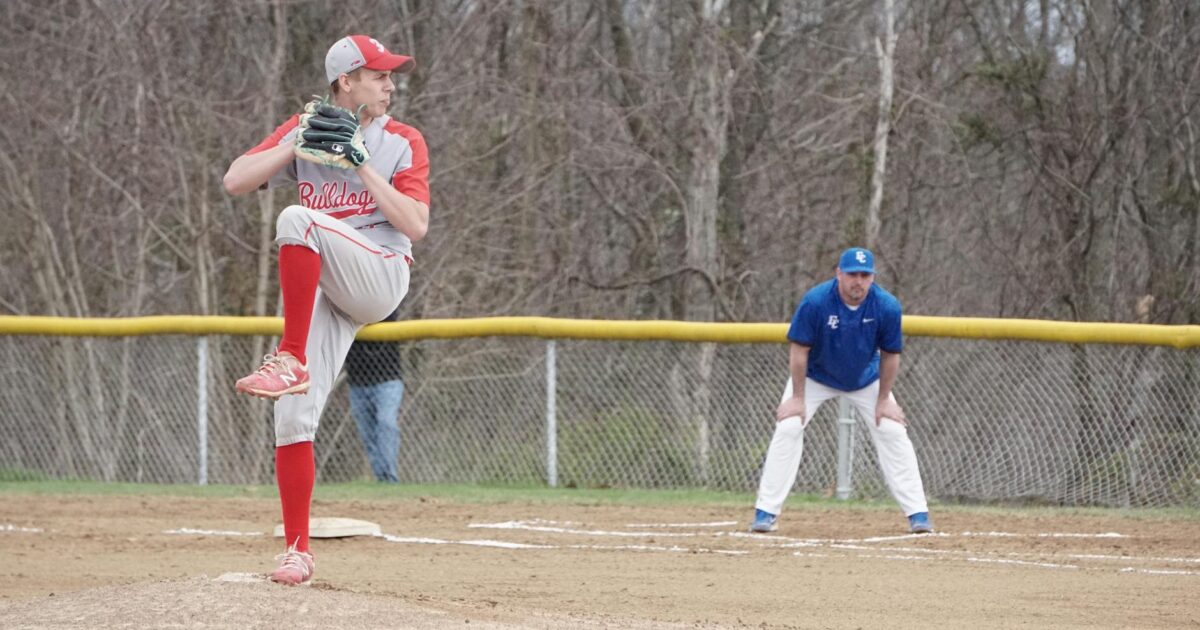
Throw a curveball the same way you throw a fastball, all the way through your delivery, until the release. Your arm slot, your stride length, your tempo, and your follow-through should all look identical. The only thing that changes is your hand position at release. For a curveball, your hand finishes with the palm facing your throwing-side ear, fingers pointing toward your face, almost like you are giving yourself a karate chop on the side of the head. Your middle finger drags down the side of the baseball, imparting the topspin. That is it. No twist. No snap. No yanking.
I tell my pitchers to “throw it like a fastball with a different finish.” The arm path is the same. The intent is the same. Only the wrist orientation changes, and that change should happen naturally once you set the grip and let your fingers do the work. If you find yourself muscling the pitch, slow down and check your grip. A properly held curveball almost throws itself.
The 7 Best Drills for Developing a Curveball
I use these drills in every bullpen I run. They progress from basic spin development to full game-speed integration. Do not skip steps. The pitchers who try to throw curveballs in the bullpen before they can spin one in the dirt are the ones who end up with sore elbows by July.
Drill 1: The Football Spiral Drill
Grab a small Nerf or junior football and throw spirals to a partner from about 15 feet. The football forces you to release the ball with your fingers ahead of the baseball at release, which mirrors the proper curveball finish. Throw 20 spirals before every bullpen for two weeks and you will feel your curveball click into place.
Drill 2: The Towel Drill
Hold a small hand towel in your grip position. Go through your full delivery and snap the towel down at release. The audible “pop” of the towel tells you whether your wrist is finishing in the right plane. No pop, no curve.
Drill 3: One-Knee Spin Drill
Drop down on your back knee, about 20 feet from a partner. Focus purely on spinning the ball with your fingers, no lower-body involvement. Throw 15-20 reps and watch the rotation. You want to see a clean red dot in the middle of the ball, indicating tight topspin. This drill isolates the arm action and is gold for grooving the feel.
Drill 4: The Wall Drill
Stand five feet from a chain-link fence or padded wall. Snap curveballs into the fence at full effort, focusing on finish only. The short distance forces you to stay over the top and not push the ball.
Drill 5: Bucket Toss
Place an empty bucket about 30 feet in front of you on the ground. Try to drop curveballs into the bucket from a flat-ground throw. This trains the downward break and the command to drop the pitch into a specific spot.
Drill 6: Tunneling Bullpens
Set up a piece of tape or a string about 5 feet in front of home plate at the height of your fastball’s path. Throw your fastball over the string, then throw your curveball over the same string. The goal is to make both pitches look identical for the first 30 feet. If you can do that, you are unhittable. For more on this concept, read our deep dive on pitch tunneling.
Drill 7: Live Count Bullpen
Once you have command of the pitch, simulate at-bats. Have a catcher call counts and throw your curveball in fastball counts, two-strike counts, and 3-2 counts. Pressure-testing the pitch in realistic contexts is the difference between a bullpen curve and a game curve.
Curveball Spin Rate Benchmarks by Level
| Level | Average Spin Rate (RPM) | Good Spin Rate (RPM) | Elite Spin Rate (RPM) | Average Velocity |
|---|---|---|---|---|
| Youth (12-14) | 1,400-1,800 | 1,900-2,100 | 2,200+ | 55-65 MPH |
| High School JV | 1,800-2,100 | 2,200-2,400 | 2,500+ | 65-72 MPH |
| High School Varsity | 2,100-2,400 | 2,500-2,700 | 2,800+ | 70-78 MPH |
| College (D1) | 2,400-2,650 | 2,700-2,900 | 3,000+ | 76-82 MPH |
| MLB | 2,500-2,750 | 2,800-2,950 | 3,000+ | 78-84 MPH |
These numbers come from a blend of TrackMan, Rapsodo, and Statcast data aggregated over the 2023-2025 seasons. If you have access to a Rapsodo unit, throw at least 20 curveballs in a bullpen and average your spin rate. If you are consistently above the “good” threshold for your level, you have a real weapon. If you are stuck in the “average” range, focus on the finger drills first before chasing velocity.
When Is It Safe to Start Throwing a Curveball?
This is the question every parent asks me, and it is the most important section of this article. The short answer: most pitching coaches and orthopedic specialists agree that pitchers should wait until they are at least 14 years old before throwing curveballs in games. The American Sports Medicine Institute (ASMI), founded by Dr. James Andrews, has long recommended this guideline based on studies showing increased elbow torque in young pitchers who throw curveballs with improper mechanics.
That said, the research has nuanced over the past decade. A 2020 study in the American Journal of Sports Medicine found that pitch volume and fatigue are far more predictive of arm injury than pitch type. A properly thrown curveball at age 13 is much safer than a fastball at 110 pitches in a single outing. The real risks are overuse, year-round play with no rest, and poor mechanics, not the curveball itself.
My personal rule for the pitchers I coach: no curveballs in games until they can throw two fastballs and a changeup for strikes consistently. If a 12-year-old has not yet mastered the basics of pitching grips and pitching fundamentals, adding a curveball will not help them; it will just slow their fastball development. Master the fastball first, then build out.
Expert Quotes on Throwing the Curveball
I have collected wisdom from coaches and pitchers I have worked with, plus public statements from MLB pitchers, over the years. Here are some of the best.
“The curveball is not a wrist pitch. It is a finger pitch. The wrist just gets out of the way.” – Tom House, founder of the National Pitching Association and former MLB pitcher.
“I throw my curveball with the same intent as my fastball. Same arm speed, same finish. The grip does the work.” – Clayton Kershaw, three-time Cy Young winner, in a 2023 interview with MLB Network.
“If you have to muscle a curveball, you are throwing it wrong. The grip and the finish should make it spin almost on its own.” – Charlie Morton, who turned his curveball into one of the most effective breaking pitches in baseball into his 40s.
“You do not need a 3,000 RPM curveball. You need one you can throw for a strike when the hitter is sitting fastball. Command beats spin every time.” – Dan Haren, former MLB pitcher and current pitching instructor.
Common Curveball Mistakes I See Every Week
Mistake 1: Twisting the Wrist Sideways
This is the number one cause of “Little League elbow.” Pitchers see cartoonish curveball motions on TV and think they need to whip their wrist around the side of the ball. They do not. The wrist should pronate naturally after release, just like on a fastball. The break comes from the finger drag, not from any rotational wrist action.
Mistake 2: Slowing Down the Arm
The instant a hitter sees a slower arm action, they know a breaking ball is coming, and your curve is no longer a weapon. Throw it with the same arm speed as your fastball. The grip and finish slow the ball down for you. You should not have to slow it down manually.
Mistake 3: Releasing Too Early
Pitchers who release the curveball too early get a “hump” or a “rainbow” pitch that floats. Hitters love these. The release point should be the same as your fastball, with the finger drag happening at the exact release moment. Drill 1 (the football spiral) and Drill 3 (one-knee spin) fix this faster than anything else.
Mistake 4: Throwing It Only for Show
A curveball that you never throw for a strike is just an extra ball in the count. You have to be able to drop it in for a called first-pitch strike, otherwise hitters will sit fastball all day and your breaking ball becomes useless. Practice command, not just spin.
Mistake 5: Throwing Too Many in a Game
If your curveball is great, you will be tempted to throw it 40 percent of the time. Do not. Pitch usage data from 2025 MLB shows the average curveball usage among starters is roughly 12-15 percent. Over-reliance on any breaking pitch tires your forearm and signals your pattern to hitters. Use it as a complement, not a foundation.
How to Sequence the Curveball in Counts
A curveball is only as good as the pitch before it. The classic sequences I teach my pitchers are timeless because they work at every level.
- 0-0 count, fastball-heavy hitter: Drop a get-me-over curveball in the zone for a called strike. The hitter is hunting heat and will freeze.
- 0-2 or 1-2 count: Bury the curve below the zone. With two strikes, hitters expand and chase. This is your money put-away pitch.
- Behind in the count (2-0 or 3-1): Surprise hitters with a back-foot curveball to a same-handed hitter. They will not be expecting it.
- Against a pull hitter: Start a curveball on the inner half and let it break to the outside corner of the plate. The hitter cannot extend their arms and rolls it over weakly.
If you want to dig deeper into how breaking balls work inside a full pitching plan, the article on pitch sequencing on this site is a solid companion read.
Arm Care Routine for Curveball Pitchers
Anyone throwing breaking balls needs a more demanding arm care routine than a pure fastball pitcher. The forearm flexor mass takes a beating from the snap-down finger action, and the medial elbow takes incidental torque from any high-effort throwing. Here is the routine I have every pitcher in my program follow.
- Pre-throw: 5 minutes of dynamic shoulder mobility, 10 minutes of band work (J-Bands or theraband), light long toss to 90 feet.
- Throwing: Always start with fastballs. Never throw a curveball cold.
- Post-throw: Wrist/forearm flexor stretches, ice or cold-water immersion if pitching more than 60 pitches, foam rolling for upper back and lats.
- Off-day: Forearm and grip strengthening (wrist curls, towel hangs, rice bucket), shoulder stability (Y-T-W raises).
- Weekly: One full rest day with no throwing. Two if you are in-season starting.
For a complete program, see our piece on baseball arm care exercises and routines.
Curveball vs. Slider vs. Sweeper: Knowing the Difference
Many young pitchers cannot tell their curveball from their slider, and this confusion shows up in their grips and their results. Here is the simple breakdown.
- Curveball: Slowest of the three breaking balls. Pure topspin. Big vertical break (12-to-6 or 11-to-5). Velocity typically 10-15 MPH slower than fastball.
- Slider: Faster than a curve, with bullet spin (gyro) and shorter, harder, more horizontal break. Velocity 5-10 MPH slower than fastball.
- Sweeper: A horizontal slider with side spin. Big lateral break, less vertical drop. Has taken over MLB in the past three years.
If you are throwing what you think is a curveball but it does not have much vertical break and stays mostly horizontal, you are probably throwing a slider or a slurve. Adjust your grip to dig deeper into the seam with your middle finger and finish with your hand fully over the top. For deeper reading, see how to throw a slider and how to throw a sweeper.
Practicing the Curveball: Bullpen Structure
Here is the bullpen template I use with my pitchers when we are working on the curveball. It is a 30-pitch bullpen designed to develop feel, command, and game integration.
| Phase | Pitches | Focus |
|---|---|---|
| Warm-up | 5 fastballs | Loosen arm, find release |
| Curveball feel | 5 curves at 70 percent | Spin, not location |
| Command | 10 curves to glove side | Hit catcher’s target |
| Bury the curve | 5 curves below zone | Chase pitch development |
| Tunnel work | 5 fastball-curve sequences | Same arm slot, same tunnel |
Do this bullpen twice a week during the season. In the off-season, you can stretch the curveball pitches to 40 percent of your total volume as you develop feel, but never more than that.
Real Game Application: When to Throw It
I once watched a high school senior I was coaching throw 9 curveballs in a row to a hitter who was guessing fastball all the way. He gave up a single on the 10th pitch (a fastball) because the hitter had finally adjusted. That is the danger of falling in love with the pitch. The curveball is most effective when the hitter is not expecting it.
Use your curveball when:
- The hitter has been ahead on your fastball in the previous at-bat
- You need a put-away pitch with two strikes
- You are facing a pull-happy power hitter who struggles with breaking stuff
- You want to steal a first-pitch strike against a fastball-only zone hitter
- The hitter has shown poor balance or weight shift on your fastball
Avoid throwing it when:
- The hitter has been crushing breaking balls all night
- You have already thrown 3 in the at-bat (they will adjust)
- You are tired and your arm slot is dropping (the pitch will hang)
- The umpire is squeezing the bottom of the zone
- It is your fourth time through the lineup and they have seen all your tendencies
Curveball FAQ
At what age should I start throwing a curveball?
Most coaches and orthopedic specialists recommend waiting until at least age 14, or until you have fully developed a fastball and changeup that you can throw for strikes consistently. Pitch volume and fatigue matter more than pitch type, but young arms benefit from waiting on breaking pitches.
Will throwing a curveball hurt my arm?
A properly thrown curveball is no more stressful than a fastball. The danger comes from twisting the wrist, throwing while fatigued, or pitching too many innings without rest. Mechanics and workload are the real culprits behind almost every youth arm injury.
What is the difference between a curveball and a slider?
A curveball is slower with mostly vertical break (12-to-6 or 11-to-5) and pure topspin. A slider is faster, has a smaller and tighter break, and combines side spin with gyro spin for a sharper horizontal cut.
How do I get more spin on my curveball?
Stronger fingers, better grip pressure, and a cleaner release with the fingers ahead of the ball. The one-knee spin drill and the football spiral drill are the fastest ways to add 200-300 RPM to your spin rate.
Why does my curveball hang?
Hanging curveballs almost always come from an early release, a dropped arm slot, or insufficient finger pressure. Check your release point on video and make sure you are finishing over the top with your middle finger driving down through the ball.
How fast should my curveball be?
Roughly 10-15 MPH slower than your fastball is ideal. If your fastball is 80 MPH, a 65-70 MPH curveball is in the right range. The exact number matters less than the spin and the break.
Should I throw a knuckle curve or a traditional curve?
Whichever feels more natural in your hand. Try both for two weeks of bullpens and see which gives you better spin and command. Hand size matters: smaller hands often prefer the spike curve, while larger hands handle the traditional grip easily.
Can I throw a curveball with a 4-seam grip?
Not really. The curveball uses the seams of the ball to generate the Magnus force, and the horseshoe-aligned grip is essential. A 4-seam grip would produce a pitch closer to a gyro slider with minimal vertical break.
How do I hide my curveball from the hitter?
Maintain identical arm speed, arm slot, and tempo as your fastball. Tunnel both pitches over the same plane until 30 feet from the plate. Hide your grip in the glove until the absolute last moment before delivery.
What is a 12-to-6 curveball?
A 12-to-6 curveball has a spin axis aligned vertically, so the ball breaks straight down (from the 12 o’clock position to the 6 o’clock position on a clock face). It is the classic “drop off the table” curveball thrown by pitchers like Clayton Kershaw and Adam Wainwright.
Final Thoughts on the Craft of the Curveball
The curveball has been around for over 150 years. Candy Cummings is credited with inventing it in 1867 by watching the way clam shells curved when he threw them. Generations of pitchers have refined and reinvented the pitch since then, but the core principle remains the same: spin the ball with your fingers, finish your delivery cleanly, and let physics do the rest. The pitchers who master the curveball are the ones who treat it as a craft, not a trick.
If you are just starting out, focus on the football spiral drill and the one-knee spin drill. Get comfortable making the ball rotate with topspin before you ever worry about velocity or break shape. If you already have a curveball but want to take it to the next level, get on a Rapsodo unit and measure your spin axis and spin efficiency. Numbers do not lie. If you are stuck below 2,000 RPM, you have a grip or release issue. If your spin axis is off, you are getting too much side rotation and need to clean up your release.
And above all, respect your arm. The curveball is a weapon. Used wisely and trained safely, it can carry you from high school to college and beyond. Used recklessly or too often, it can end your career before it even starts. Throw it with intent, throw it with mechanics, and throw it with a plan. Your future self will thank you.
If you want to keep building out your pitching arsenal, check out the guides on throwing a four-seam fastball, throwing a changeup, and pitching command drills. A complete pitcher has three reliable pitches and the command to throw any of them in any count. The curveball is one piece of that puzzle, and now you know how to make it yours.