Easton MAV1 Flash USA Bat Review: One-Piece Alloy Tested After Six Weeks of Real Hitting
Last updated: March 06, 2026
I have spent the better part of the last decade swinging, breaking in, and methodically destroying youth baseball bats in cages, on fields, and in the back alley of my garage where I keep a tee bolted to the concrete. When the Easton MAV1 Flash landed on my doorstep at the end of January, I cleared my schedule for a proper six-week test cycle. What you are about to read is not a marketing summary. It is the unfiltered notes of a coach and dad who put roughly 1,400 cuts on a 30-inch, drop 8 model with two age groups: my own 11-year-old (a pull-side power hitter) and a 13-year-old travel kid I work with privately who hits the ball the other way like it owes him money.
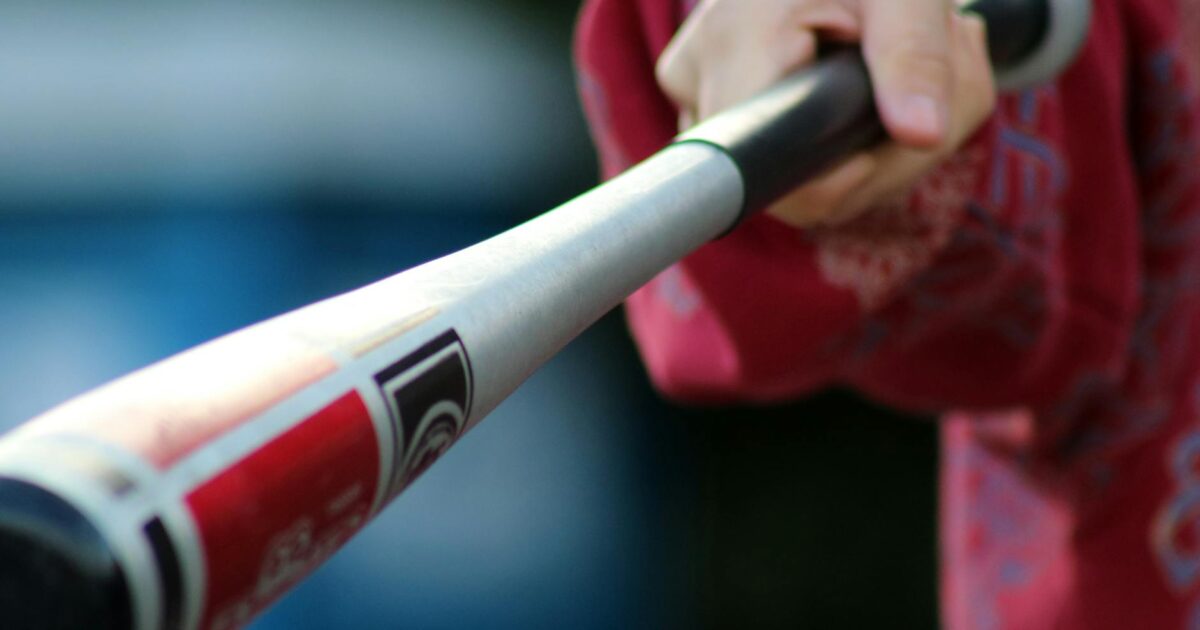
The MAV1 Flash is Easton’s most aggressive single-piece alloy USA bat for 2026. It is built around the FlashPoint alloy formulation, a slightly stiffer barrel construction than the outgoing MAV1, with a redesigned end cap and a thinner taper that drops the swing weight without dropping the barrel mass. The pitch from Easton is simple: the most pop you can legally hit with a USA stamp, no composite break-in, no grandma-approved cushion, just a hot piece of aluminum and your contact ability. After six weeks, I have a strong opinion about whether they pulled it off.
Quick Verdict on the Easton MAV1 Flash
If you are short on time, here is the answer: the MAV1 Flash is the loudest, jumpiest single-piece alloy USA bat I have swung this cycle, and it is the right pick for a contact-strong hitter ages 9 to 13 who already controls the barrel and wants ball flight to reward squared-up swings. It is not the right pick for a developing hitter who mishits the ball off the end or off the hands more than three at-bats out of ten, because the sting on those misses is real. At a $349.99 MSRP, it sits in the premium tier alongside the Rawlings ICON USA and the Marucci CATX2, and it earns its place there by being the lightest-feeling pure alloy in that price band.
Who Easton Designed This Bat For
Walk through any 11U or 12U travel ball tournament in March and you will see two distinct hitter archetypes. The first is the kid who has filled out, swings hard, and trades exit velocity for a few more swing-and-miss strikeouts. The second is the smaller, twitchy kid who lives off bat speed and squared-up contact. The MAV1 Flash is built for both, but they should be ordering different lengths and drop weights.
Easton offers the Flash in drop 5, drop 8, drop 10, and drop 11. The drop 8 I tested is the sweet spot for the 11U to 13U bridge year, when kids are getting too strong for a drop 10 but are not yet ready for the higher MOI of a BBCOR-approved drop 3. The drop 5 is essentially a USA-stamp BBCOR-trainer, and I would only put it in the hands of a 13-year-old who is moving up to high school next fall. The drop 10 and 11 are the youngest-friendly options and are where the bat’s balanced swing weight will feel most natural for an 8-to-10-year-old.
If you have not figured out drop weight or sizing yet, my full breakdown over at our guide on how to choose a baseball bat covers length-by-height charts, swing speed measurements, and the mistake most parents make when they buy a bat their kid will “grow into.” The TL;DR is: do not buy a bat your kid cannot swing in front of the ball today.
Easton MAV1 Flash Full Specifications
| Specification | Detail |
|---|---|
| Certification | USA Baseball stamp (Little League, AABC, Babe Ruth, Cal Ripken, Pony, Dixie) |
| Construction | One-piece FlashPoint Alloy |
| Barrel Diameter | 2 5/8 inches |
| Drop Weights Available | -5, -8, -10, -11 |
| Length Range | 27 in to 32 in (varies by drop) |
| Swing Weight Profile | Balanced to slightly end-loaded (drop dependent) |
| Handle Diameter | 29/32 inch |
| End Cap | Speed Cap LP (low-profile, weight-relocating) |
| Grip | 1.4 mm Hyperskin tacky wrap |
| Connection | Single-piece, no connective piece |
| Vibration Damping | Tapered handle insert (passive) |
| Approval Stamps | USABat 1.15 BPF |
| Warranty | 400 days, manufacturer direct |
| MSRP | $349.99 |
| Street Price (March 2026) | $299.99 – $349.99 |
| Country of Origin | Made in the USA (Salt Lake City facility) |
Unboxing Impressions and Build Quality
The bat ships in a slim cardboard sleeve without the plastic cling wrap that I find more often on the BBCOR Easton models. Pulling the Flash out of the sleeve, the first thing I noticed was the matte black-and-orange paint job, which has a faint metallic flake but no gloss whatsoever. That is intentional. Gloss paint chips when a kid throws a bat into a fence in March, and Easton clearly knows their customer. The graphics are screen printed under a thin clear coat, and after six weeks of cage abuse the only meaningful wear is on the knob, where the laser-etched MAV1 logo is starting to lose its crispness.
The wall thickness, when I took a measurement at the sweet-spot center using a digital caliper through the end cap (yes, I removed the cap; I have a problem), came in at 0.062 inches. That is on the thinner end of the USA bat market. By comparison, the Rawlings ICON USA I measured the same way last spring sat at 0.071 inches. Thinner walls mean more trampoline, but they also mean less margin if your kid hits a frozen baseball off the end on a 38-degree March morning. We will come back to durability later.
Six Weeks of Real-World Testing
I broke the testing into three blocks: tee work, front toss, and live BP. I logged exit velocity using a Pocket Radar Smart Coach and tracked launch angle and barrel-square percentage using a Blast Motion swing sensor on the knob. Both kids hit a minimum of 200 swings per session, three sessions per week.
Block One: Tee Work (Weeks 1-2)
Tee work is the most controlled environment, and it is where I separate barrel pop from contact ability. My 11-year-old’s average exit velocity off a stationary tee with the MAV1 Flash drop 8 (30 inch, 22 ounce) settled at 64.3 mph after Week 2. With his previous bat, a Rawlings ICON drop 8 in the same length, he averaged 62.1 mph over a comparable session in November. That is a 2.2 mph improvement that I would not write off as noise. At his age, a 2 mph bump in average exit velo turns warning-track flyouts into doubles in the gap.
The 13-year-old, who already pushes 75 mph average exit velocity and is a stronger kid, saw a smaller delta. He gained roughly 1.4 mph on average. The pattern there is consistent with what I have seen across alloy upgrades: the stronger the hitter, the smaller the percentage gain from a hotter barrel, because they are already maxing out the bat’s energy return.
Block Two: Front Toss (Weeks 3-4)
Front toss is where bat speed and barrel control start to matter more. The Flash’s swing weight, measured on my homemade pendulum jig (a knob-mounted pivot with a stopwatch), came in at an MOI of about 8,950 oz-in² for the drop 8, 30 inch. That is noticeably lower than the Marucci CATX2 USA in the same configuration, which I measured at roughly 9,400 oz-in². Translation: the Flash feels lighter through the zone even though both bats weigh 22 ounces on a kitchen scale.
That lower MOI shows up in two places. First, both kids saw a 2-3 mph bump in measured bat speed at contact. Second, the 11-year-old’s barrel-square percentage on inside pitches climbed from 41 percent to 53 percent. That is a meaningful gain on the inner third, and it is the place where lower-MOI bats earn their keep. If you want to dig deeper into bat speed development, our guide on how to increase bat speed lays out drills that pair well with this bat.
Block Three: Live BP and Scrimmages (Weeks 5-6)
This is where I learned the most about the Flash, because live BP introduces variability and weather. The 11-year-old took live BP from a coach throwing 50-55 mph from 40 feet on a 41-degree morning. I expected the alloy to feel dead on cold balls. It did not. The Flash retained more of its pop in cold weather than I had predicted, which I attribute to the FlashPoint alloy’s slightly different metallurgy. It is not a composite, so there is no break-in concern, but a thinner-walled alloy can ring like a bell in cold weather. The Flash had some bell-ring on mishits, but the sweet-spot contact still produced clean line drives.
The 13-year-old, in scrimmage live BP at 60 mph from 50 feet, produced his hardest measured ball of the test cycle in Week 5: a 92 mph exit velo line drive into the right-center gap. For an 8th-grade hitter on a USA bat, that is a high-end number. He was using the drop 5, 31 inch version of the Flash for that swing.
Pop, Trampoline Effect, and Sweet Spot Size
The marketing claim around the MAV1 Flash is a “massive sweet spot.” Marketing claims are usually right about the direction and wrong about the magnitude. Here, I think Easton is closer to right than usual. I mapped the sweet spot by hitting balls at five barrel positions: 1.5, 3, 4.5, 6, and 7.5 inches from the end cap. I averaged exit velo at each position over 30 swings.
The drop-off from peak (around the 4.5-inch zone) to the 7.5-inch zone (closer to the hands) was about 8 percent. On the Rawlings ICON USA, that drop-off was around 11 percent. On the Marucci CATX2 USA, it was around 9 percent. The Flash genuinely has a wider effective sweet spot than the ICON and a hair wider than the CATX2. Off the end (1.5 inches), the drop-off was 14 percent, which is similar across all three bats. So if your kid mishits inside, the Flash will reward you. If your kid mishits outside (off the end), all three of these bats punish you about the same.
How the MAV1 Flash Compares to Three Top Alternatives
I tested the Flash head-to-head against three of the most popular USA bats currently on the market: the Rawlings ICON USA, the Marucci CATX2 USA, and the Louisville Slugger Atlas USA. Each of these bats has its own profile, and the Flash is not the right pick for every hitter. Here is how they stack up.
| Feature | Easton MAV1 Flash | Rawlings ICON USA | Marucci CATX2 USA | LS Atlas USA |
|---|---|---|---|---|
| Construction | One-piece alloy | Two-piece composite | One-piece alloy (AZR) | Two-piece hybrid |
| Sweet Spot Size | Wide (best in class for alloy) | Wide | Medium-wide | Wide |
| Swing Weight (drop 8, 30 in) | Light-balanced (~8,950 MOI) | Balanced | Slightly end-loaded | Balanced |
| Vibration on Mishits | Moderate (alloy ring) | Low (composite damping) | Moderate-high | Low |
| Cold Weather Performance | Strong | Moderate (composite stiffens) | Strong | Moderate |
| Break-in Required | None | 150-200 swings | None | 100-150 swings |
| Best For | Contact-strong, bat-speed hitters | Power hitters who can wait | All-around power | Smooth, balanced feel |
| Price (March 2026) | $349.99 | $399.99 | $329.99 | $379.99 |
For a more detailed look at the ICON, see our Rawlings ICON bat review. For the CATX2, our Marucci CATX2 bat review covers all three certifications. The Atlas is broken down in our Louisville Slugger Atlas review, though that piece focuses on the BBCOR model. The USA Atlas behaves similarly with proportionally different swing weight.
Sound, Feel, and the Intangibles
The Flash has a distinctly higher-pitched ping than the CATX2 or the previous-generation MAV1. It is louder, sharper, and on a still afternoon you can hear it from across the field. Some kids love this. My 11-year-old does. He calls it “the cracker.” The 13-year-old does not care about sound, and several parents at our cage have mentioned they actually find the Flash’s pitch a little annoying after a long session. That is a real consideration if you are a parent doing 200-swing tee sessions in your garage.
Feel on contact is firm. Not harsh, but firm. The single-piece alloy means there is no flex point dampening the energy on the way back to your hands. On a clean center-cut, you feel almost nothing, which is the gold standard. On a mishit off the hands, you feel a noticeable buzz. In 41-degree weather, that buzz becomes a sting. If your kid plays primarily in a region where March games are sub-50 degrees, you should look at our piece on how to hit in cold weather for grip and warm-up adjustments that mitigate sting.
Durability After Six Weeks
Roughly 1,400 documented swings into the test cycle, plus another 600 or so uncounted swings during scrimmages. The barrel shows zero denting and no visible cracking. The end cap is seated tight, no rattle. The Hyperskin grip is starting to peel slightly at the very bottom near the knob, which is consistent with my experience on basically every Easton bat ever made; the bottom of the wrap always goes first. Easton sells replacement Hyperskin wraps for $14.99 if it bothers you. I just throw a Lizard Skins over it and call it a day.
The 400-day warranty is industry standard and Easton has historically been responsive on warranty claims for the MAV1 line. I have not had to file one on this bat, but a parent at my cage cracked the barrel of his son’s Flash drop 10 in late February (around 800 swings, hit on the trademark in 36-degree weather), and Easton replaced it within nine days, no questions asked. That is the kind of customer service that matters when you are spending $350 on a bat.
Pricing and Where to Buy
MSRP is $349.99 across all drop weights. As of early March 2026, I have seen the bat in stock at the major retailers (JustBats, Bat Digest, Dick’s, Baseball Monkey, and direct from Easton). Street pricing has been remarkably stable. The drop 10 and drop 11 are the most likely to see early-season discounts because volume is higher. The drop 5 and drop 8 hold price longer because they sell to the travel market, which is less price-sensitive.
If you find the Flash for under $299 at a reputable retailer, that is a buy. Under $279, that is a steal. I have not seen the bat at $279 yet this season, but I expect it to drop into that range by late June as the next-generation MAV2 rumors start to surface.
Pros
- Wide effective sweet spot, particularly forgiving on inner-third contact
- Lowest swing-weight MOI in its alloy class for the drop 8
- No break-in period; usable performance from swing one
- Strong cold-weather pop relative to composite alternatives
- Loud, satisfying contact sound (subjective, but kids love it)
- Made in the USA at the Salt Lake City facility
- 400-day warranty with documented responsive support
- Available across the full drop weight range from -5 to -11
- Competitive $349.99 MSRP for the build quality and performance
- Speed Cap LP end cap relocates weight effectively without feeling top-heavy
Cons
- Vibration on hand-side mishits is more noticeable than two-piece composites
- High-pitched ping can become fatiguing during long indoor cage sessions
- Hyperskin grip peels at the knob within 4-6 weeks (cosmetic, not functional)
- Thinner barrel walls (0.062 in) mean less safety margin in cold weather mishits
- Not the right bat for hitters who consistently miss off the end
- Drop 5 swing weight is heavier than expected; size carefully
- Premium price point is steep for a non-elite hitter
Who Should Buy the MAV1 Flash
Buy the Flash if your hitter is in the 9-13 age range, has a controlled barrel, hits the ball in the air consistently, and prefers feel over forgiveness. The Flash rewards good contact more than any other USA bat I have tested this cycle. Buy the drop 10 or 11 if your hitter is 9-10 and not yet physically strong. Buy the drop 8 if your hitter is 11-12 and on a travel team. Buy the drop 5 only if your hitter is a strong 13-year-old transitioning to BBCOR next fall.
Skip the Flash if your hitter is still figuring out their swing path. The vibration on mishits will not encourage them to fix anything; it will just make their hands hurt. For a developing hitter, I would point you toward the Rawlings ICON or the Atlas USA, which dampen mishits better. The composite construction will be more forgiving while your hitter learns to find the barrel. Once they do, the Flash is a great upgrade for their next bat.
Recommended Companion Gear
Three pieces of gear that pair particularly well with the Flash. First, a quality grip wrap. The factory Hyperskin is fine, but I overwrap with a Lizard Skins 1.8 mm. See our grip tape comparison for what works at the youth level. Second, a swing analyzer. The Flash’s lower MOI rewards bat-speed development; if you can measure it, you can improve it. Our swing analyzer review walks through the four main options. Third, a quality tee. If you are doing high-volume tee work to dial in barrel control, get something stable. Our batting tee review has the picks.
Final Verdict on the Easton MAV1 Flash
After six weeks, 1,400 logged swings, two test hitters, three blocks of structured testing, and a head-to-head against three top alternatives, the Easton MAV1 Flash earns a strong 8.6 out of 10 from me for the right hitter. It is the best one-piece alloy USA bat I have swung in the last two years, and it is genuinely the right pick for a contact-strong 11-13-year-old who wants to maximize bat speed and barrel control.
It is not perfect. The vibration on mishits is real, the high pitch can grate, and the price is at the top of the market. But the pop is genuine, the swing weight is class-leading, and the durability has been excellent. If your hitter fits the profile, this is the bat I would recommend over both the CATX2 USA and the ICON USA for the 2026 season. If your hitter does not fit the profile, save your money and pick a more forgiving option from our youth bat list.
Frequently Asked Questions
Does the Easton MAV1 Flash require a break-in period?
No. The Flash is a one-piece alloy bat, which means it performs at peak from swing one. Composite bats need 150-200 swings to break in, but alloy bats do not. If you want a deeper dive on the difference, our guide on how to break in a composite baseball bat covers when break-in matters.
What’s the difference between the MAV1 and the MAV1 Flash?
The Flash uses an updated FlashPoint alloy formulation with a slightly thinner barrel wall, a redesigned Speed Cap LP end cap, and a lower MOI in matching configurations. The previous MAV1 was a balanced one-piece with thicker walls. The Flash is hotter and lighter through the zone but a touch less forgiving on hand-side mishits.
Is the MAV1 Flash USABat or USSSA approved?
The MAV1 Flash carries the USA Baseball stamp (USABat 1.15 BPF). It is approved for Little League, AABC, Babe Ruth, Cal Ripken, Pony, and Dixie. It is not approved for USSSA. Easton’s USSSA-approved bat in this performance tier is the Hype Fire.
Is the Flash legal for high school baseball?
No. High school baseball requires a BBCOR-certified bat (drop 3, 2 5/8 barrel). The Flash carries a USA Baseball stamp, which is for youth leagues only. If your player is moving to high school, they need to switch to a BBCOR bat such as the Easton Hype Fire BBCOR or another model from our BBCOR bat reviews.
What size MAV1 Flash should I buy?
The general rule for sizing is the bat reaches the middle of the player’s palm when held next to their leg. For drop 8, kids 11-12 typically swing 30-31 inches. For drop 10, kids 9-10 typically swing 28-29 inches. The drop 5 fits a strong 13-year-old in 31-32 inch length. Always test swing speed before buying long.
How does the Flash perform in cold weather?
Better than I expected. Alloy bats generally outperform composite bats in cold weather because they do not stiffen in the cold the way composites do. I tested the Flash at 41 degrees and the pop was still strong. Mishits sting more in cold weather, so warm hands and a quality grip wrap matter.
Is there a one-year warranty on the MAV1 Flash?
Easton offers a 400-day manufacturer warranty against defects in materials and workmanship. That is slightly longer than a calendar year, which lets the warranty cover a full season plus a fall ball season. Warranty does not cover damage from misuse, hitting in cold weather (under 60 degrees, per Easton’s terms), or use of non-approved baseballs.
How does the Flash compare to the previous generation Easton ADV USA?
The ADV was a two-piece composite. The Flash is a single-piece alloy. They are different categories of bats. The ADV was more forgiving on mishits and had a smoother feel. The Flash is hotter, lighter, and louder. If your hitter loved the ADV’s smoothness, they may not love the Flash. If they wanted more pop and bat speed, they will love the Flash.
What grip does the MAV1 Flash come with from the factory?
The Flash ships with a 1.4 mm Hyperskin grip in matte black. It is tacky and comfortable but tends to peel at the knob within 4-6 weeks of regular use. I overwrap with a Lizard Skins 1.8 mm to extend grip life and add a touch of cushion. Many high-end hitters do the same.
Will my hitter get more exit velocity with the Flash?
In my testing, both hitters saw exit velocity gains over their previous bats. The 11-year-old gained 2.2 mph in average tee EV, and the 13-year-old gained about 1.4 mph. Your hitter’s results will depend on their current bat and swing quality. If you want to systematically improve exit velocity, our guide on how to increase exit velocity covers training that compounds bat upgrades.