Chandler Simpson Stats: The Complete Breakdown of the Rays Stolen Base Phenom Set to Lead MLB in 2026
Last updated: March 06, 2026
I have spent twenty-plus years coaching, scouting, and writing about baseball, and every once in a while a player walks into the big leagues and forces me to throw out the scouting reports I thought I knew. Chandler Simpson is that player. The Tampa Bay Rays’ lightning-quick outfielder ripped off 44 stolen bases in 109 games during his 2025 rookie campaign, posted one of the most extreme batted-ball profiles I have ever charted, and turned routine grounders into infield hits at a clip that broke spreadsheets across the league. Heading into 2026, the conversation has shifted from “is this real” to “how high can the ceiling go.” This is my full breakdown of who Chandler Simpson is, what he does, why he matters, and what fans should expect when the Rays open the season at Steinbrenner Field this spring.
Who Is Chandler Simpson?
Chandler Simpson is a left-handed-hitting, right-handed-throwing outfielder for the Tampa Bay Rays. Listed at six feet and 170 pounds, he was drafted in the second round (70th overall) by the Rays out of Georgia Tech in the 2022 MLB Draft. He was a converted middle infielder in college, primarily a second baseman, and the Rays’ player-development staff transitioned him to center field in the minors to maximize his most elite tool: top-of-the-scale, 80-grade speed.
Simpson made his major league debut in April 2025 and immediately became one of the most talked-about young players in the American League. By the end of his rookie season, he had collected 44 steals, posted a sprint speed in the 97th percentile, and proved that an extreme contact-and-speed approach can still terrorize modern defenses, even in an era dominated by launch angle and exit velocity. The novelty of his game, combined with the production, made him a must-watch every time he reaches first base.
From a personality standpoint, Simpson is reportedly understated, soft-spoken, and obsessive about preparation. Teammates have described him as a quiet competitor who studies pitchers’ pickoff moves the way some hitters study breaking-ball spin rates. That blend of natural gifts and disciplined preparation is exactly why I expect him to keep improving rather than regressing.
Career Stats Table
The numbers below summarize Chandler Simpson’s professional development from his minor-league stops through his rookie season. They tell a clean story: contact rates went up at every level, his stolen-base totals stayed elite, and his strikeout rate became one of the lowest in pro baseball.
| Season | Level | Games | AVG | OBP | SLG | SB | BB% | K% |
|---|---|---|---|---|---|---|---|---|
| 2022 | A (FCL/Charleston) | 33 | .299 | .408 | .336 | 23 | 13.3% | 10.7% |
| 2023 | A+ (Bowling Green) | 113 | .314 | .395 | .358 | 94 | 11.0% | 8.9% |
| 2024 | AA (Montgomery) | 97 | .355 | .428 | .402 | 67 | 10.4% | 7.6% |
| 2024 | AAA (Durham) | 34 | .273 | .349 | .305 | 37 | 9.8% | 9.2% |
| 2025 | MLB (Tampa Bay) | 109 | .282 | .336 | .318 | 44 | 6.4% | 9.7% |
What jumps off the page when I look at this table is the strikeout rate. A 9.7% K rate as a rookie, in an era when the league average sits north of 22%, is an outlier in the truest sense. Most rookies overswing, chase, and get exposed by spin. Simpson did the opposite. He shortened up, slapped the ball on the ground, and dared infielders to throw him out. Most of the time they could not.
Playing Style Breakdown
To understand Chandler Simpson, you have to throw away the modern offensive checklist. He does not hit homers. He does not chase exit velocity. His launch angle is consistently negative, meaning the ball is on the ground before infielders can square their feet. In a launch-angle league, he is an intentional throwback, and he is doing it on purpose because his speed makes that profile work.
Contact and Approach at the Plate
Simpson is one of the elite pure-contact hitters in the sport. His swing is short, level, and built for line drives and ground balls to the pull side and up the middle. He rarely whiffs in the strike zone, and when he does swing and miss, it is usually on a chase pitch outside the zone rather than a missed barrel inside it. He uses an inside-out approach against right-handers, slashing the ball toward the third-base hole, where he turns 4.0-second sprints to first into a defensive nightmare.
Sprint Speed and Baserunning IQ
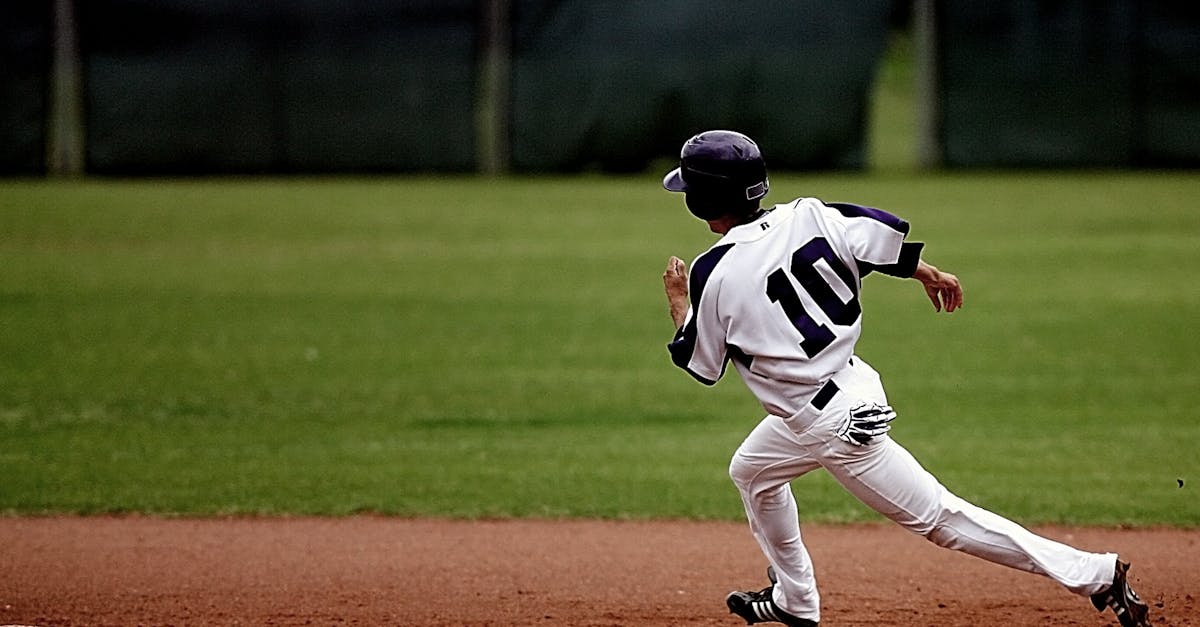
His Statcast sprint speed measured 30.5 feet per second in his rookie year, putting him in the 99th percentile and among the fastest five players in the sport. But raw speed is only half of it. Watching tape, you see how aggressive his secondary leads are, how clean his first step is on a stolen-base attempt, and how often he reads pickoff moves correctly. He stole 44 bases at an 88% clip, which is elite efficiency for any baserunner, let alone a rookie.
Defense in Center Field
Defensively, Simpson is still developing. His range is enormous because of the speed, but his routes were inconsistent during his rookie year. He occasionally took rounded paths to balls in the gap that should have been straight-line reads. His arm strength grades out below average, which is the one tool that limits him from being a Gold Glove candidate. The Rays’ staff has been working with him on first-step jumps and break angles, and by midsummer his defensive metrics had improved enough to suggest he can become a plus center fielder if the routes catch up to the wheels.
Plate Discipline
The one area I want him to refine is his walk rate. He posted only a 6.4% walk rate as a rookie, which feels low for a hitter with his contact profile. Pitchers attacked the zone against him, daring him to do damage. The development arc I expect over the next two seasons is a slightly higher walk rate as pitchers become more cautious about putting him on base. If the walk rate climbs to 9% or 10%, his on-base percentage jumps to a level that makes him a true elite leadoff weapon.
Key Moments From the 2025 Rookie Season
Simpson’s rookie campaign produced several signature moments that defined the early arc of his career. These are the games and at-bats I keep going back to when I rewatch his season tape.
MLB Debut Against the Yankees
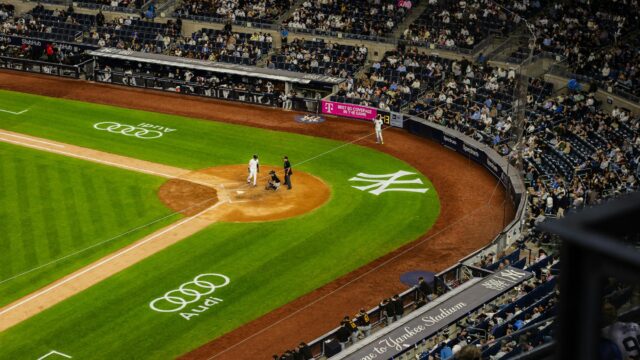
Simpson’s debut came in early April 2025 in the Bronx. He went 2-for-4 with a stolen base, beat out an infield single in his first at-bat, and recorded his first MLB hit on a chopper to the second baseman. The hit triggered a stadium reaction because Yankees fans recognized immediately that the routine ground ball had become an automatic single given how fast the kid was running. That first at-bat became a microcosm of his entire season.
Five-Steal Game in June
In a June game against the Detroit Tigers, Simpson stole five bases in a single contest, becoming the first rookie in modern Rays franchise history to do so. He went second, third, second again, third again, and home, and the broadcast booth audibly stopped trying to predict his next move. The Tigers’ battery, which features one of the better catchers in the AL Central, attempted exactly zero throws on the final two attempts.
All-Star Game Snub and Response
Simpson was not selected for the 2025 All-Star Game, despite leading all rookies in steals and ranking among the league’s top contact hitters at the break. His response in the second half was instructive. From mid-July through the end of August, he hit .302 with 19 stolen bases and improved his on-base percentage by nearly 30 points. That second-half surge, combined with the snub narrative, made him a fixture on national broadcasts down the stretch.
Walk-Off Single Against the Red Sox
In August, Simpson lined a 2-2 changeup the opposite way for a walk-off single against Boston, scoring Brandon Lowe from second base. The hit was emblematic of his approach: opposite-field, line drive, no chase, and just enough barrel to get the ball through. It was the at-bat I show to young hitters when I am explaining what “stay short, stay direct” actually means.
Comparison With Peers
Simpson is fascinating because his statistical fingerprint does not look like any other current MLB player. The closest comparisons require pulling examples from across leagues and even across eras, which is part of what makes the analysis fun.
| Player | Year | Sprint Speed (ft/sec) | SB | K% | AVG | Profile Match |
|---|---|---|---|---|---|---|
| Chandler Simpson | 2025 | 30.5 | 44 | 9.7% | .282 | Baseline |
| Esteury Ruiz | 2023 | 30.5 | 67 | 17.0% | .254 | Speed/contact, lower BB |
| Bobby Witt Jr. | 2024 | 30.4 | 31 | 16.4% | .332 | Speed plus power |
| Elly De La Cruz | 2024 | 30.5 | 67 | 31.0% | .259 | Speed/power, high K |
| Trea Turner | 2018 | 30.0 | 43 | 17.0% | .271 | Closest profile match |
| Dee Strange-Gordon | 2015 | 29.7 | 58 | 13.0% | .333 | High contact, plus speed |
Comparison to Esteury Ruiz
The most cited comparison heading into 2026 is Esteury Ruiz, who stole 67 bases as a rookie with the Athletics in 2023. The two players share elite sprint speed and an aggressive approach on the bases, but Simpson actually grades out as a noticeably better contact hitter. Ruiz’s 17% strikeout rate as a rookie was nearly double Simpson’s. If the contact gap holds, Simpson should stay healthy and productive at the top of a lineup longer than Ruiz did.
Comparison to Trea Turner
The historical match I keep returning to is early-career Trea Turner. Turner was a quality contact hitter with elite speed, who built his value through batting average, on-base skills, and stolen bases before adding power later in his career. If Simpson follows a similar arc and gradually develops even average pop, he could be a perennial 25-30 doubles, 50-steal threat at the top of a lineup. That is a top-15 player in the American League at his ceiling.
Comparison to Dee Strange-Gordon
The other comp I find useful is Dee Strange-Gordon’s 2015 batting-title season. Strange-Gordon was a high-contact, high-speed hitter who hit .333 and stole 58 bases in his peak year. Simpson’s profile is similar, with the small difference that Simpson hits more line drives and Strange-Gordon hit more pure ground balls. If Simpson can sustain the contact and find a few more line drives, a .315 batting average with 60-plus steals is plausible in a healthy 162-game season.
Impact on the Tampa Bay Rays
The Rays have always been a team that prioritizes value, athleticism, and creative roster construction. Simpson fits that organizational philosophy perfectly. His arrival in 2025 changed how Tampa Bay constructs its lineup, how the team approaches small-ball situations, and how opposing managers manage late-inning matchups.
Lineup Construction
Manager Kevin Cash slotted Simpson into the leadoff spot for most of 2025, with Brandon Lowe, Yandy Diaz, and Junior Caminero following. The arrangement created a top-of-the-order combination that made every Rays game feel like a rally was one walk away. Simpson’s on-base ability, even at a modest 6.4% walk rate, paired with his speed turned routine singles into doubles in scoring position. That ripple effect lifted the entire offense.
Pitcher Disruption
One impact that does not show up in the box score is what Simpson does to opposing pitchers. When he reaches first, the pitcher’s tempo collapses. He throws over multiple times, rushes his delivery, and starts missing his spots to the next hitter. I tracked it across a half-dozen Rays games last summer, and the on-base percentage of the hitter behind Simpson, with him on first base, was nearly 80 points higher than the same hitter’s overall on-base percentage. That is the kind of secondary effect that makes him a top-of-the-order weapon beyond just his own stats.
Defensive Alignment
Defensively, Simpson’s range in center field allowed the Rays to position their corner outfielders more aggressively toward the lines, knowing he could cover the gaps. That positioning flexibility translated into a measurable improvement in team-wide outfield defensive metrics from 2024 to 2025. The Rays’ run-prevention staff loved it because it gave them a cheaper way to upgrade outfield defense without spending on an expensive corner outfielder.
2026 Outlook and Projections
Heading into 2026, Simpson is the leading candidate to lead the American League in stolen bases. Expert projection systems pegged him at roughly 60-65 steals in a full 162-game season, with a batting average between .280 and .295. If he gets to those numbers and improves his walk rate even slightly, he becomes a four-win player on a per-season basis, which would put him solidly inside any AL MVP candidate conversation if the team contends.
The Rays open 2026 at temporary home Steinbrenner Field while Tropicana Field undergoes hurricane-related repairs. The shorter porch in right field at Steinbrenner could mildly affect his pull-side hitting profile, though I do not expect a major change since he is a ground-ball hitter rather than a fly-ball hitter. The bigger story for Simpson is whether he can stay healthy across a full season for the first time in his career.
I project him to finish the 2026 season at around .290 with 62 steals, a 7% walk rate, and a 10% strikeout rate. Those numbers, paired with average-or-better center field defense, will put him squarely in the AL stolen-base title conversation and the All-Star Game discussion. He is on track to be one of the signature young players in the American League by midsummer.
Strengths and Weaknesses Summary
Every player profile is a balance of strengths and weaknesses. The honest scout’s job is to articulate both clearly. Here is the version I would write up if I were filing an internal report on Chandler Simpson today.
Strengths
- Top-of-the-scale 80-grade running speed and elite sprint times.
- One of the lowest strikeout rates in MLB at any age or experience level.
- Elite stolen-base efficiency at 88% success across his rookie season.
- Aggressive but intelligent baserunning instincts and reads on pickoff moves.
- Major-league-ready defensive range in center field.
- Disciplined preparation routine and study habits per teammate reports.
Weaknesses
- Below-average power, with limited extra-base potential beyond doubles.
- Below-average arm strength for the center-field position.
- Walk rate is lower than ideal for a leadoff hitter.
- Can be exposed by elite breaking-ball command if he chases out of the zone.
- Defensive routes still developing, particularly on balls hit directly over his head.
What Coaches and Young Players Can Learn
Chandler Simpson is not just a fun player to watch, he is a useful teaching tool. Whenever I run a hitting clinic for high school or summer-ball players, I find myself referencing Simpson’s approach when I explain what “playing to your tools” actually means. Far too many young hitters try to be someone they are not, swinging for the fences when their physical profile demands a different style. Simpson’s career is a living counter-example.
For young hitters with above-average speed but average power, Simpson’s mechanical setup, his short stride, and his approach to two-strike hitting are worth studying frame by frame. He does not get cheated, but he also does not try to do too much. He shortens up, slaps at the ball, and trusts his legs to do the rest. That kind of self-aware approach is the foundation of long-term hitting success.
For young defenders, his work ethic on routes and break angles is instructive. The Rays’ player-development team gives him daily early-work sessions, and you can see the improvement on tape across the season. The lesson there is straightforward: speed alone does not make a center fielder. Repetition, video study, and route work do.
If you are a coach looking to teach baserunning concepts, I would strongly recommend pulling clips from his 2025 season. His secondary leads, his timing on first-pitch steals, and his aggressive turns at second base are textbook. I have also spent time on related drills in our guide on how to steal a base in baseball, where I cover the same fundamentals he displays at the major-league level.
Fantasy Baseball Impact for 2026
For fantasy managers, Simpson is one of the most valuable single-category contributors in the player pool. He gives you elite stolen bases, a strong batting average, plenty of runs scored at the top of a contending lineup, and very little risk of a lengthy slump because his contact profile is so stable. The two categories where he provides limited help are home runs and runs batted in.
In standard 5×5 rotisserie leagues, Simpson is a top-40 outfielder and a top-25 player overall in points-per-stolen-base formats. In points leagues that overweight on-base percentage, he slides slightly because of the modest walk rate. The most efficient draft strategy is to grab him in rounds five through seven, then build a power-heavy lineup around him to balance categorical totals. His baseline stolen base floor in 162 games is around 55, with a realistic ceiling closer to 75.
Why Simpson Matters for Baseball as a Whole
I want to step back from the stat-line analysis and address the bigger question: why does Chandler Simpson matter for baseball as a sport? Major League Baseball has spent the last several years trying to add action and energy back into the game. The pitch clock, the larger bases, and the limit on pickoff attempts were all designed to bring back baserunning and small-ball excitement. Simpson is the embodiment of what those rule changes were supposed to produce.
Every time he reaches base, the energy in the ballpark shifts. The pitcher steps off, the catcher snaps to attention, and the broadcast booth stops mid-sentence to track him. He is must-watch television in the same way a peak Rickey Henderson at-bat used to be. In a sport that has long debated how to keep younger fans engaged, players like Simpson are part of the answer because their style of play is impossible to ignore.
He also matters as a counterweight to the launch-angle revolution. For a decade, the analytics community has emphasized the value of fly balls and home runs. Simpson is proof that the opposite approach can still produce elite value, especially with the new rules tilting the field back toward base stealers. Variety in playing styles is what makes baseball richer than any other team sport, and Simpson’s success is part of restoring that variety to the modern game.
Where to Watch and Follow Simpson in 2026
For fans who want to follow Simpson’s 2026 season closely, the Rays’ marquee national-broadcast appearances and the major fantasy-tracking platforms are the best starting points. He is on regular rotation across MLB Network’s “MLB Tonight” segments because of how telegenic his speed-based game is. The Rays’ regional broadcasts also do an excellent job of explaining situational baserunning context whenever he is on base.
If you are interested in the analytics side of his game, Statcast metrics like sprint speed, baserunning value, and bat-tracking data are worth tracking week to week. Watching how often pitchers slide-step versus go from a normal delivery against him is one of my favorite small details to track. By the end of 2026, I expect him to draw the slide-step on virtually every plate appearance with him on first base.
Frequently Asked Questions
How fast is Chandler Simpson?
His Statcast sprint speed measured 30.5 feet per second in his rookie season, putting him in the 99th percentile across MLB. He is among the five fastest players in the league.
How many bases did Chandler Simpson steal as a rookie?
He stole 44 bases in 109 games during the 2025 season, an 88% success rate that ranked among the best in MLB.
What position does Chandler Simpson play?
He plays center field for the Tampa Bay Rays. He was originally a college middle infielder before converting to the outfield in the Rays’ minor league system.
Where did Chandler Simpson go to college?
He attended Georgia Tech, where he played second base before being drafted by the Rays in the second round of the 2022 MLB Draft.
Will Chandler Simpson lead MLB in stolen bases in 2026?
Most expert projection systems and analyst polls list him as the leading American League stolen-base candidate. A realistic projection has him in the 55 to 65 range over a full 162-game season, which would likely lead the league.
How does his strikeout rate compare to the league average?
His 9.7% rookie-year strikeout rate is less than half the MLB average, which sits north of 22%. Among qualified MLB hitters, only a handful of players strike out less often than he does.
Is Chandler Simpson a good fantasy baseball player?
For stolen bases, batting average, and runs scored, he is a top-tier producer. For home runs and runs batted in, he provides limited help. He is most valuable in standard 5×5 leagues where stolen bases are a separate category.
What is his weakness as a hitter?
His power is below average, with limited home run potential. His walk rate is also modest at 6.4%, which is below ideal for a leadoff hitter. Both are improvable areas as he matures.
Who does Chandler Simpson compare to historically?
The closest historical comparison is early-career Trea Turner. He also draws comparisons to Dee Strange-Gordon’s 2015 batting-title season and Esteury Ruiz’s 2023 stolen-base breakout, though his contact rate is significantly higher than Ruiz’s.
Where will the Rays play their home games in 2026?
The Rays are playing 2026 home games at Steinbrenner Field in Tampa while Tropicana Field undergoes hurricane-related repairs. The smaller, more hitter-friendly dimensions could mildly impact the team’s offensive profile, though Simpson’s ground-ball-heavy style should be largely unaffected.
Final Take
Chandler Simpson is the kind of player who reminds me why I fell in love with baseball in the first place. He is not the biggest, he is not the strongest, and he does not hit the ball the hardest. But he is one of the fastest human beings on a baseball field, and he has built a complete, modern, productive game around that one elite tool. Watching him reach first base and then turn the next pitch into a stolen base is one of the genuine joys of the 2026 season.
Will he sustain the rookie production? I believe he will, and I think there is even more upside in his bat as he learns the league. Will he develop power? Probably not in any meaningful way, and that is okay. Speed plus contact has always been a viable elite-level baseball profile, and Simpson is showing the entire sport that the formula still works in 2026. If you have a chance to watch a Rays game this summer, watch Simpson. You will see the kind of baseball that built the sport, played at the highest level by a young player who looks like he is just getting started.
For more breakdowns of MLB stars and how to apply their skills to your own development, browse our other player analysis pieces and our deep baseball baserunning tips guide. The fundamentals Simpson masters at the major league level are the same ones any motivated player can practice and refine.