Pitch Recognition in Baseball: How to Read Spin, Speed, and Movement at Every Level
Last updated: March 30, 2026
I have spent the last fifteen years standing in batting cages with high school freshmen, travel-ball studs, junior college transfers, and a handful of independent league guys, and the single biggest separator I see between hitters who survive and hitters who thrive is not bat speed. It is not exit velocity, it is not launch angle, and it is not even strength. It is pitch recognition. The hitter who can read a baseball out of the hand by the time it has traveled fifteen feet from the release point will out-produce a more physically gifted hitter who is still guessing at twenty-five feet, every single time. Pitch recognition is the one skill that ties together swing decisions, contact quality, and confidence at the plate, and it is also the most under-trained skill in amateur baseball.
In this guide I am going to walk through the exact framework I use with hitters from Little League up through college, including the science of how the eyes and brain process a pitch, the cues that actually matter, the drills that build real recognition, the data behind why this skill is worth the investment, and the common mistakes that quietly sabotage even talented hitters. If you want to swing at more strikes, lay off more chase pitches, and barrel more baseballs, this is where the work starts.
Why Pitch Recognition Matters More Than Bat Speed
I want to start with the cold math, because once you see it, you will never train the same way. A fastball thrown at 92 mph from a typical high school release point of about 55 feet of effective distance reaches home plate in roughly 400 milliseconds. The human visual system needs about 100 milliseconds to register and process a moving object, the brain needs another 75 to 100 milliseconds to decide swing or take, and the swing itself takes about 150 milliseconds from go signal to barrel-on-ball. Add those up and you get 325 to 350 milliseconds of mandatory processing and execution time. That means you have, at best, 50 to 75 milliseconds of actual decision window after the ball leaves the pitcher’s hand. The hitter who recognizes a pitch one tenth of a second sooner does not just gain a small edge, he doubles his decision window.
The Statcast era has put numbers on what scouts have always known. Major league hitters who rank in the top ten percent of swing decisions, measured by chase rate and zone-swing rate, outperform the bottom ten percent by an average of 65 points of wOBA, which is the difference between an All-Star season and a Triple-A demotion. Big leaguers do not have better eyes than minor leaguers. They have better recognition.
Recognition is also the foundation of every other hitting skill on this site. You can read more about how I build out the full mental approach in my guide on the baseball hitting approach, and how recognition feeds directly into plate discipline. Without recognition, every hitting tip downstream is just guessing in a uniform.
The Science of How Hitters See a Pitch
Before we talk drills, you need to understand the four phases of vision that every hitter goes through on every pitch, whether he realizes it or not. I teach these explicitly because once a hitter can name what his eyes are doing, he can train each phase independently.
Phase one is the wide focus, or soft focus. Before the pitcher comes set, your eyes should be relaxed and taking in the whole mound, the catcher, even the pitcher’s shoulders and hips. This is the equivalent of a wide-angle lens. If you stare at the pitcher’s face from the on-deck circle on, your eye muscles fatigue and your pupils lose the elasticity they need for fast tracking.
Phase two is the fine focus shift. As the pitcher starts his motion, your eyes shift to a softer target, usually the cap brim or the shoulder of the throwing arm. This is sometimes called the soft pre-pitch target.
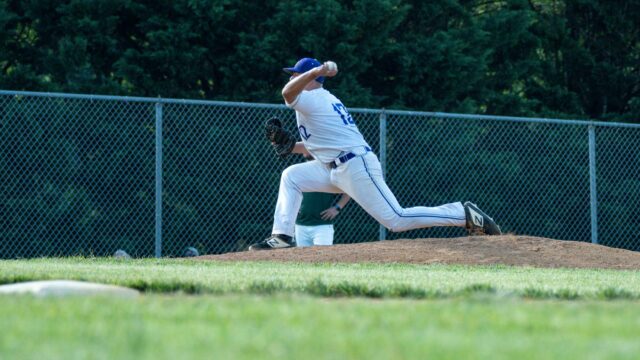
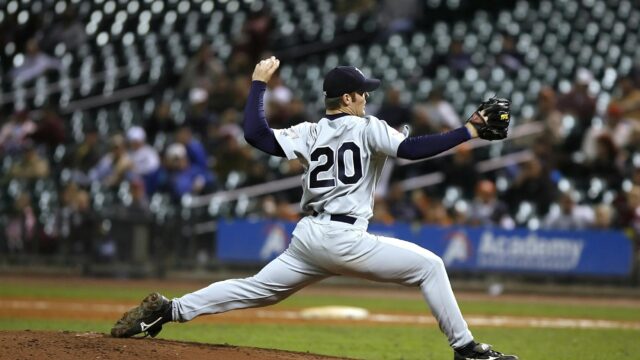
Phase three is the release point lock. About one tenth of a second before release, your eyes snap to the release window, a roughly basketball-sized circle just in front of and slightly above the pitcher’s release point. This is where recognition actually starts.
Phase four is the tracking phase. Your eyes follow the ball in soft pursuit for the first ten to fifteen feet, then you do a saccade, a sudden jump, to where you predict the ball will be over the plate. Hitters who try to track the ball all the way to the bat almost always swing late.
The Cues That Actually Matter
There are dozens of possible cues a hitter could theoretically read, but the brain can only process so much information in 400 milliseconds. I narrow my hitters down to four high-value cues that every pitch reveals within the first fifteen feet of flight. Master these four and you have ninety percent of what you need.
Spin axis is the most reliable cue. A four-seam fastball spins on a near-vertical axis at 2300 to 2500 RPM and shows a tight, almost invisible blur. A curveball spins on a 6-to-12 axis at 2400 to 2800 RPM and shows a visible red dot from the seam orientation. A slider spins on a mostly horizontal axis with a smaller, off-center red dot. A changeup shows much slower spin, about 1500 to 1800 RPM, with a wobbly, almost cloudy appearance.
Release height and arm slot consistency are next. A pitcher who drops his slot half an inch on a slider, even unconsciously, is leaking information. Hitters who track the release window catch these tells without consciously analyzing them.
Initial trajectory angle is the third cue. A fastball comes out at a near-flat downward angle of about three to four degrees. A curveball comes out climbing slightly before it falls. A slider stays flat then bends late.
Perceived velocity is the final cue. It is not the radar gun number. It is how fast the ball appears to be moving against the pitcher’s tunnel. Read more about how elite pitchers exploit this in my piece on pitch tunneling.
Reading Spin: The Single Most Trainable Skill
Spin recognition is the cue that produces the biggest jump in performance and it is also the easiest to train at home with almost no equipment. Every pitched baseball telegraphs its identity through the seam pattern it shows the hitter, and that pattern is visible to the naked eye within the first ten feet of flight if you know what to look for.
Here is the table I have hitters memorize cold. They quiz each other on it before every cage session.
| Pitch | Typical RPM | Spin Axis | Visual Cue | Recognition Distance |
|---|---|---|---|---|
| Four-Seam Fastball | 2200-2500 | Vertical (12:00) | Tight blur, no red dot, ball appears to rise | 10-15 feet |
| Two-Seam / Sinker | 2000-2200 | Tilted vertical (1:00) | Slight wobble, faint red dot to side | 15-20 feet |
| Cutter | 2300-2600 | Slightly tilted (11:30) | Looks like fastball, very subtle dot late | 20-25 feet |
| Slider | 2200-2700 | Horizontal (9:00) | Small red dot, off-center | 15-20 feet |
| Curveball | 2400-2800 | Reverse vertical (6:00) | Big red dot, visible hump out of hand | 10-15 feet |
| Sweeper | 2500-3000 | Horizontal, gyro element | Large lateral red dot, late horizontal bend | 15-20 feet |
| Changeup | 1500-1800 | Variable, lower RPM | Cloudy, wobbling rotation, dead arm look | 20-25 feet |
| Splitter | 1000-1500 | Very low spin | Almost no visible spin, knuckle-like | 20-25 feet |
The red dot is the most useful single concept for amateur hitters. When a baseball spins on a tilted axis, the seams converge into a small, visible spot from the hitter’s perspective. Fastballs do not produce a red dot because the seams are passing through the line of sight too uniformly. A curveball produces a big, dead-center red dot. A slider produces a smaller, off-center red dot. Hitters who train themselves to look for the dot will recognize breaking balls earlier than hitters who try to read the entire ball.
Eight Pitch Recognition Drills I Use Every Week
Pitch recognition is a perishable skill. It deteriorates within ten days of no live tracking, faster than swing mechanics. I build recognition work into every practice and so should you. These eight drills cover the full spectrum from beginner to advanced.
1. Color Ball Recognition
Mark four baseballs with four different colored dots, half-inch diameter, on the side. Throw them from soft toss or front toss at 30 to 40 feet. The hitter calls out the color before swinging. Start at 50 percent speed and progress to game velocity. This drill trains the eyes to lock onto small details inside the ball’s flight path, which is exactly what reading spin requires.
2. Two-Ball Identification
The thrower holds two baseballs, one in each hand, and throws one at random. The hitter must identify which hand released before swinging. This trains the pre-release focus and forces the hitter to widen his attention before narrowing it.
3. Take-Only Tracking
Live BP or front toss, but the hitter is not allowed to swing. He calls out pitch type, location, and ball-or-strike before the ball crosses the plate. Do twenty pitches. Then track accuracy. Most hitters are stunned by how often they were wrong on pitch type when they could not swing. Recognition without the swing reflex tells you the truth about your eyes.
4. Yes-No Drill
The hitter takes a normal stride and load, then either swings or takes based on a simple rule, for example, “swing only on fastballs.” The coach mixes in fastballs and breaking balls from short distance with a pitching machine or live arm. This trains the brain to make a binary recognition decision under time pressure, which is the actual game skill.
5. Two-Strike Recognition
Every round of BP, two pitches are designated as two-strike at-bats. The hitter expands his zone and protects, but must still recognize spin to avoid chasing the buried breaking ball. This drill is the bridge from cage work to game application, and I detail the full approach in my piece on hitting with two strikes.
6. Vision-Restricted Tracking
Use strobe glasses or simply close one eye for a few rounds. This forces the brain to process the ball faster because it has less visual data. When you return to normal vision the perceived speed of the pitch slows down, just like batters who swing a weighted bat in the on-deck circle. Strobe vision training has become standard in MLB and college programs, and the research is solid. Pair this with the broader principles in my guide to baseball vision training drills.
7. Machine Sequencing
If you have access to a multi-pitch machine, program a randomized sequence of fastballs, curveballs, and changeups. The hitter must take five pitches calling them out, then swing on the next five. Mix in two-pitch and three-pitch sequences that mimic real pitchers, who almost never throw the same pitch twice in a row to a quality hitter.
8. Video Recognition Without Swinging
This one is free and you can do it from your couch. Pull up MLB game footage from the centerfield camera, pause it as the pitcher releases, and call out the pitch before pressing play. Track your accuracy across one hundred pitches. After two weeks of daily video recognition, hitters consistently report seeing the ball better in live at-bats. The brain trains the same neural pathways whether the input is live or recorded.
The Recognition Window: How Distance Changes Everything
One of the most underappreciated facts in hitting is that the recognition window is not the same length at every level. The closer the mound and the lower the velocity, the more total milliseconds the hitter has to recognize and decide. But the closer the mound, the shorter the absolute distance the ball travels before it must be hit. Here is what that means in practice.
| Level | Mound Distance | Typical Velocity | Total Flight Time | Decision Window |
|---|---|---|---|---|
| Little League (Majors) | 46 feet | 50-55 mph | ~570 ms | ~220 ms |
| Intermediate / 50/70 | 50 feet | 60-65 mph | ~525 ms | ~175 ms |
| High School JV | 60 feet 6 inches | 72-78 mph | ~530 ms | ~180 ms |
| High School Varsity | 60 feet 6 inches | 80-88 mph | ~475 ms | ~125 ms |
| College | 60 feet 6 inches | 88-94 mph | ~440 ms | ~90 ms |
| MLB | 60 feet 6 inches | 94-100 mph | ~400 ms | ~50 ms |
Notice the cliff between high school JV and high school varsity. That eight to ten mph jump cuts the decision window almost in half. This is why so many talented JV hitters struggle as sophomores when they jump to varsity. Their swing did not get worse. Their recognition did not have time to catch up. The fix is more reps against varsity velocity in the off-season, not more reps in the cage against the same machine setting.
Expert Voices on Pitch Recognition
I have collected guidance from coaches and hitters at every level over the years, and the consistent themes are striking.
Tony Gwynn famously said, “I see the ball, I hit the ball.” But he also said the part most hitters miss, which is that he started looking for the spin out of the hand from the moment he stepped in the box. Gwynn estimated he picked up the spin on the breaking ball by 18 feet, which is why he could foul off pitches no one else could.
Ted Williams, in The Science of Hitting, broke the strike zone into 77 baseball-sized cells and assigned each one a batting average. He could only do that because he recognized location before pitch type, which is the opposite of what most amateur hitters do. Williams trained himself to see the ball as it left the hand, predict its terminal location, and decide swing or take in one fluid loop.
Modern hitting coordinators like Tampa Bay’s Chad Mottola have publicly stated that their player development pipeline ranks pitch recognition above mechanical refinement for minor leaguers above Double-A. The thinking is that mechanics can be tweaked at any age, but the neural patterns for recognition take thousands of repetitions to build.
And one of my old college hitting instructors used to say something I still repeat to every player I work with: “Don’t watch the pitcher throw. Watch the ball get thrown.” The distinction sounds trivial. It is not. Watching the pitcher invites you to read his body. Watching the ball invites you to read its spin.
Common Pitch Recognition Mistakes
Every hitter I have ever coached has fallen into at least one of these traps. Reading through this list honestly is the fastest way to fix your own recognition.
Mistake one: staring at the pitcher’s face. Your eyes get tired and your pupils contract from overfocus. By the time the ball is released, your visual system is not ready to acquire the spin.
Mistake two: trying to track the ball into the catcher’s glove. The eyes physically cannot track a 90 mph fastball all the way to contact. The hitter who tries to do this is constantly late on the swing decision because his eyes are losing the ball at 20 feet and his brain is using stale data.
Mistake three: guessing pitch type based on count. Sitting changeup in a 2-0 count because that is what the pitcher threw last time looks smart in theory and gets you fooled in practice. Recognize first, then commit. The count informs the prior probability, not the swing decision itself.
Mistake four: chasing the swing thought instead of the ball. If you are still thinking about your hip turn while the ball is in flight, your brain is using bandwidth that should be on the spin axis. The cage is for mechanics. The box is for the ball.
Mistake five: not training under fatigue. Recognition deteriorates faster than swing mechanics when the hitter is tired. If you only train recognition fresh, you are not training the recognition you need in the seventh inning. Build in at least one fatigued recognition session per week.
Mistake six: ignoring the umpire’s strike zone. Recognition is not just pitch type, it is also strike or ball, and that depends on the umpire calling the game today. Adjust your recognition definition of a strike to the umpire’s zone after the first inning.
How to Build a Recognition-First Practice Plan
If you want to actually develop recognition rather than just read about it, you have to restructure your practice. Most cage sessions are 90 percent mechanics and 10 percent recognition. I flip that ratio for hitters in season.
Here is the weekly template I give to high school and college hitters during the regular season:
- Monday: Mechanics tee work, 50 swings, plus 20 pitches of video recognition
- Tuesday: Front toss focused on spin call-out, 40 pitches, then 30 swings
- Wednesday: Machine work mixing pitches, take-only round of 20, then swing round of 30
- Thursday: Live arm BP if possible, 40 pitches, with two-strike rounds built in
- Friday: Light tee, vision drills, and 10 minutes of video recognition
- Saturday: Game day, full pre-game tracking from on-deck circle
- Sunday: Off, or active recovery only
The key principle is that recognition reps must outnumber pure swing reps. A hitter who takes 200 swings against a tee but only sees 40 live pitches per week is building muscle memory for a swing he will not be able to launch in time. Flip the ratio and watch the at-bats change.
Pitch Recognition by Specific Pitch Type
Different pitches reveal different cues, and the smart hitter trains each one specifically. I have written full guides on attacking the major pitch types, including how to hit a fastball, how to hit a curveball, how to hit a slider, how to hit a changeup, and how to hit a sweeper. Each one demands its own recognition strategy.
Fastball recognition is about confirming the absence of break, not the presence of speed. By the time you can confirm speed, the ball is already at 30 feet. Confirm the tight blur and the flat trajectory and you are sitting fastball with confidence.
Curveball recognition is the easiest because of the big red dot and the visible hump out of the hand. The cue is the hump. If you see the ball travel up before it comes down, it is a curveball nine times out of ten.
Slider recognition is harder because the small red dot is hard to see and the trajectory mimics a fastball for the first 20 feet. The cue is the small red dot off to one side, plus a slight late drop. Sliders are typically 5 to 8 mph slower than the pitcher’s fastball, so velocity helps confirm.
Changeup recognition is the most difficult because pitchers train to disguise it as a fastball. The cue is the dead-arm action and the slightly cloudy spin. Changeups are usually 8 to 12 mph slower than the fastball. If your eyes are tracking the release window, you will pick up the slower arm action before you read the speed.
Cutter recognition is brutal. The cutter looks like a fastball until the last 10 feet, then bends slightly. The honest truth is that very few amateur hitters can read a cutter in the air. Recognition for cutters happens through scouting and tendencies, not visual cues. Know which pitchers throw cutters and which counts they use them in.
Recognition at the High Velocity Level
When pitchers cross the 90 mph threshold, pure visual recognition starts breaking down. The brain simply does not have enough time to fully process the spin axis before the swing decision must be made. At that point recognition becomes a hybrid skill that combines visual cues with predictive pattern recognition based on the pitcher’s tendencies in that count and situation. I cover the velocity-specific adjustments in detail in my piece on how to hit high velocity pitching.
The college and pro adjustment is to widen the pre-pitch focus, narrow the cue list to two items, usually trajectory and arm slot, and use the pitcher’s prior pitches in this at-bat to set the probability ahead of release. You are still reading the ball, but you are also reading the at-bat.
Pitch Recognition Off the Field
The cheapest and most underused recognition tool is video. Centerfield camera angles from MLB broadcasts are the closest thing you can get to a hitter’s view, and they are free. I have hitters do twenty minutes of video recognition four nights a week in the offseason. Pause the video on release, call the pitch, then watch and check. Track accuracy in a notebook.
Apps like uHIT and gameSense have built entire businesses on this concept, and the research is convincing. A 2023 peer-reviewed study at a major D1 program found that hitters who did 20 minutes per day of app-based pitch recognition for six weeks improved their in-game chase rate by 9 percentage points and their batting average against breaking balls by 31 points. Those gains came without a single additional swing.
If you do not want to pay for an app, the free version of this is recording your own game at-bats from behind the plate or from centerfield and reviewing every pitch the next day. What did you read? What did you miss? Why? The honest answers to those questions are worth more than any new bat.
How Recognition Connects to Plate Discipline
Recognition and discipline are often confused. They are not the same. Recognition is the ability to identify the pitch. Discipline is the willingness to act on what you recognized. A hitter who recognizes the slider but swings anyway because he is over-aggressive does not have a recognition problem. A hitter who takes the slider on the corner because he could not read it has a recognition problem.
The two skills compound. A hitter with high recognition and high discipline becomes a Juan Soto, who at 27 already has more walks than strikeouts in multiple seasons. A hitter with high recognition and low discipline becomes a free swinger who has a tantalizing skill set but never makes the leap. A hitter with low recognition and high discipline becomes a passive hitter who works deep counts but cannot do damage. Both halves matter.
Frequently Asked Questions
How long does it take to improve pitch recognition?
In my experience, a dedicated hitter who puts in 20 minutes a day of recognition work, including video and live tracking, will see measurable improvement in chase rate and contact quality within four to six weeks. Real game application typically lags cage results by two weeks because the brain has to translate the trained pattern from a controlled environment to a competitive one.
Can pitch recognition be trained without a live arm or machine?
Yes. Video recognition, strobe glasses, and reaction-ball drills all build the underlying visual and decision-making skills. Live reps are ideal but they are not the only path. A traveling team player who only sees live arms once a week can still build recognition by doing daily video work at home.
What is the best age to start pitch recognition training?
I introduce basic spin recognition concepts as early as eight years old, using colored-dot balls and call-out drills. Real pitch type recognition starts to matter around age 11 or 12 when pitchers begin throwing breaking balls. By high school, recognition should be a core part of every practice.
Why do I recognize pitches in the cage but not in games?
This is the most common frustration I hear, and the answer is usually one of three things. First, your cage reps lack the situational pressure that compresses decision time in games. Second, your cage pitcher has a more consistent release than the game pitcher, so the cue you trained does not transfer. Third, your eyes are pre-pitched to your cage routine, not the unfamiliar pitcher you are facing. The fix is to introduce more variability in the cage by using different throwers, different machine settings, and different pre-pitch routines.
Do glasses or contacts help pitch recognition?
If your vision is uncorrected and you have an actual prescription need, yes, absolutely. The number of high school and college hitters playing with undiagnosed vision deficiencies is higher than most people realize. A simple sports vision exam catches this. Beyond corrective lenses, sport-specific tinted lenses can also reduce glare and improve contrast in bright sun.
How is pitch recognition different from pitch tunneling defense?
Pitch tunneling is what pitchers do to hide pitch type until late in flight. Pitch recognition is what hitters do to identify pitch type as early as possible. They are the offensive and defensive sides of the same coin. A pitcher with elite tunneling shortens the recognition window. A hitter with elite recognition shortens the tunneling effect. Studying both gives you a fuller picture.
Should I look at the pitcher’s release point or somewhere in front of it?
Look at the release window, which is a small zone just in front of and slightly above the actual release point. Looking directly at the release point causes your eyes to anticipate, which delays your tracking. The window approach lets your eyes pick up the ball as it enters the window rather than tracking it from the hand.
Are there pitch recognition drills for slumping hitters?
Yes, and the take-only drill is the single best slump-buster I know. When a hitter is slumping, it is almost always because his eyes have stopped tracking and his hands have started guessing. A round of pure tracking with no swing resets the visual system without the swing reflex contaminating the data. Pair that with the broader strategies in my guide on the hitting slump.
Final Word From the Cage
If you take one idea from this entire article and put it into practice tomorrow, make it this. Every time you step into the box, before the first pitch is even thrown, remind yourself that your job in the next four to seven seconds is to see the ball, not to swing the bat. The swing will happen on its own if your eyes do their job. Hitting is not a hand skill. Hitting is an eye skill that the hands finish. Train your eyes, and the bat will follow.
Pitch recognition is the most under-trained, highest-leverage skill in hitting. Spend twenty minutes a day for the next six weeks doing the drills in this guide. You will not believe the change in your at-bats. And once you start seeing the ball earlier, you will never want to go back.