Baseball Situational Awareness: How to Develop Game IQ and Make Smarter Plays at Every Level
Last updated: March 29, 2026
I have spent more than two decades around baseball as a player, coach, and clinic instructor, and the single biggest separator I see between average players and the ones who keep climbing the ladder is not raw tools. It is situational awareness. The kid who knows the count, the score, the inning, the runners, the wind, the arm strength of the right fielder, and where the relay is going before the ball is even hit, beats the kid with better numbers more often than you would think. In this guide I am going to walk through how I teach baseball IQ to youth, high school, college, and adult players, with the same checklists, drills, and pre-pitch routines I use every spring. Whether you are a parent, a coach drawing up a March 2026 practice plan, or a player trying to earn more playing time, the tips below are the ones that actually move the needle.
What Situational Awareness in Baseball Actually Means
Situational awareness is the habit of processing every variable that affects the next pitch and turning that information into a clear plan. It is not just “knowing the score.” It is knowing the score, the count, the outs, the runners, the hitter’s tendencies, the pitcher’s arsenal, the wind, the sun, the grass, the umpire’s zone, your defensive alignment, and what your job is if the ball is hit to any of nine spots. A player with high baseball IQ does this in the seven to twelve seconds between pitches without thinking about it. A player without it freezes, takes a bad route, or throws to the wrong base.
The good news is that this skill is teachable. Statcast tracking from MLB shows that the average position player makes a pre-pitch movement on roughly 92 percent of pitches at the big league level, and those movements are coached, drilled, and rehearsed long before they look natural. You can build the same habits in a backyard or a rec league field. It just takes structure and reps.
Why Game IQ Beats Pure Talent Over a Long Season
Talent gets you noticed. Awareness keeps you on the field. I have watched dozens of players with plus tools wash out of college ball because they could not handle the volume of in-game decisions, while less physically gifted players stuck around for years because their mistakes were rare and their reads were sharp. Coaches at every level value reliability, and reliability is downstream of awareness.
Below is a snapshot I pulled together from public Statcast and college coaching surveys to show how much situational play swings outcomes. The numbers are conservative, but they make the point.
| Situational Skill | Approximate Run Value (per 162 games) | Source / Benchmark |
|---|---|---|
| Taking the extra base on hits | +8 to +14 runs | Baseball Savant baserunning runs |
| Hitting the cutoff man on relays | +5 to +10 runs saved | MLB defensive metrics |
| First-step reaction in the outfield | +6 to +12 runs saved | Statcast OAA |
| Anticipating sacrifice bunts on defense | +3 to +6 runs saved | College coaching surveys |
| Two-strike approach adjustments | +10 to +20 wOBA points | FanGraphs splits |
| Holding runners as a pitcher | +4 to +8 runs saved | Stolen base prevention data |
Add those up across a roster and you are looking at the difference between a .500 team and a playoff team. None of those gains require extra velocity or exit velo. They require a brain that is one pitch ahead.
The Pre-Pitch Checklist I Make Every Player Run
If I could give you only one tip from this entire article, it would be this: build a pre-pitch checklist and run it every single pitch. I teach a five-question version that fits in the time between the catcher’s sign and the pitcher coming set. Players whisper the answers to themselves in the dugout for a week until it becomes silent and automatic.
- Score and inning. Are we playing for one run or a big inning? Is this a save situation? Is the run expectancy chart on our side?
- Count and outs. Two outs change everything. So does an 0-2 count. Adjust depth, lead size, and aggressiveness.
- Runners. Speed at first? Tying run at second? Force in play? Who am I covering, who am I backing up?
- Hitter and pitcher matchup. Is the hitter pull-heavy? Is the pitcher locating away? Where is contact most likely?
- My job on contact. Ball to me, ball to my left, ball to my right, ball over my head, slow roller, line drive, pop-up. One sentence per scenario.
That is fifteen seconds of mental work and it eliminates the “wait, what do I do?” freeze that costs teams runs. I will say this: a 12-year-old can absolutely run this checklist. I have done it with my own travel-ball groups, and within three weekends the dugout chatter changes from “throw strikes” to “two outs, runner going, back up third.”
Situational Awareness for Hitters at the Plate
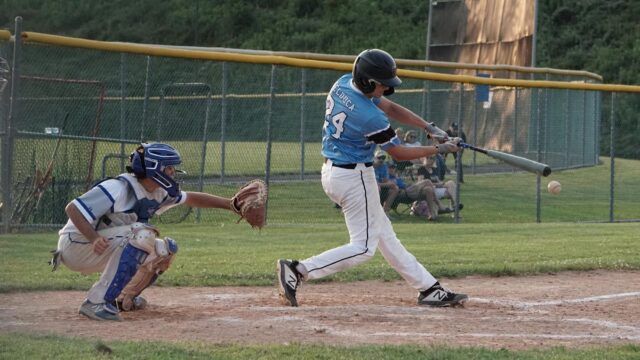
Hitting is the most public failure in sports, and I think that is partly because hitters take so many at-bats without a plan. Awareness at the plate starts before you leave the on-deck circle. You should know the pitcher’s out pitch, what he threw the last hitter, and what your job is in the lineup right now. If the leadoff guy just walked and we are down two, I am not swinging at the first slider in the dirt. If we have first and third with one out, my swing path changes.
Here are the in-at-bat tips I drill the most:
- Track every pitch from the on-deck circle. Stand on the same side as you hit so you see the release point you will see.
- Know the pitcher’s 0-0 pitch. Most pitchers under college level go fastball away on the first pitch about 65 percent of the time.
- Adjust with two strikes. Choke up an inch, widen your stance, shorten your load, expand the zone slightly. League-average two-strike batting average is roughly .175, so the bar is low and any contact helps.
- Read the defense. If the third baseman is playing in, a bunt or chop becomes a weapon. If the outfield is shaded, the opposite gap is a green light.
- Match your swing to the situation. Runner on second, no outs, less than two strikes? My job is to hit the ball to the right side. I am not trying to launch.
If you want a deeper dive into building plate plans, our piece on the baseball hitting approach walks through how to script every at-bat. Pair it with our situational hitting guide for the moving-runners side of the same coin.
Situational Awareness on the Bases
Baserunning is the most controllable part of offense, and it is also where I see the most preventable mistakes. A runner who knows the situation can turn a single into a double, score from first on a gap shot, or shut down a force at home with a smart slide. A runner who does not pays for it with TOOTBLAN highlights and lost rallies.
My core baserunning awareness rules:
- Know the outfielder’s arm before the inning starts. Watch warm-up throws. A weak right field arm means I am rounding hard on any ball to the gap.
- Two outs, contact, you are running. No hesitation. The break should be at the crack of the bat with two outs, every time.
- Less than two outs, read the ball. Line drive, freeze. Ground ball, advance on the ground. Fly ball, tag from third, half-way from first or second.
- Pick up the third base coach early. I tell players to find the coach by the time they are two steps past second base.
- Know the pitcher’s move. Time the leg lift. A slow leg lift over 1.4 seconds is a steal opportunity even with average speed.
For more reps on this, our baseball baserunning tips article covers leads, secondaries, and reads in much more detail, and our guide to reading a pitcher’s pickoff move is required reading for any potential base stealer.
Situational Awareness for Infielders
Infielders touch the ball in roughly 60 to 70 percent of all defensive plays in a typical college or high school game. Their pre-pitch read sets the table for everything else. A shortstop who is not thinking about double plays with a runner on first and less than two outs is going to cost his team a baserunner.
My infield awareness checklist before every pitch:
- Where is my double play? Where is my force? Where is my best out?
- Who covers second on a steal? Who covers a bunt to third? Who covers first on a slow roller?
- Am I cheating in for a bunt, back for a double play, or playing straight up?
- Where is the cut man going on a ball to the gap?
- If the ball is hit to me on a slow chop, am I throwing or eating it?
I want my infielders moving with the pitch. Baseball Savant tracking shows the best MLB infielders are taking a small jab step with every pitch, and that movement is what creates the first-step explosion that turns a 3.9-second runner into an out by half a step. If you are flat-footed when the ball is struck, you are already late.
Situational Awareness for Outfielders
Outfielders have more time to think than anyone, which means there is no excuse for being out of position. The mistake I see most is outfielders playing the same depth all game regardless of count, score, or hitter. That is lazy.
Awareness adjustments I want to see every pitch:
- Depth shifts. Two-strike count, no shift in. Power hitter, shift back. Late innings with a one-run lead and tying run at second, play no-doubles depth.
- Sun and wind awareness. Check the flag every inning. A 10-mph crosswind changes flyball trajectory by several feet by the time the ball lands.
- Backups. Right fielder backs up first base on every throw from the catcher to first. Left fielder backs up third on every throw from the catcher.
- Communication zones. Center fielder is king. He calls every ball he can reach, including pop-ups behind second base.
- Throw decisions. Hit the cutoff unless you have a play at the plate. The trail runner advancing is almost always more costly than failing to nail the lead runner.
For position-specific reps, see our baseball outfield drills piece and the cutoffs and relays guide. Both are built around the awareness habits I describe above.
Situational Awareness for Pitchers and Catchers
The battery sets the tone. A pitcher who does not know the count and the runner is going to lose games no matter how hard he throws. A catcher who does not know what pitch he just called and where it ended up is going to give up free bases. The mental side is half the job.
My short list for pitchers:
- Know the score and inning before every pitch. Do not give in with a base open.
- Hold runners. A 1.3-second time to the plate or quicker shuts down the running game.
- Vary your hold time. Predictable timing gets stolen on.
- Know your fielders. If your shortstop has limited range, you pitch to contact differently.
- Have a plan for the next hitter while you are facing the current one.
And for catchers:
- Know the running game tendencies of every opponent.
- Set up early enough to give the pitcher a target but late enough to not tip location.
- Track the runner from the corner of your eye, not your whole head.
- Block, do not catch, with a runner on third and less than two outs.
- Communicate the situation before every pitch with a hand signal or a finger to the brim.
For a deeper dive on the catching side, our guide to calling a game as a catcher is the most-used resource we have for travel-ball catchers, and our signs and signals piece shows how to communicate without tipping.
Communication and Calls That Win Games
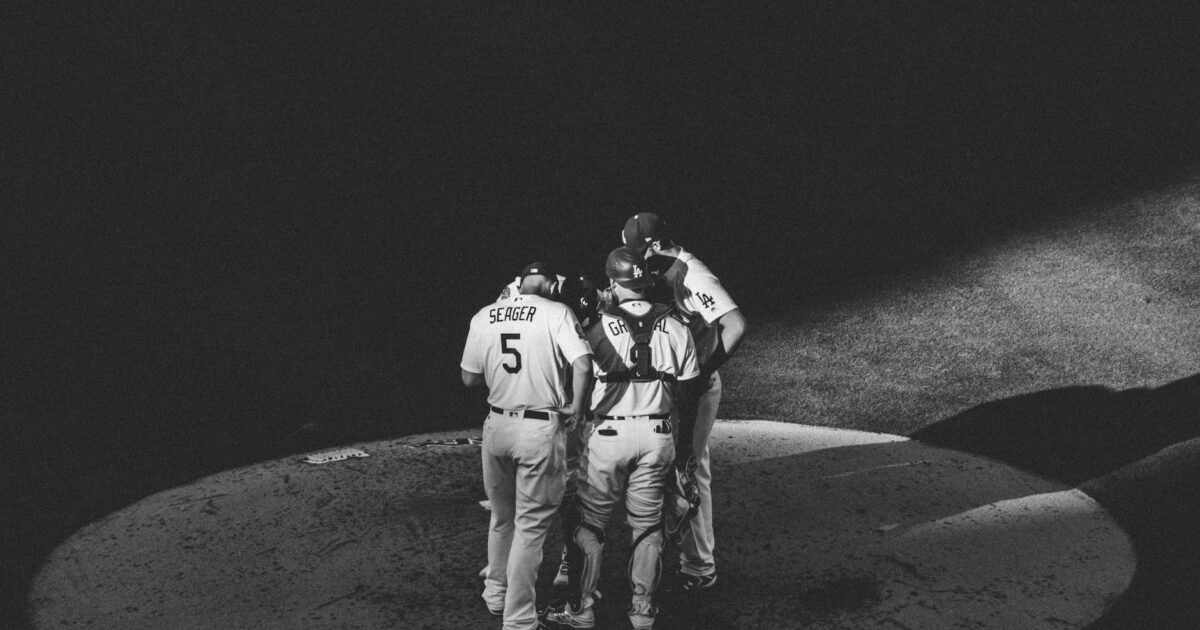
I have argued for years that the loudest team usually wins. Communication is awareness made audible. When everyone on the field is talking, mistakes become rare because three people are reminding the pitcher that there is a runner on second, two outs, and the next hitter is a pull guy. Silent teams beat themselves.
The calls I require on every defensive team I coach:
| Situation | Who Calls It | What Gets Said |
|---|---|---|
| Outs before pitch | Every infielder | “One out, one out, get one!” |
| Pop-up between positions | Player with best angle | “Ball, ball, ball!” loud and three times |
| Runner stealing | Middle infielder covering | “He’s going!” |
| Bunt in play | Catcher | “One, two, or three!” to direct the throw |
| Cutoff line | Cutoff infielder | “Cut two!” or “Let it go!” |
| Backing up bases | Pitcher | Calls his own base out loud as he moves |
| Tag-up situation | Whole infield | “Tag! Tag! Tag!” |
I tell players that if they are not yelling at least four times per inning on defense, they are not engaged. It feels weird at first. Within a week it becomes the default.
Common Situational Awareness Mistakes I See Every Weekend
I run a clinic almost every Saturday in the spring, and the same mistakes show up at every level from 10U to college club ball. If you can fix even three of these on your team, you will probably pick up a few wins this season.
- Throwing behind the lead runner. If the trail runner is not the tying or winning run, you almost always go after the lead runner.
- Missing the cutoff man. Every overthrow is a free base. Trust the relay.
- Running into the third out at third base. The first and third outs are the most expensive. Never make the third out at third.
- Not tagging up on fly balls. Less than two outs, runner on third, medium fly: tag, every time. League data shows roughly 70 percent of those tags score safely.
- Forgetting the count. 3-2 with two outs and a runner going? You are running on contact. Yet I see freeze-ups every weekend.
- Pitching from the windup with a runner on. Unless you have a unique slide step, this hands the running game a free pass.
- Diving when sliding feet first works. Diving back to first is fine. Diving into home plate when feet first is open is risky and slower than people think.
- Watching the ball as a runner. Pick it up, then run. Find your coach and let him do the math for you.
- Standing flat-footed on defense. Pre-pitch movement is non-negotiable.
- Not knowing the wind. A flag check takes one second and saves you from a triple over your head.
Drills I Use to Build Baseball IQ
Awareness is built through reps that force decisions. Skill drills that just ask players to catch and throw do not build IQ. The drills below all force a decision under time pressure.
1. The Situation Card Drill
I print 30 index cards with situations on them: “runner on second, one out, ball hit to the right-center gap.” Before each rep, I draw a card and read it out loud. Players have to say their job, then we run the play. This drill takes ten minutes and is more useful than thirty minutes of fungo.
2. Freeze Tag Defense
I hit a ball, and as soon as a player touches it I yell freeze. Every other defender has to be exactly where they should be. If anyone is wrong, the team owes me five push-ups. Sounds silly. Works every time. Within three practices, the cutoff lines and backups are crisp.
3. Live Read Baserunning
Runners on first or second. I hit a ball into the outfield. Outfielders play it at game speed. The runner has to make a real decision: stop, advance, or score. We grade the decision not the speed. Get the read right and the time will come.
4. Two-Strike BP
Every BP round ends with a two-strike round where the hitter has to fight off pitches and put the ball in play to the right side. The hitter is out if they swing and miss. This trains the count-aware approach more than any other drill I use.
5. Pitch Recognition Reps
From a tee or a soft toss machine, I throw a mix of fastballs and breaking balls and the hitter has to call out the pitch type before the ball reaches the plate. Even five minutes a day improves recognition speed dramatically over a season.
6. Game-Speed Communication Drill
I hit pop-ups in the gap between two fielders and require three loud calls. If the calls are weak or late, we run that rep again. I am ruthless about volume. The point is to make loud calls feel normal in a game.
7. Film Study With Pause
For high school and up, watch ten minutes of MLB game tape, and pause the video before each pitch. Players have to call out the count, outs, and what they would do at their position. This is the cheapest IQ drill on earth and the one most coaches skip.
A Position-by-Position Awareness Cheat Sheet
I keep a laminated cheat sheet in my equipment bag for clinics. Here is a condensed version. Print it, tape it to a dugout, and watch how fast players start using the language.
| Position | Pre-Pitch Read | On-Contact Job (Ball Not To You) | On-Contact Job (Ball To You) |
|---|---|---|---|
| Pitcher | Score, count, runners, hold time | Back up third or home, depending on play | Field clean, set feet, get a sure out |
| Catcher | Pitch call, runners, blocking situation | Direct traffic, back up first on grounders | Pop-up read with mask off |
| First Base | Holding runner? Bunt coverage? | Cover the bag, prepare for relay throw | Glove side flip or step on bag |
| Second Base | DP depth, steal coverage, bunt rotation | Cut for relays, cover first on a 3-1 play | Field, feed, or turn the DP |
| Shortstop | DP depth, steal coverage, sign relay | Cover second, cutoff on balls to LF | Field, feed, or turn the DP |
| Third Base | Bunt coverage, depth, slow roller plan | Cover third on bunts and steals | Charge or back up on chops |
| Left Field | Wind, depth, hitter tendencies | Back up third on throws from infield | Hit cutoff or shortstop |
| Center Field | Wind, depth, gap coverage call | Back up second on every pickoff | King of pop-ups, hit cutoff |
| Right Field | Wind, depth, arm position | Back up first on every catcher throw | Hit cutoff or second baseman |
What Coaches and Pros Actually Say About Game IQ
I collect quotes from clinics and coaches’ conventions because the same themes keep coming up. Here are the lines I have written down in my own notebook over the past few seasons. I have paraphrased some for clarity but the spirit is intact.
- “The best players I ever managed knew the situation before they took the field. The rest of them learned it on the bench.” — longtime D1 head coach
- “You cannot teach speed. You can absolutely teach reads. And reads beat speed in October.” — pro scout I work with
- “I would rather have nine guys who know the count than nine guys who throw 90.” — veteran high school coach
- “Pre-pitch movement is the line between major league defense and Triple-A defense.” — MLB infield coordinator
- “You give me a smart base runner over a fast one with bad reads any day.” — college outfield coach
- “The mental game is 80 percent of the sport above 16U. Everyone is talented at that level. The brain wins the inning.” — travel-ball director
If you want to dig deeper into the headspace side of all of this, our baseball mental game tips guide is the natural companion to this article.
How to Build a Practice Plan That Trains Awareness
If your practices are mostly catch, BP, and infield-outfield in straight rotations, awareness will not develop fast enough. I push every coach I work with to dedicate at least 25 percent of practice to situational, decision-based work. Here is how I split a typical 90-minute high school practice in March.
- 0:00 to 0:10. Dynamic warm-up and pre-throwing routine.
- 0:10 to 0:25. Throwing program with intentional accuracy targets.
- 0:25 to 0:45. Position-specific drills and footwork.
- 0:45 to 1:05. Situational defense. Cards, freeze tag, base running reads.
- 1:05 to 1:25. Live BP with situational rounds and two-strike work.
- 1:25 to 1:30. Sprint-based conditioning and a brief team meeting where we review one mental rep from the day.
The team meeting at the end is non-negotiable. Twenty seconds of “what was the play we got wrong today?” teaches more IQ than another 20 minutes of fungo. For more on practice design, our baseball practice plan guide is built around exactly this rhythm.
How Awareness Develops by Age and Level
Expectations should match age. I have coached 8-year-olds who could call a pop-up cleanly and college players who could not. Use this rough framework to know what to demand.
| Level | Awareness Goals | Coach Cue |
|---|---|---|
| 8U to 10U | Know outs, know bases, know your position | “Hold up your outs!” before every pitch |
| 11U to 12U | Pre-pitch movement, basic communication, bunt coverage | “What is your job on contact?” |
| 13U to 14U | Cutoffs, relays, situational at-bats, runner reads | “Where is your relay going?” |
| High School | Full pre-pitch checklist, two-strike approach, sign systems | “Score, count, runners, plan.” |
| College | Full game management, bullpen awareness, scouting reports | “What does this hitter beat us with?” |
| Adult or Rec | Communication, backing up bases, smart baserunning | “Talk through every play.” |
Tips for Parents Who Want to Build Game IQ at Home
Parents ask me this all the time, and the honest answer is that you do not need a backyard cage or a gym membership to develop a baseball brain. You need a TV, a willingness to ask questions, and patience.
- Watch one MLB game per week with the sound on. Pause and ask, “What is the count? What is the runner doing? What would you do?”
- Read the box score together. Talk about why a leadoff hitter walked, or why a manager went to the bullpen.
- Walk the bases at a youth game. Before games, walk your kid from base to base and ask what they would do as a runner with one out and a fly ball.
- Play out scenarios in the yard. No coach needed. “Bases loaded, ground ball to short, what happens?”
- Stay positive. Awareness is a skill, not a personality trait. Confidence is a huge part of how fast it grows.
Frequently Asked Questions About Baseball Situational Awareness
What is the easiest way to start improving my baseball IQ?
Start with the five-question pre-pitch checklist. Score, count, outs, runners, your job. Run it every pitch in practice for two weeks. It will become automatic in games faster than you think.
How young can you start teaching situational awareness?
I have taught it as young as 7. The complexity changes, but the habit of stopping to think about outs and runners before the pitch can be built at any age. Start with one question (how many outs?) and grow from there.
Is awareness more important than mechanics?
Mechanics get you to the field. Awareness keeps you on it. At younger levels mechanics dominate development time, but by high school the gap between players is mostly mental. Both matter, but awareness becomes the bigger differentiator over time.
How do I help a player who freezes in big moments?
Freezing is almost always a sign of too much information and too little rehearsal. Run more situational reps in practice with realistic pressure. Confidence in the moment comes from having seen the situation 100 times in practice first.
What is the most overlooked situational tip?
Backing up bases. Pitchers and corner outfielders should be moving on every throw across the diamond. The number of free bases I see given up because no one was behind the throw is staggering. Fix this and you instantly play smarter.
How long does it take to see real improvement?
I tell coaches three weeks of consistent situational reps will visibly change a team. Three months will change a season. Three years will change a player’s ceiling. The compounding is real.
Do MLB players still drill awareness?
Every spring training. Bunt coverages, pop-up communication, first-and-third defense, pickoff rotations. The habits never stop being trained because the game keeps creating new wrinkles. If MLB veterans still rep these scenarios in March, your team should too.
What stat best reflects situational awareness?
There is no single perfect metric. Baserunning runs, OAA, and two-strike OPS are all rough proxies. For team-level evaluation, I look at extra bases taken, runners thrown out at the plate, and unforced errors. Trends in those categories tell the story.
Final Thoughts: The Cheapest Edge in Baseball
Velocity is expensive. Exit velocity is expensive. Lessons, gear, travel ball, weighted balls, and swing analyzers all add up fast. The good news is that situational awareness is the cheapest edge in baseball. It costs nothing but attention. And in my experience it pays out faster than almost any other investment in a player’s development.
If you take only one thing away from this article, take this: build the pre-pitch habit, talk loud, and run drills that force decisions. Do that for one season and your team will look like a different unit. Do it for three and you will have built players who keep climbing long after the kids with bigger arms have flamed out. That is the real promise of baseball IQ. It outlasts the radar gun every time.