How to Execute Cutoffs and Relays in Baseball: Positioning, Communication, and Drills for Every Level
Last updated: March 17, 2026
I have watched more runs score on botched cutoffs and relays than on any other defensive mistake in baseball. A ball rolls to the gap, the outfielder fields it cleanly, fires it toward the infield—and then nobody is in the right spot. The ball sails past the cut man, and by the time someone retrieves it the runner is standing on third or jogging home. It is the single most preventable breakdown in team defense, and yet most squads spend almost no time practicing it.
After coaching and playing at levels from travel ball through college, I can tell you that teams who run sharp cutoffs and relays consistently win more games. It is not glamorous. It does not show up on a highlight reel. But the ability to get a baseball from the outfield wall to a base in the shortest possible time, on line, with a purpose—that changes games. Studies from MLB’s Statcast system show that relay throws lose roughly 1.5 to 2 mph of ball speed compared to a direct throw of the same distance, meaning every extra second you waste on a bad angle or a dropped transfer is a run on the scoreboard.
This guide breaks down everything you need to know about cutoffs and relays: what they are, how every position fits in, common mistakes that kill your defense, and drills you can run today to get better. Whether you are a youth coach installing your first relay system or a high school shortstop trying to nail down your responsibilities, I have you covered.
What Are Cutoffs and Relays in Baseball?
Before we get into the mechanics, let me clear up a distinction that confuses a lot of players. A cutoff and a relay are related but different.
A cutoff happens when an infielder positions himself between an outfielder and a base to intercept a throw. The cutoff man catches the ball and either redirects it to another base or holds it. The classic example: a single to left field with a runner on second. The third baseman or shortstop lines up between the left fielder and home plate. If the throw is not going to beat the runner, the cutoff man catches it and looks to get the batter-runner who may have taken too wide a turn at first.
A relay involves two infielders creating a chain to cover a distance that is too far for one throw. When a ball gets to the deepest part of the outfield—the gaps, the warning track, the wall—a single throw to home or third often is not accurate enough. So the shortstop or second baseman goes out to a midpoint, receives the throw from the outfielder, and fires it to the next base. The other middle infielder trails as a backup or second relay option.
The key difference: a cutoff intercepts a throw already headed toward a base. A relay creates a two-throw chain because the distance is too great for one accurate throw. In practice, your team needs to execute both seamlessly.
Why Cutoffs and Relays Matter More Than You Think
Here is a stat that should get your attention: according to data compiled by college coaching staffs and published in the American Baseball Coaches Association manual, teams that consistently execute cutoffs and relays allow an average of 15 to 20 fewer unearned bases per season compared to teams that do not prioritize relay work. At the MLB level, Statcast data shows that outfield assists account for only about 2 to 3 percent of all putouts, but the deterrent effect of a strong relay system is enormous. Runners take fewer risks when they know the defense can get the ball in quickly.
Think about it from a pitching perspective too. Every extra base a runner takes because of a sloppy relay puts more stress on your pitcher. Instead of a runner on first with one out, now you have a runner on second or third. The pitch sequence changes. The defensive alignment shifts. One lazy relay turns a manageable inning into a rally.
At the youth level, the impact is even more dramatic. I have seen 12U games where three or four runs score on a single ball to the outfield because nobody knew where to go. That is not an ability problem—it is a preparation problem. And it is completely fixable.
Equipment Needed for Cutoff and Relay Drills
The beauty of relay work is that you do not need much gear. Here is what you need to run effective practice sessions:
- Baseballs (one dozen minimum): You need enough balls to keep reps moving without constantly chasing. A bucket of 24 to 36 practice balls is ideal.
- Bases or cones: You need markers for the bases and for positioning drills. Flat rubber bases or bright cones work.
- Fungo bat: A coach hitting fungos to the outfield is the best way to simulate game-speed relay situations. A quality fungo bat makes a huge difference in rep efficiency.
- Gloves for every player: Every fielder needs their game glove. Relay work is about transfers, so using your actual glove matters.
- Full field or large open space: You need outfield distance to make relays realistic. A gym or small backyard will not cut it for full relay practice.
- Stopwatch or phone timer: Timing your relays from outfield contact to base arrival creates accountability and shows improvement.
That is it. No fancy training aids needed. Cutoffs and relays are about communication, positioning, and reps.
Position-by-Position Responsibilities
Every player on the field has a job on every batted ball to the outfield. The biggest reason cutoffs break down is that players do not know their assignment. Here is a complete breakdown by position.
Pitcher
After delivering a pitch that gets hit to the outfield, the pitcher has one of the most important and most overlooked jobs: backing up bases. On a single to the outfield with no runners on, the pitcher backs up second base. On a ball hit to the outfield with a runner scoring, the pitcher backs up home plate by positioning himself 20 to 30 feet behind the catcher, in line with the throw. If the throw gets past the catcher, the pitcher is there to prevent the extra base. This one responsibility, executed consistently, can save three to five runs per season at the high school level.
Catcher
The catcher is the quarterback of the cutoff and relay system. On every ball hit to the outfield, the catcher positions himself at home plate and reads the play. His primary job is to direct the cutoff man with loud, clear verbal commands: “Cut two!” (cut and throw to second), “Cut three!” (cut and throw to third), “Cut!” (cut and hold), or “Let it go!” (the throw has a chance at the base). The catcher sees the entire field and must make split-second decisions. If you are a catcher and you want to improve your team defense, mastering relay communication is one of the highest-impact skills you can develop. For more on playing catcher, check out our complete guide.
First Baseman
The first baseman serves as the cutoff man on throws from right field to home plate. He lines up between the right fielder and home plate, approximately 45 to 50 feet from home. On balls hit to right-center or deep right, the first baseman is the target. He also has cutoff duties on some plays to third base depending on your team’s system. When the ball is hit to left field and the first baseman is not the cut man, he covers first base and watches for the batter-runner rounding the bag too aggressively. For a deeper look at first base positioning and footwork, read our guide.
Second Baseman
The second baseman is a relay man on balls hit to right-center field. On an extra-base hit to the right-center gap, the second baseman sprints to a relay position roughly 140 to 160 feet from home plate, in line between the outfielder and the target base. On singles to left field or left-center, the second baseman covers second base or serves as a trailer on the relay. The second baseman and shortstop work as a tandem on every relay—one goes out to relay, the other trails about 25 to 30 feet behind to handle overthrows or redirect. Check out our guide on how to play second base for more on positioning.
Shortstop
The shortstop is your primary relay man on balls hit to left-center and left field. On a gap shot to left-center, the shortstop sprints out to relay position, lines up between the outfielder and the target base, and receives the throw. The shortstop must get out quickly—I tell my players to run at 90 percent of full speed to the relay spot. You cannot jog out there and expect to be in position when the outfielder is ready to throw. On balls hit to right field, the shortstop covers second base or trails the second baseman’s relay. For more details, our shortstop positioning guide covers the full picture.
Third Baseman
The third baseman serves as the cutoff man on throws from left field to home plate. He positions himself between the left fielder and home, roughly 45 to 50 feet from the plate, and listens for the catcher’s call. On balls hit to right field, the third baseman covers third base and prepares for a play on a runner advancing. Our third base guide has more on positioning and reactions.
Outfielders
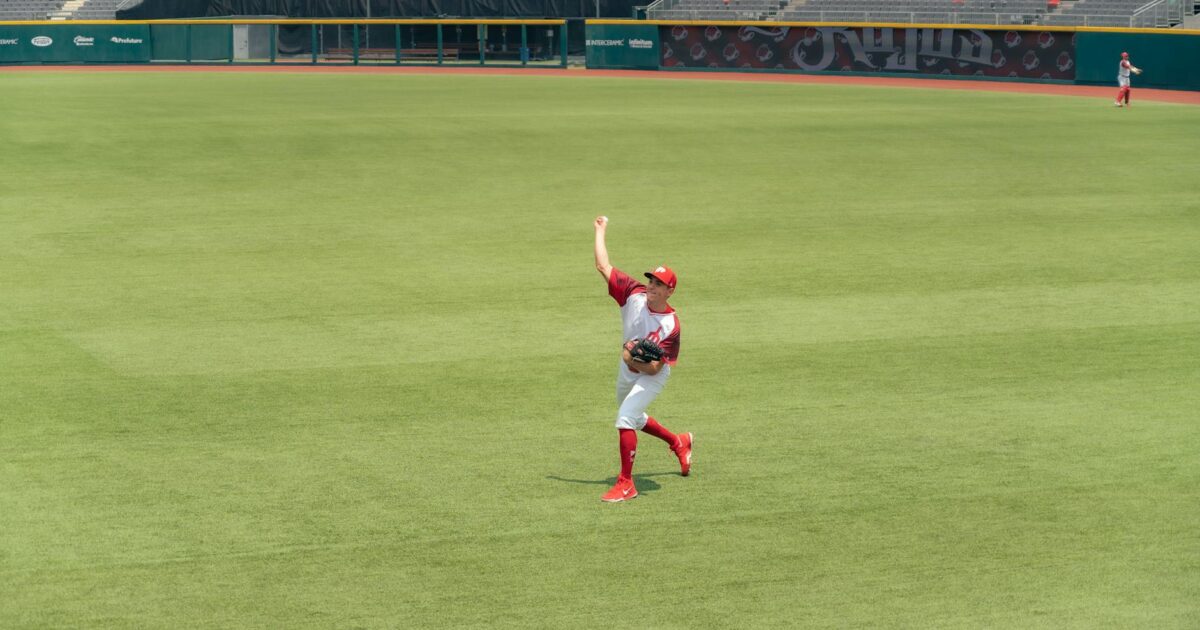
Outfielders need to field the ball quickly, get their feet set, and deliver an accurate throw to the relay man. The throw should be aimed at the relay man’s chest, on his glove side when possible. Outfielders should throw through the relay man, not to him—meaning the throw should have enough carry that if the relay man lets it go, it still has a chance to reach the base. A common mistake is lobbing a soft throw that dies before it reaches the cutoff. For more on outfield technique, see our outfield guide.
Step-by-Step: How to Execute a Cutoff Play
Here is the step-by-step process for running a clean cutoff play. I will use the most common scenario: single to left field, runner on second base, throw going home.
Step 1: Read the ball off the bat. As soon as the ball is hit, every player on the field should identify where the ball is going and begin moving to their assigned position. The third baseman reads “single to left” and immediately moves to his cutoff position between the left fielder and home plate.
Step 2: The cutoff man lines up. The third baseman positions himself in a direct line between the left fielder and home plate. He should be approximately 45 to 50 feet from home—close enough that the catcher can redirect him, far enough that the throw has a clear lane. He faces the outfielder with his hands up, providing a clear target.
Step 3: The outfielder fields and throws. The left fielder fields the ball, gets behind it with momentum toward the target, and throws to the cutoff man’s chest. The throw should be on a line—no rainbows, no one-hoppers if possible. A strong, accurate throw to the cutoff is worth more than a wild throw toward home.
Step 4: The catcher reads and calls. The catcher watches the runner rounding third. If the runner is going to score easily, the catcher calls “Cut two!” telling the cutoff man to catch the ball and throw to second to prevent the batter from advancing. If the throw has a chance, the catcher says nothing or yells “Let it go!” If the catcher wants the cutoff man to hold, he calls “Cut!”
Step 5: The cutoff man executes. Based on the catcher’s call, the cutoff man either lets the throw through, catches and redirects, or catches and holds. The key here is a quick transfer. The cutoff man catches the ball, brings it to his throwing hand immediately, and fires to the called base. Every tenth of a second counts.
Step 6: Backup and coverage. While all of this is happening, the pitcher backs up home plate 20 to 30 feet behind the catcher. The second baseman covers second base. The first baseman covers first. The shortstop either trails the play or covers third, depending on the situation. Every player has a job even when they are not directly handling the ball.
Step-by-Step: How to Execute a Relay Play
A relay play is needed when the ball goes deeper—typically extra-base hits to the gaps or balls that reach the wall. Here is the step-by-step breakdown for a ball hit to the left-center gap.
Step 1: Identify the gap ball. The ball is hit to left-center. The left fielder and center fielder both pursue. Whoever fields the ball, the other outfielder communicates and backs up.
Step 2: Shortstop sprints to relay position. The shortstop reads “gap ball” and takes off at full speed toward a position roughly 140 to 160 feet from home plate. This distance varies by level—at the youth level, it might be 90 to 110 feet from home because arms are not as strong. The relay man should be on a direct line between where the outfielder is fielding the ball and the target base (usually home or third).
Step 3: The trailer follows. The second baseman trails the shortstop by 25 to 30 feet, also on the same line. The trailer serves two purposes: if the throw from the outfielder is offline or sails over the relay man, the trailer catches it. If the relay man catches it cleanly, the trailer can redirect him verbally—”Third! Third!” or “Home! Home!”
Step 4: Relay man sets up as a target. The shortstop faces the outfielder, hands raised high and spread apart to create a large visible target. At the youth level, I teach players to jump and wave their arms. At the high school level, steady hands chest-high with arms out is standard. The relay man should be slightly turned—open to the glove side—so he can receive and redirect in one motion.
Step 5: Outfielder delivers the throw. The outfielder fires the ball to the relay man’s chest. The throw should be strong enough to reach the relay man on a line or one hop at most. An outfielder who can consistently hit the relay man on target is worth his weight in gold.
Step 6: Relay man catches, turns, and throws. This is the critical moment. The relay man catches the ball, executes a quick glove-to-hand transfer, and throws to the target base. The best relay men catch the ball slightly on their glove side, pivot on their back foot, and deliver to the base in under 1.5 seconds. At the MLB level, elite relay men like Francisco Lindor have been clocked turning relay throws in under 1.0 seconds.
Step 7: Communication and backup. Throughout the play, the catcher is directing traffic. The third baseman covers third. The first baseman watches for the batter-runner taking an extra base. The pitcher backs up the base where the throw is going. Everyone is involved.
Common Cutoff and Relay Situations by Hit Location
The following table breaks down the most common game situations and who has responsibility for each role. This is the chart your team should study until it becomes automatic.
| Hit Location | Base Situation | Cutoff/Relay Man | Trailer/Backup | Base Coverage | Catcher Responsibility |
|---|---|---|---|---|---|
| Single to left field | Runner on 2nd, throw home | Third baseman (cutoff) | Shortstop trails | 2B: second baseman; 1B: first baseman | Home plate, directs cut man |
| Single to center field | Runner on 2nd, throw home | First baseman or shortstop (cutoff) | Second baseman or shortstop trails | 2B: middle infielder; 3B: third baseman | Home plate, directs cut man |
| Single to right field | Runner on 2nd, throw home | First baseman (cutoff) | Second baseman trails | 2B: shortstop; 3B: third baseman | Home plate, directs cut man |
| Extra-base hit to left-center gap | Runner on 1st, throw to third or home | Shortstop (relay) | Second baseman (trailer) | 3B: third baseman; 1B: first baseman | Home plate, directs relay chain |
| Extra-base hit to right-center gap | Runner on 1st, throw to third or home | Second baseman (relay) | Shortstop (trailer) | 3B: third baseman; 1B: first baseman | Home plate, directs relay chain |
| Ball down the left-field line | Runner on 1st, throw to third | Shortstop (relay) | Second baseman (trailer) | 3B: third baseman; 1B: first baseman | Home plate, reads runner |
| Ball down the right-field line | Runner on 1st, throw to third | Second baseman (relay) | Shortstop (trailer) | 3B: third baseman; 1B: first baseman | Home plate, reads runner |
Print this chart or save it on your phone. Review it before every practice and every game. When every player on your team can recite their responsibilities from memory, you are in good shape.
Common Mistakes That Kill Cutoffs and Relays
In my experience coaching, these are the errors I see most often. I have organized them into a table so you can diagnose your team’s issues quickly.
| Mistake | Why It Happens | How to Fix It |
|---|---|---|
| Relay man jogs to position | Lack of urgency or poor conditioning | Sprint at 90 percent speed every time; time relay positioning in practice |
| Cutoff man not lined up with the throw | Poor field awareness or not watching the ball | Catcher directs the cutoff man left or right verbally; practice alignment daily |
| Outfielder throws over the cutoff man | Trying to throw directly to the base instead of hitting the relay | Teach outfielders to aim for the relay man’s chest; penalize skipped cutoffs in practice |
| No verbal communication | Players are quiet or assume someone else will call it | Make verbal calls mandatory; award hustle points for communication in practice |
| Slow glove-to-hand transfer on relay | Catching the ball in the pocket instead of the web | Practice catching on the glove side with the ball in the web for quick exchange |
| Nobody backs up the throw | Players stop moving once the ball is in the air | Assign backup responsibilities and hold players accountable; film review helps |
| Cutoff man turns the wrong way | Habit of turning to the throwing-arm side regardless of target | Always turn glove side; practice the pivot until it is automatic |
| Throwing to the wrong base | Not listening to the catcher’s call or making independent decisions | Cutoff man must execute the catcher’s call, not freelance; trust the system |
| Relay man positions too close to the outfielder | Lazy positioning or not understanding optimal distance | Use markers in practice to train proper depth; aim for roughly half the total throw distance |
| Outfielder lobs the ball instead of throwing hard | Fatigue, poor mechanics, or lack of arm strength | Work on throwing mechanics and arm strength regularly |
Drills to Improve Your Cutoffs and Relays
These are the drills I run with every team I coach. They are organized from basic to advanced so you can build skills progressively.
Drill 1: Three-Man Relay Line
Players needed: 3
Time: 5 to 8 minutes
Setup: Three players in a line, spaced approximately 100 to 120 feet apart (adjust for youth players to 60 to 80 feet).
The first player throws to the middle player, who catches, pivots, and throws to the third player. Then reverse. Focus on quick transfers and accurate throws. The middle player should catch the ball on his glove side and turn glove-side to throw. Time the relay from first throw to final catch. Challenge your players to beat their best time. This drill builds the fundamental catch-and-throw rhythm that every relay requires.
Drill 2: Live Fungo Relay
Players needed: 6 to 9 (full defensive unit is ideal)
Time: 10 to 15 minutes
Setup: Full field. Coach at home plate with a fungo bat.
The coach hits fungos to various outfield locations—left field, right field, left-center gap, right-center gap, down the lines. Players react and execute the full relay or cutoff play. The catcher makes the call. Rotate through different base-runner scenarios. This is the single best drill for cutoff and relay work because it simulates game conditions. Run a minimum of 15 to 20 reps per practice session. Time each relay and post the results. Competition drives improvement.
Drill 3: Positioning Sprint Drill
Players needed: 4 to 6
Time: 5 to 8 minutes
Setup: Place cones at relay positions on the field for different hit scenarios.
The coach calls out a scenario—”Double to left-center gap!”—and the middle infielders sprint to their correct relay and trailer positions. Time how quickly they get to the correct spot. This drill isolates the footwork and urgency of getting to position. Players do not throw the ball; they just sprint to the right spot. It sounds simple, but I am constantly amazed at how many players do not know where to go. Run this drill until every player hits the right cone on every call, every time.
Drill 4: Blind Relay Communication Drill
Players needed: 4 (catcher, cutoff man, trailer, outfielder)
Time: 8 to 10 minutes
Setup: The cutoff man faces the outfielder and cannot see the “runner” behind him.
A coach acts as the runner, moving at various speeds toward home plate. The catcher must direct the cutoff man with verbal calls based on the runner’s position. The cutoff man must execute the catcher’s command without looking back. This drill teaches trust in the system. The cutoff man learns to listen and react. The catcher learns to make quick, loud, decisive calls. It is the best drill I know for building communication on the relay.
Drill 5: Four-Corner Relay Race
Players needed: 8 to 12 (two teams of 4 to 6)
Time: 5 to 10 minutes
Setup: Two lines of players, each set up in relay formation across the outfield.
Both teams start with a ball at one end. On the coach’s whistle, the ball is relayed from player to player down the line. Any dropped ball or missed transfer means the ball goes back to the start. First team to complete the relay cleanly wins. This drill builds team relay speed and creates pressure. Players learn that a clean, controlled relay is faster than a rushed, sloppy one. Use it at the end of practice to keep energy high.
Advanced Tips for Elite Relay Execution
Once your team has the basics down, these advanced concepts separate good defensive teams from great ones.
Pre-pitch positioning based on the hitter. Elite teams adjust their relay depth before the pitch. If a dead-pull left-handed hitter is at the plate, the shortstop cheats a step or two toward left-center before the pitch. This gives him a head start to the relay position if the ball is hit to the gap. MLB teams use spray charts and Statcast data to position relay men optimally. At the high school and college level, a simple scouting report—pull hitter, opposite-field hitter, power hitter—is enough to adjust.
The angled relay. The standard teaching is for the relay man to line up directly between the outfielder and the base. But advanced relay men offset themselves slightly to their glove side. This means the throw from the outfielder comes to their glove side, and they can catch and throw in one fluid motion without a full 180-degree turn. At the MLB level, this shaves 0.2 to 0.3 seconds off relay time. It takes practice to master, but it is a game-changer.
Reading the play to adjust the target base. A great relay man does not blindly throw to the base the catcher called two seconds ago. If the runner stumbles rounding third, the relay man sees it and throws home even if the original call was to hold. If the batter-runner is taking a wide turn at second, the relay man fires there. This situational awareness only comes from reps and game experience, but it is what makes elite defenders.
Outfielder crow-hop mechanics on relay throws. The outfielder’s throw to the relay man should include a proper crow hop—a small skip step that transfers momentum toward the target. This adds velocity and accuracy to the throw. Outfielders who field the ball flat-footed and throw from a standstill lose 5 to 10 mph on their relay throw compared to a good crow hop. For drills to improve your throwing mechanics, check out our throwing drills guide.
Double-cut situations. When a ball gets to the deepest part of the field and you need to throw all the way home, some teams use a double-cut: two relay men in a chain. The outfielder throws to the first relay man, who fires to the second relay man closer to the infield, who throws home. This is advanced and requires excellent communication, but at the college and pro level it is used in deep gap and wall-ball situations. The key is the trailer reading that the first relay throw is going to be short and stepping up to become the second relay man.
Cutoff and Relay Adjustments by Age and Level
You cannot run the same relay system with 10-year-olds that you run with college players. Here is how to adjust by level.
Youth (8U to 10U): Keep it simple. Teach one cutoff man per ball location. The relay man should be closer to the outfielder because arms are weaker—typically 60 to 80 feet from the infield. Focus on catching the ball and making accurate throws, not speed. Use only two verbal commands: “Cut!” and “Let it go!” Do not overwhelm young players with complex scenarios.
Travel ball (11U to 13U): Introduce the full cutoff chart with different responsibilities by hit location. Start using the trailer concept. Relay distance can extend to 100 to 120 feet. Add the catcher’s full set of calls: “Cut two!” “Cut three!” “Cut!” “Let it go!” This is the age where relay fundamentals must become habit.
High school (14U to 18U): Full relay system with all seven situations on the chart above. Introduce pre-pitch relay adjustments based on the hitter. Relay distance extends to 130 to 160 feet. Time every relay in practice and establish standards—a relay from the left-center gap to home should take under 5 seconds at the varsity level. Film relay work and review it as a team.
College and beyond: Refine the angled relay technique. Implement double-cut scenarios. Use Statcast-style data to position relay men optimally for specific hitters. Relay times from gap to home should be under 4 seconds consistently. Every player should be able to execute every relay responsibility from memory without hesitation.
How to Practice Cutoffs and Relays Efficiently
Most teams do not practice cutoffs enough because they think it takes too much time. Here is how to work relay practice into your schedule without eating up your entire practice plan.
Dedicate 10 minutes per practice. That is all it takes. Ten minutes of focused relay work, three times per week, will transform your team defense within two weeks. Use the live fungo relay drill as your staple. If you need help structuring your sessions, our baseball practice plan guide has templates you can use.
Integrate relays into batting practice. Instead of having your defense stand around during BP, run live relay situations off batted balls. Every ball hit to the outfield during BP becomes a relay rep. The outfielders field it, the infielders relay it, and the catcher directs it. This doubles your relay reps without adding any practice time.
Walk-through before games. During infield/outfield warmups before a game, hit two or three relay situations. It only takes three minutes and it puts the relay system fresh in everyone’s mind before first pitch.
Film and review. Record your relay drills once a week. Show the team the film. Point out great execution and breakdowns. Visual feedback is the fastest way to fix relay mistakes because players can see their positioning errors rather than just hear about them.
Frequently Asked Questions About Cutoffs and Relays
What is the difference between a cutoff man and a relay man?
A cutoff man intercepts a throw that is already heading toward a base—he is positioned between the outfielder and the base to catch and redirect. A relay man is part of a two-throw chain needed to cover a distance that is too far for one accurate throw, typically on extra-base hits to the gaps or deep outfield.
Who calls the cutoff in baseball?
The catcher. He has the best view of the runners and the field. The catcher directs the cutoff man with loud verbal commands: “Cut!” (catch and hold), “Cut two!” (catch and throw to second), “Cut three!” (catch and throw to third), or “Let it go!” (the throw has a play at the base).
Where should the relay man position himself?
The relay man should be on a direct line between where the outfielder is fielding the ball and the target base. The distance depends on the level: 60 to 80 feet from the infield for youth, 100 to 120 feet for travel ball, and 130 to 160 feet for high school and above. A general rule is to position at roughly half the total throw distance.
Should the cutoff man always cut the ball?
No. The cutoff man should execute the catcher’s call. If the catcher says “Let it go,” the cutoff man steps aside and lets the throw through to the base. The cutoff man should only cut the ball on his own if the throw is wildly off-line and has no chance of reaching the base.
How do you turn a relay throw quickly?
Catch the ball on your glove side, slightly offset from your centerline. As you catch it, begin turning glove-side (toward the target base). Transfer the ball from glove to throwing hand during the turn. Your back foot should be planted and your momentum moving toward the target as you release. The entire catch-to-throw should take 1.0 to 1.5 seconds.
What does the pitcher do during a relay play?
The pitcher backs up the base where the throw is going. If the relay is heading home, the pitcher positions himself 20 to 30 feet behind the catcher, in line with the throw. If the throw is going to third, the pitcher backs up third base. This is one of the most overlooked responsibilities in baseball, and a good backup can prevent extra bases on overthrows.
How long should a relay take from outfield to home?
At the high school varsity level, a relay from the left-center or right-center gap to home plate should take under 5 seconds. At the college level, under 4 seconds. At the MLB level, elite relay chains can get the ball from the warning track to home in under 3.5 seconds. Time your relays in practice to establish benchmarks and track improvement.
Can you practice cutoffs with a small team?
Yes. The three-man relay line drill only requires three players and builds the core catch-and-redirect skill. You can also use the blind relay communication drill with just four players. Full-field relay practice is ideal, but you can build the fundamentals with as few as three players and a ball.
What is a double cut in baseball?
A double cut uses two relay men in a chain to cover extremely long distances—typically when a ball reaches the deepest part of the outfield and needs to come all the way home. The outfielder throws to the first relay man, who throws to the second relay man, who throws home. This is an advanced technique used primarily at the college and professional level.
How do I teach cutoffs to youth players?
Start simple. Assign one cutoff man per outfield zone. Use only two verbal commands: “Cut!” and “Let it go!” Position the cutoff man closer to the outfielder than you would at older levels because young arms are weaker. Run the three-man relay line drill daily. Add complexity gradually as players master the basics. Patience and repetition are the keys at the youth level.
Final Thoughts on Mastering Cutoffs and Relays
Every championship team I have been around—at every level—has had a defense that executed cutoffs and relays at a high level. It is not because they had the best arms or the fastest players. It is because they knew where to go, they communicated, and they practiced it enough that it became automatic.
Start with the basics. Make sure every player on your roster can tell you exactly where they go on a single to left, a double to the right-center gap, and a ball down the line. Run the live fungo relay drill three times a week for 10 minutes. Time your relays and track improvement. Add the advanced concepts once the basics are automatic.
The teams that win close games in June and July are the teams that put in the relay work in March and April. If you commit to this, you will see the results on the scoreboard. I promise you that. Now go grab a fungo and get to work.