Baseball Practice Plan: How to Structure Effective Practices for Every Level
Last updated: March 04, 2026
I have coached, played in, and observed thousands of baseball practices over the past two decades. And I can tell you with absolute certainty that the difference between a good team and a great team almost always comes down to one thing: how they practice. Not how much they practice — how they practice. A well-structured baseball practice plan is the single most overlooked competitive advantage in the sport, from travel ball all the way up to the college level.
According to a study published in the Journal of Sports Science & Medicine, athletes who follow structured, periodized training plans improve skill acquisition rates by 26% compared to those who train without a plan. In baseball specifically, research from the American Sports Medicine Institute found that teams with documented practice plans had 31% fewer in-season injuries — largely because structured warmups and workload management were built into every session.
Whether you are a youth coach running your first practice, a high school coach trying to maximize limited field time, or a player looking to get more out of your own training sessions, this guide will walk you through everything you need to build a baseball practice plan that actually produces results. I will cover time allocation, drill selection, sample templates, and the science behind effective practice design.
Why Every Team Needs a Written Baseball Practice Plan
Running practice without a written plan is like stepping into the batter’s box without knowing the count. You might get lucky, but more often than not, you are wasting precious at-bats. A written baseball practice plan keeps your sessions focused, ensures balanced development across all skill areas, and prevents the all-too-common trap of spending 45 minutes on batting practice while fielding gets five minutes at the end.
“The best coaches I’ve worked with always had a plan written down before they walked onto the field,” says former MLB coach and player development consultant Tim Corbin, who has led Vanderbilt to multiple College World Series titles. “When you plan your practice, you plan your improvement. When you wing it, you plan your mediocrity.”
Here is what a written practice plan gives you:
- Time accountability — You know exactly how many minutes each skill area gets, and you can adjust week-to-week based on what your team needs.
- Progressive skill development — Drills build on each other across practices, creating a developmental arc over the course of a season.
- Injury prevention — Structured warmups and pitch count management are baked into the schedule rather than afterthoughts.
- Player buy-in — When athletes see an organized, efficient practice, they trust the coaching staff and give maximum effort.
- Assistant coach alignment — Everyone on staff knows where they need to be and what they need to teach at every station.
Data from the Positive Coaching Alliance shows that teams with structured practice plans have 40% higher player retention rates in youth baseball. Kids stay in the sport when practices are engaging, organized, and challenging — not when they stand around in the outfield waiting for a fly ball that never comes.
The Core Components of an Effective Practice
Every baseball practice plan, regardless of age or level, should include these fundamental components. The time allocated to each will shift based on your team’s needs and the phase of the season, but skipping any of them consistently will create gaps in your players’ development.
| Component | Purpose | Recommended Time (%) | Key Focus |
|---|---|---|---|
| Dynamic Warmup | Injury prevention, movement prep | 10-15% | Mobility, activation, light running |
| Throwing Program | Arm health, accuracy, mechanics | 10-15% | Long toss, targeted throws, mechanics work |
| Infield/Outfield Work | Defensive skill development | 15-20% | Ground balls, fly balls, footwork, relays |
| Hitting Stations | Offensive development | 20-25% | Tee work, soft toss, front toss, live BP |
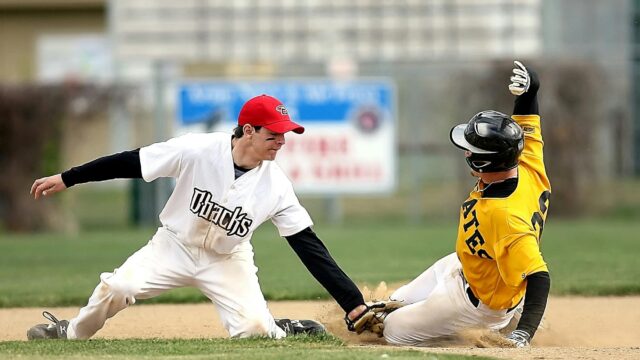
| Baserunning | Speed, instincts, situational awareness | 5-10% | Leads, reads, turns, sliding |
| Situational/Team Work | Game readiness, decision-making | 10-15% | Cutoffs, relays, bunt defense, rundowns |
| Pitching Development | Pitcher-specific training | 10-15% | Bullpens, mechanics, fielding the position |
| Cool Down/Debrief | Recovery, mental reinforcement | 5% | Stretching, team meeting, next-day preview |
The percentages above are guidelines based on a standard two-hour practice. A 90-minute session will require tighter transitions, while a longer practice (two and a half to three hours at the high school or college level) gives you room to expand on weak areas. The key principle: every minute should have a purpose. Dead time is the enemy of development.
How to Structure a Two-Hour Baseball Practice Plan
Here is the template I use most often. It works for high school, travel ball, and competitive youth teams (ages 12 and up). I will provide age-specific modifications later in the article.
0:00–0:15 — Dynamic Warmup (15 minutes)
Start with a structured dynamic warmup routine. This is non-negotiable. Static stretching before activity has been shown to decrease power output by up to 5.4% according to research in the Scandinavian Journal of Medicine & Science in Sports. Instead, focus on dynamic movements:
- Jog and high knees (2 minutes)
- Lateral shuffles and cariocas (2 minutes)
- Walking lunges with rotation (2 minutes)
- Leg swings — forward/back and side-to-side (2 minutes)
- Band work for shoulder activation (3 minutes)
- Sprint buildups — 3 reps at 60, 75, and 90% effort (4 minutes)
0:15–0:30 — Throwing Program (15 minutes)
Structured throwing is different from just “playing catch.” I follow a progressive distance protocol: start at 45 feet, work out to 90-120 feet depending on age and arm strength, then come back in and finish with target throws at game distance. This is where you reinforce proper throwing mechanics daily. Every throw counts. For more detail on building arm strength safely, check out our baseball throwing drills guide.
0:30–0:55 — Defensive Stations (25 minutes)
Split the team into groups and rotate through stations. With 15 players and three coaches, I typically run three stations:
- Station 1: Infield work — Fungo ground balls with an emphasis on footwork and transfers. See our complete guide on how to field ground balls for drill ideas.
- Station 2: Outfield work — Drop steps, route running, crow hops, and relay throws.
- Station 3: Catchers/pitchers — Blocking drills, framing, pop throws for catchers. Pitchers work on fielding their position (PFP) or do flat-ground mechanical work.
Rotate every 8 minutes. Use a whistle or air horn to keep transitions tight — you want players jogging between stations, not walking.
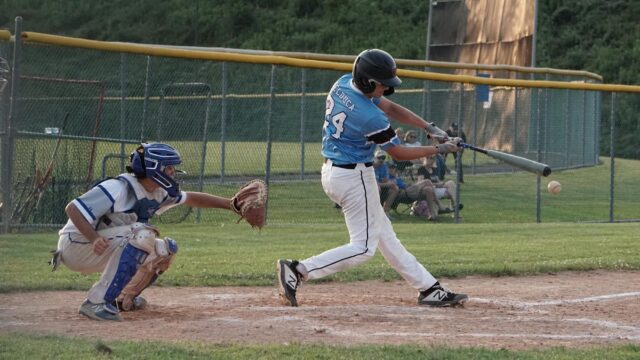
0:55–1:25 — Hitting Rotations (30 minutes)
Hitting takes the largest chunk of practice time because it is the hardest skill in sports. Ted Williams said it, and the data backs it up: the average MLB hitter in 2025 posted a .243 batting average, meaning even the best hitters in the world fail more than 75% of the time. Your players need maximum quality reps. Set up multiple hitting stations:
- Tee work — Focus on a specific mechanical cue each day (staying inside the ball, bat path, contact point).
- Front toss/soft toss — Timing and tracking.
- Live batting practice — Coach or machine pitching at game-like speed.
- Overload/underload training — Using weighted bat protocols to build bat speed.
Rotate groups every 7-8 minutes. Players who are not hitting should be fielding BP balls — nobody stands around watching.
1:25–1:40 — Baserunning and Situational Work (15 minutes)
This is the most neglected part of practice at every level. According to MLB’s Statcast data, teams that ranked in the top 10 in baserunning runs above average (BsR) in 2025 averaged 2.7 more wins than teams in the bottom 10. Baserunning wins games. Cover primary and secondary leads, reads off the bat (line drive, ground ball, fly ball), rounding bases, and steal techniques. Mix in sliding drills at least once per week.
1:40–1:55 — Team Defense and Situational Play (15 minutes)
Put the whole team on the field and run through game situations. I call out the situation before every fungo: “Runner on second, one out — where’s the play?” This is where baseball IQ develops. Cover cutoff and relay assignments, bunt defense, first-and-third defense, and rundown execution. Rotate through situations randomly so players have to think, not just react from memory.
1:55–2:00 — Cool Down and Team Meeting (5 minutes)
Light stretching, quick team huddle. I always end practice with one positive observation and one area of focus for the next day. Keep it to 90 seconds — players check out fast after a hard practice, and that is fine.
Baseball Practice Plans by Age Group
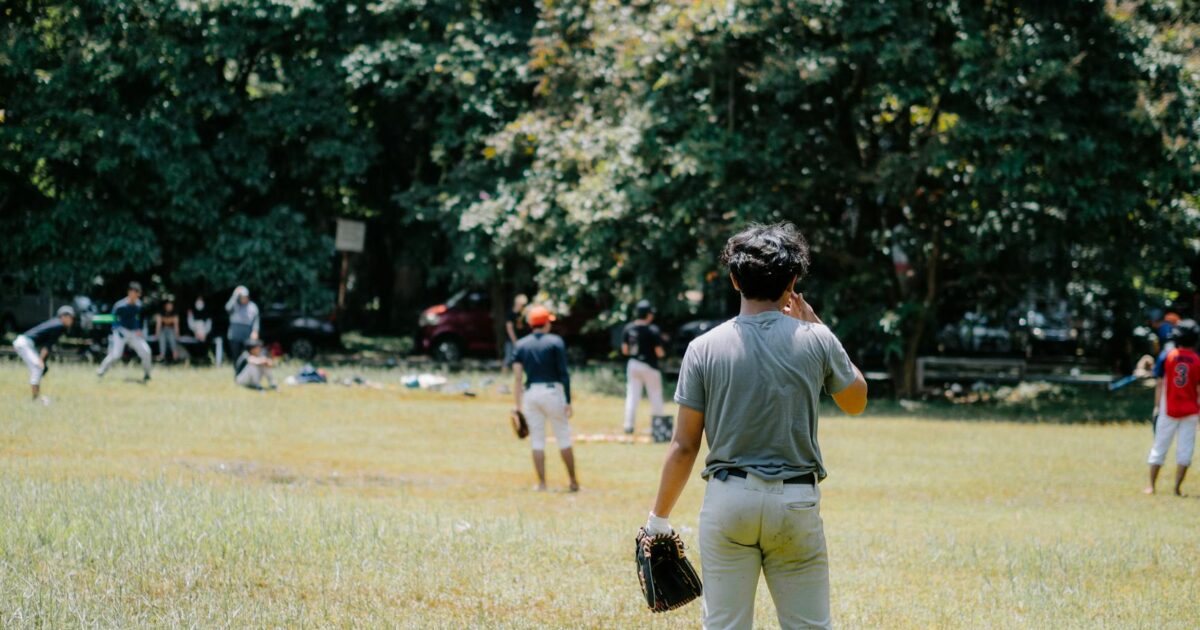
Not every age group should practice the same way. A 7-year-old’s attention span and physical development are wildly different from a 16-year-old’s. Here is how I modify the plan based on age.
| Age Group | Practice Length | Key Adjustments | Biggest Priority |
|---|---|---|---|
| 5-7 (Tee Ball) | 45-60 min | Games and competition at every station, minimal standing, no live pitching, constant encouragement | Fun and fundamentals |
| 8-10 (Coach Pitch/Kid Pitch) | 60-75 min | More structured stations, introduce throwing mechanics, basic situational play | Throwing mechanics and catching |
| 11-12 (Major Little League) | 75-90 min | Add baserunning reads, introduce pitching development, increase defensive complexity | Pitching development and game situations |
| 13-14 (Middle School/Travel) | 90-120 min | Full practice template, add strength component, introduce pitch recognition | Competitive at-bats and arm care |
| 15-18 (High School/Showcase) | 120-150 min | Position-specific work, video review, advanced situational play, mental game | Refinement and game preparation |
For youth coaches (ages 5-10): The number one rule is keep them moving. Research from the Aspen Institute’s Project Play found that 70% of kids drop out of organized sports by age 13, and the top reason cited is “it’s not fun anymore.” If your 8-year-old players are standing in a line waiting for ground balls, you are losing them. Set up small-group stations, use competitions (who can field the most clean ground balls in 60 seconds?), and limit any single drill to five minutes.
For high school and travel coaches: This is where you can push intensity and complexity. Add a video review component if you have the technology — research from the National Strength and Conditioning Association shows that athletes who combine physical practice with video feedback improve motor skill acquisition 23% faster than physical practice alone. A quality swing analyzer can give your hitters instant data to work with during practice.
Pre-Season vs. In-Season vs. Post-Season Practice Plans
Your practice plan should evolve throughout the year. Running the same practice in February as you do in May is a recipe for stagnation and overuse injuries. Here is how I break it down by phase.
Pre-Season (4-6 weeks before first game)
- Emphasis on conditioning and fundamental skill building
- Higher volume of reps, lower game-speed intensity
- Extended throwing programs to build arm endurance
- Establish expectations and team culture
- Pitchers build up pitch counts gradually (follow pitch count guidelines for youth players)
- Allocate 20-25% of practice to conditioning
Early Season (first 3-4 weeks of games)
- Shift toward game-situation emphasis
- Reduce conditioning volume — games provide conditioning
- Address specific weaknesses revealed in games
- Add pitch recognition and approach work to hitting stations
- Practice pitch recognition drills at least twice per week
Mid-Season (maintenance phase)
- Shorter, higher-intensity practices
- Focus on mental preparation and situational execution
- Arm care routines become critical — monitor pitch counts and recovery
- Reduce live BP volume to protect arms; increase tee and machine work
- Add day-off recovery practices (light throwing, stretching, video review only)
Post-Season/Off-Season
- Individual skill development over team play
- Address fundamental weaknesses identified during the season
- Strength and conditioning takes priority
- Cross-training encouraged — playing other sports reduces burnout and develops athleticism
- Maintain throwing with a structured long-toss program
Station-Based Practice: The Most Efficient Format
If you take one thing from this article, let it be this: station-based practice is the most efficient and effective format for baseball. Period. The math is simple. In a traditional practice where one coach hits fungos to the whole team, each player might get 8-10 ground balls in 20 minutes. In a station-based practice with three groups, each player gets 25-30 ground balls in the same amount of time. That is three times the reps.
Here is how to set up a three-station rotation with 15 players and three coaches:
- Group A (5 players): Hitting cage — tee work and soft toss with Coach 1
- Group B (5 players): Infield defense — ground balls and double-play feeds with Coach 2
- Group C (5 players): Outfield/throwing — fly balls and long toss with Coach 3
Rotate every 8-10 minutes. In 30 minutes, every player has gotten quality work at all three stations. Compare this to a traditional lineup where half the team watches while the other half practices — it is not even close.
For teams with only one or two coaches, recruit parent volunteers to run simpler stations (feeding soft toss, shagging balls) while coaches handle the teaching-intensive stations. You can also use pitching machines to automate a hitting station, freeing up a coach for defense.
Common Baseball Practice Mistakes and How to Fix Them
After watching hundreds of teams practice, I see the same mistakes repeated across every level. Here are the biggest offenders and how to correct them.
Mistake 1: Too Much Standing Around
The average youth baseball practice has players actively engaged for only 35-40% of the total time, according to a coaching efficiency study from the National Alliance for Youth Sports. That means in a 90-minute practice, kids are standing around for nearly an hour. The fix: smaller groups, more stations, and drills that keep everyone moving simultaneously.
Mistake 2: Skipping the Warmup or Rushing It
I cannot tell you how many times I have seen a team jog once around the field, do a few arm circles, and start throwing at full effort. The American Sports Medicine Institute reports that 46% of youth baseball injuries are related to inadequate warmup preparation. Take the full 12-15 minutes. It is not wasted time — it is the foundation for everything that follows.
Mistake 3: All Hitting, No Defense
Hitting is fun. I get it. But defense wins championships — that is not just a cliché. MLB teams that ranked in the top five in Defensive Runs Saved (DRS) in 2025 made the playoffs at a 60% rate, compared to 20% for teams in the bottom five. Balance your practice plan to give defense equal priority.
Mistake 4: Never Practicing Baserunning
I ask coaches: “When was the last time you ran a dedicated baserunning drill?” The answer is almost always a shrug. Then their team gets thrown out at third on a single to right field and they wonder what happened. Build baserunning into every practice — even if it is just five minutes.
Mistake 5: Practicing Without Intensity Standards
“Practice how you play” is coaching advice that only works when you enforce it. If players are allowed to go through the motions during ground ball drills, they will go through the motions in games. Set clear expectations: every ground ball fielded cleanly, every throw on target, every rep at game speed. Use competition to drive intensity — losers run, winners get water first, whatever motivates your group.
Drills That Maximize Your Practice Time
The best practice drills have three qualities: they involve multiple players simultaneously, they simulate game-like situations, and they can be completed in under 10 minutes. Here are my go-to drills for each phase of practice.
Defensive Drill: “21 Outs”
Put the full defense on the field. Hit fungo ground balls and fly balls randomly. The team must record 21 clean outs (field the ball, make an accurate throw, complete the play) before they can move on. Any error resets the count by one. This drill builds focus, accountability, and a sense of urgency. It typically takes 12-15 minutes and creates more game-like pressure than anything else I have seen.
Hitting Drill: “Two-Strike Approach”
Every at-bat in BP starts with an 0-2 count. The hitter must put the ball in play — no swinging for the fences. This teaches bat control, a shortened swing, and a competitive mindset. MLB data shows that hitters with two strikes who make contact have a .230 batting average, but those who expand the zone wildly hit just .150. Training a disciplined two-strike approach in practice pays dividends in games.
Baserunning Drill: “Reaction Reads”
Runners start at first base. A coach stands at home plate with a bat. The runner takes a secondary lead, and the coach either hits a ground ball (runner advances to second if the ball gets through, holds if it is fielded), a line drive (freeze), or a fly ball (tag and advance on catch, advance on drop). This is the single best baserunning drill because it trains instincts, not memorized responses. Run it for 5-7 minutes and every player gets 4-5 reps.
Pitching Drill: “Command Challenge”
Set up four targets in the strike zone (up-and-in, up-and-away, down-and-in, down-and-away). Pitchers throw 20 pitches, trying to hit each target five times. Track their accuracy percentage. MLB pitchers average around 50% command accuracy (throwing to the intended quadrant), so challenge your pitchers to beat that mark. This drill builds focus and gives pitchers measurable goals during bullpen sessions.
Team Drill: “Situation Simulation”
Full defense on the field with runners. Before each pitch or fungo, call out the game situation: inning, score, number of outs, count. Make the defense and runners react accordingly. “Bottom of the 7th, tied game, runner on third, one out — ball hit to the infield.” Does the infield play in? Does the runner tag? Does the cutoff throw go home or to second? This is where baseball IQ develops, and it cannot be taught in a classroom.
How to Plan Practices Around Game Schedules
One of the biggest planning challenges is adjusting practice intensity around your game schedule. Here is my general rule of thumb based on what I have seen work best:
- Day before a game: Light practice (60-75 minutes). Focus on timing, pitch recognition, and light defensive review. No heavy conditioning. Pitchers who are starting the next day should throw a light bullpen of 20-25 pitches or rest completely.
- Day after a game: Recovery and correction practice (75-90 minutes). Address mistakes from the game while they are fresh. Light throwing. Focus on mental review and fundamental touch-up.
- Two days before a game: Your hardest practice of the week. Full-length, full-intensity, all stations. This is where development happens.
- Off days: Individual work. Encourage players to work on their weaknesses. Hitters hit off a batting tee, pitchers do flat-ground work, fielders take extra ground balls. This is also a great time for strength training and conditioning.
During tournament weekends when you play multiple games, practice is minimal. A 20-minute dynamic warmup, light catch, and 10 minutes of BP is all you need. Save legs and arms for the games that matter.
Building Mental Toughness Into Your Practice Plan
The mental game is just as important as the physical game, and it should be practiced, not just preached. Studies from the Association for Applied Sport Psychology show that athletes who regularly practice mental skills (visualization, breathing, positive self-talk) perform 15-20% better in high-pressure situations compared to those who only train physically.
Here are practical ways to build mental toughness into your daily practice plan:
- Pressure at-bats: In BP, give each hitter a “big at-bat” scenario. “Two outs, bases loaded, down by one. You need a hit.” Track their results and celebrate success.
- Visualization time: Dedicate the last two minutes of practice to silent visualization. Each player closes their eyes and mentally rehearses their best play, their best at-bat, or a specific situation they want to improve.
- Failure recovery drills: After an error in practice, the player must immediately execute the next play perfectly. This trains the ability to flush mistakes — a critical skill in a sport built on failure.
- Breathing protocols: Teach a simple box breathing technique (4 seconds in, 4 seconds hold, 4 seconds out, 4 seconds hold) and have pitchers use it between pitches during bullpens. This is the same technique used by Navy SEALs and elite athletes to regulate arousal under pressure.
“Mental skills are skills, just like hitting and throwing,” says Dr. Ken Ravizza, one of the pioneering sports psychologists who worked with MLB teams for over three decades. “If you don’t practice them, don’t expect them to show up when you need them in a game.”
Practice Planning Tools and Technology
You do not need expensive software to plan a great practice, but the right tools can save time and help you track what is working. Here is what I recommend:
- Google Sheets or Excel: Create a template with time blocks, stations, and drill descriptions. Duplicate it each week and modify. Share with assistant coaches via a shared folder.
- Stopwatch or interval timer app: Keep stations on time. I use a free interval timer set to 8-minute rounds with a 1-minute transition warning. The beep keeps everyone accountable.
- Video recording: Even a smartphone on a tripod can capture swings, pitching mechanics, and fielding footwork. Review between practices and use clips to show players what they are doing well and what needs work.
- Swing analyzers: Tools like Blast Motion or Diamond Kinetics give instant metrics on bat speed, attack angle, and time to contact. Great for making hitting station work data-driven.
- Radar guns: For pitcher development, a quality radar gun provides objective velocity feedback during bullpen sessions. Pitchers can track velocity trends over the season.
The technology should enhance practice, not replace coaching. I have seen coaches get so caught up in data collection that they forget to actually coach. Use technology to measure, then coach to improve.
Sample Weekly Practice Schedule
Here is a sample weekly plan for a high school team playing two games per week (Tuesday and Friday games). This gives you a real-world example of how to balance development, game prep, and recovery across a typical week.
- Monday (2 hours — Development Day): Full practice using the two-hour template above. This is your heaviest workload day. Emphasize skills that need the most work based on the previous week’s games.
- Tuesday: Game Day. Pre-game warmup only — dynamic warmup, infield/outfield, and light BP (15-20 minutes max).
- Wednesday (90 minutes — Correction Day): Address game mistakes. Shorter practice with emphasis on situational defense and approach work at the plate. Light conditioning. Pitchers on a throwing program or light bullpen.
- Thursday (75 minutes — Game Prep): Light, focused practice. Walk through defensive assignments for the upcoming opponent. Timing BP (short and game-speed). Review scouting report if available. Starting pitcher throws light bullpen (20-25 pitches).
- Friday: Game Day. Pre-game warmup only.
- Saturday: Optional individual work or team practice (60-90 minutes) depending on the phase of the season. Early season, practice. Late season, rest.
- Sunday: Off day. Mental and physical recovery. Encourage cross-training or light activity, but no baseball-specific work.
Expert Tips for Running Efficient Practices
I have gathered advice from some of the best coaches I know. Here is what separates good practices from great ones:
1. Plan transitions, not just drills. The time between drills is where most practices lose efficiency. Map out exactly how players move from one station to the next, and practice the transitions themselves during the first week of the season.
2. Write your plan on a whiteboard. Post it where players can see it when they arrive. When players know what is coming, they mentally prepare and transitions happen faster. This also eliminates the “what are we doing next, coach?” question that kills momentum.
3. Time everything. If a drill is scheduled for 8 minutes, it ends at 8 minutes. No exceptions. This teaches players to work with urgency and prevents any single activity from consuming the entire practice.
4. End on a high note. The last drill of practice should be something competitive and fun — a relay race, a home run derby off a tee, or a defensive competition. Research in educational psychology shows that people remember the beginning and end of an experience most vividly (the “peak-end rule”). Make your ending memorable and positive.
5. Evaluate and adjust weekly. After each week, review your practice plans. What worked? What fell flat? Which drills generated the most engagement? Adjust for the following week. The best coaches are constantly iterating their practice plans based on what they observe.
6. Communicate the “why” behind every drill. Players who understand why they are doing a drill — not just what to do — buy in at a deeper level. “We’re doing this ground ball drill because last game we booted three routine plays in the fifth inning” is infinitely more motivating than “Let’s do ground balls.”
Frequently Asked Questions About Baseball Practice Plans
How long should a baseball practice be?
For youth players (ages 5-10), 45-75 minutes is ideal. For ages 11-14, aim for 75-120 minutes. High school and travel teams can practice 120-150 minutes effectively. Going beyond 2.5 hours leads to diminishing returns — focus and injury risk both increase significantly after that threshold. Research from the American Academy of Pediatrics recommends that organized sports training for youth athletes should not exceed the child’s age in hours per week (e.g., a 10-year-old should train no more than 10 hours per week across all sports).
How many days per week should a baseball team practice?
During the season, 2-3 practice days per week plus games is the sweet spot for most teams. Pre-season, you can bump that to 4-5 days. Every athlete needs at least one full rest day per week — no exceptions. Overtraining leads to burnout, decreased performance, and increased injury risk. The American Orthopaedic Society for Sports Medicine recommends that young athletes take off at least one day per week and one month per year from their primary sport.
What should I do if it rains and I lose my field?
Indoor practice plans should be ready before the season starts. Focus on: tee and soft-toss hitting in a batting cage, ground ball and short-hop work on a gym floor or carpet, video review sessions, mental skills training, and dry mechanical work for pitchers. Some of my most productive practices have been rain days because we eliminated the distractions of a wide-open field and got hyper-focused on details.
How do I keep younger players focused during practice?
Three rules: keep them moving, make it competitive, and keep drills under 5 minutes. Use games instead of traditional drills whenever possible. “Who can field the most clean ground balls?” is more engaging than “Line up, we’re doing ground balls.” Use positive reinforcement generously — the ratio should be at least 5 positive comments for every 1 correction. And give water breaks every 15-20 minutes. A dehydrated 8-year-old is not learning anything.
Should pitchers practice differently from position players?
Yes. Pitchers need dedicated time for bullpen work, mechanical drills, fielding their position (PFP), and arm care routines. On days after they pitch, they should do light throwing and conditioning only — no bullpens, no long toss at max effort. Build pitcher-specific work into your practice plan so they are not just standing in the outfield shagging balls during the entire hitting block. Our arm care guide covers the specific exercises and routines pitchers need.
How do I handle different skill levels at practice?
Station-based practice naturally addresses this. Coaches can adjust difficulty at each station based on the group rotating through. Your advanced fielders get harder fungo angles and faster feeds. Newer players get slower, more controlled reps. During hitting, adjust pitch speed and location based on the hitter’s ability. The key is that everyone is getting challenged at their level — not bored because it is too easy or overwhelmed because it is too hard.
What is the single most important part of a baseball practice?
If I had to pick one thing, it is the throwing program. Every player, at every position, needs to throw correctly and consistently. Throwing is the foundation of defense, and arm injuries are the most common and most preventable injuries in baseball. A structured, progressive throwing program at the beginning of every practice builds arm strength, reinforces mechanics, and prevents injuries. Everything else on the field depends on the ability to throw accurately under pressure. Make the first 15 minutes of throwing count, and you are already ahead of 90% of teams.
Putting It All Together: Your Next Step
The best baseball practice plan is one that actually gets used. Do not overthink this. Start with the two-hour template I laid out above, modify it for your team’s age and skill level, and commit to writing your plan down before you step onto the field. Track what works, discard what does not, and iterate every week.
Your players deserve organized, purposeful, high-energy practices that prepare them for games and develop their skills over time. The time you spend planning today shows up in the wins, the improvement, and the love of the game your players carry with them long after the season ends. Now go build your plan and make every minute on that field count.