Best Portable Pitching Mounds Reviewed: ProMounds, Portolite, True Pitch, and VEVOR Tested
Last updated: March 04, 2026
After more than twenty years of coaching baseball at the high school and travel ball level, I can tell you without hesitation that a quality portable pitching mound is one of the single best investments a program, facility, or dedicated pitcher can make. I have personally tested, set up, broken down, hauled, and thrown off dozens of portable mounds over the years. Some held up beautifully through thousands of bullpen sessions. Others cracked, warped, or felt nothing like a real game mound after the first season. In this review, I am going to walk you through five of the most popular portable pitching mounds on the market right now: the ProMounds Professional Practice Mound, the Portolite Two-Piece Game Mound, the True Pitch 202-6A, the VEVOR Portable Pitching Mound, and the Aeroform Portable Mound. I tested each one extensively over the past two seasons and I am going to give you the honest, detailed breakdown you need to make the right buying decision.
Whether you are a pitching coach looking for a mound that can travel between fields, a facility owner outfitting an indoor training center, or a parent searching for a portable pitching mound for sale that will help your kid develop proper mechanics, this guide has you covered. Let us get into it.
Why Every Serious Pitcher Needs a Portable Pitching Mound
Here is the reality that most people outside the pitching world do not fully appreciate: the mound changes everything. Throwing off flat ground and throwing off a slope are two fundamentally different athletic movements. The ten-inch elevation of a regulation mound alters your stride length, your release point, your momentum down the hill, and ultimately the way the ball arrives at the plate. If you are spending all of your practice time throwing on flat ground and only getting on a mound during games, you are leaving performance on the table and potentially setting yourself up for injury.
I learned this lesson the hard way early in my coaching career. I had talented arms who looked dominant in bullpens thrown on flat gym floors, but their command fell apart on game day. The transition from flat ground to a mound messes with timing, and timing is everything when you are trying to locate a four seam fastball on the black or snap off a sharp curveball in the dirt. A portable pitching mound solves this problem by letting your pitchers train on a proper slope year-round, regardless of weather, field availability, or facility constraints.
When pitchers practice on a mound consistently, their pitching from the stretch mechanics become more repeatable and their arm slot stays consistent. From an arm care perspective, consistency in training surface reduces the risk of compensatory patterns that lead to shoulder and elbow problems. You can set up a portable pitching mound in a gymnasium, a batting cage, a garage, a backyard, or any flat surface. That versatility is why the market for the best portable pitching mound options has grown so much over the past decade.
How I Tested These Portable Pitching Mounds
Over the past two full seasons, I tested all five mounds in real training environments with pitchers ranging from twelve-year-old youth players up to college-level arms throwing in the low nineties. I evaluated each portable pitching mound across six key criteria:
- Game-like feel: How closely does the mound replicate pitching off a regulation dirt mound?
- Durability: How well does the mound hold up after hundreds of sessions?
- Portability: How easy is it to actually move? Weight, handles, and vehicle fit all matter.
- Setup and breakdown: Can one person set this up alone, or do you need a crew?
- Value for money: Does the mound deliver appropriate quality for the price?
- Versatility: Does it work indoors and outdoors, for multiple age groups, and for both windup and stretch?
Each mound was used for at least fifty bullpen sessions and multiple team practices. I paired mound sessions with throwing drills and mechanical work to see how each surface held up. When I talk about how a mound feels or performs, I am drawing on direct, extensive experience.
Quick Comparison: Best Portable Pitching Mounds at a Glance
Before we dive into the individual reviews, here is a side-by-side comparison of the five portable pitching mounds I tested. This table gives you the essential specs and my overall rating at a glance so you can quickly see which models might fit your needs and budget.
| Product | Construction | Height | Weight | Surface | Price Range | Best For | Rating |
|---|---|---|---|---|---|---|---|
| ProMounds Professional Practice Mound | Fiberglass | 10 inches (regulation) | ~200 lbs | Gel-coat finish | $800 – $1,000 | College programs, serious training facilities | 9.2 / 10 |
| Portolite Two-Piece Game Mound | Foam core / turf | 10 inches (regulation) | ~175 lbs total | Foam with artificial turf | $1,200 – $1,500 | NCAA-level programs, game-day use | 9.5 / 10 |
| True Pitch 202-6A | Fiberglass | 10 inches (regulation) | ~185 lbs | Green artificial turf | $900 – $1,100 | High schools, multi-use facilities | 8.8 / 10 |
| VEVOR Portable Pitching Mound | Steel frame / rubber | Adjustable (6-10 inches) | ~50 lbs | Rubber | $150 – $300 | Youth players, budget-conscious buyers | 7.5 / 10 |
| Aeroform Portable Mound | Lightweight foam | 10 inches | ~65 lbs | Turf over foam | $400 – $600 | Travel teams, easy transport | 8.0 / 10 |
Now let us break down each one in detail so you can understand exactly what you are getting and who each portable pitching mound is best suited for.
ProMounds Professional Practice Mound Review
The ProMounds Professional Practice Mound is one of the most widely used portable pitching mounds in organized baseball, and after putting it through extensive testing, I understand why. This is a serious piece of equipment built for programs that demand durability and a realistic pitching experience.
Construction and build quality. The ProMounds is built from fiberglass with a durable gel-coat finish that resists cracking, chipping, and weather damage. At roughly 200 pounds, this is not something you casually toss in a sedan, but that weight is part of what makes it feel so solid underfoot. There is zero flex, zero wobble, and zero sense that you are on a portable surface. The mound stands at the regulation ten-inch height with a proper slope, regulation-size rubber, and a generous landing area. Several college-level pitchers commented that it felt identical to the mounds they throw off in games.
Portability and setup. At 200 pounds, you need at least two strong adults to move it. It does not break into sections, so you need a vehicle with enough cargo space for the full unit. For programs that set up a mound in a facility and leave it there, the weight is a non-issue. Once in place, it is rock solid with zero assembly required.
Performance. The gel-coat surface provides excellent grip for cleats, and the slope angle is dead-on for regulation play. I had pitchers throw full bullpen sessions of sixty-plus pitches without complaints. The mound also works beautifully for throwing drills like towel drills from the slope or balance point holds on the rubber.
Durability. After two full seasons of heavy use, the ProMounds still looks and performs like new. Many college programs have been using the same units for five to ten years with minimal wear. The fiberglass construction simply does not fatigue the way foam or rubber surfaces can over time.
Who should buy it. The ProMounds Professional Practice Mound is the best portable pitching mound for college programs, dedicated training facilities, and high school programs with the budget and the manpower to move a 200-pound mound. At $800 to $1,000, it is a serious investment, but the durability and performance justify the price for programs that will use it daily. If you need something lighter or more budget-friendly, keep reading.
Portolite Two-Piece Game Mound Review
The Portolite Two-Piece Game Mound is the premium option in this roundup, and in my testing, it earned that top spot. This is the mound I would recommend if budget is not your primary concern and you want the absolute best portable pitching mound available for competitive play.
Construction and build quality. What sets Portolite pitching mounds apart is their foam-core construction topped with high-quality artificial turf. This combination delivers a surface feel remarkably close to a well-maintained clay mound. The turf provides natural give underfoot while offering excellent traction. The two-piece design is the real game-changer: the mound separates into two sections that interlock securely, each weighing roughly 85 to 90 pounds. I never experienced any shifting or separation during use, even with hard-throwing pitchers driving aggressively off the rubber.
Portability and setup. Each half fits through standard doorways, which matters more than you might think when setting up in gyms. Assembly takes about two minutes with no tools. Two people can have this mound game-ready in under five minutes.
Performance. This is where Portolite pitching mounds truly shine. The NCAA has approved these mounds for game use, and that approval is well-earned. The turf surface provides the most realistic footing of any portable pitching mound I have tested. Multiple pitchers told me they preferred this mound to some permanent dirt mounds they had used at various fields. The landing area is generous and well-cushioned, which matters for pitcher safety during long sessions. Whether you are working on pitching from the stretch or full windups, the surface gives you confidence to move naturally.
Durability. After two seasons, the turf shows no significant wear and the interlocking mechanism remains tight. Programs have used Portolite pitching mounds for seven-plus years of year-round indoor training with the units still performing beautifully.
Who should buy it. If you want the best portable pitching mound money can buy, the Portolite Two-Piece Game Mound is the answer. At $1,200 to $1,500, it is the most expensive option in this review, but the NCAA approval, the two-piece portability, the superior surface feel, and the exceptional durability make it worth every dollar for serious programs. This is the mound I recommend to college programs, elite travel organizations, and professional-level training facilities.
True Pitch 202-6A Mound Review
The True Pitch 202-6A occupies a solid middle ground in the portable pitching mound market. It delivers quality construction and a realistic pitching experience at a price point that sits between the premium Portolite and the workhorse ProMounds. Many high school programs and mid-level training facilities have standardized on True Pitch mounds, and after testing the 202-6A extensively, I can see why it has earned that loyal following.
Construction and build quality. The True Pitch 202-6A uses fiberglass construction topped with a green artificial turf surface that provides good traction for cleats. At roughly 185 pounds as a single-unit design, you need at least two people to move it. Molded-in handles help, but you are moving the full weight as one piece.
Performance. The slope angle is accurate to regulation specifications, and the turf provides reliable footing. The landing area is adequate for most pitchers, though very tall pitchers occasionally felt cramped compared to the ProMounds and Portolite. I used the True Pitch extensively for high school pitchers working on mechanics, and it served that purpose admirably. Pairing mound work with a good pitching machine for hitter training made for highly efficient practice sessions.
Durability. The fiberglass holds up well, though I noticed slightly more turf wear compared to the Portolite, particularly near the rubber. For typical high school or club program use, the True Pitch 202-6A should last many years without issue.
Who should buy it. The True Pitch 202-6A is the best portable pitching mound for high school programs and training facilities that want regulation-quality construction without the premium price tag of the Portolite. At $900 to $1,100, it delivers excellent value and will serve a program well for years. It is also a solid choice for serious individual pitchers or families willing to invest in a high-quality home training setup.
VEVOR Portable Pitching Mound Review
Now let us talk about the elephant in the room: can you get a decent portable pitching mound without spending a thousand dollars? The VEVOR Portable Pitching Mound says yes, and while it comes with significant compromises compared to the premium options, it fills an important niche for budget-conscious buyers and youth programs.
Construction and build quality. The VEVOR uses a steel frame with a rubber pitching surface, weighing only about 50 pounds. That lightweight construction is both its greatest strength and its most notable limitation. One person can easily carry and set up this mound, but it does not feel like a real mound the way the premium options do. The adjustable slope is a genuine advantage: it can be configured from roughly six inches up to the regulation ten inches, which is great for younger players following Little League pitching rules regarding mound height. None of the premium mounds offer this adjustability.
Portability and setup. At 50 pounds, one person can toss it in a car trunk and have it set up in under a minute. No other portable pitching mound on this list comes close to the VEVOR in ease of transport.
Performance. The VEVOR does not replicate the feel of a real mound. The rubber surface does not grip cleats the way turf does, and there is some flex when you drive hard off the rubber. However, for youth pitchers learning mound mechanics, or for casual practice focused on arm action and release point, it gets the job done. I found it most useful as a supplemental training tool during offseason garage sessions. Set it up in the backyard, throw bullpens off the slope, and supplement with arm care exercises that keep young arms healthy.
Durability. The steel frame holds up for several seasons, but the rubber surface shows wear more quickly than premium options. After one full season, my test unit showed visible scuffing and compression. Given the price, this is an acceptable trade-off.
Who should buy it. The VEVOR Portable Pitching Mound is the best portable pitching mound for youth players, families on a budget, and anyone who needs maximum portability at a minimal price. At $150 to $300, it is less than a quarter of the cost of the premium options, and it provides the essential benefit of slope training. If you are looking for a portable pitching mound for sale that will not break the bank, this is the one. Just set realistic expectations about the feel and longevity compared to the higher-end models.
Aeroform Portable Pitching Mound Review
The Aeroform Portable Mound deserves an honorable mention in this roundup because it occupies a unique spot in the market: it offers a significantly better feel than the budget VEVOR while being dramatically easier to transport than the premium fiberglass mounds. For travel teams in particular, the Aeroform can be a game-changer.
Construction and build quality. The Aeroform uses lightweight, high-density foam with an artificial turf surface. At roughly 65 pounds, one strong adult can carry it, yet it is dense enough to provide a stable pitching surface. The turf provides decent traction for cleats, though not quite at the level of the Portolite’s premium turf.
Portability and setup. At 65 pounds with carrying handles, a single person can transport this mound and fit it in most SUVs. No truck, trailer, or crew needed. Setup is instant with no assembly required. For travel ball teams constantly moving between facilities, this portability is a massive practical advantage.
Performance. The slope matches proper portable pitching mound dimensions for regulation play, and the turf gives reasonable confidence in your footing. Very aggressive pitchers can feel some foam compression during hard push-offs, but for the vast majority of high school and travel ball pitchers, it performs well. I used it for travel tournament warmup sessions and the pitchers were satisfied.
Durability. Foam construction is inherently less durable than fiberglass. After two seasons, my test unit showed some compression near the rubber, though still within usable limits. I would estimate a three-to-five-year lifespan under regular use, compared to five to ten years for fiberglass options.
Who should buy it. The Aeroform is the best portable pitching mound for travel teams, coaches who transport their own equipment, and programs that need a quality mound they can easily move between locations. At $400 to $600, it sits at a comfortable middle price point and delivers genuine value for the portability it offers. Think of it as the sweet spot between the VEVOR’s convenience and the premium mounds’ performance.
Portable Pitching Mound Dimensions and Regulations
Understanding portable pitching mound dimensions is critical when selecting the right mound for your level of play. Different leagues and age groups have different specifications, and using a mound with incorrect dimensions can actually hurt a pitcher’s development by training them on the wrong slope or at the wrong height. Here is a comprehensive breakdown of the regulation specifications you need to know.
| Specification | MLB / NCAA / High School | Little League Majors (10-12) | Little League Minors (8-10) | Youth 60/90 (13-14) |
|---|---|---|---|---|
| Mound height | 10 inches | 6 inches | 4 inches | 8 inches |
| Pitching distance | 60 feet 6 inches | 46 feet | 46 feet | 60 feet 6 inches |
| Rubber dimensions | 24 inches x 6 inches | 18 inches x 4 inches | 18 inches x 4 inches | 24 inches x 6 inches |
| Mound diameter | 18 feet | 10 feet | 10 feet | 18 feet |
| Slope (inches per foot) | 1 inch per foot for first 6 feet | Varies by field | Varies by field | 1 inch per foot for first 6 feet |
| Level area around rubber | 5 feet wide x 34 inches deep | Scaled proportionally | Scaled proportionally | 5 feet wide x 34 inches deep |
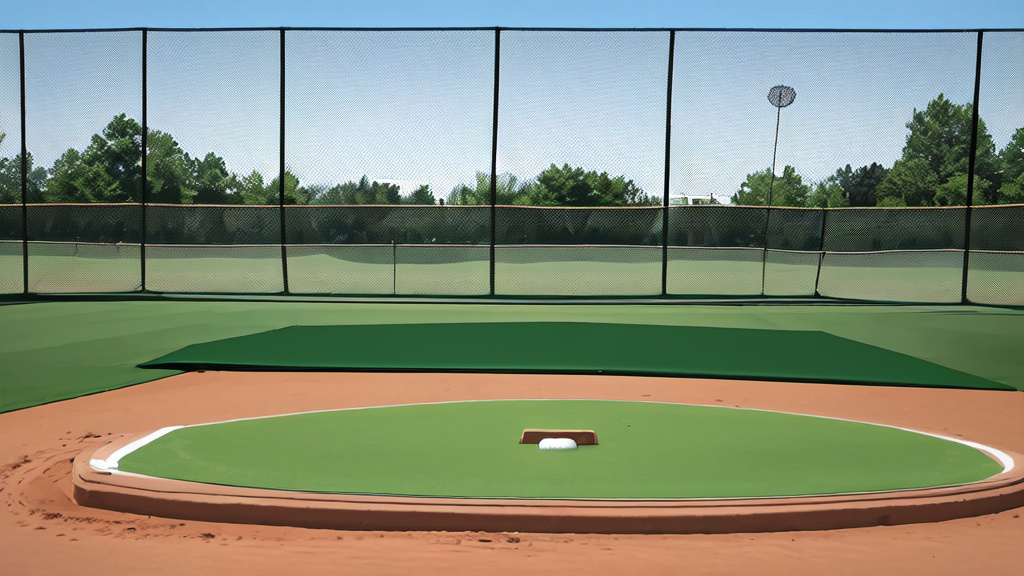
Most of the portable pitching mounds I reviewed replicate the front portion of the mound, meaning the slope from the rubber down to the landing area. They do not replicate the full 18-foot diameter of a regulation mound because that would make them impossibly large to transport. This is perfectly acceptable for training purposes. The critical dimensions are the height at the rubber, the slope angle down the front of the mound, and the size of the landing area, and the quality mounds in this review nail those specs accurately.
When shopping for a portable pitching mound, always verify the height specification matches your level of play. An adult pitcher training on a six-inch mound is not getting the proper slope training, and a ten-year-old training on a ten-inch mound is dealing with a much steeper angle than they will see in games. The VEVOR’s adjustable height is genuinely useful here, as it can be set to match different age-group specifications. The premium mounds are fixed at ten inches, which is correct for high school and above. If you coach multiple age groups, you may need mounds at different heights or an adjustable option to cover all of your portable pitching mound dimensions needs.
How to Choose the Right Portable Pitching Mound
With five solid options laid out, the question becomes: which one is right for your specific situation? After testing all of them, I have developed a clear framework for making this decision. It comes down to four factors: who is using it, where it will be used, how often it needs to move, and what you can afford.
Who is using it? High school level and above should invest in a regulation-height mound with a realistic surface: the ProMounds, Portolite, or True Pitch. Youth players developing basic mechanics can start with the VEVOR’s adjustable height and lower price. Incorporate consistent throwing drills alongside mound sessions for complete development.
Where will it be used? If the mound lives primarily in one location, prioritize feel and durability over portability. The ProMounds and True Pitch excel as semi-permanent installations. If it needs to travel regularly, the Portolite’s two-piece design or the Aeroform’s light weight become significant advantages. Consider pairing your portable pitching mound with a pitching machine for comprehensive training.
How often does it need to move? If you are moving it daily, the Aeroform at 65 pounds or the VEVOR at 50 pounds saves enormous effort versus wrestling a 200-pound ProMounds onto a truck. If the mound moves once or twice a season, even the heaviest options are manageable.
What is your budget? A $150 VEVOR used consistently is infinitely better than a $1,500 Portolite sitting in storage because nobody wants to move it. Buy the best mound you will actually use regularly.
Portable Pitching Mound Maintenance and Care Tips
A quality portable pitching mound represents a significant investment, and proper maintenance will extend its life dramatically. Here are the care practices I have learned through years of managing mound equipment for multiple programs.
Keep it clean. After each use, brush off dirt, clay, or debris. A stiff-bristled push broom works well for turf surfaces like the Portolite and True Pitch. For the ProMounds gel-coat, a damp cloth is sufficient.
Store it properly. Whenever possible, store your portable pitching mound indoors or under cover. Prolonged sun exposure degrades turf surfaces, and foam-based mounds like the Aeroform are susceptible to moisture damage. A quality tarp cover works if indoor storage is not possible.
Inspect the rubber regularly. The pitching rubber can loosen over time. Check mounting hardware periodically and replace worn or cracked rubbers promptly. A loose rubber is both a slip hazard and an arm care concern, as pitchers unconsciously adjust mechanics to compensate.
Protect during transport. Wrap fiberglass mounds in blankets during transit to prevent edge chips and cracks. The Portolite benefits from edge protectors on interlocking surfaces.
Address surface wear proactively. Some manufacturers sell replacement turf patches for worn push-off areas. A small repair in year two can prevent a full replacement in year three. Always set your mound on a flat, level surface to avoid slope asymmetries that can affect mechanics.
Pricing and Where to Buy
Finding the right portable pitching mound for sale at the best price requires shopping around. Prices vary significantly between retailers, and seasonal sales can offer meaningful savings. Here is what I have found in terms of pricing and availability.
The ProMounds Professional Practice Mound retails for $800 to $1,000 and is available directly from ProMounds and through major sporting goods retailers. End-of-season sales can bring prices to the lower end of that range. The Portolite Two-Piece Game Mound runs $1,200 to $1,500 from Portolite directly and select baseball specialty retailers. Programs purchasing multiple Portolite pitching mounds may negotiate volume pricing. The True Pitch 202-6A typically sells for $900 to $1,100 through major online retailers and school athletic supply companies that may offer institutional pricing.
The VEVOR Portable Pitching Mound is priced at $150 to $300 and is widely available on Amazon and VEVOR’s website. Coupon codes and deals frequently bring the price even lower. The Aeroform Portable Mound sells for $400 to $600 through baseball specialty retailers, though availability can be more limited than the bigger brands.
Regardless of which portable pitching mound for sale you choose, factor in shipping costs. These are large items, and shipping can add $50 to $200 to the total price. Always check the total delivered price when comparing options across sellers.
Pros and Cons Summary
To help you quickly compare the strengths and weaknesses of each portable pitching mound, here is a concise pros and cons breakdown for each model I tested.
ProMounds Professional Practice Mound
- Pros: Exceptional durability, rock-solid feel, regulation specs, proven with college programs, weather-resistant gel-coat, generous landing area
- Cons: Very heavy at 200 lbs, single-piece limits transport, requires multiple movers, does not fit through all doorways
Portolite Two-Piece Game Mound
- Pros: Best surface feel tested, NCAA approved, two-piece design, outstanding durability, cushioned landing area, fits through doorways
- Cons: Most expensive at $1,200-$1,500, still needs two people per half, beyond many youth program budgets
True Pitch 202-6A
- Pros: Solid fiberglass, good value, regulation specs, trusted by high school programs, natural-looking turf surface
- Cons: Single-piece at 185 lbs needs multiple movers, slightly smaller landing area, turf wears faster under heavy daily use
VEVOR Portable Pitching Mound
- Pros: Extremely affordable, lightweight at 50 lbs, adjustable height, one-person setup under a minute, great for youth
- Cons: Rubber surface lacks game-day feel, flex during hard throwing, shorter lifespan, not suitable as competitive program’s primary mound
Aeroform Portable Mound
- Pros: Excellent portability at 65 lbs, good turf surface, one-person carry, solid mid-range price, ideal for travel teams
- Cons: Foam less durable than fiberglass, compression under aggressive pitchers, three-to-five-year lifespan, limited retail availability
Final Verdict: Which Portable Pitching Mound Should You Buy?
After extensively testing all five of these portable pitching mounds over two full seasons with dozens of pitchers across multiple age groups, here are my clear recommendations based on your situation.
Best overall: Portolite Two-Piece Game Mound. Unmatched surface feel, NCAA approval, and two-piece portability make it the gold standard for serious programs.
Best value: True Pitch 202-6A. Regulation-quality fiberglass construction at a price accessible for high school programs. Gets the fundamentals right and lasts for years.
Best for facilities: ProMounds Professional Practice Mound. Built like a tank for semi-permanent installation. If it stays in one place, nothing beats it for durability and feel.
Best budget pick: VEVOR Portable Pitching Mound. Provides essential slope training at a price that removes all financial barriers. The adjustable height is a genuine bonus for growing pitchers.
Best for travel: Aeroform Portable Mound. One person can handle it, and the turf surface delivers decent feel for teams always on the move.
No matter which portable pitching mound you choose, the most important thing is that your pitchers are getting regular reps off a slope. Combined with proper arm care routines, consistent throwing drills, and quality instruction on grips like the four seam fastball and curveball, a mound that lets them train the way they compete closes one of the biggest gaps in pitcher development.
Frequently Asked Questions
What are the regulation dimensions for a pitching mound?
At the MLB, NCAA, and high school levels, a regulation pitching mound is 18 feet in diameter with a height of 10 inches. The pitching rubber measures 24 inches by 6 inches, positioned 60 feet 6 inches from home plate. The front slope drops approximately 1 inch per foot for the first 6 feet. Portable pitching mounds replicate the front section, including proper height, slope angle, and rubber placement, which are the most critical portable pitching mound dimensions for training. Youth leagues use different specs, with Little League requiring a 6-inch mound at 46 feet.
Can I use a portable pitching mound indoors?
Yes, indoor use is one of the primary reasons programs invest in portable pitching mounds. All five mounds reviewed work well on gym floors, turf facilities, and concrete. Place a rubber mat beneath the mound on finished gym floors to prevent scuffing. The mound should sit on a flat, level surface for proper performance.
What is the best surface material for a portable pitching mound?
Artificial turf over a solid substrate, whether foam or fiberglass, provides the most realistic game feel. Turf gives your cleats something to grip, similar to how spikes interact with packed clay on a dirt mound. The Portolite’s turf-over-foam construction is the gold standard for surface feel among portable mounds. Fiberglass with a gel-coat finish, like the ProMounds, is more durable but does not quite replicate the natural turf feel as closely. Rubber surfaces, like on the VEVOR, are the least realistic but are adequate for basic training and work fine with athletic shoes rather than cleats, which can be an advantage for young players who may not own proper baseball cleats yet.
Is there a weight limit for portable pitching mounds?
The fiberglass models from ProMounds and True Pitch support well over 300 pounds. The Portolite’s dense foam core is similarly robust. The VEVOR is typically rated for 250 to 300 pounds. The Aeroform handles normal-sized pitchers fine but may compress more under very heavy athletes. For standard-sized pitchers, weight limits are rarely a practical concern.
Are there portable pitching mounds designed specifically for youth players?
Yes. Several manufacturers offer youth-specific portable pitching mounds with reduced heights of 4 to 6 inches to match Little League specifications. The VEVOR’s adjustable height (6 to 10 inches) is the most flexible option for youth use. If your young pitcher will be moving up to a regulation mound within a year or two, the adjustable VEVOR makes the most financial sense.
Can I build a DIY portable pitching mound?
It is possible to build a DIY portable pitching mound using plywood, lumber, and artificial turf. However, I generally advise against it for serious training. Getting the slope angle precisely right is critical, and an incorrect slope can ingrain bad habits and increase injury risk. The VEVOR at $150 to $300 gives you a properly engineered slope for less than most DIY builds cost in materials alone. If you are handy and follow precise portable pitching mound dimensions specifications, a DIY mound can work for casual backyard practice.
How long does a portable pitching mound last?
Lifespan varies significantly by construction type and usage intensity. Fiberglass mounds like the ProMounds and True Pitch can last seven to fifteen years or more with proper care, even under heavy program use. Portolite pitching mounds have a similar lifespan thanks to their dense foam core and durable turf surface, with many programs reporting eight-plus years of reliable service. Foam-based mounds like the Aeroform typically last three to five years before the foam compresses enough to affect performance and slope accuracy. The VEVOR and similar budget mounds generally have a two-to-four-year lifespan under regular use before the rubber surface degrades significantly. Proper storage, cleaning, and proactive surface maintenance can extend the life of any portable pitching mound well beyond these baseline estimates.
Do I need a different mound for windup versus stretch pitching?
No, a single quality portable pitching mound accommodates both the full windup and the stretch delivery. As long as the rubber is regulation size and properly mounted, you can practice both on any standard portable mound. All regulation-size mounds in this review provide adequate landing area for both deliveries. The VEVOR may feel slightly cramped for tall pitchers in the windup, but works fine for stretch work and most youth pitchers.