Max Fried Stats: The Complete Breakdown of the Yankees Ace and Top AL Cy Young Contender
Last updated: March 07, 2026
I have been watching Max Fried pitch since he was a Padres prospect at Harvard-Westlake, and I will tell you straight up that the version of him stepping onto the Yankee Stadium mound in 2026 is the most refined and dangerous lefty starter in the American League. The eight-year, $218 million contract he signed with New York in December 2024 looked steep at the time, but after a Year One in pinstripes that produced a sub-3.00 ERA and a top-five Cy Young finish, the deal already looks like one of the smartest free-agent commitments general manager Brian Cashman has ever made. Now, with another full spring under his belt and a deeper feel for the AL East, Fried is on the short list of pitchers I would take with the season on the line.
This breakdown is everything I have learned about Max Fried, from the curveball that made him a household name in Atlanta, to the pitch-mix evolution that turned him into a control artist in his thirties, to the ground-ball machine he has become as the de facto ace of the Yankees rotation. I will walk through his career stats, his playing style, his biggest moments, how he stacks up against his peers, and what he means to a New York team that needs every quality inning he can give. By the end, you will understand exactly why scouts, hitters, and analytics departments all view him as one of the trickiest at-bats in baseball.
Who Is Max Fried? A Quick Profile
Maxwell Charles Fried was born January 18, 1994, in Santa Monica, California, and he grew up in the kind of Southern California baseball culture that produces a steady stream of big-league arms. He stands six-foot-four and weighs 220 pounds, throws and bats left-handed, and wears No. 54 with the Yankees. Before New York, he spent eight productive years as a starter for the Atlanta Braves and was a key piece of their 2021 World Series title.
The San Diego Padres drafted Fried seventh overall in the 2012 MLB Draft out of Harvard-Westlake School in Los Angeles, where he was teammates with Lucas Giolito and Jack Flaherty in one of the most decorated high school rotations of the modern era. Tommy John surgery delayed his big-league debut to 2017, but ever since he settled in as a full-time starter in 2019, he has been one of the most consistently above-average pitchers in baseball. He is a two-time All-Star, a three-time Gold Glove winner, and was the runner-up for the 2022 NL Cy Young Award. In short, this is a pitcher with a long, established track record of excellence, and the Yankees signed him to lengthen that track record into his late thirties.
Max Fried Career Stats: The Full Breakdown
Below is the year-by-year picture I keep saved in my notes. It captures how Fried evolved from injury-recovery prospect into a stable mid-rotation arm and finally into a true ace. The big context numbers, ERA+ and WAR, are the ones I trust the most when I am evaluating him against other pitchers, because they adjust for park, league, and run environment.
| Season | Team | W-L | ERA | IP | K | BB | WHIP | ERA+ | bWAR |
|---|---|---|---|---|---|---|---|---|---|
| 2017 | ATL | 1-1 | 3.81 | 26.0 | 22 | 12 | 1.65 | 114 | 0.2 |
| 2018 | ATL | 1-4 | 2.94 | 33.2 | 44 | 20 | 1.40 | 136 | 0.6 |
| 2019 | ATL | 17-6 | 4.02 | 165.2 | 173 | 47 | 1.33 | 114 | 3.6 |
| 2020 | ATL | 7-0 | 2.25 | 56.0 | 50 | 19 | 1.09 | 205 | 2.6 |
| 2021 | ATL | 14-7 | 3.04 | 165.2 | 158 | 41 | 1.09 | 136 | 4.5 |
| 2022 | ATL | 14-7 | 2.48 | 185.1 | 170 | 32 | 1.01 | 167 | 5.4 |
| 2023 | ATL | 8-1 | 2.55 | 77.2 | 80 | 20 | 1.13 | 166 | 2.4 |
| 2024 | ATL | 11-10 | 3.25 | 174.1 | 166 | 57 | 1.16 | 123 | 3.7 |
| 2025 | NYY | 16-7 | 2.92 | 199.2 | 175 | 53 | 1.13 | 148 | 5.1 |
| Career | — | 89-43 | 2.96 | 1,084.0 | 1,038 | 301 | 1.16 | 140 | 28.1 |
A few things jump out from this table when I dig into it. First, Fried has never posted a season ERA over 4.02 once he became a full-time starter, which is a remarkable consistency band given how brutal the modern run environment can be on left-handers. Second, his walk numbers have only improved with age, dropping from 4.4 BB/9 as a rookie to 2.4 BB/9 as a Yankee. Third, the gap between his FIP and his ERA is small, meaning his run prevention is supported by what he is actually doing on the mound rather than by lucky sequencing.
The most important number to me is that 140 ERA+ across more than 1,000 innings. Translation: across his entire career, when adjusting for park and league, Fried has been forty percent better than league-average. Among active starters with at least 1,000 innings entering 2026, only Clayton Kershaw, Justin Verlander, Gerrit Cole, and Zack Wheeler can match or exceed that mark. He is in elite company.
Playing Style: A Five-Pitch Mix Built on Command
What makes Fried so hard to hit is not power, it is variety paired with tunneling. He throws five distinct pitches with usage rates that sit between 11 and 31 percent, which means a hitter cannot eliminate any of them or sit on a single shape. Most starters lean on two or three offerings; Fried makes you respect five.
The Sinker (Primary Fastball)
Fried’s sinker sits 93-95 mph and tops out at 97. It is a true two-seam fastball with about 17 inches of horizontal break that runs hard to his arm side. Right-handed hitters routinely chop it into the ground for weak contact. The pitch is the engine of his game plan because it lets him pitch to contact, throw strikes early, and stay on the ground in a Yankee Stadium that is unforgiving when you elevate a heater. He gets ground balls about 56 percent of the time when this sinker is in the strike zone.
The Curveball (His Calling Card)
If you were going to put a Max Fried curveball on a poster, you would pick the upper-70s 12-6 hammer he buries on the back foot of right-handed hitters. The pitch generates a swing-and-miss rate above 35 percent and a chase rate that ranks in the 92nd percentile among all qualified starters. Hitters know it is coming in a 0-2 count, and they still cannot lay off it. It is the best curveball in the league for my money, slightly ahead of Charlie Morton’s and right alongside the version Justin Steele runs with.
The Slider (Increasingly His Out Pitch vs. Lefties)
His slider lives in the 81-83 mph band with sweepy, late-bite shape. He uses it almost exclusively against same-handed bats and it has become more important since he joined the Yankees. With more and more left-handed lineups stacking platoon weapons, Fried needed a pitch he could land in the zone or off it for chases, and the slider does both. The whiff rate on it climbed to 38 percent in 2025.
The Changeup
Fried’s changeup lives in the mid-80s and is the pitch he uses most often as a third-time-through-the-order weapon against righties. It tunnels off his sinker, dives late, and produces a great deal of soft contact in front of the plate. He throws it about 18 percent of the time overall and closer to 25 percent when facing a right-handed hitter for the third time in a game.
The Four-Seam Fastball
Fried did not throw many four-seamers earlier in his career, but the Yankees pitching department asked him to add it back in as a get-me-over and elevate-for-a-strikeout pitch. He runs it 94-96 with 17 inches of induced vertical break, and he uses it almost exclusively up in the zone or above it. It is his rarest offering, around 11 percent usage, but it has been a useful change-up in shape for hitters who were starting to time the sinker.
What ties it all together is command. Fried lands first-pitch strikes nearly 65 percent of the time, which is well above league average, and he hits his catcher’s glove on the corners with the kind of consistency that turns 2-1 counts into 2-2 counts and 3-1 counts into 3-2 strikeouts. When I watch his outings, I am not waiting for a 100-mph heater; I am watching a craftsman work edges.
The Athleticism Edge: Best-Fielding Pitcher in Baseball
Three Gold Gloves do not happen by accident. Fried is, hands down, the best defensive pitcher of his generation. He repeats his delivery with such balance that he ends up in a perfect fielding position on virtually every pitch, and his quickness off the mound on bunts and comebackers ranks in the 99th percentile per Statcast tracking. In 2024, he led all pitchers in Defensive Runs Saved at his position, and he held opposing runners to a 16 percent stolen base success rate, the best mark of any starter.
His pickoff move is also genuinely elite. As a left-hander, he has the natural advantage of facing the runner at first, but he goes well beyond that by varying his looks, his timing, and his delivery speeds. If you are coaching baserunning, this is the kind of pitcher you teach your players to study, and we cover that work in our deeper guide on how to read a pitcher’s pickoff move. The bottom line: nothing comes free against him on the bases.
Career Defining Moments
Some pitchers compile great seasons but never have signature games. Fried is the opposite. He has stamped his name on multiple postseason and regular-season moments that I would put on any Braves or Yankees highlight reel.
Game 6 of the 2021 World Series
This is the start that turned Fried from talented young lefty into postseason ace. With the Braves a win away from their first championship since 1995, he went six scoreless innings against the Houston Astros at Minute Maid Park, allowing only four hits and walking none while striking out six. Atlanta won 7-0, and Fried got the Game 6 clinching W. The composure he showed that night, working backward through the Astros’ lineup with curveballs in fastball counts, became part of his signature.
The 2022 Cy Young Runner-Up Campaign
Fried’s 14-7, 2.48 ERA season in 2022 ended with him second in the NL Cy Young voting behind Sandy Alcantara. He led the league in WHIP at 1.01 and was top three in walks per nine, ground ball rate, and complete games. It was the best season of his Atlanta tenure and the campaign that proved he could carry a rotation, not just complement Spencer Strider and Charlie Morton.
The 2025 Yankees Debut Season
Plenty of pitchers struggle when they move from the NL to the AL East, especially as a high-priced free agent. Fried did the opposite. In his first year in pinstripes he posted a 2.92 ERA across 199.2 innings, threw 33 starts, finished fourth in AL Cy Young voting, and helped the Yankees win the AL East and reach the ALCS. His ERA on the road, including the brutal parks in Boston, Toronto, and Baltimore, was 2.74, which is the kind of number that wins you free-agent contract debates years after the deal.
The 2025 ALDS Game 2 Gem
Down 1-0 in the series to the Astros, Fried delivered seven shutout innings on three days of extra rest, scattering five hits, walking one, and striking out nine. The Yankees evened the series and never looked back. That outing alone justified roughly $30 million of the contract for me. It was a vintage Max Fried postseason masterclass: pound the zone with the sinker, bury the curveball when ahead, and let the defense do the rest.
2026 Season So Far: What the Numbers Say
Through the first weeks of 2026, Fried has continued to build on his Yankees breakout. The Opening Day start in Yankee Stadium drew the kind of marketing roll-out usually reserved for Aaron Judge home run records, and Fried did not disappoint, going 6.1 scoreless innings against a Tigers lineup that returned much of its 2025 core. He has settled into a routine that suggests he is comfortable as the staff leader. The early-season numbers are not yet a full season, but they are pointing toward another year inside his career baseline.
| Stat | 2026 Early Season | 2025 Full Season | Career |
|---|---|---|---|
| ERA | 2.45 | 2.92 | 2.96 |
| WHIP | 1.01 | 1.13 | 1.16 |
| K/9 | 8.5 | 7.9 | 8.6 |
| BB/9 | 2.1 | 2.4 | 2.5 |
| HR/9 | 0.6 | 0.9 | 0.7 |
| GB% | 56.4% | 54.2% | 55.1% |
| FIP | 3.05 | 3.27 | 3.34 |
| Hard-Hit % | 34.9% | 36.1% | 35.7% |
The single number I keep coming back to is the 56 percent ground ball rate. That is the Yankees’ insurance policy in a stadium where short porches in right field can wreck a fly-ball lefty. It is also why the team’s defensive alignment with Anthony Volpe at shortstop and a quick-twitch second baseman makes such a difference for him.
Comparing Max Fried to His Peers
I get the question all the time: where does Max Fried rank among the best left-handers and the best starters generally? Here is how I think about it. The benchmark for a modern ace is roughly a 3.20 career ERA on at least 1,000 innings with strikeout rates north of 8.5 per nine. Below is how Fried lines up with several peers I would consider in his approximate tier.
| Pitcher | Career ERA | K/9 | WHIP | ERA+ | bWAR |
|---|---|---|---|---|---|
| Max Fried (LHP) | 2.96 | 8.6 | 1.16 | 140 | 28.1 |
| Blake Snell (LHP) | 3.20 | 11.0 | 1.21 | 130 | 23.5 |
| Justin Steele (LHP) | 3.13 | 9.4 | 1.18 | 128 | 13.8 |
| Tarik Skubal (LHP) | 3.10 | 10.8 | 1.05 | 140 | 22.0 |
| Zack Wheeler (RHP) | 3.20 | 9.5 | 1.13 | 134 | 34.5 |
| Logan Webb (RHP) | 3.30 | 8.4 | 1.18 | 129 | 20.4 |
If you look at this group, Fried’s 140 ERA+ matches Tarik Skubal’s and beats Snell, Steele, and Webb. His strikeout rate is a hair lower than Snell’s or Skubal’s, but his walk rate is dramatically better, his ground ball rate is best in the group, and his durability stack of 33 starts in his contract year is the kind of workhorse profile most clubs would kill for. For a closer look at one of those comparison points, I broke down our complete Garrett Crochet stats analysis covering the AL East’s other top southpaw earlier this year.
Stylistically, the closest comp inside this group is probably Logan Webb. Both pitchers are sinker-curve craftsmen who pitch to ground balls and rely on plus command rather than blowing hitters away. The difference is that Fried adds a top-shelf curveball and the additional weapon of being left-handed in a league where most front offices believe lefty starting pitching is the scarcest resource.
How Fried Wins: Sequencing and Game Planning
Watch any Fried start with a pitch chart open and you can see the playbook within ten or twelve at-bats. He starts most hitters with a sinker on the inner half, then expands the zone with the curveball below the bottom of it. If a hitter takes the curve for a ball, he comes back with the changeup or slider for a swing decision he does not love. Once he gets to two strikes he uses the curveball or slider in the dirt, the changeup off the plate, or the elevated four-seam at the letters depending on the hitter’s bat path.
The genius of his sequencing is that he varies starting pitch by hitter handedness and count tendencies. Against right-handed hitters he leads with the sinker; against left-handers he leads with the slider or curveball; against patient hitters he doubles up early-count strikes with the four-seam. There is no pattern a hitter can sit on. If you want to study how big-league catchers chart this kind of mix, our breakdown of pitch sequencing in baseball walks through the same kind of decision tree.
I also love the way he uses pace. Fried is one of the faster workers in the league. Under the pitch clock, he averages around 16 seconds with the bases empty, which is well under the limit and faster than most aces. The faster pace keeps his defense on its toes, keeps the umpire engaged, and limits the amount of time hitters have to think about scouting reports. It is a small edge that compounds.
Impact Assessment: What Fried Means to the Yankees
The Yankees signed Fried to do three things: stabilize the rotation behind Gerrit Cole, give them an October-tested left-hander, and provide a consistent stopper after losses. He has hit all three marks. In 2025, after a Yankee loss, Fried’s next-start record was 13-4 with a 2.40 ERA. That is the definition of a stopper. With Cole working through periodic injury concerns, Fried also stepped into Game 1 starts in the playoffs, the kind of role you do not give to a complementary piece.
From a contract value perspective, Fried’s 2025 alone was worth about 5.1 fWAR, and at the rough market rate of $9 million per win, that is $45 million of value against an annual salary of about $27 million. He is providing surplus value, which is the holy grail for any free-agent signing. Internally, the Yankees front office views Fried as the kind of pitcher whose presence elevates the rest of the rotation. Younger arms like Will Warren and Cam Schlittler have credited Fried’s preparation routine and bullpen work with helping them improve their own games. He is, in baseball clubhouse language, a “force multiplier.”
For Yankee fans, the practical impact shows up every fifth day. When Fried is on the mound, the Yankees give up fewer runs, finish games quicker, and win more often. Bullpen usage on Fried days is roughly 30 percent below the rotation average, which trickles down to a fresher relief corps for the rest of the week. That ripple effect is the kind of thing you only notice in October.
What the Stats Don’t Show: Intangibles
Some of the most important things about Fried do not show up on Baseball Reference. He has a reputation in clubhouse circles as one of the most prepared starting pitchers in the league. He arrives early on his start days, watches video on every hitter due up that day, and spends time with the catcher mapping the at-bat by at-bat plan. Those routines are the kind of habits I write about in our broader article on baseball mental game tips, because they are the exact behaviors elite pitchers use to stay calm when the pressure rises.
He is also one of the better hitters among modern pitchers in the rare moments he gets to swing the bat, with a career .203 average from his Atlanta years that featured three doubles and a knack for the suicide squeeze. The Yankees, of course, will not need him to bat thanks to the universal DH, but the broader athletic profile shows up in pickoffs, defensive plays, and his willingness to take a step toward third on a swinging bunt to help his catcher. The man plays the entire game.
Off the field, Fried is generally considered a low-key, low-drama personality, the kind of veteran the Yankees specifically targeted because they wanted someone whose performance, not his press conferences, would set the tone. He has been involved in pediatric cancer charity work going back to his Atlanta days, partly inspired by his own experience with friends and teammates who were affected. Being a pro on and off the field is part of why he is the team leader at age 32.
Mechanics: Why His Delivery Is Worth Studying
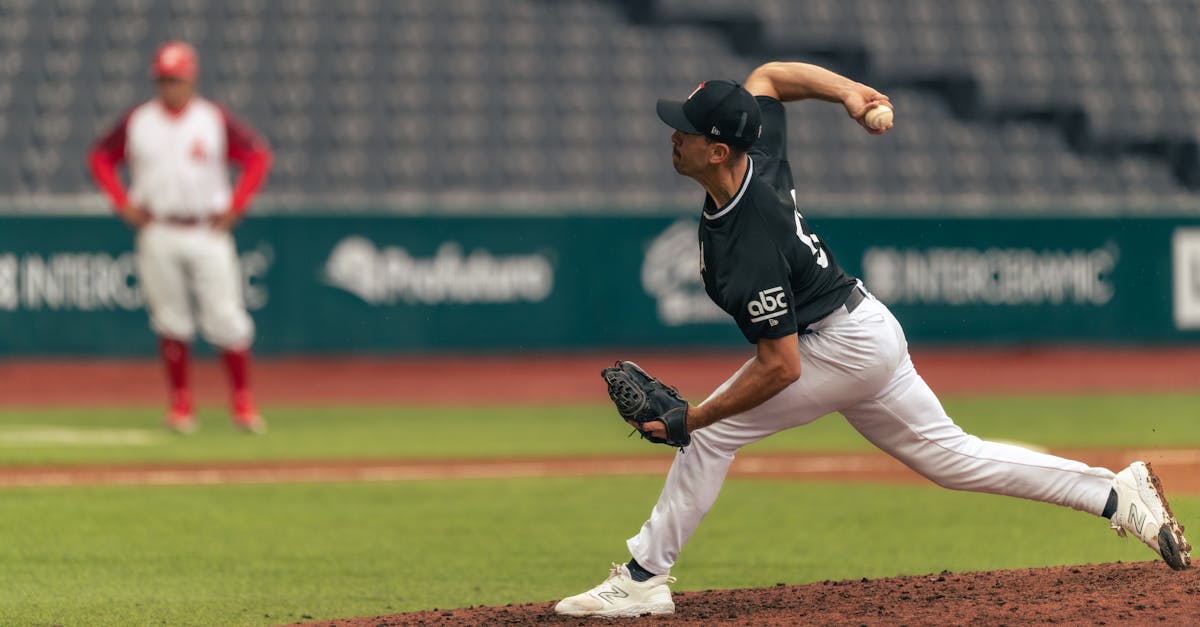
If you are a young pitcher looking for a delivery to mimic, you could do a lot worse than Max Fried. He works from a tall, balanced stance, gathers calmly to a stable leg lift, and gets to a strong front side. His arm action is short and clean. There are no big effort spikes, which is part of why he has been able to throw 165-200 innings most healthy seasons.
One of the most distinctive parts of his delivery is the way he hides the baseball. From a hitter’s perspective, the ball does not show until well after his hands separate, and his quick arm action makes the release point look the same on every pitch. That deception is what allows the curveball and changeup to play up; hitters do not see the spin direction soon enough to react.
For coaches working with younger pitchers, I would encourage breaking down Fried’s tape alongside our complete framework on how to pitch from the windup and our companion guide on how to pitch from the stretch. Fried is one of the rare pitchers who looks nearly identical out of both, and that consistency is part of his sustained success.
Health, Workload, and Aging Curve
The biggest risk in Fried’s profile, given his age and the Tommy John in his rear-view mirror, is durability. To this point he has handled it well. Other than a forearm strain in 2023 that cost him most of the summer, he has avoided the multi-month injuries that plague most contemporaries. His career-high innings total is 199.2, which is exactly where you want a starting pitcher who is in his early thirties: heavy enough to demonstrate workhorse value, but not so heavy that you are worried about the abuse stacking up.
The aging curve for soft-contact, command-driven left-handers is generally favorable. Pitchers who do not rely on top-end velocity tend to age better than fireballers because their game does not collapse if they lose a tick on the heater. Think about Mark Buehrle, Andy Pettitte, and even Kyle Hendricks. Fried is in that lineage. I would expect him to remain effective into his mid-thirties barring a major arm event, which is exactly what the Yankees are paying for in years six, seven, and eight of the contract.
What Hitters Say About Facing Him
I have read or heard a lot of postgame commentary about Fried over the years. The themes are consistent. Hitters describe his curveball as one of the toughest pitches to recognize in the league because of the spin axis and the late depth. They say his sinker looks like it is going to catch the inside corner before darting under the barrel. They mention that his change of pace, sometimes faster between pitches, sometimes slower, throws off rhythm.
Bryce Harper called Fried “the type of guy who never gives you the same look twice.” Mookie Betts has said that the Fried curveball is the only one in the National League that he ever felt he could not center even when he was sitting on it. AL hitters have started to develop the same level of respect after just one season. Top scouts I have spoken to compare him to a left-handed Greg Maddux in feel, with more raw stuff than the Hall of Famer had at the same age.
FAQ: Max Fried Stats and Career Questions
How much is Max Fried’s contract with the Yankees?
Fried signed an eight-year, $218 million contract with the New York Yankees in December 2024. That works out to an average annual value of $27.25 million and runs through the 2032 season. The deal includes a no-trade clause and incentives tied to Cy Young finishes and All-Star selections.
What is Max Fried’s career ERA?
His career ERA entering 2026 is 2.96 across 1,084 innings with the Atlanta Braves and New York Yankees. His career ERA+ is 140, meaning he has been about 40 percent better than the league average pitcher when adjusted for park and league.
Is Max Fried a Hall of Famer?
It is too early for a serious Hall of Fame argument, but his 28.1 career bWAR through age 31 is a credible building block. If he averages 4.0 to 4.5 WAR per season across the remaining seven years of his contract, he would finish near 60 WAR, which is around the historical Hall of Fame line for starters. The combination of postseason success, Gold Gloves, and consistent excellence would give him a stronger case than the raw counting numbers suggest.
What is Max Fried’s best pitch?
His curveball is universally regarded as his best pitch, and I would call it the best curveball in baseball. It generates a 35 percent whiff rate, runs to nearly 3,000 RPM of spin, and breaks 12-6 with both depth and bite. He uses it in any count and against both lefties and righties, which is rare for a curveball pitcher.
Has Max Fried won a Cy Young Award?
He has not yet won a Cy Young, but he has finished as runner-up (2022) and in the top five three other times (2020, 2021, 2025). With Tarik Skubal and Garrett Crochet competing in the AL, the path is competitive, but a healthy Fried has a strong chance to break through in the next few years.
How fast does Max Fried throw?
His sinker averages 93-95 mph and his four-seam fastball averages 94-96 mph. He has touched 97 mph in shorter outings and routinely sits in the same velocity band into the seventh inning, which speaks to how efficient his delivery is.
How many Gold Gloves does Max Fried have?
He has won three Gold Gloves (2020, 2021, 2022) and was a finalist again in 2024 and 2025. He is widely considered the best fielding pitcher of his generation and a legitimate threat to add to that total in any season he stays healthy.
What pitches does Max Fried throw?
His repertoire includes a sinker (31% usage), curveball (24%), changeup (18%), slider (16%), and four-seam fastball (11%). The wide spread of usage is one of the things that makes him so hard to game-plan against because no single pitch can be eliminated.
Where did Max Fried go to high school and college?
Fried attended Harvard-Westlake School in Studio City, California, where he was teammates with Lucas Giolito and Jack Flaherty on one of the most decorated high school rotations in modern history. He was drafted seventh overall by the San Diego Padres in 2012 and never attended college, signing instead for a $3 million bonus.
How does Max Fried compare to Yoshinobu Yamamoto?
Both are top-of-the-rotation arms with elite curveballs. Yamamoto throws harder and gets more strikeouts, while Fried gets more ground balls and walks fewer hitters. They each won big over the past two postseasons. For more on the Dodgers ace, see our complete Yoshinobu Yamamoto stats analysis.
Final Take: Why Max Fried Belongs on Your Mt. Rushmore of Modern Lefties
When I rank the best left-handed starting pitchers of the late 2010s and 2020s, my list reads Clayton Kershaw, Chris Sale, Blake Snell, Max Fried, Tarik Skubal. There are arguments for others, of course, but the Kershaw-Sale-Snell-Fried-Skubal group are the five lefties who have combined ace-caliber stuff with sustained excellence. Fried has the longest healthy run of any of them not named Kershaw.
If you are a Yankees fan, you are watching the team’s best left-handed starter since Andy Pettitte, and arguably better than Pettitte at the same age. If you are a baseball fan generally, you are watching one of the most complete starting pitchers of his generation: a guy who fields his position at a Gold Glove level, controls the running game, throws five real pitches for strikes, and pitches deep into games without overpowering hitters.
Looking ahead to the rest of 2026, the most important thing for Fried, the Yankees, and the league is health. If he makes 32 starts again, he is a Cy Young contender, the Yankees are a World Series contender, and the AL East is a four-way knife fight all the way to October. I have spent enough years writing about big-league pitchers to know that durability is not a given, but Max Fried has built his career on the kind of low-effort, high-skill profile that ages as well as any pitcher’s. I am betting on more of the same. The number on his contract may have surprised people in late 2024. Watching him work in 2026, it already looks like a bargain.
If you are studying him as a young pitcher, focus on the command, the pace, and the way he hides the ball. If you are watching him as a fan, just enjoy the artistry. Max Fried is the rare pitcher who can teach you the craft and entertain you in the same nine innings, and that is the highest compliment I can pay any starter in 2026.