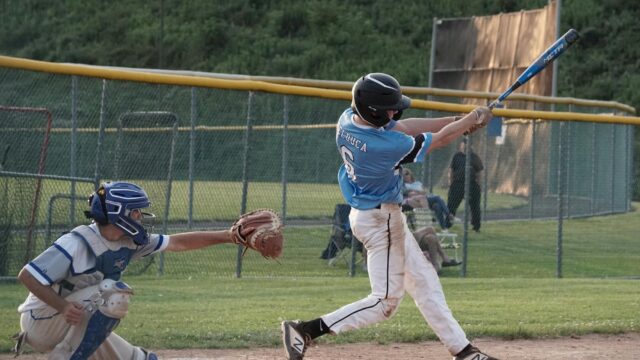
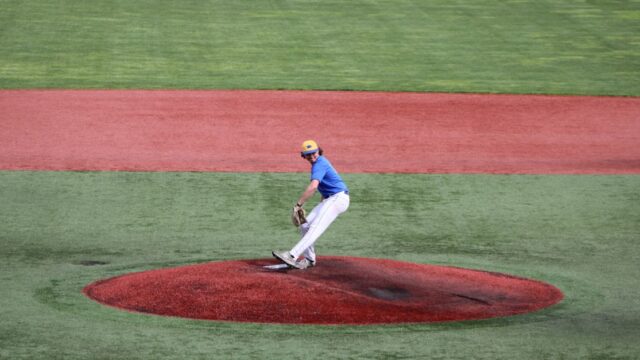
How to Pitch Inside in Baseball: Inner Third Targets, Sequencing, and Drills for Every Level
Last updated: March 29, 2026
I have been coaching pitchers for almost two decades, and the single skill that separates a kid who throws hard from a pitcher who actually pitches is the willingness, and the technical ability, to attack the inside half of the plate. It sounds simple. It is not. Pitching inside is a craft built on conviction, command, sequence, and a clear plan for what you want the hitter to feel in the box. When I sit in the dugout in spring 2026 watching staffs across high school, college, and the affiliated minor leagues, the biggest skill gap I see between dominant arms and pedestrian ones is not velocity. It is the courage and the precision to live on the inner third when the count and the lineup demand it.
This is a long, detailed guide on how to do that safely, intelligently, and effectively at every level of the game. I will walk you through the why, the mechanics, the grips, the sequencing, the drills, and the most common errors I see — including the ones I made myself when I was young, dumb, and stubborn about my fastball. If you read this article straight through and apply the framework to your next bullpen, I am confident you will throw a better inside fastball within a week and own that part of the plate within a season.
Why Pitching Inside Matters More in 2026 Than Ever Before
The modern hitter is built to extend, to lift, and to cover the outer third with a flat, slightly upward bat path. Statcast data through the 2025 MLB season showed that hitters batted .310 with a .585 slugging percentage on pitches over the outer third of the plate, but only .238 with a .402 slugging percentage on pitches over the inner third when those pitches were located above the knees and below the chest. That is not a small gap. That is a 70-point batting average difference and nearly 200 points of slugging, on the same hitters, swinging the same bats, against the same pitchers, in the same season.
The inside pitch also drives the rest of the at-bat. When the hitter has to respect a 94 mph fastball off the inner edge, his hands move earlier, his front shoulder pulls a fraction sooner, and his ability to cover the down-and-away breaking ball collapses. That is the mechanism by which every great pitcher in the last fifty years has expanded the zone. You cannot tunnel a backdoor slider to a hitter who knows you are afraid to come inside. You cannot get a chase on the curveball below the zone to a hitter who is sitting outer third because you have shown him nothing else.
The pitch clock that arrived in 2023 and has been refined for 2026 has further sharpened this advantage. Hitters have less time to reset their feet between pitches, and an inside fastball that backs a hitter off forces a real mechanical and mental reset before the next delivery. I have watched pitchers steal three or four extra outs a game in spring 2026 just by knowing how to use the inner third as a tempo weapon.
What Coaches and Hitters Are Saying
Greg Maddux, talking with a group of minor league pitchers a few years ago, framed it the way I still teach it: “You don’t pitch inside to hit guys. You pitch inside so the outside half feels like Kansas. If they don’t move, you won. If they move, you also won.” That quote lives on my clipboard for a reason. It captures the whole purpose of the inside pitch in a single sentence.
Justin Verlander, in a 2024 interview, said it from the other side: “The fastball under your hands at 95 changes the entire at-bat. If I make you respect it, I can throw you anything for the next three pitches and you’re swinging defensively.” Hitters say the same thing in the cages. Aaron Judge has talked openly about how a single well-located fastball off the hands resets his timing and shrinks his coverage zone for the rest of the plate appearance.
From a coaching standpoint, Dan Haren, now working with young arms in the Diamondbacks system, put it bluntly during a 2025 pitching summit I attended: “You’re either a guy who can pitch in, or you’re a guy who hopes hitters chase. The first guy gets paid. The second guy gets released.”
The Three Targets on the Inner Third
The inside half is not a single target. I teach my pitchers to think of three distinct inside locations, each with a different purpose and a different acceptable margin of error. Knowing which one you are throwing — and being honest with your catcher about which one you can execute that day — is the foundation of everything else in this article.
| Inside Target | Location | Best Pitch Type | Primary Purpose | Acceptable Miss |
|---|---|---|---|---|
| Off the Hands | 4-6 inches inside, belt-to-letters | 4-seam fastball, cutter | Jam the hitter, break the bat, set up outer third | Further inside is fine; never middle-in |
| Inner Edge / Black | On or just inside the inside corner, belt level | 4-seam, 2-seam, cutter | Steal a strike, freeze the hitter, change the eye line | Off the plate is fine; never middle-middle |
| Front-Hip / Front-Foot | At the hitter’s front hip or front foot | Sinker, slider (back-foot to lefty) | Open swing, expose outer corner, lefty-righty matchup play | Hitting the foot is acceptable; never hanging the slider |
Notice that none of the acceptable misses involve the middle of the plate. That is the entire game. The inside pitch only works if your miss pattern goes further inside, not back over the plate. A 92 mph fastball off the hands jams the hitter. A 92 mph fastball that backs up to middle-in is a souvenir for someone in the third row.
Mechanics: How to Actually Get the Ball Inside
The pitchers I work with who struggle to come inside rarely have a grip problem. They have a direction problem. Their lower half is pulling them off to the glove side, their front side flies open, and the ball drifts back toward the middle of the plate because the body is no longer aimed at the inside target. The fix is not “throw harder inside.” The fix is to teach the body to stay closed longer and to finish through the inside target line.
1. Stride Direction
For a right-handed pitcher throwing inside to a right-handed hitter, the stride foot should land slightly closed of the target line — typically two to four inches to the third-base side of a direct line to home plate. That closed landing gives the arm more time to swing across the body and through the inside target. Pitchers who stride open to the glove side will drift their arm slot, and their inside fastball will leak back over the middle of the plate. I cue this as “land in your own footprint” — the stride foot should land on the same line as the back foot, not in front of it.
2. Front Side Discipline
The glove-side arm is the rudder for the entire delivery. To get to the inside corner, the glove must stay over the front knee or just outside of it through ball release. Pitchers who pull the glove out and away — what I call “pulling the door open” — lose direction toward the target and the ball runs back arm-side, which for a righty means arm-side miss to a righty is exactly the dangerous middle-in zone. Cue: “Tuck the glove over the knee, hold it there until the chest beats it.” If you want a deeper dive into how front side discipline ties into broader command, I cover the topic in detail in our article on pitching command drills.
3. Hip-Shoulder Separation
The single most important mechanical variable for an inside fastball is the angle of hip-shoulder separation at front foot strike. Pitchers who get their hips open while keeping the shoulders closed create the natural arm path needed to finish through the inside target. Average MLB hip-shoulder separation is between 40 and 60 degrees at front foot strike. Below 30 degrees, the arm has to do all the work, the slot drops, and the ball leaks back over the middle. Above 65 degrees, you risk injury. The window is real but it is also wide enough to work with.
4. Finish Through the Target
The throwing arm should finish across the body, with the chest pointed at the catcher’s inside knee for a right-on-right fastball. Pitchers who short-arm or cut off their finish leave the ball up and back over the plate. Long, complete extension toward the inside target is what creates both the velocity and the location you need.
Grips That Help You Live Inside
Different inside pitches do different things, and the grip is what gives you the movement profile you need. I do not believe in trying to throw every inside pitch with every grip. Instead, I match the grip to the inside target and the hitter. Here is the table I keep in the bullpen.
| Pitch | Grip Notes | Typical Velo (HS / College / Pro) | Best Inside Target | Use Vs. |
|---|---|---|---|---|
| 4-Seam Fastball | Across the seams, index and middle fingers on the horseshoe, light grip | 78-85 / 86-92 / 93-99 mph | Off the hands, up and in | Hitters who sit on offspeed, late swingers |
| 2-Seam Fastball | Along the seams, slight pronation at release, tighter grip | 76-83 / 84-90 / 91-96 mph | Front hip of lefty, in to righty’s hands | Pull-happy hitters, ground-ball situations |
| Cutter | 4-seam grip shifted slightly off-center, middle finger pressure | 76-82 / 83-88 / 88-94 mph | Inner edge, off the hands | Same-side hitters, opposite-field guys |
| Slider (Back-Foot) | Off-center grip, middle finger ridge, tilt around the throw | 72-78 / 78-84 / 84-90 mph | Back foot of opposite-side hitter | Two-strike counts, chase pitch |
| Sinker (Running) | Two-seam variant, supinate less, fingers stay behind the ball | 76-83 / 84-90 / 91-96 mph | Front-hip of opposite-side hitter | Double play counts, contact outs |
For deeper grip work on these specific pitches, I would point you toward our pieces on throwing a four-seam fastball and throwing a two-seam fastball, plus our complete baseball pitching grips guide which covers every pitch type in detail.
Sequencing: How to Set Up the Inside Pitch
An inside fastball thrown in a vacuum is just a fastball. An inside fastball thrown after the right setup pitches is an at-bat-ending weapon. The best pitchers in the game sequence inside pitches with a plan that accomplishes three things: it establishes the outer half early, it forces the hitter to commit to one half of the plate, and it finishes him on the side he is no longer covering.
Here is the framework I teach. It is not a script — it is a decision tree.
- Pitch 1 — Probe: Throw a fastball or sinker to the outer third. See where the hitter is on the timing, and watch his front foot. If he steps in toward the plate or has a closed stride, he is begging for something inside. If he opens up early, you can attack inside immediately.
- Pitch 2 — Establish: If he took the first pitch for a strike, throw another outer-third fastball or a soft pitch away to lock him onto the outer half mentally. If he fouled it, throw a breaking ball away to widen his eyes.
- Pitch 3 — Attack: Now go inside. Off the hands for a fastball, inner edge for a cutter, or front-hip for a sinker. The hitter’s eyes and feet are committed away — you are working in his blind spot.
- Pitch 4 — Finish: After an inside pitch, the hitter’s hands speed up and his front shoulder pulls. Now throw the breaking ball down and away or the changeup off the outer corner. The chase rate on this pitch in MLB increases by roughly 14 percent compared to the same pitch thrown without an inside setup.
If you want a deeper read on how to build entire at-bat plans, our piece on pitch sequencing in baseball is the natural follow-up.
The Inside Pitch and the Tunnel
One of the underrated reasons to develop a real inside fastball is that it expands your tunneling options. A pitcher who only throws to the outer third has one effective tunnel — fastball, changeup, slider, all starting on the outer half. A pitcher who lives inside as well has at least three useful tunnels, because the hitter cannot make a clean directional read at decision point. Modern research using Hawk-Eye tracking data shows that hitter swing decisions are driven by the perceived ball trajectory in the first 200 milliseconds after release. If your inside fastball and your outer-third changeup leave the hand on similar planes, the hitter cannot read which is which until it is too late. I cover the full mechanics of this in our piece on pitch tunneling in baseball.
Inside Vs. Same-Side and Opposite-Side Hitters
The inside pitch behaves differently depending on the matchup. I keep separate game plans for same-side and opposite-side hitters, and I expect every pitcher I work with to know the differences cold.
Same-Side Matchup (Righty vs. Righty, Lefty vs. Lefty)
The inside fastball off the hands is your hammer. The cutter on the inner edge is your scalpel. The back-foot slider is your kill pitch. Hitters in same-side matchups are most uncomfortable with hard stuff that starts in the middle of the plate and finishes off the hands or just inside the corner. Your job is to get to that pitch as often as the count and the lineup allow.
Opposite-Side Matchup (Righty vs. Lefty, Lefty vs. Righty)
The inside fastball still works, but it is harder to locate and the consequences of a miss back over the middle are worse — opposite-side hitters tend to be the ones who can pull a mistake. Here, the front-hip sinker is the inside weapon of choice. A two-seam running fastball that starts at the front hip of the opposite-side hitter and finishes on the inner edge is one of the most uncomfortable pitches in baseball. Cole Hamels built a Hall of Fame–level career on that pitch to right-handed hitters. The other option is the back-door breaking ball that starts off the plate inside and finishes on the inner corner for a called strike. That pitch requires elite command and an extremely committed hitter on the outer half.
Pitching Inside Without Hitting Anyone
The biggest reason young pitchers — and a lot of older ones — refuse to pitch inside is the fear of hitting the batter. That fear is legitimate. It is also fixable. The pitchers who hit hitters in the back or in the head are almost always pitchers who have no plan for the inside pitch and who only come in when they are frustrated, behind in the count, or trying to send a message. None of those situations should lead to an inside fastball. Inside pitches are a planned, repeated, committed location — not an emotional outburst.
The mechanical sources of an inside fastball that hits the batter are well documented and almost always fall into one of these four buckets. Diagnose which one is yours and you eliminate the danger almost entirely.
- Cutting off the finish. The arm stops short across the body, the slot drops, and the ball runs further arm-side than intended. Fix: full chest-to-glove-side finish on every inside fastball in the bullpen.
- Yanking the front side. The glove flies open, the chest rotates too early, the ball rides up and in. Fix: glove stays over the front knee until release.
- Overthrowing for velocity. Pitchers who try to add 2 mph on the inside pitch lose command of it. Fix: throw the inside fastball at 92-95 percent effort, not 100 percent.
- Targeting wrong. Aiming at the hitter instead of the catcher’s glove off the inner edge. Fix: pick a small target six inches inside the inside corner, at belt height, and throw there.
If you do hit a hitter — and every pitcher who throws inside eventually will — own it, ask after him, and keep throwing inside next batter. Pitchers who get gun-shy after a HBP and abandon the inside pitch never get it back. The hitter learns immediately and the rest of the lineup tells each other in the dugout.
Drills That Build the Inside Fastball
I run the same six drills with every pitcher who wants to develop an inside pitch. They build, in order, direction, command, conviction, and game-speed execution. I would do these drills two or three times a week during the season and four times a week in the offseason.
Drill 1: The Dummy Drill
Put a hitting tee or a dummy batter on the inside half of the plate. The pitcher’s job is to throw 15 fastballs that pass within four inches of the dummy without hitting it. This drill calibrates the brain to the inside target line. Most pitchers miss low and away on the first five reps. By rep 12, they are dialed in. Track the percentage of pitches that pass through the four-inch window. My target for a high school pitcher is 50 percent. For a college pitcher, 65 percent. For a pro, 75 percent.
Drill 2: The Closed-Stride Drill
Place a small towel or alignment stick on the ground six inches to the third-base side of the mound’s centerline (for a right-handed pitcher). The pitcher throws 20 fastballs and must land his front foot on the third-base side of the towel every rep. This drill rewires the body to stay closed and finish through the target. Watch the location of the ball — when the stride is closed, the ball naturally finishes inside.
Drill 3: Two-Target Bullpen
Two catchers’ mitts placed on the inner corner and outer corner. The pitcher and the coach call the target before each pitch — inside or outside. Throw 30 pitches with random calls. Track the in-zone strike rate by target. Most pitchers find that their outside command is twice as good as their inside command. The drill closes that gap.
Drill 4: Sequence Game
Live or simulated AB with a stand-in hitter. The pitcher must throw a specific four-pitch sequence: outside fastball, outside soft, inside fastball, outside finish. Execute the sequence five times in a row. Then change the order. This drill builds the muscle memory for the sequencing framework I described above.
Drill 5: Live Inside ABs
Get a real hitter in the box, ideally a teammate who knows what is happening. Tell him you are throwing inside on every pitch. Throw 10 pitches. The hitter is there to be a real human presence, not to drive the ball. This drill removes the psychological barrier of throwing inside to a live human, and most pitchers find that it is the single biggest unlock in their development. Conviction comes from reps with a body in the box.
Drill 6: Constraint Game
In a live BP or sim game, the pitcher is only allowed to throw inside or down. No middle, no outer third. The hitter knows the constraint. The pitcher learns to live in the inside zone for an entire outing. After two or three sessions of this, throwing inside in a real game feels routine instead of high-stakes.
Common Errors and How to Fix Them
Below is the error chart I use with every pitcher. If your inside fastball is not where you want it, it is almost certainly one of these.
| Error | What You See | Root Cause | Fix |
|---|---|---|---|
| Leaks back middle | Inside pitch ends up over the heart of the plate | Front side flies open, glove pulls out | Glove over front knee until chest beats it |
| Sails high and tight | Pitch flies up to the head area | Overthrowing, cutting off finish | Throw at 92% effort, finish chest-to-glove-side |
| Pulls way inside off the plate | Pitch is a ball, hitter takes for free strike | Stride lands too closed | Reset stride two inches more open, recalibrate |
| Loses velocity inside | Inside pitch is 3-4 mph slower than away | Tentative, aiming the ball | Commit to the target, throw through it |
| Front-hip sinker won’t run | Pitch stays straight, hits the hitter | Pronating too early, slot is high | Stay behind the ball longer, slight slot drop |
| Cutter backs up | Pitch drifts back arm-side | Middle finger pressure too light | Increase middle finger pressure, slight off-center grip |
If you are seeing any of these errors, also check whether you are tipping the inside pitch itself. A lot of young pitchers grip the inside fastball differently in the glove, or set their hands lower for the cutter, or speed up the rocker step when they know they are going in. Hitters at every level above 12U see those tells. Our complete guide on how to stop tipping pitches covers exactly how to audit your own delivery for this.
The Catcher’s Role in the Inside Pitch
The inside pitch is a partnership between the pitcher and the catcher. A great catcher sets up early enough that the pitcher can lock his eyes on the glove. He does not float around behind the plate. He gives a stable, slightly low target on the inner edge — not at the hitter, not behind the hitter — and he frames any close pitch back over the corner with a quiet, in-to-out glove move. Catchers who stab at inside pitches, or who jump out of their crouch on inside fastballs, telegraph the location and cost their pitcher strikes.
If you are a catcher reading this, study the inside-pitch framing technique we cover in how to frame pitches. The inside fastball is the hardest pitch in baseball to frame because the natural glove move pulls it further inside, away from the strike zone. The technique I teach is the “stick” — receive the pitch with a quiet glove and hold it for a beat, then bring it back. No sweeping motions, no overcompensation.
Inside Pitch by Level
How and when you throw inside should change with the level you are pitching at. Below is the rough framework I use across age groups and competitive tiers.
| Level | Inside Usage Rate | Primary Inside Pitch | Coaching Emphasis |
|---|---|---|---|
| 10U / 12U | 10-15% | 4-seam fastball, inner third | Direction and confidence, not corners |
| 13U / 14U | 15-20% | 4-seam fastball, occasional cutter | Establish willingness, build command |
| High School Varsity | 20-25% | 4-seam, cutter, 2-seam | Sequencing, location-based pitch calls |
| College | 25-30% | 4-seam, cutter, 2-seam, back-foot slider | Matchup-based usage, tunneling |
| Affiliated Pro | 28-35% | All inside pitches, situational | Statcast-informed usage, hitter-specific |
At the youth level, I am much more concerned with the pitcher learning that the inside half is part of his territory than I am with him hitting a specific corner. Conviction comes first, location follows. By the time a pitcher is in high school varsity, I expect him to throw a quality inside pitch in two-strike counts at least 25 percent of the time. By college, the inside pitch is a regular part of the at-bat plan against every hitter in the lineup.
How to Practice Inside Pitching in a Bullpen Session
Most bullpens I see are wasted on aimless throws to the middle of the mitt. A bullpen designed to build the inside fastball looks completely different. Here is the structure I use for a 35-pitch in-season bullpen during spring training in 2026.
- Pitches 1-5: Down the middle, build feel, easy effort.
- Pitches 6-10: Outside corner, both four-seam and two-seam, establish the outer third.
- Pitches 11-15: Inside corner, four-seam only, building location.
- Pitches 16-20: Off the hands, four-seam at 95 percent effort, finishing through the target.
- Pitches 21-25: Front-hip running fastball or cutter, two-seam variant, working the inner edge with movement.
- Pitches 26-30: Sequenced four-pitch ABs: away, away, in, away. Repeat five times.
- Pitches 31-35: Free choice with a focus on inside finish — last impression of the session is conviction inside.
If you want to layer in command work that translates to game outings, pair this structure with the drills from our pitching command drills guide. The combination of structured bullpens plus targeted drills is the fastest path to a real inside fastball I have ever seen.
Inside Pitching and Arm Health
A common myth I hear from parents and youth coaches is that throwing inside is harder on the arm. It is not. What is hard on the arm is throwing inside with bad mechanics — yanking the front side, snapping off pitches, overthrowing for velocity. A pitcher with sound mechanics and a calm, repeated delivery can throw inside all day without elevated injury risk. In fact, pitchers who refuse to pitch inside often compensate by overthrowing on the outer corner, which is its own injury pattern.
That said, every pitcher needs a real arm care program, and inside pitching demands particularly good external rotation, scap stability, and posterior cuff strength. I cover the program I use with my pitchers in our baseball arm care exercises article. If you want to add velocity safely so that your inside fastball plays at a level above your current ceiling, the how to throw harder in baseball guide is the natural companion to this one.
Spring 2026 Inside-Pitch Trends Across MLB
Watching spring training in March 2026, three trends stand out across MLB staffs in how they are using the inside half.
First, the use of the cutter on the inner edge has continued to rise. Through the first three weeks of spring 2026 games, MLB cutter usage was up roughly 3 percent year-over-year, and the vast majority of those additional cutters were located on the inside corner against opposite-side hitters. Pitchers like Yoshinobu Yamamoto, Garrett Crochet, and Max Fried have specifically worked on tightening their cutter command to the inner third this spring.
Second, the back-foot sweeper has become a near-mandatory two-strike weapon. Sweeper usage is up nearly 4 percent overall in spring 2026 compared with spring 2025, and the chase rate on back-foot sweepers to opposite-handed hitters has crept up to 41 percent. If you are a young pitcher developing a sweeper, throwing it to the back foot is now the highest-leverage location in the strike zone.
Third, the running two-seam fastball is making a comeback. After years of de-emphasis in favor of high four-seam usage, sinker rates are up across MLB this spring, and the front-hip sinker to opposite-side hitters has become a featured pitch for groundball-driven staffs like the Pirates, Brewers, and Guardians. The pitch is a perfect tool for live BP work because it lets the pitcher practice inside command without the velocity-spike injury risk of an over-the-top four-seam.
How Hitters Adjust to Inside Pitching
Smart hitters adjust to a pitcher who lives inside. They open their stance, they move off the plate, they cheat their hands to be ready for the inner third, or they look inside-only on certain counts and take everything else. As a pitcher, you have to read those adjustments and respond. A hitter who suddenly opens his stance is telling you he wants the inside pitch — throw away. A hitter who moves off the plate is telling you he can no longer cover the outer third — go there. A hitter who chokes up and shortens his swing in a two-strike count is telling you he will fight off the inside pitch — throw a chase pitch low and away.
The inside pitch is not a one-way conversation. It is a dialog with the hitter, and the pitcher who reads the response best wins the at-bat. If you want a fuller treatment of how to think your way through a hitter’s adjustments, our piece on scouting opposing teams and the way I think about calling a game as a catcher will give you the full picture from both sides of the battery.
Frequently Asked Questions
How often should I throw inside in a game?
At the high school and college level, I want my pitchers throwing an inside pitch on roughly 20-30 percent of all pitches in a start. That breaks down as roughly 1 in every 4 pitches. Some of those are strikes inside, some are off-the-hands jam pitches, some are front-hip runners. The goal is consistent presence on the inner half, not maximum frequency.
Should I throw inside when I am behind in the count?
It depends on the count and the hitter. On a 2-0 or 3-1, I generally want the pitcher to throw a strike, and inside is only an option if his inside command that day is genuinely strike-ready. On a 1-0 or 2-1, attacking inside is often the right move because the hitter is sitting on a get-me-over pitch and is unlikely to be looking inside. Behind in the count is no excuse to abandon the inner third.
Is it safe to throw inside in youth baseball?
Yes, with one caveat. At the 10U and 12U levels, I want pitchers throwing toward the inner half — not at the inner edge with surgical precision. The goal is to teach the body and the mind that the inside half is part of the pitcher’s territory. A miss four inches further inside is fine at that age. A miss back over the middle of the plate is the more dangerous outcome and should be the focus of the coach’s corrections.
What is the difference between pitching inside and pitching to brush a hitter back?
Pitching inside is a planned, repeated location with a clear competitive purpose — to jam the hitter, set up the outer third, or get a chase. Brushing back is a one-time, emotionally-charged pitch intended to send a message. The two are completely different in intent, in mechanics, and in usage. A great inside pitcher rarely needs to brush anyone back, because his inside command speaks for itself.
What is the single most important thing I can do this week to throw better inside?
Do Drill 1 (Dummy Drill) and Drill 2 (Closed-Stride Drill) in every bullpen for the next two weeks. Film yourself from behind. Watch where your stride foot lands and where the glove finishes. If you are like 80 percent of the pitchers I coach, you will discover that your front side is flying open on inside attempts. Fix that one thing and your inside command will jump within seven days.
How do I know if my catcher is hurting my inside command?
If your catcher is setting up on the inside corner but you keep missing back over the middle, ask him to set up two inches further inside than he normally does. If your command immediately improves, the catcher’s target was the issue. If it does not change, the issue is in your delivery. This is the simplest diagnostic I know.
Can I learn to pitch inside without a coach watching me?
You can make significant progress, especially with video review. Record every bullpen from behind and from the side. Watch your stride direction, your glove path, and your finish. The drills in this article are designed to be doable solo with just a catcher and a few targets. That said, a second pair of eyes — a coach, a teammate, or even a parent who knows what to look for — accelerates the process considerably.
The Mindset That Makes It All Work
I will leave you with this. Every great inside pitcher I have ever seen had one thing in common: he believed the inside half belonged to him. Not the hitter. Him. That belief did not come from a grip, or from a drill, or from a coach yelling at him. It came from preparation. He had thrown so many inside fastballs in the bullpen, and so many inside live ABs, and so many inside pitches in spring training, that by the time he stood on a mound in a real game and a hitter dug in on the inner third, he knew with certainty that he could get to the spot he wanted. Conviction is a downstream effect of preparation. You cannot manufacture it in the moment. You can only earn it ahead of time.
If you take this article seriously, do the drills, run the bullpens, and commit to the inside pitch as a real part of your craft, you will not only get more outs. You will become a better pitcher in every other dimension of the game — your outer-third command will sharpen, your offspeed will play up, your tunnels will deepen, and the hitters in your league will start telling each other in the dugout that you are uncomfortable to face. That is the goal. That is what pitching inside is for.
For the broader pitching skill set, our complete guide on how to pitch in baseball ties together mechanics, strategy, and development across every pitch type and every level. Pair it with this article and you will have the full picture. Now go throw a bullpen. Spring 2026 is the time to build the inside pitch that will define your season.