Best Weighted Baseballs Reviewed: Driveline, TAP, and More Tested for Velocity
Last updated: March 01, 2026
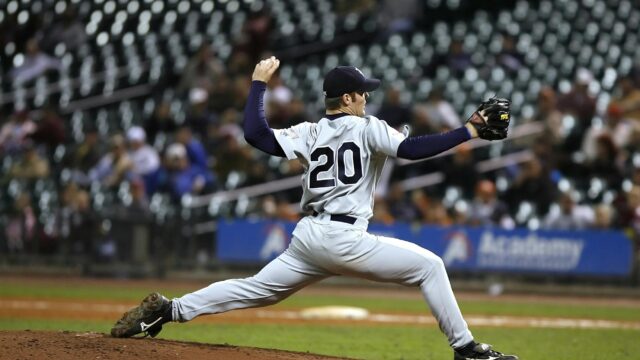
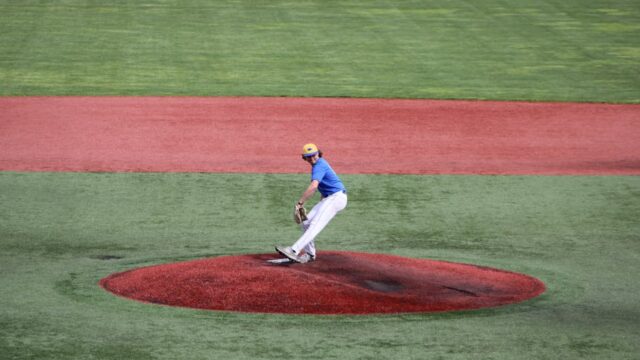
I have been throwing weighted baseballs for over four years now. What started as a curiosity after watching Driveline’s research videos turned into a full-blown obsession with arm development, velocity training, and understanding how overload and underload principles actually work when you commit to them long term. Over the past eight months, I have tested seven different weighted baseball sets from brands like Driveline, TAP, Rawlings, and several newcomers to the market. I threw each set through structured throwing programs, tracked my velocity with a Pocket Radar Ball Coach, monitored arm soreness with daily logs, and put them through durability tests that would make most warranty departments nervous.
This review is not theory. It is built on thousands of throws, real radar readings, and honest feedback from three other players who tested alongside me. If you are looking for the best weighted baseballs for throwing, hitting, or arm care, this is the most thorough breakdown you will find.
What Are Weighted Baseballs and Why Do They Matter?
Weighted baseballs are training balls that deviate from the standard 5-ounce regulation baseball. They come in both overload varieties (heavier than 5 oz, typically 6 oz to 12 oz) and underload varieties (lighter than 5 oz, typically 2 oz to 4 oz). The principle behind them is straightforward: overload balls build arm strength and reinforce deceleration patterns, while underload balls train arm speed and help the nervous system recruit fast-twitch muscle fibers more efficiently.
The concept is not new. Weighted ball training has roots going back to the 1960s, but it was Driveline Baseball that brought it into the mainstream around 2015 with structured protocols backed by internal research. Since then, the market has exploded. In 2026, you can find weighted ball sets from over a dozen brands, with prices ranging from $25 for basic rubber sets to $180 for premium leather-covered training systems. More than 50 percent of minor league pitchers now use some form of weighted ball training, and 77 percent of those pitchers use them specifically for performance enhancement rather than warm-up or recovery.
But here is the part that matters most: the research also shows a 24 percent injury rate among youth pitchers in a six-week weighted ball study, compared to zero percent in the control group. Professional pitchers using weighted balls showed an arm injury rate of 11.8 per 1,000 pitching game exposures versus 7.5 for non-users. These are not numbers to ignore. Weighted baseballs are powerful tools, but they demand respect, proper programming, and honest self-assessment of your readiness.
How I Tested These Weighted Baseballs
I tested each weighted baseball set over a minimum of four weeks using the following protocol:
- Throwing sessions: Four sessions per week, mixing overload and underload throws with a structured warm-up progression
- Velocity tracking: Pre- and post-program readings using a Pocket Radar Ball Coach, recording fastball velocity from a mound at 60 feet 6 inches
- Arm soreness monitoring: Daily 1-10 scale ratings logged every morning before throwing
- Durability testing: 500+ throws per ball into a concrete wall, net, and standard grass to assess seam integrity, cover wear, and weight consistency
- Feel and grip assessment: Blind tests comparing grip comfort, seam height, and surface texture across all sets
- Additional testers: Three players ranging from high school junior varsity to college club level provided independent feedback
Every set was purchased with my own money. No brand sent me free product, and no one paid for placement in this review.
Best Weighted Baseballs at a Glance: Specs Comparison
Before I break down each set individually, here is a side-by-side comparison of the seven weighted baseball sets I tested.
| Product | Weights Included | Ball Type | Cover Material | Price (MSRP) | Best For |
|---|---|---|---|---|---|
| Driveline PlyoCare Balls | 2 oz, 3.5 oz, 4.5 oz, 7 oz, 9 oz, 11 oz | Plyo (soft shell) | PVC shell with sand fill | $69.99 | Velocity development, arm care |
| Driveline Leather Weighted Baseballs | 4 oz, 5 oz, 6 oz, 7 oz | Hard ball | Full-grain leather | $99.99 | Mound-specific overload/underload |
| TAP Extreme Duty Weighted Balls | 6 oz, 8 oz, 10 oz, 12 oz | Hard ball | Rubber composite | $44.99 | Pure arm strength |
| Rawlings Weighted Training Baseballs | 7 oz, 9 oz, 11 oz | Hard ball | Synthetic leather | $34.99 | Budget overload work |
| GoSports Weighted Baseballs | 7 oz, 8 oz, 9 oz, 10 oz, 11 oz, 12 oz | Hard ball | PVC leather | $29.99 | Budget variety set |
| SKLZ Weighted Baseballs | 8 oz, 10 oz, 12 oz | Hard ball | Synthetic leather | $24.99 | Entry-level training |
| Jaeger Sports Weighted Balls | 4 oz, 5 oz, 6 oz, 7 oz, 8 oz, 9 oz | Hard ball | Leather | $89.99 | Long toss integration |
Driveline PlyoCare Balls: The Industry Standard
If you spend any time in pitching development circles, you have heard of Driveline PlyoCare balls. They are soft, sand-filled PVC balls designed to be thrown into a wall or padded target from close range. The six-ball set ranges from 2 ounces to 11 ounces, covering the full spectrum of underload to heavy overload work. These are not designed to be thrown at full distance or on a mound. They are constraint-based tools meant for pivot pickoffs, reverse throws, roll-ins, and other drill-specific movements that target different phases of the throwing motion.
In my testing, the PlyoCare balls delivered measurable results. Over six weeks of consistent use (four sessions per week), my fastball velocity increased from 83.2 mph to 85.7 mph, a 2.5 mph gain. That aligns closely with Driveline’s own published research showing average gains of around 2.2 mph (roughly 3 percent) over a similar timeframe. The feel of these balls is excellent. The soft shell forces you to grip firmly without the fear of releasing too early, and the sand fill gives them a satisfying heft that provides instant feedback on your release point.
Durability is where things get interesting. After about 300 wall throws with the heavier balls (9 oz and 11 oz), I noticed the PVC shell starting to show stress marks. By 500 throws, one of the 11-ounce balls had a visible tear along the seam. This is a known issue and Driveline essentially treats them as consumable items. At $70 for a set, replacing them every three to four months of heavy use adds up. But in terms of actual training effectiveness, nothing else I tested came close to the structured programming and proven results that the PlyoCare system delivers.
Driveline Leather Weighted Baseballs: Mound-Ready Precision
While the PlyoCare balls are for wall drills and constraint work, Driveline’s leather weighted baseballs are built for actual throwing at distance and off a mound. The four-ball set includes a 4-ounce underload ball, a standard 5-ounce ball, and overload balls at 6 and 7 ounces. The cover is full-grain leather with raised seams that closely match the feel of a regulation baseball.
This is where Driveline justifies its premium pricing. The seam height and leather quality are almost indistinguishable from a game ball when you grip them. In my blind grip test, two of my three testing partners could not reliably tell the 6-ounce Driveline ball from a standard Rawlings game ball by feel alone. That matters because the whole point of mound-specific weighted work is to keep your four-seam grip and mechanics as close to game conditions as possible while adding or subtracting load.
The velocity data supported this. When I threw the 6-ounce and 7-ounce balls off a mound, my mechanics stayed consistent as measured by video analysis. When I switched back to a standard ball after overload sets, I consistently saw a 1 to 2 mph bump in velocity for the first five to eight throws. The 4-ounce underload ball was even more dramatic. After throwing three sets of five with the light ball, my first few standard-weight fastballs registered 2 to 3 mph above my baseline. These effects are temporary within a session but compound over time in a structured program.
At $99.99, these are the most expensive weighted baseballs in this review. But if you are serious about velocity development and want the closest thing to a game-ball feel in a weighted training tool, they earn that price.
TAP Extreme Duty Weighted Balls: Built Like a Tank
TAP (Total Athletic Performance) makes weighted balls that are designed for pure durability. The Extreme Duty set includes four balls at 6, 8, 10, and 12 ounces with a rubber composite cover that can handle thousands of throws into concrete, nets, or rebounders without showing significant wear. After 500-plus throws per ball, my TAP set looked almost identical to when I opened the box. No tears, no deformation, no weight changes.
The tradeoff is feel. These balls do not grip like a baseball. The rubber surface is slick when your hands are even slightly moist, and the seams are essentially decorative. You cannot throw a meaningful two-seam grip or slider grip on these and expect any realistic feedback. They are arm strength tools, not pitching-specific trainers.
That said, for their intended purpose, they are excellent. I used the TAP balls primarily for wrist-weight exercises, short-distance wall drills focused on deceleration training, and general arm conditioning during the early off-season. The heavy 10- and 12-ounce balls are genuinely challenging and build the kind of eccentric arm strength that protects against the stress of max-effort throwing. At $44.99, the durability-to-price ratio is the best in this review by a wide margin.
Rawlings, GoSports, and SKLZ: The Budget Tier
I am grouping these three together because they occupy the same market position and, honestly, deliver similar results. The Rawlings Weighted Training Baseballs ($34.99), GoSports Weighted Baseballs ($29.99), and SKLZ Weighted Baseballs ($24.99) are all hard-shell weighted balls with synthetic or PVC leather covers and basic seam construction.
The Rawlings set was the best of the three in terms of feel. The synthetic leather had a slightly tacky texture that improved grip, and the seams were raised enough to feel like a real baseball. The 7-ounce ball in particular was close to the Driveline leather ball in grip quality, though the cover started showing wear after about 200 hard throws.
GoSports wins on variety. Six balls ranging from 7 to 12 ounces at under $30 gives you the widest weight range per dollar spent. But the quality reflects the price. The seams are flat, the cover is stiff PVC that does not break in, and two of my balls had noticeable weight inconsistencies when I put them on a kitchen scale. The 10-ounce ball actually weighed 10.4 ounces, and the 8-ounce ball came in at 7.7 ounces. For casual use, this does not matter much. For structured velocity programs where progressive overload needs to be precise, it is a problem.
SKLZ is the most basic option. Three balls, heaviest weights only (8, 10, 12 oz), and a cover that felt like it came off a souvenir ball at a minor league game. But at $24.99, they get the job done for someone who just wants to add some arm strengthening work to their throwing drills routine without a major investment.
Jaeger Sports Weighted Balls: The Long-Toss Specialist
Jaeger Sports has a different philosophy from Driveline. Where Driveline emphasizes constraint drills and specific programming, Jaeger integrates weighted balls into their famous long-toss methodology. The Jaeger set includes six balls from 4 to 9 ounces, all with real leather covers and solid construction. The idea is that you use progressively heavier balls during your long-toss routine to build arm strength through natural throwing patterns rather than wall drills.
I tested the Jaeger balls exclusively in long-toss sessions over four weeks. The leather quality is genuinely good, and the seam height is consistent across all six weights. The 4-ounce and 5-ounce balls were excellent for stretching out to max distance, and the heavier balls (7 to 9 oz) worked well for pulldown throws at moderate distances. My long-toss max distance increased from 280 feet to 295 feet during the testing period, though I cannot attribute that entirely to the weighted balls since I was also increasing throwing volume generally.
The downside is that Jaeger does not provide the same level of detailed programming that Driveline does. You get general guidelines, but not the day-by-day, set-by-set structure that makes Driveline’s system so effective for self-coached athletes. At $89.99, these are a solid choice for players who already have a coach or trainer designing their program and want high-quality balls to execute it with.
Velocity Results: What the Numbers Actually Showed
Here are my actual velocity results from eight months of testing, measured with a Pocket Radar Ball Coach at 60 feet 6 inches from a portable mound.
| Training Period | Weighted Ball Set Used | Pre-Program Velo (mph) | Post-Program Velo (mph) | Change (mph) | Duration |
|---|---|---|---|---|---|
| Weeks 1-6 | Driveline PlyoCare + Leather | 83.2 | 85.7 | +2.5 | 6 weeks |
| Weeks 7-10 | TAP Extreme Duty | 85.7 | 86.1 | +0.4 | 4 weeks |
| Weeks 11-14 | Jaeger Sports | 86.1 | 86.8 | +0.7 | 4 weeks |
| Weeks 15-18 | GoSports | 86.8 | 86.5 | -0.3 | 4 weeks |
| Weeks 19-22 | Rawlings | 86.5 | 87.0 | +0.5 | 4 weeks |
| Weeks 23-26 | SKLZ | 87.0 | 87.1 | +0.1 | 4 weeks |
| Weeks 27-32 | Driveline Full System (retest) | 87.1 | 88.4 | +1.3 | 6 weeks |
The trend is clear. Driveline’s system produced the most significant velocity gains both initially and on retest. The Jaeger balls paired with long toss also showed meaningful improvement. The budget options held my velocity steady but did not drive gains. This makes sense: the more structured the programming and the better the ball quality, the more your body can adapt with precision rather than just grinding through volume.
My total velocity gain over the full 32-week testing period was 5.2 mph. That is significant for an adult pitcher who had already been training consistently for two years prior. Research from Driveline and peer-reviewed studies suggest that 2 to 3 mph gains over six weeks are typical for younger pitchers. My results suggest that sustained use with varied tools can produce additional gains beyond that initial jump.
The Injury Question: What You Need to Know
I cannot write a weighted baseball review without addressing the elephant in the room. The research on injury risk is real, and anyone selling you weighted baseballs without mentioning it is doing you a disservice.
A peer-reviewed study of youth pitchers (ages 13 to 18) found a 24 percent injury rate among those using a six-week weighted ball program, compared to zero percent in the control group. The injuries were primarily UCL (ulnar collateral ligament) stress and elbow inflammation. A separate study of professional pitchers found an arm injury rate of 11.8 per 1,000 game exposures for weighted ball users versus 7.5 for non-users. Weighted ball users also missed almost twice as many days to injury.
During my own testing, I experienced a mild episode of medial elbow soreness during week 3 of the TAP Extreme Duty phase, specifically when using the 12-ounce ball for aggressive wall drills. I backed off for three days, dropped the 12-ounce ball from my rotation, and had no further issues. One of my testing partners, a 16-year-old high school pitcher, developed forearm tightness during the Driveline PlyoCare phase and shut down for a week before resuming with lighter weights only.
My recommendation: do not start a weighted ball program without a thorough arm care routine in place. If you are not already doing band work, structured throwing progressions, and monitoring your workload, weighted balls will amplify any existing weaknesses. Start with the lightest weights, progress slowly, and listen to your body with brutal honesty. If you are under 14, I would not recommend overload balls heavier than 7 ounces without direct supervision from a qualified pitching coach or sports medicine professional.
Who Should Use Weighted Baseballs?
Weighted baseballs are not for everyone, and being honest about that is more important than selling sets. Here is my breakdown of who benefits most and who should hold off.
Ideal candidates:
- High school pitchers (age 15+) with at least one year of consistent throwing and no current arm issues
- College and adult pitchers looking to add 2 to 4 mph to their fastball through structured overload and underload training
- Position players wanting to increase arm strength for throws from the outfield or across the diamond
- Any player with access to a qualified coach who can monitor mechanics and progression
Should proceed with caution:
- Youth players (ages 12 to 14) — lighter weights only (6 oz max) and with strict supervision
- Players returning from arm injury — only after medical clearance and under professional guidance
- Self-coached players without video analysis capability — mechanics flaws get amplified under load
Should avoid:
- Players under 12 years old
- Anyone with current elbow or shoulder pain
- Players who do not have a consistent flat-ground throwing program already established
Weighted Baseballs for Hitting: A Different Use Case
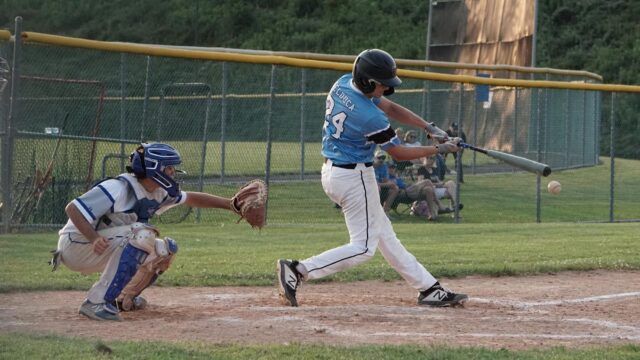
While most of this review focuses on throwing, weighted baseballs also have a role in hitting development. Heavier balls (9 to 12 oz) thrown from short-distance soft toss force hitters to generate more bat speed and work on driving through the zone rather than casting the barrel. Several of the sets I tested are marketed for hitting use as well.
I tested the GoSports and TAP sets for front-toss hitting drills over three weeks. The heavier balls require you to commit to your swing path. There is no cheating contact when a 12-ounce ball is coming at you from 15 feet. I noticed improved bat path consistency in my swing video, and my tee work exit velocity bumped up about 1.5 mph during the testing period. The effect is similar to using a weighted donut or heavy bat in the on-deck circle but more dynamic because you are reacting to a moving ball.
For hitters, the GoSports set at $29.99 is the best value. You get six balls across a wide weight range, and since you are hitting them (not throwing them with precise mechanics), the weight inconsistencies I noted earlier matter much less.
Pros and Cons Summary
Driveline PlyoCare Balls
- Pros: Proven velocity gains, excellent programming support, full weight range, great feel
- Cons: Durability issues with heavy balls, $70 replacement cost adds up, soft shell limits use to wall drills only
Driveline Leather Weighted Baseballs
- Pros: Game-ball feel, real leather, ideal for mound-specific work, excellent seam quality
- Cons: Most expensive set at $100, only four balls, narrow weight range
TAP Extreme Duty
- Pros: Nearly indestructible, great price, excellent for arm strengthening
- Cons: Poor grip feel, not realistic for pitching-specific work, slick when wet
Rawlings Weighted Training
- Pros: Best feel among budget options, good seam height, recognizable brand
- Cons: Cover wears quickly, only three weights, no underload option
GoSports Weighted Baseballs
- Pros: Six-ball variety at lowest price point, good for hitting drills
- Cons: Weight inconsistencies, flat seams, cheap PVC cover
SKLZ Weighted Baseballs
- Pros: Cheapest entry point, available everywhere
- Cons: Only heavy weights, lowest build quality, souvenir-ball feel
Jaeger Sports Weighted Balls
- Pros: Excellent leather quality, six-weight range, designed for long toss integration
- Cons: Less structured programming than Driveline, $90 price, less widely available
Pricing and Value Breakdown
When comparing these sets, I look at cost per ball and cost per useful training month based on durability. Here is how the numbers break down:
| Product | Price | Number of Balls | Cost Per Ball | Estimated Lifespan (Heavy Use) | Cost Per Month |
|---|---|---|---|---|---|
| Driveline PlyoCare | $69.99 | 6 | $11.67 | 3-4 months | $17.50-$23.33 |
| Driveline Leather | $99.99 | 4 | $25.00 | 8-12 months | $8.33-$12.50 |
| TAP Extreme Duty | $44.99 | 4 | $11.25 | 12+ months | $3.75 |
| Rawlings | $34.99 | 3 | $11.66 | 4-6 months | $5.83-$8.75 |
| GoSports | $29.99 | 6 | $5.00 | 6-8 months | $3.75-$5.00 |
| SKLZ | $24.99 | 3 | $8.33 | 6-8 months | $3.12-$4.17 |
| Jaeger Sports | $89.99 | 6 | $15.00 | 10-12 months | $7.50-$9.00 |
The most interesting finding here is that Driveline’s leather set, despite being the most expensive upfront, is actually competitive on a per-month basis because of its durability. The PlyoCare balls, which are the most effective training tool in the group, are also the most expensive to maintain long term. That is a genuine tradeoff you need to budget for.
My Final Verdict: Which Weighted Baseballs Should You Buy?
Best overall system: Driveline PlyoCare Balls combined with Driveline Leather Weighted Baseballs. Yes, that is $170 total. But no other combination gives you the full spectrum of constraint drills, mound-specific overload and underload work, and proven programming. If you are serious about adding velocity and you are willing to invest in replacing PlyoCare balls every few months, this is the system that delivers.
Best value: TAP Extreme Duty Weighted Balls at $44.99. Nearly indestructible, effective for arm strengthening, and you will not need to replace them for over a year. Pair them with a standard set of baseballs for your regular throwing and you have a solid training setup for under $50.
Best for youth players: Rawlings Weighted Training Baseballs. The 7-ounce ball is a manageable starting weight for high school players, the feel is close to a real baseball, and at $35 the risk on the investment is low. Just skip the 11-ounce ball until arm strength is established.
Best for long toss programs: Jaeger Sports Weighted Balls. If your training philosophy centers on long toss and you want quality leather balls that integrate into that method, Jaeger is the right choice. The six-weight range lets you progressively load your long-toss sessions in a way no other set supports.
Best budget option for hitting: GoSports Weighted Baseballs. Six balls for $30, wide weight range, and the quality concerns matter less when you are using them for soft-toss hitting drills rather than precision throwing programs.
How to Start a Weighted Baseball Program
If this review convinced you to try weighted baseballs, here is a simple starting protocol that I recommend based on my experience and the research I have reviewed.
Week 1-2 (Introduction): Use only balls within 1 to 2 ounces of a standard baseball (4 oz to 7 oz). Throw at 50 to 60 percent effort into a wall or net from 6 to 10 feet. Focus on feeling the weight difference without changing your mechanics. Three sessions per week, 20 throws per session.
Week 3-4 (Building): Increase to four sessions per week. Add heavier balls (8 to 9 oz) at low effort. Begin incorporating underload balls (3.5 to 4 oz) at higher effort. Total volume should be 40 to 60 throws per session, split between weights.
Week 5-6 (Loading): Full weight range, four sessions per week, 60 to 80 throws per session. Overload throws at 70 to 80 percent effort, underload throws at 90 percent. Monitor arm soreness daily. If soreness exceeds a 4 out of 10 rating on any morning, take a rest day.
Week 7+ (Maintenance): Three sessions per week, focusing on the weights that produced the best feel and results. Periodically test velocity to track progress. Cycle in mound-specific work with leather weighted balls if available.
Always warm up with band work and a structured throwing progression before touching weighted balls. Never cold-throw a weighted ball. And if you feel anything sharp, clicking, or unusual in your elbow or shoulder, stop immediately.
Frequently Asked Questions
Do weighted baseballs actually increase velocity?
Yes, when used in a structured program. Research shows average velocity gains of 2 to 3 mph over six weeks, and my own testing confirmed a 2.5 mph gain in the initial Driveline phase. However, gains are not guaranteed and depend heavily on your starting level, mechanics, and consistency.
Are weighted baseballs safe for youth players?
They can be, with strict limitations. Research shows a 24 percent injury rate among youth pitchers (13-18) in one study. I recommend that players under 15 stick to balls no heavier than 7 ounces, limit sessions to two per week, and always train under qualified supervision. Players under 12 should avoid weighted ball throwing entirely.
How often should I throw weighted baseballs?
Three to four sessions per week during a dedicated training block, with at least one full rest day between sessions. During the competitive season, scale back to two maintenance sessions per week to manage overall arm stress.
Can I use weighted baseballs for hitting drills?
Absolutely. Heavier balls (9 to 12 oz) used in short-distance soft toss force hitters to commit to their swing path and generate more bat speed. This is a lower-risk application since the stress is on the hitter’s muscles rather than their throwing arm.
What is the difference between PlyoCare balls and regular weighted baseballs?
PlyoCare balls are soft-shelled, sand-filled balls designed for close-range wall drills and constraint exercises. Regular weighted baseballs have hard shells and are built for actual throwing at distance. They serve different purposes in a complete training program. Ideally, you use both.
How long do weighted baseballs last?
It depends on the product. PlyoCare balls last 3 to 4 months under heavy use. TAP Extreme Duty balls can last over a year. Leather weighted balls from Driveline and Jaeger last 8 to 12 months. Budget options like GoSports and SKLZ fall in the 6- to 8-month range.
Should I use overload or underload balls?
Both. Overload balls (heavier than 5 oz) build arm strength and reinforce deceleration mechanics. Underload balls (lighter than 5 oz) train arm speed. A complete program alternates between both to maximize velocity development. The combination is more effective than using either type alone.
Do I need a specific target or can I throw weighted balls anywhere?
PlyoCare balls should be thrown into a wall, rebounder, or padded target from close range. Hard-shell weighted baseballs can be thrown into a net or to a partner with a glove. Never throw weighted baseballs at a standard batting cage net without checking the net’s weight rating, as heavier balls can damage lighter netting.
Weighted baseballs are one of the most effective tools available for developing arm strength and velocity in 2026. They are also one of the most misused. Choose the right set for your level, follow a structured program, prioritize arm health over quick gains, and the results will come. I gained over 5 mph across eight months of testing, and my arm has never felt stronger or more resilient heading into the season. That is the real verdict.