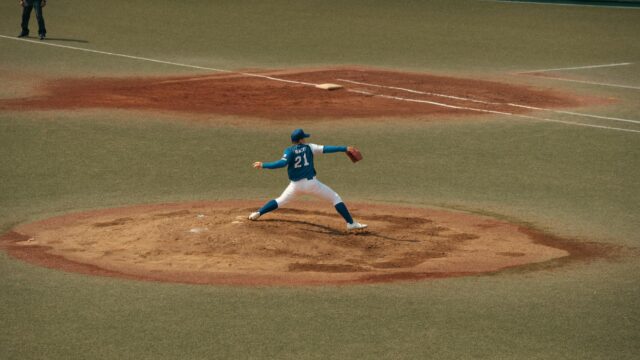
How to Throw a Four-Seam Fastball: Grip, Mechanics, and Drills for Every Level
Last updated: March 26, 2026
The four-seam fastball is the first pitch I ever learned, the first pitch I ever taught, and the pitch I still believe every developing arm should obsess over before chasing anything else. I have spent more than two decades around mounds, bullpens, and college recruiting showcases, and the single biggest separator I see between pitchers who advance and pitchers who stall is the quality of their four-seam fastball. It is the foundation pitch. It sets up everything else. And, frankly, most amateurs throw it wrong.
This guide walks through everything I teach when I work with a pitcher on the four-seamer, from how to grip it to how to spin it, how to deliver it, how to locate it, and how to keep your arm healthy doing it. Whether you are a 10-year-old in Little League trying to figure out why your fastball keeps sailing, a high school varsity pitcher chasing your first 85, or a college arm trying to add late ride at the top of the zone, the principles in this article will move you forward. We are going to go deep, but I will keep it practical. By the end, you will have a grip you trust, mechanics you can repeat, a drill bank to attack weaknesses, and a clear picture of what good actually looks like.
What a Four-Seam Fastball Actually Is
A four-seam fastball is the straightest, fastest, and most repeatable pitch in baseball. It gets its name from the four parallel seams of the baseball that rotate through the wind as the ball travels toward the plate. Those four seams produce backspin so clean and so symmetrical that the ball appears, to the hitter, to resist gravity, especially when thrown with high velocity and high spin efficiency. The pitch does not actually rise, but the brain of a hitter, used to predicting a gravity arc, perceives a well-thrown four-seamer as climbing through the zone. That perceived “ride” is what makes it so valuable.
At the major league level, the average four-seam fastball in 2025 sat right around 94.2 mph, with elite power arms living in the 98 to 102 range. The pitch is used roughly 32 to 35 percent of the time, more than any other single pitch in the game. It is the pitch most often thrown for strike one. It is the pitch most often thrown when a pitcher is behind in the count. And it is the pitch most often thrown to put a hitter away with two strikes when the at-bat needs to end. There is a reason every arsenal is built around it.
Why the Four-Seam Is the Foundation Pitch
I have watched countless young pitchers fall in love with a curveball or a slider before they have any business throwing one, and almost every one of them stalls. The four-seam fastball is the pitch your body learns first because it teaches your delivery what it should feel like at full intent. Off-speed and breaking pitches are essentially modifications of that base delivery. If your base is shaky, everything you build on it will be shaky. If your four-seam is sharp, repeatable, and located, your secondary pitches will be sharper too. The four-seamer is also the pitch most directly tied to your arm health, because it is thrown more often than any other pitch in your arsenal and any flaw in your mechanics will be exposed by the volume.
For a deeper look at how every pitch in a complete arsenal fits together, the companion piece Baseball Pitching Grips walks through grips for every pitch type. And if you want to understand where the four-seam fits in a complete development plan, How to Pitch in Baseball is the macro view this article zooms into.
Equipment You Need
You can throw a four-seam fastball with nothing more than a baseball and a target, but if you actually want to develop the pitch over the course of a season, there are a few pieces of equipment I think are non-negotiable. None of this is fancy. None of this is what shows up in MLB pitching labs. This is just the working setup that has helped me move pitchers forward at every level.
- A clean, broken-in baseball. The seams matter. Brand new balls with high seams give artificial spin readings; bald, weathered balls hide your real grip. Use a mid-life leather ball with raised but not razor seams.
- A radar gun or velocity tracker. You cannot improve what you do not measure. A pocket radar like the one I evaluated in the Pocket Radar Smart Coach Review is the most practical home tool I have used.
- Weighted balls for arm patterning. The plyo and weighted ball systems detailed in Best Weighted Baseballs Reviewed are the most reliable velocity tools on the market when used responsibly.
- A pitching net or target. Throwing into a tarp is not the same as throwing to a target. Use a strike zone net with quadrants so you can train spots, not just strikes.
- Arm care bands. Whether you go with J-Bands or off-brand resistance bands, you need them daily. See Baseball Arm Care for a full routine.
- A flat-ground or portable mound. Throwing on slope is different from throwing on flat ground. Both have a place.
- Cleats with proper toe and heel grip. The push off the rubber is everything; slipping costs velocity and command.
- A pitch logbook or app. Track velocity, pitch count, perceived effort, and recovery feel for each session.
The Four-Seam Grip Step by Step
The grip is where every four-seamer is won or lost. Before we talk mechanics, you have to be able to find the grip in the dark, without looking at it, in under a second. That is the standard. Here is the exact sequence I teach.
Step 1: Find the Horseshoe
Hold the ball in front of you and rotate it until you see the C-shaped seam pattern that looks like a horseshoe. Every baseball has two horseshoes, one on each side. You can grip either one. The horseshoe is your reference point; without it, you will end up gripping the slick leather between the seams, which kills both spin and control.
Step 2: Place the Index and Middle Fingers Across the Seams
Lay your index and middle fingers across the top of the horseshoe, perpendicular to the seams. The fingertips should rest just past the seam, with the pads, not the tips, on the leather. Spacing between the two fingers should be roughly the width of a pencil for most adult pitchers, slightly narrower for kids with smaller hands. Too wide kills velocity; too narrow reduces spin axis stability.
Step 3: Anchor the Thumb Underneath
The thumb sits directly under the ball, ideally on a smooth leather surface or lightly catching a seam. It should form a clean line under your middle finger. A common error is letting the thumb creep up the side of the ball, which causes side-spin and turns your four-seam into an accidental two-seam that runs unpredictably. The pad of the thumb, not the tip and not the joint, is the contact point.
Step 4: Tuck the Ring and Pinky Fingers
Your ring and pinky should curl gently against the side of the ball. They do nothing during release, but their position helps stabilize the ball in your hand during the windup and arm action. Avoid letting them hang straight, which tends to flatten your wrist at release.
Step 5: Confirm the Air Pocket
There should be daylight, an air pocket, between the palm of your hand and the ball. The ball is held in your fingertips, not in your palm. If the ball is buried in your hand, you will produce a heavy, dead pitch that lacks both velocity and ride. Loose, light, fingertip pressure is the standard.
Pitching Mechanics for the Four-Seam
A great grip with broken mechanics will still produce a bad fastball. Mechanics is the engine; the grip is the steering. I break the delivery into six checkpoints. Every pitcher I work with learns these in this order, no exceptions.
1. Setup and Balance
Whether you start from the windup or the stretch, your setup should put your weight evenly through the back foot, with the spine stacked, shoulders soft, and eyes locked on the target. A common amateur mistake is leaning back at setup; that creates rotational drift before you have even started the pitch.
2. Leg Lift and Load
Lift the front leg with the knee tracking toward the chest, then load slightly into the back hip. The back leg is your engine. If you collapse the back knee or rush the leg lift, you bleed power before you start moving forward. Hold balance at the top of the lift for a half-count, then drive.
3. Stride and Direction
Your stride should travel directly toward the catcher. The front foot should land slightly closed, with the toe pointing roughly at the target. Stride length for most adult pitchers is 85 to 100 percent of body height; collegiate and pro arms often exceed 100 percent. Short, conservative strides reduce velocity. Stride direction off the centerline pulls your release across your body and erodes command.
4. Hip-Shoulder Separation
This is the velocity gold mine. As your front foot lands, your hips should already be rotating toward the plate while your shoulders remain closed. The disparity between hip and shoulder rotation is the spring that fires the arm forward. Elite pitchers exhibit 40 to 60 degrees of hip-shoulder separation at foot strike. Most youth pitchers exhibit 10 to 20 degrees, which is why they cap out at modest velocity even when they have a clean grip.
5. Arm Action and Release
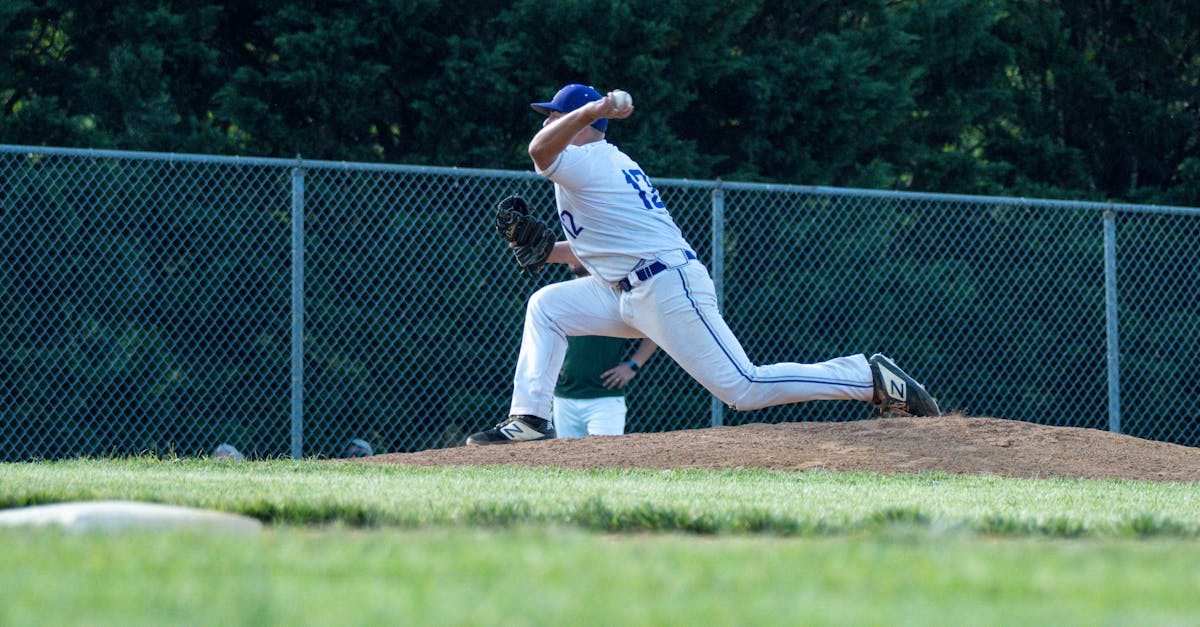
The pitching arm swings from hand break, down, back, and up into the cocked position with the elbow at or just above shoulder height. At release, the ball should leave the fingertips with the wrist firm but not stiff, the hand directly behind the ball, and the middle finger applying the last pressure. A late, behind-the-ball release is what produces high-spin, true four-seam ride. A release on the side of the ball or out front prematurely tilts the spin axis and you get cut or run instead of straight backspin.
6. Follow-Through
Finish over a firm front leg with the throwing shoulder traveling across the body, ending near the opposite knee or hip. A clean, decelerated follow-through is what protects your shoulder and elbow from the violent forces of pitching. If you cut the follow-through short, all of that energy stays in your arm. That is how you end up with arm pain.
Velocity vs Command: How to Balance the Two
The most common question I get from young pitchers and their parents is some version of: “Should I focus on throwing harder, or throwing strikes?” The honest answer is both, but in a specific order. Below 14U, command is the priority. You cannot teach a body to compete with a pitch it cannot control. At 14U through high school, the priority shifts to velocity development without giving back command. By college, you are refining both at the elite end of the curve.
To put real numbers on it, here is the velocity benchmark table I use when I evaluate a pitcher’s four-seam fastball relative to their age group. These are averages, not requirements, and individual development paths vary widely.
| Age Group | Below Average | Average | Above Average | Elite |
|---|---|---|---|---|
| 9-10U | Under 45 mph | 45-50 mph | 51-55 mph | 56+ mph |
| 11-12U | Under 52 mph | 52-58 mph | 59-64 mph | 65+ mph |
| 13-14U | Under 62 mph | 62-68 mph | 69-74 mph | 75+ mph |
| High School Freshman | Under 70 mph | 70-75 mph | 76-80 mph | 81+ mph |
| High School Varsity | Under 75 mph | 75-82 mph | 83-87 mph | 88+ mph |
| College D-I | Under 85 mph | 85-89 mph | 90-93 mph | 94+ mph |
| Pro / MLB | Under 91 mph | 91-94 mph | 95-97 mph | 98+ mph |
Notice the gaps. At the youth level, a few miles per hour separates above average from elite. By the high school years, that gap stretches to five or six. By college and pro, the difference between average and elite is significant, and earned through years of layered development. Do not skip ahead. If you want a deeper dive on adding velocity safely, the article on how to throw harder in baseball is the most complete framework I have built.
Common Mistakes (and How to Fix Them)
I keep a running list of the mistakes I see most often in four-seam fastballs at amateur levels. Here is the diagnostic table I use during lessons. Most velocity and command issues at the amateur level come from one of these eight problems.
| Mistake | What You See | Why It Happens | The Fix |
|---|---|---|---|
| Ball buried in palm | Heavy, slow pitch with no ride | Lack of finger strength or bad habit | Practice grip with daily tossing; ensure air pocket |
| Thumb up the side | Unwanted side-to-side movement | Hand size or grip drift | Re-center thumb directly under middle finger |
| Flying open early | Pitches sail high and arm-side | Hip and shoulder rotate together | Stride drills that delay shoulder rotation |
| Short stride | Velocity caps below potential | Fear of front leg landing, weak core | Stride sticks at 90% of height in catch play |
| Across-body stride | Pitches cut in to glove side | Closed hip lock, poor balance | Towel drills on direct line to target |
| Slow arm circle | Velocity caps, late release | Tension in shoulder, fear of pain | Long toss and connection ball work |
| Cutting off follow-through | Soreness, command loss | Front leg collapse, balance error | Firm front-leg drills, decel work |
| Releasing on the side of the ball | Cut action instead of backspin | Late hand rotation, weak wrist | Spin axis drills, mirror release work |
Drills to Develop a Better Four-Seam Fastball
Drills are where development actually happens. If you only throw bullpens, you will plateau. If you only do drills, you will not learn to compete. The right mix in a typical week for a high school pitcher is two bullpens, three drill sessions, two long toss days, and at least one full rest day. The drills below are the ones I assign most often.
Drill 1: The Grip-and-Spin Toss
Stand 10 feet from a partner or a net. Grip the ball as a four-seam. Toss it straight up using only your wrist and fingers, no arm motion. The goal is to produce tight, four-seam backspin so clean that you can see the seams forming visible rings as the ball spins. Twenty-five reps daily. This is the single best grip refinement drill I know.
Drill 2: Wall Drill for Direction
Set up parallel to a wall, with your glove-side foot about six inches away. Go through your full delivery in slow motion. If you fly open, your glove-side hip will smack the wall. If your stride drifts off line, your front foot will land in front of the wall instead of along it. Ten reps per day.
Drill 3: Long Toss Progression
Long toss is one of the most powerful tools in arm development. A full long toss session starts at 30 feet and progressively moves back in 15-foot increments to your maximum distance, then back in to a pulldown phase. The complete framework is in the long toss guide. Two long-toss sessions per week is the standard.
Drill 4: Towel Drill
Hold a small towel as if it were a baseball. Have a partner hold a target a stride length and a half in front of you. Make a full pitching motion, finishing with the towel snapping the target. This drill grooves stride length and a complete follow-through without the wear and tear of throwing a baseball. Two sets of fifteen, three times a week.
Drill 5: Connection Ball Drill
Wedge a small ball or rolled-up sock between your throwing-side bicep and torso. Make your full delivery without dropping it. If the ball falls, your arm has separated from your trunk too early, which is a common cause of velocity leakage and command issues. The connection ball forces you to lead with the body and let the arm follow.
Drill 6: Bullpen with Quadrants
Divide the strike zone into four quadrants: up-and-in, up-and-away, down-and-in, down-and-away. In a 25-pitch bullpen, call out a quadrant before each pitch. Hit the quadrant. Track the percentage. Twenty out of twenty-five is a strong session; ten out of twenty-five means you need more reps. For a deeper command framework, the pitching command drills piece is essential reading.
Drill 7: Weighted Ball Pulldowns
After a thorough warm-up and long toss, take a 7-ounce or 9-ounce weighted ball and throw with full intent into a net. Five pulldowns at maximum effort, with a one-minute rest between each. This builds velocity, but only when sequenced into a proper program. Misused, weighted balls cause injuries.
Drill 8: Video Self-Review
Film every bullpen from the side and the front. Review immediately. Look for the six checkpoints in the mechanics section. You will catch flaws on film that you cannot feel in your body. Every elite pitcher I know watches their delivery weekly.
Advanced Tips: Spin Rate, Spin Axis, and Ride
Once your four-seam is repeatable, the next layer of development is about spin quality, not just velocity. The two metrics that matter most are spin rate and spin axis. Spin rate is measured in revolutions per minute (RPM); the MLB average four-seam fastball spins at roughly 2,300 to 2,400 RPM, with elite arms producing 2,500 to 2,700+. Spin axis is the angle at which the ball rotates; a pure backspin axis at 12:00 produces the most perceived ride.
Spin rate is largely genetic; you can move it modestly with grip refinement and finger strength. Spin axis, however, is highly trainable. If your four-seam currently runs arm-side, your axis is likely tilted to 1:00 or 2:00 instead of 12:00. The grip-and-spin drill, mirror release work, and patient repetition will reorient the axis over time.
Spin efficiency is the percentage of spin that contributes to movement. A 100 percent efficient four-seamer has all backspin and no gyro component. The closer to 100 percent you can get, the more vertical ride your pitch will produce. Velocity matters, but at the elite end of the game, ride and induced vertical break are what make a fastball untouchable at the top of the zone. This is why a 92 mph fastball with elite ride can miss more bats than a 95 mph fastball with poor ride.
Locating the Four-Seam: Where to Throw It
A four-seam fastball is most dangerous in two locations: at the top of the zone, where its ride defeats the hitter’s swing plane, and on the inside corner to either side of the plate, where its velocity beats the hitter’s reaction time. The bottom of the zone is where four-seam fastballs go to die; without sink, a low fastball is the easiest pitch in baseball to barrel.
If your four-seam has flat or below-average ride, locate it inside and just off the corner. If your four-seam has elite ride, climb the ladder. Pitch up. The hitter will swing under it. The data on this is unambiguous: high-ride four-seamers at the top of the zone produce whiff rates above 30 percent at the major league level, the highest of any location-pitch combination in baseball.
Pitch Sequencing: Setting Up With the Four-Seam
The four-seam is not just a pitch in itself; it is the reference pitch that makes every other pitch in your arsenal more effective. A curveball is harder to hit if the hitter is honoring your fastball. A changeup is more deceptive when it looks like a fastball out of the hand. A slider plays off the fastball’s tunnel.
The classic two-pitch sequence is fastball up, breaking ball down. The hitter’s eye level rises with the high fastball, then the breaking ball drops out from underneath that eye level. Add a third pitch, typically a changeup, that mimics the fastball arm action and tunnels through the same release window for the first 30 feet, and you have an arsenal capable of competing at every level. The curveball and changeup guides walk through how to layer those pitches on top of a strong four-seam foundation.
Arm Care for the Fastball-Heavy Pitcher
Because the four-seam is your most-thrown pitch, your arm care has to support fastball volume. The basics that every pitcher I work with follows: a daily band routine pre-throw and post-throw, shoulder mobility work three times per week, posterior cuff strengthening two to three times per week, and structured rest between outings. The complete program is laid out in the arm care article, and I refer back to it constantly.
Pitch count limits matter even more than they used to, with research linking high single-game and weekly counts to elbow injuries in youth pitchers. Pitch Smart guidelines suggest a daily maximum of 75 pitches for 11-12 year olds, 85 for 13-14 year olds, 95 for 15-16 year olds, and 105 for 17-18 year olds. These are not suggestions; they are floors of safety. Respect them.
Conditioning and Off-Mound Training
Velocity is built off the mound as much as it is on the mound. The biggest physical predictors of fastball velocity in young pitchers are lower body strength, rotational core power, and posterior chain capacity. Squats, deadlifts, single-leg variations, medicine-ball rotational throws, and Nordic curls all show up in the programs of every elite pitcher I have ever worked with. Upper body work is supplemental; the lower half is the engine. Long toss, plyo balls, and weighted balls layered onto a serious lower-body strength program produce the most consistent velocity gains I have observed.
Mental Approach on the Mound
The four-seam fastball is the pitch you fall back on when you need to compete. When the count goes 3-1, when the bases are loaded, when the game is on the line, the fastball is the pitch you trust. You cannot trust it if you have not committed to it in practice. I tell every pitcher I work with: own your fastball. Walk a hitter on three fastballs at the knees if that is what you need to do. Do not nibble. Attack the zone with conviction. Hitters can sense hesitation, and a 92 mph fastball thrown with doubt is a worse pitch than an 87 mph fastball thrown with conviction.
Sample Weekly Pitcher Workload
Here is a sample week for a high school varsity pitcher in mid-season, structured around one start every five days. Adjust intensity for younger arms.
| Day | Throwing | Strength | Recovery |
|---|---|---|---|
| Day 1 (Game Day) | Start, ~85 pitches | None | Ice, hydration, light stretch |
| Day 2 | Catch play, light bands | Lower body, light | Mobility, contrast bath |
| Day 3 | Long toss to 200 ft | Upper body push | Active recovery |
| Day 4 | Bullpen, 30 pitches, mixed grips | Lower body, heavy | Foam roll, stretch |
| Day 5 | Light catch, command work | Core, rotational | Visualization, scouting |
| Day 6 (Game Day) | Start, ~85 pitches | None | Ice, hydration, light stretch |
| Day 7 | Off / Active rest | Off | Full day off |
Four-Seam vs Two-Seam: Knowing the Difference
If you are deep enough in your development to be reading this article, you have probably heard about two-seam fastballs and sinkers. These are not replacements for your four-seamer; they are complements. A two-seam fastball is gripped along the seams rather than across them, producing arm-side run and modest sink. A sinker is a heavier variation of the two-seam with more vertical drop and less ride. Some pitchers throw both; many elite arms throw only a four-seamer and let movement come from secondary pitches.
For a deeper dive on the sinker family of pitches, see how to throw a sinker. The takeaway: master the four-seam first. Add variations only when the foundation is rock solid.
Frequently Asked Questions
How fast should I throw a four-seam fastball at 12 years old?
The average 12-year-old throws between 52 and 58 mph. Above 60 mph is above average; above 65 is elite. Velocity matters less than command at this age. If you are throwing strikes consistently at 55 mph, you will outperform a 65 mph pitcher who cannot find the zone.
Why does my four-seam tail or run instead of being straight?
Almost always a grip or release issue. Most often the thumb is up the side of the ball, producing accidental two-seam movement. Less often, the hand is releasing on the side of the ball instead of behind it. Use the grip-and-spin toss drill daily and you will see the axis straighten within two to three weeks.
Should I learn a four-seam or a two-seam first?
Four-seam first. Always. The four-seam teaches you to release with clean backspin from a stable hand position. Adding a two-seam later is a relatively small adjustment. Building a delivery around a two-seam first leaves you without a true fastball reference pitch and limits your development.
How much should I throw to develop a great four-seam fastball?
For high school pitchers, somewhere around five to six throwing days per week with one full off day. Of those, two are bullpens, two or three are catch play or long toss, and the rest are drills. Volume matters, but quality of repetition matters more. Two focused 30-pitch bullpens beat five lazy 60-pitch bullpens every time.
Can I add velocity without changing my mechanics?
Sometimes. If you have clean mechanics and limited strength, getting stronger will add velocity. If you have flawed mechanics, no amount of strength work will close the gap. Most amateur pitchers I see have a mix: some mechanical inefficiency and some physical underdevelopment. Address both, in that order, and gains follow.
How important is grip pressure?
Very important. The ball should feel light in your fingers. A common cue is “hold it like a bird, firm enough that it cannot fly away but loose enough that you do not crush it.” Excess grip pressure tightens the wrist, which kills spin and slows the arm. Most amateur pitchers grip too tight. Loosen your grip and you will often see velocity and spin go up in the same session.
Is it bad to throw a four-seam fastball with poor mechanics?
It is the single biggest cause of pitching injuries at every level below pro ball. The four-seam is your most-thrown pitch, so any mechanical flaw is repeated thousands of times per season. Fixing mechanics is non-negotiable. If you have shoulder or elbow pain, stop throwing and see a qualified instructor or medical professional immediately.
What is the best four-seam fastball drill of all time?
For my money, long toss. If I could only assign one drill to a pitcher for the rest of their career, it would be long toss. It builds arm strength, stretches the throwing pattern, exposes mechanical flaws, and translates directly to mound velocity. Done properly, it is the closest thing to a magic bullet in pitching development.
Putting It All Together
The four-seam fastball is not a complicated pitch, but mastering it requires layered, patient work over years. Find the grip. Repeat the mechanics until they are second nature. Build the lower body. Train your arm with long toss and disciplined bullpens. Add weighted balls and velocity work only when the foundation is solid. Track your numbers. Trust the process. The pitchers I have seen advance the furthest, from college rosters to professional contracts, are the ones who never stopped working on their fastball. The breaking pitches get the attention, but the fastball wins the games.
If you take one thing from this guide, let it be this: your four-seam fastball deserves your respect. Throw it with conviction. Locate it with purpose. Train it with intensity. The pitcher who owns his fastball owns the mound. That is true at every level, from Little League to the major leagues, and it has been true for as long as the game has been played.