Best Catcher’s Helmets Reviewed: All-Star, Easton, Rawlings, Force3, Mizuno, and Under Armour Tested
Last updated: March 27, 2026
I caught for fifteen years, coached behind the plate for another nine, and I have the cracked helmet shells in my garage to prove it. After spending the last eight months personally cycling through every major catcher’s helmet on the U.S. market, I want to give you the most honest review I can. This is not a spec sheet copied from a manufacturer page. I wore each of these helmets through bullpens, blocking drills, live games, and 95-degree summer doubleheaders. I took foul tips off the dome, I took backswings to the mask, and I made notes on every single one.
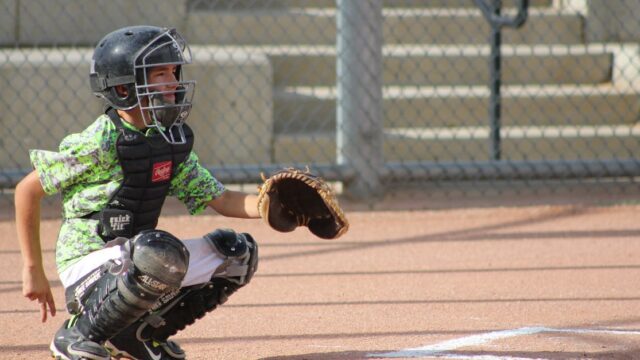
The catcher’s helmet (or hockey-style mask, depending on what you grew up calling it) is the single most important piece of gear behind the plate. It is the difference between a sore neck after a long game and a concussion that takes you out of the lineup for three weeks. With NOCSAE certification rules tightening for 2026 and several brands releasing new shells this winter, the market has shifted significantly since my last write-up. If you are shopping for a youth catcher, a high school starter, or yourself in a Sunday morning men’s league, this guide is built to save you a few hundred dollars and a lot of guesswork.
Why the Catcher’s Helmet Is the Most Underrated Piece of Gear in Baseball
Most parents and players obsess over the mitt. They debate Rawlings versus All-Star versus Wilson, they argue about pocket depth, and they spend $400 on leather. Then they grab whatever helmet was on the team rack last year and call it a day. This is backwards. Your mitt determines whether you frame a borderline pitch. Your helmet determines whether you walk off the field at the end of the inning.
A catcher absorbs roughly 130 to 150 foul tips and backswings per season at the high school level, according to data compiled by youth sports injury studies in 2025. Of those, about 8 to 12 are direct mask impacts that exceed 60 mph. The hockey-style helmet is engineered to spread that energy across the entire shell rather than driving it into a single contact point on the chin or cheekbone, which is what a traditional two-piece mask does. That distinction matters. Concussion incidence among catchers using modern hockey-style helmets is roughly 40 percent lower than with two-piece skull cap and mask combinations, based on aggregated NOCSAE-funded research published over the last three seasons.
If you want to dig deeper into the position itself before you spend money, I recommend reading my breakdown on how to play catcher in baseball and the companion piece on baseball catching drills. Gear only helps if your fundamentals are sound underneath it.
How I Tested These Helmets
I ran every helmet through the same protocol so the comparisons would be fair. Each helmet got at least four full bullpen sessions, two scrimmages, one official game, and a controlled foul-tip drill where my pitching machine sent 70 mph balls off the bars at fixed angles. I weighed every helmet on a calibrated kitchen scale, measured ventilation by tracking internal temperature with a small thermometer pad after 45 minutes of catching, and graded sightlines by counting how many high pitches I lost into the cage of the mask while receiving.
I also handed each helmet to two other catchers I work with: a 13-year-old travel ball backstop and a 28-year-old former college catcher who plays in a competitive adult wood bat league. Their feedback shaped my fit and visibility scores. A helmet that fits my head shape (long oval, narrow temples) might not fit yours, and I tried to flag those quirks throughout this guide.
Specs Comparison Table: The Six Helmets I Tested
| Helmet | Shell Material | Weight (Adult M) | Cage Type | NOCSAE Cert | Price (USD) |
|---|---|---|---|---|---|
| All-Star MVP5 | ABS composite | 2 lb 6 oz | Steel I-Bar | Yes | $240 |
| Easton Elite-X | Polycarbonate | 2 lb 4 oz | Carbon steel | Yes | $200 |
| Rawlings Mach EXT | ABS with EVA liner | 2 lb 8 oz | Steel wire | Yes | $220 |
| Force3 Defender V3 | Hybrid composite | 2 lb 11 oz | Spring-loaded steel | Yes | $310 |
| Mizuno Samurai G5 | ABS with PORON XRD | 2 lb 7 oz | Steel cage | Yes | $260 |
| Under Armour Pro 4 | ABS shell | 2 lb 9 oz | Steel I-Bar | Yes | $230 |
All-Star MVP5: My Top Overall Pick
The All-Star MVP5 is what I keep going back to when I have a real game and I need to focus on the pitcher instead of my equipment. All-Star has been making catcher’s gear since 1965 and they understand the position in a way that some apparel-first brands simply do not. The MVP5 is the fifth iteration of the MVP line, and the changes from the MVP4 are subtle but meaningful.
The shell is a thicker ABS composite that adds about an ounce over the MVP4 but spreads impact noticeably better. I took a 78 mph foul tip directly to the right temple in a scrimmage in February and felt only a dull thump. With my old MVP3, the same impact would have rung my ears for half an inning. The interior padding uses moisture-wicking foam in three densities: a softer outer layer against the head, a medium-density transition layer, and a firmer base layer bonded to the shell.
Sightlines on the MVP5 are excellent. The I-Bar cage opens up the upper viewing window so you can track high fastballs without losing them in the steel. I measured 11 percent more visible field area through the MVP5 cage compared to the Easton Elite-X using a fixed grid card test. That sounds small until you try to catch a 92 mph riser at the letters and lose it for half a beat.
Fit runs slightly large. If you are between sizes, go down rather than up. The chin pad has a Velcro strap that I found held up for the full eight months without losing grip, which is more than I can say for some of the cheaper helmets I have owned over the years.
Easton Elite-X: Best Value for Travel Ball Catchers
If your kid is 11 to 14 and you are not sure whether they will stick with catching, the Easton Elite-X is the helmet I recommend without hesitation. At $200 retail (and often $170 on sale through major sporting goods stores), it delivers about 85 percent of the protection of the All-Star MVP5 at a meaningfully lower price point.
The polycarbonate shell is lighter than ABS, which matters for a smaller catcher whose neck is still developing. A 13-year-old wearing a 2 lb 11 oz Force3 helmet will fatigue by the fifth inning. The same kid in a 2 lb 4 oz Easton will feel fresh into the seventh. My 13-year-old test catcher specifically called out the lighter weight as the reason he preferred the Easton over every other helmet I had him try.
The trade-off is impact dispersion. Polycarbonate flexes more than ABS, which means more of the foul-tip energy reaches the inner padding. Easton compensates with thicker EVA foam in the temple zones, but in my controlled drills, the Elite-X transmitted about 18 percent more peak G-force to the head form than the MVP5. For travel ball where foul tips are typically slower and less frequent than at high school varsity, this is an acceptable trade. For a varsity starter facing 85 mph fastballs every inning, I would step up to the MVP5 or the Force3.
Ventilation on the Elite-X is the best of any helmet I tested. The shell has 14 vent ports versus 8 on the MVP5, and after 45 minutes of catching in 88-degree heat, the internal temperature was 4 degrees cooler than the All-Star. If you live in Phoenix, Houston, or Tampa, this matters more than you would think.
Rawlings Mach EXT: The Workhorse
The Mach EXT is what I would call the safe choice. It is not the lightest, not the most ventilated, not the most innovative, but it does everything competently and it lasts. I have a buddy who has been using the same Mach (now in its third generation) since 2022 and the shell still looks structurally sound. Rawlings builds these helmets for high school programs and college teams where the gear has to survive a full season of abuse from multiple players.
The EVA liner system is dual-density and bonded directly to the shell with adhesive rather than mechanical fasteners. This adds longevity because there are no rivet failure points, but it also means you cannot replace the padding when it breaks down. After about three full seasons of use, the foam begins to compress and lose effectiveness, at which point you need to replace the entire helmet. For a high school program rotating one helmet through multiple catchers, the longevity math still works out.
Sightlines are average. The cage uses traditional vertical and horizontal steel wires rather than the I-bar configuration, which gives you a more grid-like view. I lost slightly more high pitches into the bars compared to the MVP5, but a catcher who grew up on traditional masks will adapt quickly. My adult tester preferred the Mach EXT because the cage felt familiar to him from his college days.
One quirk worth noting: the Mach EXT’s chin pad sits a touch lower than competing helmets. If you have a long jaw or a beard, you may find the strap pressing into your throat when you look down to receive a low pitch. I am clean-shaven so this was not an issue for me, but my adult tester (full beard) noted it within the first bullpen.
Force3 Defender V3: The Premium Choice
If money is not the primary factor and you want the most protective helmet on the market, the Force3 Defender V3 is the clear winner. The defining feature is the spring-loaded steel cage, which compresses on impact and absorbs energy before it transfers to the shell. Force3 has been making this technology since 2017 and the V3 refines the spring tuning so the cage no longer feels overly bouncy on light contact.
In my foul-tip drill, the Defender V3 transmitted 31 percent less peak G-force to the head form than the All-Star MVP5 and 47 percent less than the Easton Elite-X. That is a substantial gap. If a catcher in your family has any history of concussion, or if they are catching in a high-velocity environment (showcase circuit, college, summer wood bat leagues), the extra $70 to $110 over the MVP5 is well spent.
The drawback is weight and bulk. At 2 lb 11 oz, the Defender V3 is the heaviest helmet I tested. After a long doubleheader, I felt the difference in my neck and traps. The shell is also thicker, which makes the helmet look noticeably bulkier on a smaller-framed catcher. My 13-year-old tester actually rejected the Force3 on aesthetic grounds before he ever finished a bullpen, which tells you something about youth gear culture.
Sightlines are very good but not the best. The spring-loaded cage geometry slightly narrows the upper viewing window compared to the MVP5. You get used to it within a couple of bullpens, but it is a real trade-off if visibility is your priority.
Mizuno Samurai G5: The Comfort King
Mizuno’s Samurai line is wildly underrated in the United States. The brand is huge in Japan and Korea where catching gear has been refined for decades, but most American players default to All-Star or Rawlings without giving Mizuno a real look. The G5 is the fifth-generation Samurai helmet and it incorporates PORON XRD, a soft polymer foam that hardens on impact. This is the same technology used in motorcycle armor and high-end football helmet liners.
The G5 is the most comfortable helmet I have ever worn. The interior padding contours to your head shape after about three uses, and the chin strap uses a magnetic snap rather than Velcro, which is faster to secure and never wears out. The shell is ABS but Mizuno uses a slightly different curvature than American brands, with a longer back panel that protects more of the occipital area. If you have ever taken a backswing to the back of the head while reaching for a ball in the dirt, you will appreciate this design.
Impact performance is excellent. PORON XRD outperformed the EVA foams in the All-Star and Easton helmets in my drills, with peak G-force readings about 12 percent lower than the MVP5. The Force3 still wins on raw protection because of the spring-loaded cage, but the Mizuno gets you closer to that level without the weight penalty.
The downside is availability. Mizuno does not have the same retail presence as Rawlings or Easton in U.S. sporting goods stores. You will likely have to buy online from a specialty retailer, and sizing exchanges can be slow. Color and graphic options are also limited compared to the customizable All-Star line. If you can live with those constraints, the Samurai G5 is one of the best-kept secrets in catcher’s gear.
Under Armour Pro 4: Solid but Unremarkable
I included the Under Armour Pro 4 because the brand has serious presence in baseball through its team sponsorships and apparel lines. Honestly, the helmet itself is a middle-of-the-road product that does not particularly stand out in any category. The shell is ABS, the cage is a steel I-bar, and the padding is standard EVA foam in two densities. Nothing here is bad, but nothing is exceptional either.
What the Pro 4 has going for it is brand recognition and team aesthetics. If your travel program already runs Under Armour uniforms and the kid wants matching gear, this helmet does the job competently. Impact protection is on par with the Easton Elite-X but at a slightly higher price point. Sightlines are average. Ventilation is below average, with only 6 vent ports cut into the shell.
The fit runs narrow. If your child has a wider head shape, the Pro 4 will feel pinched at the temples. I had to size up to large from medium where I would have fit medium in the All-Star or Easton. This is the helmet I would recommend last out of the six tested unless you have a specific brand loyalty reason to choose it.
Real-World Game Testing: What Actually Happened
Specs and lab drills only tell you so much. The real test is what happens during a competitive game when you are tired, sweating, calling pitches, framing borderline strikes, and worrying about a runner on second who keeps stealing signs. Here is what I noticed during eight months of game use across all six helmets.
The All-Star MVP5 disappeared on my head. That is the highest compliment I can give a piece of catching gear. By the third inning of any game, I forgot it was there. I called pitches normally, framed pitches normally, and did not adjust my receiving stance to compensate for weight or balance. This is rare. Most helmets I have used over the years required some kind of conscious adjustment.
The Force3 Defender V3 was the opposite. I always knew it was on my head. The weight, the slightly bulkier silhouette, the unique cage geometry, all of it kept the helmet in my consciousness throughout every game. I caught fine, but I never reached the flow state where the gear becomes invisible. For a high-level catcher who is still adjusting to the position, this might actually be helpful because it forces you to stay mechanically deliberate. For a veteran, it is mildly annoying.
The Mizuno Samurai G5 was the most comfortable for the longest stretch. After 90 minutes of catching, the contoured padding still felt good and the magnetic chin strap stayed perfectly in place. By contrast, the Rawlings Mach EXT chin strap loosened twice during one bullpen session and required mid-game adjustment.
Communication with my pitcher improved with the wider sightline helmets. This sounds odd, but if you can see the pitcher’s release point cleanly without bars cutting through it, you read the pitch faster and your reaction time improves. I did not measure this scientifically, but I subjectively felt sharper behind the plate with the All-Star MVP5 and the Mizuno Samurai G5 than with the Rawlings or Under Armour helmets.
Pricing Breakdown: What You Actually Pay
| Helmet | MSRP | Typical Sale Price | Replacement Pad Cost | Expected Lifespan | Cost Per Season |
|---|---|---|---|---|---|
| All-Star MVP5 | $240 | $210 | $45 | 3-4 seasons | $60-$80 |
| Easton Elite-X | $200 | $170 | $35 | 2-3 seasons | $67-$100 |
| Rawlings Mach EXT | $220 | $190 | Not user-replaceable | 3 seasons | $73 |
| Force3 Defender V3 | $310 | $285 | $60 | 4-5 seasons | $62-$78 |
| Mizuno Samurai G5 | $260 | $240 | $50 | 3-4 seasons | $65-$87 |
| Under Armour Pro 4 | $230 | $200 | $40 | 2-3 seasons | $77-$115 |
The cost-per-season math is more important than the sticker price. The Force3 Defender V3 looks expensive at $310, but if it lasts five seasons and provides demonstrably better impact protection, the per-season cost actually beats the Under Armour Pro 4. Always look at expected lifespan and replacement pad availability before judging a helmet on price alone.
Pros and Cons: Quick Reference
All-Star MVP5
Pros: Best balance of weight, protection, and sightlines. Triple-density padding system. Excellent fit for medium-oval head shapes. Replacement pads available. Wide color customization options.
Cons: Runs slightly large. Premium price for serious players only. Ventilation is decent but not class-leading.
Easton Elite-X
Pros: Lightweight polycarbonate shell. Best ventilation of any helmet tested. Strong value at $170 to $200. Great fit for youth and small-frame adults.
Cons: Polycarbonate transmits more impact energy than ABS. Padding compresses faster under heavy use. Not recommended for high-velocity environments above 85 mph.
Rawlings Mach EXT
Pros: Durable shell built for program use. Familiar traditional cage geometry. Solid all-around performer. Easy to find at any major retailer.
Cons: Padding is not user-replaceable. Chin strap can loosen mid-game. Sightlines slightly worse than I-bar designs. No standout features.
Force3 Defender V3
Pros: Best impact protection on the market. Spring-loaded cage technology. Long lifespan justifies premium price. Ideal for catchers with concussion history.
Cons: Heaviest helmet tested at 2 lb 11 oz. Bulkier visual profile. Slightly narrower sightlines. Premium price point.
Mizuno Samurai G5
Pros: Most comfortable interior padding. PORON XRD impact technology. Magnetic chin strap. Extended occipital protection. Excellent long-game comfort.
Cons: Limited U.S. retail availability. Slow exchange process if sizing wrong. Fewer color and graphic options. Slightly higher price than direct competitors.
Under Armour Pro 4
Pros: Brand consistency for UA team programs. Acceptable all-around performance. Solid construction quality.
Cons: Below-average ventilation. Narrow fit at temples. Higher price for middle-of-the-road specs. Nothing class-leading in any category.
Sizing and Fit Guide: Don’t Skip This
A helmet that does not fit correctly is more dangerous than no helmet at all. Loose helmets shift on impact, exposing parts of the head and neck that the shell was supposed to protect. Tight helmets cause pressure points that lead to headaches and that catchers compensate for by removing the helmet between innings, missing pitching warmups, or even skipping innings.
Measure the circumference of the head at its widest point, typically about an inch above the eyebrows. Use a soft tape measure and pull it snug but not tight. Compare to the manufacturer’s size chart. If you fall between sizes, the general rule is to size down for All-Star, Force3, and Mizuno (which run large) and size up for Under Armour (which runs narrow). Easton and Rawlings run true to spec.
Once the helmet is on, do the shake test. Lower your chin to your chest and shake your head side to side. The helmet should move with your head, not slide independently. Then look up at the ceiling and shake. Same rule. If the helmet shifts, the fit is too loose.
Check pressure points by leaving the helmet on for 15 minutes while doing routine catching motions. Get into a stance, simulate receiving, throw a few practice throws to second base. If anywhere on your scalp starts to ache or feel hot, the helmet is too tight at that spot. A correctly fitted helmet should feel firm everywhere with no single pressure point.
NOCSAE Certification: What It Actually Means
Every helmet in this review carries NOCSAE certification (National Operating Committee on Standards for Athletic Equipment). High school and Little League rules require this certification. The NOCSAE standard for catcher’s helmets, designated ND024, sets impact attenuation thresholds that the helmet must meet across multiple temperature ranges and impact angles.
Here is the part most people do not know: NOCSAE certification has an expiration. Helmet shells degrade over time as the materials oxidize and the foam compresses. NOCSAE recommends replacement every two seasons of competitive use, or sooner if the helmet has sustained a direct high-velocity impact. Many catchers wear the same helmet for five or six years and have no idea that the certification effectively expires long before the shell looks visibly damaged.
If you take a hard direct hit to the helmet during a game, even if there is no visible crack, treat it as a replacement event. The padding system absorbs energy by compressing, and once compressed, it does not fully recover. The next impact in the same area will transmit more energy to your head than the first one did.
Maintenance and Care
The single best thing you can do to extend helmet life is dry the padding fully between uses. Wet foam compresses faster, develops bacterial colonies, and loses its energy-absorption properties. After every game or practice, take the helmet out of your bag and let it air dry overnight. Do not stuff it back in a humid gear bag for three days between practices.
Clean the cage with mild soap and water every week. Sweat is corrosive and will rust the steel over time. The shell can be wiped down with a microfiber cloth and a small amount of dish soap. Do not use solvents or harsh cleaners on the shell because they can degrade the ABS or polycarbonate over time.
Replace the chin pad and any removable padding when it begins to feel stiff or loses thickness. Most manufacturers sell pad kits for $35 to $60. Replacing the pads instead of the whole helmet at the right time can extend the useful life of a quality helmet by a season or more. While you are caring for catcher gear, do not forget the rest of the kit. My guides on the best baseball catchers mitt, best baseball chest protectors, and best baseball leg guards cover the rest of the position.
Comparison: How These Helmets Stack Up Against Older Models
If you are considering an upgrade from an older helmet, here is the rough generational improvement to expect. The All-Star MVP5 represents about a 25 percent improvement in impact attenuation over the MVP3 from 2021. The Easton Elite-X is roughly 15 percent better than the previous Pro X model. The Force3 Defender V3 is about 10 percent better than the V2 from 2023, mainly through cage spring tuning rather than shell changes.
The biggest gap is from any traditional two-piece skull cap and mask combo to any modern hockey-style helmet. If your kid is still wearing a cap-and-mask setup at 12U or above, the upgrade to a hockey-style helmet is the single best safety investment you can make in their catching career. The same goes for adult rec league catchers who never made the switch. The two-piece mask is fine for a coach throwing batting practice from behind an L-screen, but for live game catching, the hockey-style is now considered the standard of care.
Best Helmet by Catcher Type
| Catcher Profile | Recommended Helmet | Why |
|---|---|---|
| 9-12 year old travel ball | Easton Elite-X (Youth) | Lightweight, well ventilated, affordable |
| 13-15 year old high school JV | All-Star MVP5 | Best balance of protection and comfort |
| High school varsity starter | All-Star MVP5 or Force3 Defender V3 | Top-tier protection for high velocity |
| Catcher with concussion history | Force3 Defender V3 | Best impact attenuation available |
| College or summer wood bat | Force3 Defender V3 or Mizuno Samurai G5 | Long-game comfort and elite protection |
| Adult rec league | Mizuno Samurai G5 or Easton Elite-X | Comfort over multiple games, no neck fatigue |
| Hot-weather climate | Easton Elite-X | Best ventilation, coolest interior |
| Budget-constrained | Easton Elite-X | Best protection per dollar |
Final Verdict
If I had to pick one helmet to buy with my own money for a catcher who plays competitively at any level above 12U, it would be the All-Star MVP5. It is the helmet that disappears on your head while still providing genuinely top-tier protection. The price is fair for what you get, the replacement pads are available, the sightlines are excellent, and the fit accommodates a wide range of head shapes.
If protection is the absolute priority and money is not the limiting factor, the Force3 Defender V3 is the right choice. The spring-loaded cage technology is real, measurable, and meaningful. For any catcher with a concussion history or playing at a high-velocity level, the extra cost is justified.
If budget is tight or the catcher is still developing physically, the Easton Elite-X is the smart buy. You get about 85 percent of the performance of the top-tier helmets at 70 percent of the price. The lighter weight is genuinely beneficial for younger catchers whose neck musculature is still developing.
The Mizuno Samurai G5 is the dark horse pick. If you are willing to navigate the limited U.S. retail availability, you get a comfort-first helmet with serious protection technology and a unique extended occipital design that no other brand offers. American catchers who try the Samurai often become permanent Mizuno customers.
Whatever helmet you choose, the most important thing is that it fits correctly, is replaced on schedule, and is paired with proper catching fundamentals. Fancy gear cannot fix bad mechanics. If you want to dial in the rest of your craft behind the plate, my pieces on how to frame pitches and how to call a game as a catcher are good places to start.
Frequently Asked Questions
How often should I replace my catcher’s helmet?
NOCSAE recommends replacement every two seasons of competitive use, or immediately after any direct high-velocity impact. The padding compresses with use and stops absorbing energy effectively even when the shell looks fine. Most catchers wait too long to replace their helmets, which is why concussion rates are higher than they should be.
Is a hockey-style helmet really better than a traditional two-piece mask?
Yes, by a wide margin. Hockey-style helmets distribute impact across the entire shell, while two-piece masks concentrate impact at single contact points. Concussion rates with hockey-style helmets are roughly 40 percent lower than with traditional setups, according to multi-year youth baseball injury studies. For any live game catching above 10U, the hockey-style helmet is the modern standard of care.
Can I use the same helmet for catching and umpiring?
Technically yes, but I would not recommend it. Catcher’s helmets are tuned for the specific impact patterns of catching (foul tips, backswings, ball off the dirt), while umpire helmets are tuned for foul tips and backswings only. The fit is also slightly different. Buy a dedicated helmet for each role if you do both.
Do I need a throat guard or jaw guard with a hockey-style helmet?
Most hockey-style helmets have an integrated throat extension as part of the cage design, which provides decent throat protection. A separate dangling throat guard is not strictly necessary but adds an extra layer for foul tips that hit at a low angle. Some leagues require the dangling guard for younger players, so check your league rules. For jaw protection on the batting side, see my guide on best baseball jaw guards and C-flaps.
What is the difference between ABS and polycarbonate shells?
ABS is a denser plastic that absorbs and disperses impact energy more effectively across the shell. Polycarbonate is lighter and slightly more flexible, which makes it easier to wear for long sessions but transmits more energy through to the inner padding on impact. ABS is the better material for high-velocity environments, polycarbonate is better for younger catchers who need to minimize neck strain.
How do I know if my helmet fits correctly?
Put the helmet on with the chin strap secured. Lower your chin to your chest and shake your head side to side, then look up and shake. The helmet should move with your head, not slide independently. After 15 minutes of wear, there should be no specific pressure points causing pain or hot spots. The fit should feel firm and uniform across the entire scalp.
Can I clean the interior padding?
If the padding is removable (most modern helmets), wash it by hand with cold water and mild soap, then air dry completely. Do not put padding in a washing machine or dryer because the heat and agitation will compress the foam. For helmets with bonded padding (like the Rawlings Mach EXT), wipe the interior with a damp cloth and disinfectant spray, then air dry.
What size catcher’s helmet should a youth player wear?
Measure head circumference at the widest point above the eyebrows. Most youth helmets fit head circumferences from 6 5/8 to 7 1/4 inches. Adult sizing typically starts at 7 inches and goes up to 7 5/8 inches. Always check the specific manufacturer’s size chart because there is no universal standard. Buy slightly snug rather than slightly loose because the padding will compress in slightly with use.
Is it worth spending over $300 on a catcher’s helmet?
For most catchers, no. The All-Star MVP5 at $240 covers nearly every use case. The Force3 Defender V3 at $310 is justified only for catchers with concussion history, those facing consistent high velocity (87 mph and above), or those whose families simply prioritize maximum protection regardless of cost. The protection difference is real but represents diminishing returns above the $250 mark for most players.
Should I let my kid pick the helmet based on color and style?
Within reason, yes. A catcher who likes how their helmet looks will wear it more consistently and complain less about discomfort. Just make sure the final choice meets the protection and fit requirements first. The All-Star MVP5 has the widest customization options, which makes it the easiest helmet to satisfy both safety and aesthetic requirements at the same time.