Tee Ball Drills: Fun Practice Ideas, Games, and Skills for Ages 3-6

Last updated: March 18, 2026
I have coached tee ball for six seasons now, starting when my oldest was four and barely tall enough to see over the tee. In that time I have run hundreds of practices, watched kids go from swinging at air to actually making contact, and learned more about patience than any parenting book could teach. Tee ball is the first real introduction most kids get to baseball, and getting it right matters more than most people think. A bad first experience can push a kid away from the sport entirely, while a good one can light a fire that burns for decades.
This guide covers everything you need to run effective, fun, and age-appropriate tee ball drills for players aged three to six. I will walk you through the equipment you need, the drills that actually work, the mistakes that trip up every first-time coach, and the advanced progressions that keep older tee ballers engaged. Whether you are a volunteer parent-coach who just got drafted into the role or a seasoned youth baseball instructor looking for fresh ideas, this guide has you covered.
What You Need Before Your First Tee Ball Practice
Before you run a single drill, you need the right gear on the field. Tee ball equipment is simple compared to older age groups, but having the right stuff makes the difference between a productive practice and thirty minutes of chaos. Here is everything you need.
Essential Equipment List
| Equipment | Quantity | Notes |
|---|---|---|
| Batting tee (adjustable height) | 2-3 | Get tees that adjust from 18 to 26 inches. One per station minimum. |
| Tee balls (soft or reduced-impact) | 24-36 | RIF (Reduced Injury Factor) balls are ideal for ages 3-5. Standard tee balls for ages 5-6. |
| Batting helmets | 6-8 | Multiple sizes. Check NOCSAE certification. Replace any with cracks. |
| Cones or field markers | 12-16 | Flat disc cones work best. Use different colors to mark stations. |
| Gloves (youth sized) | 4-6 extras | Keep extras for kids who forget theirs. 9-10 inch gloves for this age group. |
| Tee ball bats | 3-4 | 25-26 inch length, 13-15 oz. USA Baseball certified. Keep different sizes available. |
| Bucket or ball bag | 2 | One for clean balls, one for collection. A five-gallon bucket works perfectly. |
| First aid kit | 1 | Band-aids, ice packs, antiseptic. Keep it in your coaching bag at all times. |
If you are looking for the right batting tee for your setup, I have tested and reviewed the top options. For helmets, check out my batting helmet reviews to find the safest picks for young players. And if you need help picking the right bat size, my guide to choosing a baseball bat covers everything including sizing charts for youth players.
How to Structure a Tee Ball Practice Session
The biggest mistake new tee ball coaches make is running practice like a miniature version of a high school workout. Kids aged three to six have attention spans measured in minutes, not hours. Research from the American Academy of Pediatrics shows that children under six can focus on a single structured activity for roughly their age plus one minute. That means your four-year-old has about five minutes of real focus per drill before you lose them.
Here is the practice structure I use for a 45-minute session, which is the sweet spot for this age group. Anything longer than an hour and you are babysitting, not coaching.
| Block | Time | Activity | Purpose |
|---|---|---|---|
| 1 | 0:00 – 0:05 | Team huddle and warm-up game | Build excitement, get bodies moving |
| 2 | 0:05 – 0:12 | Throwing and catching basics | Fundamental arm and hand-eye development |
| 3 | 0:12 – 0:22 | Hitting station rotations | Bat-ball contact and swing mechanics |
| 4 | 0:22 – 0:30 | Fielding drill or game | Ground balls, tracking, and positioning |
| 5 | 0:30 – 0:40 | Base running activity | Running form, base awareness, direction |
| 6 | 0:40 – 0:45 | Fun game and team cheer | End on a high note, reinforce love for the game |
The key principle here is rotation. Kids should never stand still for more than sixty seconds. If they are waiting in line, you have too many kids at one station. Split your team into groups of three or four and rotate them through stations every five to seven minutes. Parent helpers are essential. I aim for one adult per four kids minimum.
Warm-Up Games That Actually Work for Tee Ball Age
Forget static stretching. Three-year-olds are not going to hold a hamstring stretch. Instead, use dynamic movement games that double as warm-ups and excitement builders.
Red Light, Green Light (Baseball Edition)
Line kids up on the baseline. When you shout “Green light,” they run toward you. “Red light” means freeze. “Yellow light” means slow motion. Add a baseball twist: “Fly ball!” means they look up and pretend to catch. “Ground ball!” means they squat down with hands out. This builds listening skills, reaction time, and body control. I use this at the start of nearly every practice because it burns off that initial burst of wild energy that every tee baller shows up with.
Sharks and Minnows
Set up two lines of cones about forty feet apart. One kid is the shark in the middle. Everyone else tries to run from one line to the other without getting tagged. If tagged, they become a shark too. Last minnow standing wins. This is pure running and agility work disguised as a game, and kids absolutely love it. I have never had a group that did not beg to play this one more time.
Coach Says (Simon Says Variation)
Use baseball movements instead of random actions. “Coach says swing the bat.” “Coach says field a ground ball.” “Coach says throw the ball.” This teaches proper movement patterns while keeping kids engaged through the game format. It also gives you a quick diagnostic on which kids already know basic baseball movements and which ones need extra help.
Tee Ball Hitting Drills: Teaching Kids to Make Contact
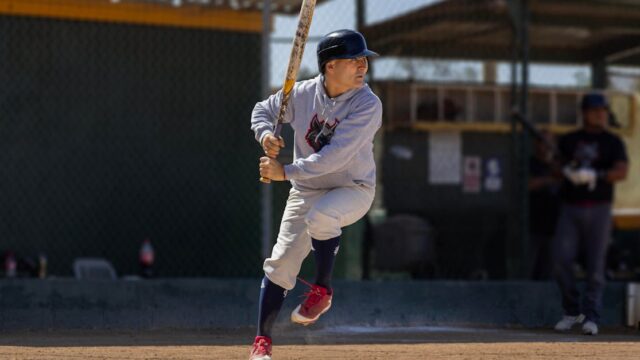
Hitting is the reason most kids want to play baseball. That crack of the bat, even off a tee, is pure magic for a four-year-old. But teaching proper hitting mechanics to someone who barely has the coordination to tie their shoes requires a different approach than you would use with older players. If you want a deeper dive into hitting mechanics for older ages, my guide on how to hit a baseball covers the full progression.
Drill 1: The Statue Swing
Before kids even touch a bat, teach them the stance. Have each player stand with feet shoulder-width apart, knees slightly bent, and hands together at shoulder height. Hold the position for three seconds. Call it “being a statue.” Then have them rotate their hips and swing their imaginary bat. Do five reps without a bat, then five with a bat but no ball, then put the ball on the tee. This progression takes about three minutes and dramatically reduces the wild, off-balance swings you see when kids just walk up and hack.
Drill 2: Color Ball Contact Drill
Mark tee balls with different colored dots using a Sharpie. Put a ball on the tee and ask the player to tell you what color they see before they swing. This forces them to actually look at the ball rather than closing their eyes and swinging, which is the number one problem with new tee ball hitters. Studies from the American Sports Education Program show that 65 percent of first-time tee ball hitters close their eyes at the point of contact. This drill fixes that habit fast. I usually see improvement within two practices.
Drill 3: Tee Height Challenge
Set up three tees at different heights: belt level, mid-thigh, and just below the chest. Have players rotate through hitting three balls at each height. This teaches them to adjust their swing plane and develops the hand-eye coordination needed to hit pitches at different locations. For the youngest kids, ages three and four, keep the tee at belly-button height until they can consistently make contact. The goal for these ages is 60 percent contact rate before moving to variable heights.
Drill 4: Hit the Target
Place a large bucket or a hula hoop on the ground about fifteen feet in front of the tee. Challenge players to hit the ball into the target area. This gives them a focus point beyond just making contact and naturally teaches them to hit line drives rather than pop-ups. Award points for hits that reach the target. Kids are wildly competitive even at this age, and adding a scoring element keeps engagement levels sky high.
Drill 5: Soft Toss Introduction (Ages 5-6 Only)
For older tee ballers who have mastered hitting off the tee consistently, introduce soft toss from the side. Kneel about four feet to the side and slightly in front of the hitter. Toss the ball underhand into the hitting zone at a gentle arc. Start with large, slow tosses and gradually decrease the size of the arc. This is the bridge between tee ball and coach-pitch, and getting kids comfortable with a moving ball at age five or six gives them a massive head start. For more hitting drill ideas, check out my hitting drills guide which includes additional tee work progressions.
Tee Ball Throwing Drills: Building the Foundation
Most three and four-year-olds throw like they are shot-putting. They push the ball from their ear rather than using their whole body. That is completely normal. The goal at this age is not to create perfect mechanics but to build the neural pathways that lead to proper throwing later. My guide to throwing a baseball covers full mechanics for older players, but here is what works for tee ball age.
Drill 1: The Bowling Throw
Start with rolling instead of throwing. Pair kids up about eight feet apart and have them roll the ball to each other on the ground. This teaches aiming at a target and the concept of releasing toward your partner. It sounds too simple, but this is the critical first step. Kids who cannot roll accurately cannot throw accurately.
Drill 2: Knee Throwing
Have players kneel on their throwing-side knee with their glove-side foot forward. From this position, they throw to a partner or a target eight to ten feet away. Taking the legs out of the equation isolates the upper body and naturally creates the arm path you want. I spend at least two minutes per practice on knee throwing for the first four weeks of the season. By mid-season, most kids have noticeably better arm action.
Drill 3: Wall Ball
If you have a wall or backstop, have kids stand six feet away and throw at a target drawn with chalk. The ball bounces back and they field it. This is a solo drill that gives them unlimited reps without needing a partner. It works on both throwing accuracy and fielding in one drill. I always have a wall ball station running as a backup activity for kids who finish other drills early.
Drill 4: The Scarecrow Throw (Ages 5-6)
Teach the full throwing motion by breaking it into the scarecrow position: arms out to the sides like a scarecrow, then bring the throwing arm forward while stepping with the glove-side foot. Use the cue “arms out, step, throw.” Repeat five times slowly, then five times at game speed. This builds the muscle memory for proper overhand throwing mechanics. The key is the step. Kids who do not step when they throw lose 30 to 40 percent of their potential distance.
Tee Ball Fielding Drills: Getting the Ball and Knowing Where to Go
Fielding at the tee ball level is beautiful chaos. Twelve kids chasing one ball like a swarm of bees. Your job as a coach is to channel that chaos into something resembling positions and fundamentals. For more advanced fielding work once players age up, my ground ball fielding guide has the full progression.
Drill 1: Alligator Chomps
Roll a ball slowly toward the player. Teach them to get their body in front of it, bend their knees, and “chomp” the ball with both hands like an alligator mouth, one hand on top and the glove underneath. The alligator imagery clicks instantly with this age group. I have found that visual and animal-based cues work ten times better than technical language with kids under six. Say “chomp the ball” not “use two hands to secure the ball in your glove.” Same result, completely different response from the kids.
Drill 2: The Bucket Game
Place a bucket at a central spot. Roll or hit ground balls to players spread out around the infield. Each player fields the ball and runs it to the bucket. First team to get five balls in the bucket wins. This teaches fielding, running to a target, and introduces the concept of throwing to a base without the complexity of an actual throw. I use this drill for the first three to four weeks before transitioning to actual throws to a base.
Drill 3: Ball Drop Reaction
Stand two feet in front of a player. Hold a ball at shoulder height and drop it. The player has to catch it before it bounces twice. Start with soft, large balls and progress to regular tee balls. This drill builds reaction time and hand-eye coordination at a rapid pace. Research shows that reaction time drills improve fielding success rates by up to 25 percent in youth players. I see the results within three weeks of consistent practice.
Drill 4: Fly Ball Tracking (Ages 5-6)
Toss pop flies underhand to players, starting with very low tosses of about six feet high. Have players call “mine” and catch with two hands. Increase the height gradually over multiple practices. Most five-year-olds can track and catch a ten-foot pop fly by mid-season if they get consistent reps. The key is to never throw a fly ball that is actually difficult to catch. You want a 70 percent or higher success rate to build confidence. If you want to develop deeper outfield skills as kids get older, my outfield play guide covers routes, positioning, and fly ball technique.
Tee Ball Base Running Drills: Teaching Direction and Speed
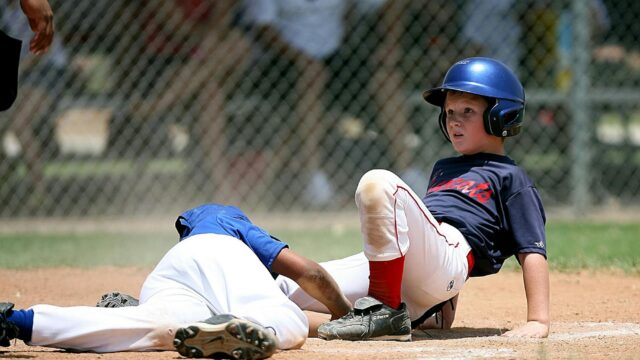
You have not truly coached tee ball until you have watched a kid hit the ball and run to third base. Or run to the pitcher. Or run to their parent in the stands. Base running at this age is about two things: knowing which direction to go and running hard. That is it.
Drill 1: The Base Path Race
Line up three or four kids at home plate. On your whistle, they race to first base. Then first to second. Then second to third. Then third to home. Make it a race every time. Kids run harder when they are racing someone, and running the bases in order dozens of times is what builds the muscle memory so they do not turn left when they should turn right on game day. I run this drill at every single practice until I see zero kids running the wrong direction in games, which usually takes about four to five weeks.
Drill 2: Stop and Go Bases
Players start at home plate. Coach stands in the infield with a red and green card or cones. Green means run to the next base. Red means stop at whatever base you are on. This teaches the concept of reading signals, stopping at a base rather than running past it, and staying on the bag. These are three fundamental skills that directly translate to game situations. For a broader look at baserunning strategy for older players, my baserunning tips guide covers reads, leads, and smart running.
Drill 3: Home Run Trot
Every kid wants to hit a home run. Set up a scenario where each player hits the ball off the tee and runs all the way around the bases while the fielding team tries to get the ball into the bucket at the pitcher’s spot. If the runner touches home before the ball reaches the bucket, it is a home run. This is the best full-team drill in tee ball. It combines hitting, fielding, base running, and teamwork in one activity that kids want to do over and over.
Common Tee Ball Coaching Mistakes and How to Avoid Them
I have made every one of these mistakes myself. Learning from them is what turned me from a frustrated parent-coach into someone who actually enjoys running tee ball practices. Here are the most common errors I see from coaches at this level.
| Mistake | Why It Happens | How to Fix It |
|---|---|---|
| Practices are too long (60+ minutes) | Coach thinks more time equals more learning | Cap practice at 45 minutes max. Quality over quantity. Kids are mentally done after 40 minutes. |
| Too much standing around and waiting | Only one station or one activity running at a time | Run 2-3 stations simultaneously with parent helpers. Max wait time should be 60 seconds. |
| Using technical language | Coach explains mechanics like they would to a 12-year-old | Use visual cues and animal imagery. “Alligator chomp” beats “secure the ball with your bare hand.” |
| Focusing on winning over development | Competitive instinct takes over | The only goal at this age is love of the game. Every kid plays every position. Every kid bats. |
| Not enough parent involvement | Coach tries to do it all solo | Recruit 3-4 parent helpers per practice. Assign them specific stations. Brief them before practice starts. |
| Correcting every mistake | Coach wants perfect mechanics immediately | Pick ONE thing to work on per player per practice. Praise effort and improvement, not perfection. |
| Skipping warm-ups | Coach wants to get right to drills | Five minutes of dynamic warm-up games prevents injuries and sets the energy level for the session. |
| No water breaks | Coach forgets kids dehydrate fast | Schedule water breaks every 10-12 minutes. Keep a cooler on site. Remind parents to bring water bottles. |
| Ignoring the quiet kids | Loud, confident kids naturally get more attention | Make a mental checklist. Give every player at least two direct interactions per practice. |
| Running batting practice with one tee | Not enough equipment | Set up at least 2 tees. While one group hits, others do fielding or throwing drills. |
Fun Tee Ball Games That Teach Real Skills
The best tee ball drills do not feel like drills. They feel like games. Here are the ones my teams have loved the most over six seasons of coaching.
Pickle (Simplified Rundown)
Set up two bases about twenty feet apart. One runner goes between them while two fielders try to tag them out. At the tee ball level, this is pure hilarity and chaos, but it teaches kids to run between bases, stop and change direction, and introduces the concept of tagging. Keep the base distance short so the game moves fast. Play three rounds and rotate everyone through.
Baseball Bowling
Set up plastic cones or empty water bottles like bowling pins about ten feet from the players. Each kid rolls a ball trying to knock them down. This builds accuracy and arm control in a format every kid understands. I use this as a station that runs alongside hitting drills.
Musical Bases
Like musical chairs but with bases. Play music and have kids run the bases. When the music stops, they must be standing on a base. Remove one base each round. Last player on a base wins. This teaches base awareness and running the correct path while being genuinely fun. Kids talk about this game for days after practice.
Cleanup Crew
Scatter twenty to thirty balls around the outfield. Split the team into two groups. On your whistle, each group races to pick up balls and put them in their bucket. First team to collect more balls wins. This teaches hustling to the ball, picking it up cleanly, and running it back. It is also the best way I have found to clean up after batting practice, so you are being efficient while making it fun.
Advanced Tee Ball Drills for Ages 5-6
Older tee ballers who have been playing for a season or two need more challenge. These drills bridge the gap between tee ball and coach-pitch and prepare them for the next level.
Live Fielding with Throws
Hit ground balls to infielders and have them field the ball and throw to first base, where a coach or parent stands with a glove. This is the first real game-like fielding scenario most kids experience. Keep the throws short, fifteen feet maximum, and always have a backstop or parent behind first base to catch overthrows. Expect about a 40 percent accuracy rate on throws at this age, and celebrate every one that gets there.
Situation Hitting
Place runners on bases and have the batter hit off the tee. Call out the situation: “Runner on first, hit the ball to the right side.” This is extremely advanced for tee ball, but five and six-year-olds who have played for a season can start understanding directional hitting. Do not expect consistency. The goal is introducing the concept. For a deep dive on situational hitting approaches, my two-strike hitting guide covers the adjustments hitters make at higher levels.
Position Rotation Game
Set up a mini game where kids play actual positions. After each batter, everyone rotates one position clockwise. This teaches all nine positions and gets kids comfortable with the concept of playing a specific spot on the field. I run this for the last fifteen minutes of practice once a week starting in the third week of the season.
Coach-Pitch Progression
For the most advanced five and six-year-olds, start introducing underhand pitching from ten feet away. Throw large, slow arcs. Let them swing and miss. Give them five pitches, then let them hit off the tee if they have not made contact. This is the final progression before they move to coach-pitch ball, and getting comfortable with a moving ball before the transition makes a massive difference. Kids who get this exposure typically adjust to coach-pitch in half the time of kids who only ever hit off a tee.
How to Keep Tee Ball Players Engaged and Having Fun
Engagement is the real skill in coaching tee ball. You can know every drill in every coaching manual, but if you cannot keep a group of four-year-olds interested for more than three minutes, none of it matters. Here are the principles I have learned.
Energy matches energy. If you are low-energy and monotone, the kids will be too. Be enthusiastic, be loud, be silly. High-fives after every rep. Celebrate everything. A kid picks up the ball? “Amazing catch!” A kid swings and misses? “Great swing, you almost crushed that one!” Positive reinforcement is not just good coaching at this level, it is the only coaching that works.
Give every kid a job. If you are demonstrating a drill, let one kid hold the extra balls. Let another kid be the line leader. Let someone be the score keeper. Kids who feel important stay focused. Kids who feel invisible wander off to pick dandelions.
Use names constantly. “Great throw, Marcus.” “Way to hustle, Lily.” Using a kid’s name makes them feel seen and keeps them locked in. I try to use every player’s name at least five times per practice. It sounds like a lot, but once you make it a habit, it becomes second nature.
End every practice with something fun. The last thing kids remember about practice is how it ended. If you end with a boring drill, they dread coming back. If you end with a game, a cheer, and a snack, they cannot wait for next practice. I always end with either Musical Bases, Cleanup Crew, or a relay race, followed by a team cheer and high-fives on the way out.
Tee Ball Practice Plans by Week
Here is a six-week progression that takes a group of beginners from zero to game-ready. Each week builds on the previous one while keeping things fresh. For a more detailed approach to structuring practices at older ages, my baseball practice plan guide has full session breakdowns.
Week 1: Introduction. Focus on what a baseball diamond looks like, which direction to run, and basic throwing and catching. Use the bowling throw and alligator chomps. Let every kid hit off the tee at least three times. End with Red Light Green Light.
Week 2: Fundamentals. Introduce the statue swing for batting. Work on knee throwing. Play the bucket game for fielding. Run the base path race. End with Sharks and Minnows.
Week 3: Repetition. Repeat Week 2 drills but add the color ball contact drill and wall ball. Start running two to three stations at once with parent helpers. Play Musical Bases at the end.
Week 4: Game Situations. Introduce the home run trot drill. Work on fielding and running the ball to a base. Start the tee height challenge for hitting. Add the stop and go bases drill. End with Cleanup Crew as a team competition.
Week 5: Advancement. For ages 5-6, introduce soft toss and live fielding with throws. For ages 3-4, increase reps on existing drills and add the ball drop reaction drill. Play a simplified pickle game. End with a relay race around the bases.
Week 6: Scrimmage. Run a mini game with full positions and batting order. Coach handles pitching (off a tee or underhand). Rotate positions every inning. Keep the mood light and fun. This is their dress rehearsal for actual games. End with a team cheer and individual high-fives where you tell each kid one thing they did great.
Safety Tips for Tee Ball Coaches
Safety at the tee ball level is mostly about preventing the obvious stuff. Kids at this age have no spatial awareness, and bats in the hands of three-year-olds become dangerous if you are not careful.
Establish a no-swing zone. Mark a circle around the batting tee with cones. Only the batter and the coach feeding the tee are inside the circle. Everyone else stays behind the cones. Enforce this rule from day one with zero exceptions.
Helmets on for all batting activities. This includes tee work, soft toss, and any drill where a bat is being swung. No exceptions. Make it a routine: pick up bat, put on helmet. Every time.
Watch the on-deck area. Kids love to swing bats while they wait. Designate a bat-free waiting area and a separate on-deck spot where only one player at a time can take practice swings. Use cones to mark it clearly.
Use age-appropriate balls. RIF (Reduced Injury Factor) level 5 or level 10 balls are designed for this age group. They are softer and lighter than standard baseballs, which means less pain when a kid inevitably takes a throw to the body. Standard tee balls are appropriate for ages five and six, but for three and four-year-olds, softer is always better.
Hydration and weather. Schedule water breaks every ten to twelve minutes. In temperatures above 85 degrees, shorten practice to thirty minutes. Watch for signs of overheating: red face, confusion, or complaints of dizziness. Have a shaded area available for breaks.
For a complete look at warming up properly before physical activity, my warm-up routine guide covers the full pre-game and pre-practice system, and my article on the importance of stretching for athletes explains why dynamic movement matters for young players.
How to Communicate with Tee Ball Parents
Half of coaching tee ball is coaching the parents. Most parents at this level are watching their child play organized sports for the first time, and expectations can range from “I just want them to have fun” to “my kid should be batting cleanup.” Set expectations early and often.
Send a welcome email before the first practice. Include what to bring, what to wear, practice length and schedule, and your coaching philosophy. I always include this line: “Our number one goal this season is for every player to leave loving baseball more than when they started.” It sets the tone immediately.
Recruit parent helpers at the first practice. You need at least three extra adults to run an effective tee ball practice. Ask for volunteers and give them specific roles: “You are running the fielding station,” “You are feeding the tee,” “You are catching throws at first base.” Parents who have a job are engaged parents, and engaged parents do not stand on the sideline yelling coaching instructions that contradict what you are teaching.
Keep game expectations realistic. Remind parents that every kid will play every position. There is no bench. There are no strikeouts. The score does not matter. If a parent gets overly competitive, have a private one-on-one conversation. Nine times out of ten, they do not realize how they are coming across.
Frequently Asked Questions About Tee Ball Drills
What age should a child start tee ball?
Most leagues start tee ball at age four, but some offer programs for three-year-olds. The key readiness indicators are the ability to follow simple two-step instructions, hold a bat without dragging it on the ground, and participate in a group activity for at least fifteen minutes. If your child can do those three things, they are ready for tee ball. If they are not quite there, wait six months and try again. There is no advantage to starting early if the child is not developmentally ready.
How long should a tee ball practice be?
Forty-five minutes is the ideal length. Thirty minutes is the minimum to cover meaningful content. Sixty minutes is the absolute maximum, and honestly, the last fifteen minutes of an hour-long practice are usually wasted time with kids this young. Quality always beats quantity. A focused 45-minute practice with three stations running simultaneously will produce better results than a 90-minute practice where kids stand around half the time.
How many practices per week does a tee ball team need?
One to two practices per week is plenty. Most tee ball leagues run one practice and one game per week, which is the right balance. Kids this age develop skills through repetition over time, not through volume in a single week. More practice does not equal faster development at this age. It equals burnout.
What size bat should a tee ball player use?
Most tee ball players use a 25 or 26-inch bat weighing between 13 and 15 ounces. The general rule is that the bat should reach from the ground to the player’s hip when standing upright. If the bat is too heavy for the player to hold straight out to the side for five seconds, it is too heavy. USA Baseball certification is required for most leagues. For a complete breakdown of bat sizing, check my bat sizing guide.
Should tee ball players use a glove?
Yes, but keep expectations low. Most three and four-year-olds cannot actually catch with a glove yet. They will use it more like a scoop. A 9 to 9.5-inch glove is the right size for this age group. Avoid buying an expensive glove for a tee baller. They will outgrow it in one to two seasons. Focus on getting a glove that fits their hand and is already broken in enough that they can close it. My youth glove guide has specific recommendations by age.
How do I handle a child who does not want to participate?
This happens at least once every season. The child who sits on the grass, hides behind a parent, or cries when it is their turn. Do not force them. Let them watch. Invite them to join, but accept the “no.” Most reluctant kids warm up within two to three practices if the environment feels safe and fun. Pair them with the most encouraging parent helper and give them low-pressure activities first, like being the ball boy or helping set up cones. Once they see the other kids having fun, curiosity usually wins out.
What is the most important skill to teach in tee ball?
Love of the game. Seriously. If a kid finishes a tee ball season and still wants to play baseball, you have succeeded as a coach. The specific skills, hitting off a tee, throwing and catching, and running the bases, are all important developmental building blocks. But the single most important outcome is that the child associates baseball with fun, positivity, and accomplishment. Everything else can be taught later.
How do I handle different skill levels on the same tee ball team?
Station-based practices solve this naturally. Run a beginner station and an advanced station simultaneously. Younger or less experienced kids work on rolling and alligator chomps while older or more advanced kids work on overhand throwing and soft toss hitting. Same practice, different skill levels, everyone is challenged at their own level. Avoid putting all the advanced kids together in games because this creates a competitive imbalance that frustrates everyone.
Final Thoughts on Tee Ball Drills
Coaching tee ball is not about creating the next MLB draft pick. It is about giving kids their first positive experience with the greatest game ever invented. The drills in this guide are the ones I have used season after season because they work. They keep kids moving, they build real skills, and most importantly, they are fun.
If you take nothing else from this guide, remember these three things: keep it short, keep it moving, and keep it positive. A forty-five minute practice with three stations, lots of high-fives, and a game at the end will develop better players and happier kids than any amount of technical instruction delivered to a group of bored four-year-olds.
Get out there, set up the tee, scatter some balls around the field, and let those kids play. That is what tee ball is all about.