How to Turn a Double Play in Baseball: Feeds, Pivots, and Drills for Every Level
Last updated: March 16, 2026
I have turned thousands of double plays across youth ball, high school, college summer leagues, and adult recreational leagues. Some were textbook — glove flip, clean pivot, rifle throw to first. Others were ugly, rushed, and ended with a ball sailing into the dugout. Through all of it, I learned that the double play is one of the most satisfying and momentum-shifting plays in baseball, and it is also one of the most teachable. If you are willing to put in the reps, you can turn double plays consistently at any level.
This guide covers every aspect of turning a double play in baseball: the feeds, the pivots, the footwork, the communication, and the drills that make it second nature. Whether you are a middle infielder learning the basics or a coach looking for a complete system to teach your players, this is the resource I wish I had when I was coming up.
What Is a Double Play and Why Does It Matter
A double play occurs when the defensive team records two outs on a single continuous action. The most common version is the ground ball double play, typically scored 6-4-3 (shortstop to second baseman to first baseman) or 4-6-3 (second baseman to shortstop to first baseman). In the 2025 MLB season, teams averaged roughly 0.6 double plays per game, and clubs that consistently turned twin killings ranked among the best defensive units in baseball.
The double play does more than erase baserunners. It shifts momentum, deflates rallies, and gives pitchers confidence to attack the strike zone with runners on base. A well-turned double play can change the entire trajectory of an inning, and sometimes a game. Ground ball pitchers who induce weak contact rely on their middle infield to convert these plays, making the double play a true team effort between the mound and the middle of the diamond.
If you are working on your ground ball fielding technique, the double play is the next logical skill to develop. Clean fielding feeds directly into clean feeds, and clean feeds are the foundation of every successful double play.
Types of Double Plays Every Infielder Should Know
Before we get into footwork and pivots, you need to understand the different types of double plays you will encounter during a game. Each one requires a slightly different approach, feed, and sense of timing.
6-4-3 Double Play: The shortstop fields the ground ball and feeds it to the second baseman covering second base. The second baseman catches the ball, touches the bag, pivots, and throws to first. This is the most common double play in baseball because most right-handed hitters pull the ball toward the shortstop side of the infield.
4-6-3 Double Play: The second baseman fields the ball and feeds it to the shortstop covering second base. The shortstop catches, tags the bag, and throws to first. This play often comes on balls hit to the right side of the infield.
3-6-3 Double Play: The first baseman fields a ground ball, throws to the shortstop covering second for the force, and then the shortstop throws back to first where the pitcher or first baseman covers the bag.
1-6-3 or 1-4-3 Double Play: The pitcher fields a ball hit back up the middle and starts the double play with a throw to second base. These are often bang-bang plays where the feed needs to be quick and accurate.
5-4-3 Double Play: The third baseman fields the ball and fires to the second baseman covering second. This requires a strong arm from the third baseman and a quick turn at second.
Line Drive and Fly Ball Double Plays: An infielder catches a line drive and throws to a base to double off a runner who was moving on contact. These are less common but can be game-changers, especially when a runner gets caught off the bag.
Equipment You Need to Practice Double Plays
You do not need a full team or a fancy facility to practice turning double plays. Here is what you need to get quality reps in:
- A quality infield glove: Middle infielders typically use an 11.25-inch to 11.75-inch glove with a shallow pocket for quick transfers. Check out our best infield gloves review for specific recommendations.
- Baseballs: A bucket of regulation baseballs. You want at least a dozen so you can take continuous reps without chasing.
- Bases or base markers: You need a second base and a first base. Throw-down bases work fine for practice. If you are working in your backyard, cones or even old towels will do.
- A fungo bat: A coach or training partner hitting ground balls with a fungo bat is the best way to simulate game-speed grounders.
- A partner: You absolutely need at least one other person to practice double plays. One person fields and feeds, the other person receives and turns. If you have three people, you can simulate the full play from grounder to first base.
- Cleats or turf shoes: Footwork is everything on the double play. Practice in the shoes you play in so your muscle memory translates to game day. Our turf shoe guide covers solid options for training.
- A flat, firm surface: Grass is fine, but infield dirt or turf gives you the truest hops and the best footwork practice.
Step-by-Step: How to Turn a Double Play as the Second Baseman (6-4-3)
The 6-4-3 is the bread and butter double play. As the second baseman, you are receiving the feed from the shortstop and making the turn at second base. Here is the complete sequence, broken down step by step.
Step 1: Pre-pitch positioning. Before the pitch is thrown, you should already be thinking about the double play if there is a runner on first with fewer than two outs. Position yourself a step or two closer to second base than your normal depth. You want to be able to reach the bag quickly without sprinting.
Step 2: Read the ground ball. As soon as the ball is hit to the shortstop, break toward second base. Do not wait to see if the shortstop fields it cleanly — start moving immediately. Your angle should take you to the outfield side of the bag, arriving just before the feed does.
Step 3: Set up at the bag. As you approach second base, get your feet near the bag with your left foot touching or near the back corner of the base (the outfield side). Face the shortstop with your body square to the feed. Your hands should be out in front of you, giving the shortstop a clear target — chest height.
Step 4: Receive the feed. Catch the ball with two hands. A clean catch is more important than a fast turn. If you bobble the feed, you lose both outs. Squeeze it. Own it.
Step 5: Touch the base. As you catch the ball, your left foot should drag across or touch the top of second base. This secures the force out on the lead runner. Some players prefer to step on the bag with the left foot while catching; others touch it with the right foot first and then step off with the left. Either way, make sure you actually touch the base — umpires watch for this.
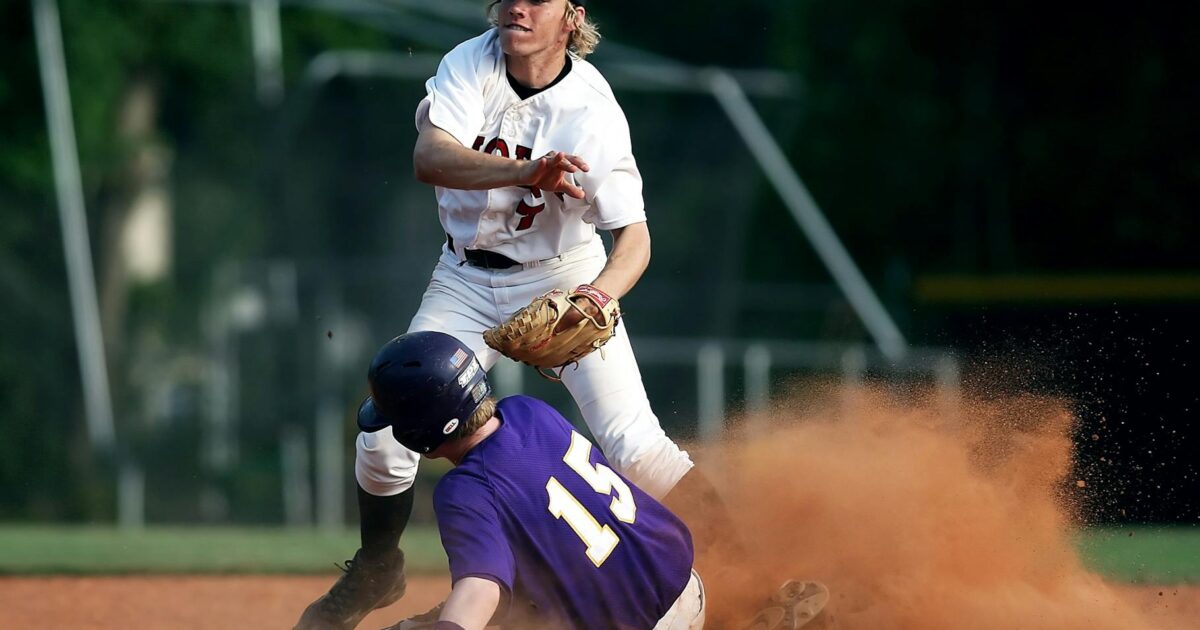
Step 6: The pivot. This is where the play either comes together or falls apart. After touching the bag, you need to clear the sliding runner and get your body into throwing position. The most common pivot for a 6-4-3 is the “step behind” method: after catching and touching the bag, step behind the base (toward the outfield) with your right foot, clearing your body from the runner’s path. Your momentum should carry you toward first base.
Step 7: Throw to first. Plant your right foot, rotate your hips toward first base, and make a strong, accurate throw. Aim for the first baseman’s chest. The throw does not need to be a bullet — accuracy matters more than velocity. A firm, on-target throw beats a laser that sails into the stands.
Step 8: Get out of the baseline. After releasing the throw, immediately move out of the baseline. The runner coming from first base will be sliding into second, and you need to protect yourself. Jump, fade, or shuffle out of the way. Your safety comes first.
Step-by-Step: How to Turn a Double Play as the Shortstop (4-6-3)
On the 4-6-3, the shortstop is the one receiving the feed and turning the play at second base. The footwork is different because you are arriving from the other side of the diamond.
Step 1: Break to the bag. When the ball is hit to the second baseman, immediately break toward second base. Your angle should bring you to the third-base side of the bag.
Step 2: Arrive and set up. Get to the bag with your right foot on or near the base. Face the second baseman with your body open toward the throw. Give a chest-high target with your glove.
Step 3: Catch and tag the base. Receive the feed with two hands while your right foot touches the base. The force out on the lead runner is now recorded.
Step 4: The shortstop pivot. The most common shortstop pivot is the “jump turn.” After catching the ball and touching the base, jump straight up or slightly toward the pitcher’s mound, rotate your body in the air to face first base, and throw as you land. This gets you clear of the sliding runner and puts your body in alignment for the throw to first.
An alternative is the “rocker step” where you plant your left foot behind the bag after receiving the throw, push off it, and throw to first. This pivot keeps you more grounded and is preferred by shortstops who generate arm strength from their lower half rather than their arm alone. Strong shortstop fundamentals make this pivot much smoother.
Step 5: Throw and clear. Deliver an accurate throw to first and get out of the runner’s path. The runner will be sliding into you, so finishing the throw and clearing the lane protects both you and the quality of the throw.
The Feed: How to Start a Double Play With an Accurate Throw to Second
The pivot man gets all the attention, but the feed is just as important. A bad feed kills the double play before it starts. Whether you are a shortstop feeding the second baseman or a second baseman feeding the shortstop, these principles apply.
Feed to the chest. Every feed should arrive at chest height. Not at the ankles, not at the head — chest. This gives the pivot man the best chance to catch, touch the bag, and make a quick throw. If the ground ball takes you far to your left or right, adjust by using an underhand flip, a backhand toss, or a sidearm throw, but still target the chest.
Feed early. Get the ball to the pivot man as quickly as possible. The faster the feed arrives, the more time the pivot man has to make the turn. A half-second delay on the feed can be the difference between turning two and getting only one.
Underhand feeds. When you are close to the bag (within about 15 feet), use an underhand flip or shovel toss. Keep the ball firm — no soft lobs. A firm underhand feed is easier to handle than a short overhand throw that arrives with backspin and hop.
Overhand feeds. When you are farther from the bag (20 feet or more), use an overhand or three-quarter arm throw. This gives the feed more carry and accuracy over distance. Lead the pivot man slightly toward first base to help his momentum.
The backhand glove flip. On balls hit directly at you or slightly to your glove side when you are very close to the bag, a backhand glove flip can be the fastest option. Open your glove toward the pivot man and direct the ball out of the pocket with a controlled push. This takes practice but is a valuable weapon in double play situations. Solid throwing mechanics help with all of these feeds.
Common Double Play Mistakes and How to Fix Them
I have made every one of these mistakes at some point. The key is recognizing the pattern and building the correct habits through repetition.
| Common Mistake | Why It Happens | How to Fix It |
|---|---|---|
| Arriving at the bag too late | Slow read on the ground ball or hesitation before breaking | Start moving to the bag the instant the ball is hit to your partner. Trust that they will field it. |
| Bobbling the feed at the bag | Trying to rush the turn before securing the catch | Catch first, turn second. Two hands on every feed. The extra tenth of a second to secure the ball is always worth it. |
| Missing the base on the pivot | Focusing on the runner instead of the base | Practice touching the base without looking at it. Build muscle memory so your feet know where the bag is. |
| Throwing off-balance to first | Not clearing the runner properly during the pivot | Use the step-behind or jump-turn pivot to get your body clear before throwing. Never throw across the runner’s path. |
| Short-arming the throw to first | Rushing the throw or fear of the sliding runner | Trust your pivot footwork to clear you from the runner. Make a full arm action with a follow-through toward first base. |
| Feed arriving too low or too high | Fielding the ball and throwing from an awkward body position | Field the ball cleanly first, then get your feet set before the feed. Target the pivot man’s chest every single time. |
| Feeding too softly on the underhand flip | Being too cautious or trying to be too accurate at close range | Firm the flip up. A firm underhand toss is easier to handle than a floater that dies in the air. |
| Not communicating before the play | Assuming your partner knows the coverage plan | Before every pitch in a DP situation, confirm who is covering second. Point, nod, or use a verbal call. |
| Standing on top of the base while receiving | Wanting to guarantee contact with the bag | Set up just behind the bag on the outfield side. This gives you room to catch, tag, and pivot without tripping over the base. |
| Watching the runner instead of the ball | Worrying about the incoming slide | Lock your eyes on the feed. Your footwork and pivot technique will protect you from the runner. Trust the process. |
Double Play Drills for Middle Infielders
Repetition builds the muscle memory you need to turn double plays in game situations without thinking. These drills cover feeds, pivots, footwork, and the full play from start to finish.
Drill 1: Dry Pivot Work (No Ball)
Stand at second base and practice your pivot footwork without a ball. For the second baseman, practice the step-behind, step-over, and fade pivots. For the shortstop, practice the jump turn and rocker step. Do 20 reps of each pivot, focusing on foot placement, balance, and body alignment toward first base. This drill is quick and can be done during warm-ups.
Drill 2: Short-Distance Feed and Turn
Position one player at second base and one player about 15 feet away simulating the shortstop. The shortstop feeds an underhand flip to the second baseman, who catches, touches the bag, pivots, and simulates a throw to first (no actual throw needed initially). Switch roles after 10 reps. Focus on clean feeds at chest height and a smooth pivot. Once the footwork feels natural, add the throw to first with a third player or a net.
Drill 3: Full Ground Ball Double Play
A coach hits ground balls to the shortstop, who fields and feeds to the second baseman covering the bag. The second baseman turns and throws to a first baseman. After 10 reps, switch: hit ground balls to the second baseman, who feeds to the shortstop covering the bag. This is the gold-standard drill for double play practice. Do 15 to 20 full reps from each side during every infield session.
Drill 4: Rapid-Fire Feeds
Two players stand 20 feet apart and throw back and forth as quickly as possible, simulating the feed-catch-throw sequence. The goal is to decrease the time from catch to release. Start slow and increase speed over 2-minute intervals. This builds the hand speed and transfer quickness you need in the middle of a double play.
Drill 5: Runner Simulation Pivot
Add a baserunner to the full double play drill. The runner starts at first base and runs at full speed on the ground ball. This teaches the pivot man to work with the urgency and awareness they need in a real game. The runner should slide so the pivot man practices clearing the slide. Use sliding shorts or a quality pair of sliders to protect the runner during practice.
Drill 6: Backhand Glove-Flip Drill
Position the shortstop about 8 feet from second base. Roll or toss balls directly at the shortstop, simulating balls hit up the middle. The shortstop backhand glove-flips the ball to the second baseman at the bag. This drill is specifically for building confidence and touch on the glove flip, a skill that separates good double play teams from great ones.
Drill 7: Clock Drill for Pivot Footwork
Place the base in the center and imagine a clock face around it. The pivot man starts at 12 o’clock (outfield side) and receives feeds from different positions around the clock: 9 o’clock (shortstop feed), 3 o’clock (second baseman feed), 6 o’clock (pitcher feed). This teaches the pivot man to adjust their footwork depending on where the feed comes from, which is critical because not every ground ball gives you a clean, straight-on feed.
Advanced Double Play Tips for Experienced Infielders
Once you have the basic mechanics down, these advanced concepts will help you turn double plays faster and more consistently against better competition.
Cheat the timing, not the position. In a double play situation, do not cheat by playing out of position closer to second base. Instead, cheat the timing by taking your first step toward the bag a split second earlier. This keeps you in position to field a ball hit at you while still getting to the bag quickly enough for the pivot.
Read the hitter. If you know a pull hitter is at the plate, you can anticipate which side the ball is likely to be hit and mentally prepare for the specific double play scenario. A left-handed pull hitter is more likely to produce a 4-6-3 opportunity, while a right-handed pull hitter favors the 6-4-3. This mental preparation gives you a half-step advantage.
Master the inside move. Instead of always fading away from the runner during your pivot, sometimes the fastest double play comes from stepping toward the infield (inside) after touching the base. This shortens the throw to first and catches the runner’s slide behind you. It is more aggressive but very effective when the feed arrives early and you have time to set.
Use the bag as a shield. Position your body so the base is between you and the sliding runner. This is a subtle positioning trick that experienced middle infielders use to protect themselves. The runner has to slide into the base, not through it, and if the base is between you and the slide path, you buy yourself a cushion of safety.
Work on your internal clock. Great double play turners know instinctively whether they have time for two outs or should settle for one. This comes from experience and from practicing with runners. If the ground ball is slow, hit to the right spot, or the runner at first is fast, sometimes getting the sure out at second and living with the runner at first is the smarter play. Baseball IQ matters here, and developing strong mental game fundamentals will sharpen that instinct.
Pre-pitch communication. Before every pitch in a double play situation, the shortstop and second baseman need to communicate who is covering second on a steal, who is covering on a ground ball hit to the pitcher, and who is covering on a ball to the opposite side. A simple open-mouth or closed-mouth signal behind the glove is the standard method. Open mouth means “I have the bag,” closed mouth means “you have the bag.” This prevents hesitation and collisions.
Double Play Footwork Variations for Every Scenario
There is no single perfect pivot for every double play. Different feed angles, throw distances, and runner speeds require different footwork. Here are the main pivot variations and when to use each one.
| Pivot Variation | Best For | How It Works | Difficulty Level |
|---|---|---|---|
| Step-Behind Pivot | Second baseman on a 6-4-3 with a clean feed | Catch the feed while touching the bag with your left foot, then step behind the bag with your right foot toward the outfield. Plant and throw to first. | Beginner-friendly |
| Step-Over Pivot | Second baseman when the feed arrives early and you have time | Catch the feed, step across the bag toward the pitcher’s mound with your right foot, and throw to first. This moves you toward first base and shortens the throw. | Intermediate |
| Fade Pivot | Second baseman when the runner is close and you need to clear quickly | Catch and tag the bag, then fade backward (toward right field) as you throw to first. This creates maximum distance between you and the sliding runner. | Intermediate |
| Jump Turn | Shortstop on a 4-6-3 | Catch the feed and touch the bag with your right foot, jump and rotate your body 180 degrees in the air to face first base, throw as you land. | Advanced |
| Rocker Step | Shortstop on a 4-6-3 with time to set | Catch and touch the bag, step back with your left foot behind the base, push off that foot and throw to first. Keeps you grounded for a stronger throw. | Intermediate |
| Inside Move | Either position when the feed is early and the runner is not yet close | After catching and touching the bag, step toward the infield grass (toward home plate) and throw to first. Shortens the throw significantly. | Advanced |
How to Turn a Double Play at the Youth Level
Youth baseball presents unique challenges for double play execution. Arm strength is developing, footwork is less refined, and game speed can feel overwhelming for young infielders. Here is how to build the skill from the ground up with younger players.
Start with the force out at second only. Before asking young players to turn two, make sure they can consistently receive a feed and get the force out at second base. That is the first out, and it is the most important one. Once they are comfortable with the force play, then add the pivot and throw to first.
Use shorter distances. Move the bases closer together during practice so the throws are manageable. As arm strength develops, move back to regulation distances. There is no point in practicing double plays at 90 feet if your players cannot make accurate 60-foot throws yet.
Emphasize safety. Teach young infielders to clear the runner’s path during every pivot. At the youth level, runners may not know how to slide properly, which increases the risk of collisions. Make it clear that getting out of the way after the throw is not optional — it is part of the play. Check out our guide on how to slide properly to help runners do their part safely too.
Repetition over perfection. Young players will struggle with the timing and coordination at first. That is normal. Run the drills consistently, praise effort and improvement, and do not expect game-speed double plays right away. The muscle memory will come with time.
Build arm strength separately. The double play requires quick, firm throws. If a player’s arm is not strong enough to make the throw from second to first, work on arm strength through long toss programs and arm care routines before expecting double play proficiency.
Double Play Positioning and Pre-Pitch Setup
Where you set up before the pitch has a major impact on your ability to turn the double play. Your positioning should balance two competing demands: being able to field a ball hit to you and being able to get to second base quickly to receive a feed.
Second baseman positioning: In a standard double play depth, the second baseman moves about two steps closer to second base and one step closer to the pitcher’s mound compared to their normal position. This shaves valuable time off the run to the bag. Do not play too close, though — you still need to be able to field a ground ball hit to you and start the 4-6-3.
Shortstop positioning: The shortstop should also shade slightly toward second base, roughly one to two steps from their normal spot. The exact positioning depends on the hitter — against a strong pull hitter, you might stay closer to your normal spot so you can field hard grounders to the hole. Against a hitter who tends to go up the middle, cheat toward the bag.
Reading the pitcher’s offering. If you know the pitcher is throwing a sinker or a ground ball pitch, be extra ready for the double play. Knowing the pitch can help you anticipate the play a fraction of a second earlier. Good second base instincts develop with experience reading these situations.
On the pitch: As the ball leaves the pitcher’s hand, take your ready hop — a small athletic hop that puts you on the balls of your feet and ready to react in any direction. This is the same ready position you use for any fielding play, but in double play situations, your weight should lean slightly toward second base to give you a quicker first step to the bag.
How Pitchers Help Turn Double Plays
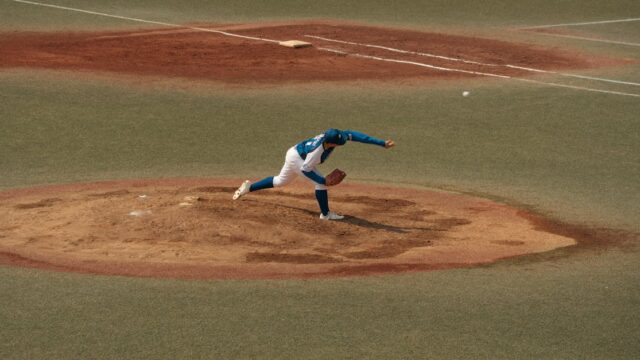
The double play starts on the mound. Pitchers who understand how to pitch for the double play give their infielders the best chance to turn two.
Work the bottom of the zone. Double plays come from ground balls, and ground balls come from pitches at or below the knees. In double play situations, pitchers should focus on two-seam fastballs, sinkers, and changeups that induce downward contact. Hard ground balls to the middle of the diamond are the ideal result. Our guides on throwing sinkers and two-seam fastballs can help pitchers develop these ground ball pitches.
Avoid pitches up in the zone. Elevated fastballs lead to fly balls and line drives, not ground balls. Save the high heat for strikeout counts, not double play situations.
Be ready to start the 1-6-3 or 1-4-3. Pitchers need to field their position. A ball hit back up the middle is a prime double play opportunity, but only if the pitcher fields it cleanly and makes a quick, accurate feed to second. Pitchers should practice this play regularly during team practice sessions.
Frequently Asked Questions About Turning Double Plays
How fast does a double play need to be?
At the MLB level, most double plays are completed in about 4.0 to 4.5 seconds from the time the ball is hit to the time it reaches the first baseman’s glove. At the youth and high school level, anything under 5 seconds is solid. The key components are the fielding time (about 1 to 1.5 seconds), the feed to second (about 0.5 to 1 second), the pivot and throw (about 1 to 1.5 seconds), and the throw traveling to first (about 0.5 to 1 second).
What is the hardest double play to turn?
The 5-4-3 (third base to second to first) is generally considered the hardest ground ball double play because of the distance the ball must travel. The third baseman needs to make a long, accurate throw to the second baseman, and then the second baseman still has to turn and throw to first. It requires strong arms and precise timing across a wider span of the infield.
Should the pivot man always throw to first?
No. If the runner is fast, the ground ball was slow, or the feed arrived late, the pivot man should take the sure out at second and hold the ball. Getting one out is always better than trying for two and getting none. Knowing when to eat the ball is a sign of a smart, experienced infielder.
Can you hit the runner to break up a double play?
Under current MLB rules (and most amateur rules following the same guidelines), the runner must make a bona fide attempt to reach and stay on the base. They cannot intentionally deviate from their path to interfere with the pivot man. If the runner goes out of the baseline to break up the play, they can be called for interference, resulting in a double play being awarded regardless. The old-school “takeout slide” is largely a thing of the past at every level.
How do I practice double plays without a full team?
You need a minimum of two people. One person fields the ground ball and makes the feed, while the other receives and turns the pivot. If you are alone, you can still work on dry pivot footwork at a base and practice underhand feeds against a rebounder net. But the timing element of the double play really requires at least one partner.
What is a 6-4-3 double play?
The numbers represent the defensive positions involved in the play. In baseball scorekeeping, the shortstop is number 6, the second baseman is number 4, and the first baseman is number 3. So a 6-4-3 means the shortstop fielded the ball, threw to the second baseman for the force at second, and the second baseman threw to the first baseman for the second out. If you want to better understand these numbers and other stats, check out our guide on how to read baseball statistics.
Does the pivot man have to touch second base?
Yes. For the force out at second base to count, the player must touch the base while in possession of the ball. In practice, umpires sometimes give a “neighborhood” call where the pivot man is close to the base but does not technically touch it. However, with instant replay now available at higher levels of baseball, it is best to always make definitive contact with the bag. Do not rely on the neighborhood play — touch the base.
At what age should players start learning double plays?
Players can begin learning the basics of the double play around ages 10 to 11, when they have developed enough arm strength and coordination to make the throws. Start with the force out at second and gradually add the full turn. By ages 12 to 13, most competitive players should be comfortable with double play fundamentals and practicing them regularly.
Building Double Play Chemistry With Your Partner
The best double play combinations in baseball work together so often that the play becomes automatic. Here is how to build that chemistry with your middle infield partner.
Take reps together daily. There is no substitute for time on the field with your partner. During every infield practice, take at least 15 to 20 double play reps together. Over the course of a season, that adds up to hundreds of turns, and each one builds the trust and timing you need.
Talk about preferences. Ask your partner where they want the feed. Some pivot men want the ball on the glove side, others want it at the center of the chest, and some want it slightly toward first base to help their momentum. Learn your partner’s preference and deliver accordingly.
Watch film together. If you have access to game film, review your double plays (and your missed double plays) together. Identify where the breakdowns happen — was the feed off target? Was the pivot slow? Did the timing feel rushed? Film does not lie, and studying it together helps both players improve.
Develop trust. The pivot man has to trust that the feed will be accurate. The feeder has to trust that the pivot man will be at the bag. Trust comes from consistency, and consistency comes from reps. When that trust is there, you stop thinking and start playing. That is when the double play becomes automatic.
The double play is not a solo act. It is one of the most collaborative plays in all of baseball, requiring two infielders working in perfect sync with a pitcher who puts the ball on the ground. The teams that turn double plays consistently are the teams that practice them relentlessly, communicate before every pitch, and trust each other to execute their role. Put in the work with your middle infield partner, run the drills, and the twin killings will come. That is the beauty of the double play — it rewards preparation more than talent, and there is no ceiling on how smooth you can make it.